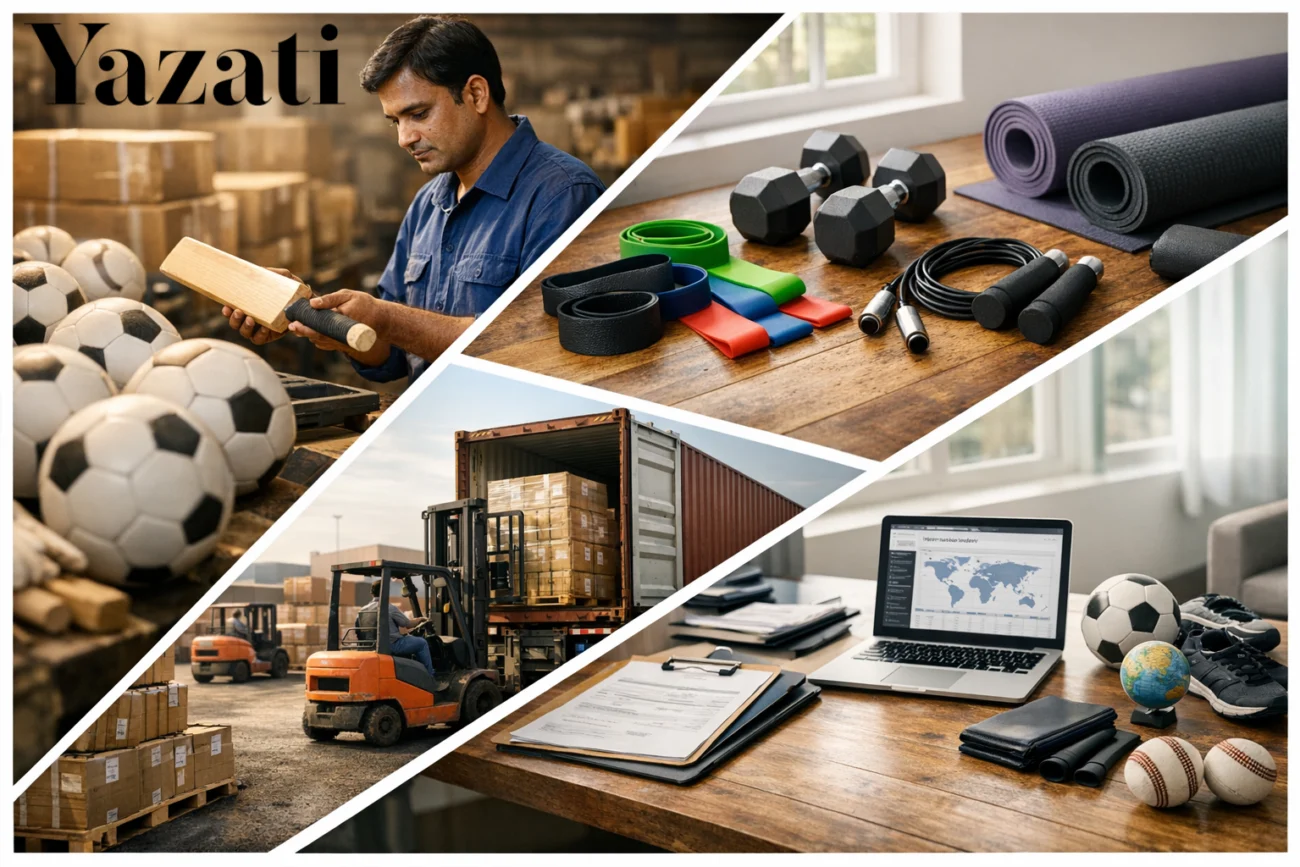
Introduction to India’s Sports Goods Export Industry
India has emerged as a significant global supplier of sports equipment and fitness accessories. With decades of manufacturing experience, skilled labor, and expanding production capabilities, the country supplies products to major markets across Europe, North America, the Middle East, Africa, and Asia-Pacific.
From cricket bats and footballs to resistance bands and yoga mats, India’s export portfolio is diverse and steadily growing. Understanding How to Import Sports Equipment & Fitness Accessories from India can help distributors, retailers, and fitness brands tap into this expanding sourcing opportunity efficiently and profitably.
A structured import process ensures smooth transactions and consistent supply.
Why How to Import Sports Equipment & Fitness Accessories from India Matters
Importing sports equipment involves more than simply placing an order. Buyers must consider:
- Product safety standards
- Quality consistency
- Shipping timelines
- Customs regulations
- Payment security
A well-planned approach helps reduce risks, prevent delays, and maintain profitability.
Careful planning transforms importing into a reliable growth strategy.
Understanding Product Categories
India manufactures a wide range of sports and fitness products.
Indoor Fitness Equipment
Popular export categories include:
- Dumbbells and weight plates
- Resistance bands
- Yoga mats
- Exercise balls
- Home gym accessories
- Foam rollers
Rising global health awareness has increased demand for indoor fitness products.
Outdoor and Team Sports Equipment
India is also known for producing:
- Cricket equipment
- Footballs
- Basketballs
- Hockey sticks
- Protective gear
- Training cones and kits
Team sports remain strong export segments due to consistent international participation.
Identifying Reliable Indian Manufacturers
Selecting the right supplier is the most critical step.
Methods for finding reliable manufacturers include:
- Trade exhibitions
- Industry directories
- B2B sourcing platforms
- Export promotion councils
- Business referrals
Shortlist suppliers based on:
- Export experience
- Production capacity
- Client portfolio
- Product specialization
- Responsiveness
Reliable communication often reflects professional operations.
Verifying Certifications and Compliance
Sports equipment must meet safety and quality standards.
Verify whether suppliers comply with:
- International safety certifications
- Material safety standards
- Product testing protocols
- Environmental regulations
Depending on your market, additional certifications may be required.
Compliance reduces customs issues and builds consumer trust.
Requesting Samples and Product Testing
Never finalize bulk orders without inspecting samples.
Evaluate:
- Material strength
- Weight accuracy
- Stitch durability
- Resistance levels
- Packaging quality
If necessary, conduct performance testing or third-party lab checks.
Sample approval ensures alignment before mass production begins.
Negotiating Pricing and MOQ
Pricing depends on:
- Material type
- Product complexity
- Order volume
- Custom branding requirements
- Packaging specifications
Discuss minimum order quantities (MOQs) clearly.
Negotiating fair pricing while maintaining quality is essential for long-term success.
Transparent agreements prevent misunderstandings.
Understanding Export Documentation
Accurate documentation is essential for customs clearance.
Common export documents include:
- Commercial invoice
- Packing list
- Bill of lading or airway bill
- Certificate of origin
- Insurance documents
Ensure all details match shipment specifications.
Correct documentation prevents delays.
Payment Terms and Risk Management
Secure payment structures protect both buyer and seller.
Common options include:
- Letter of credit (LC)
- Telegraphic transfer (TT)
- Partial advance payment
- Documentary collection
For first-time transactions, consider risk-reducing methods such as phased payments.
Clear payment agreements strengthen business relationships.
Shipping Options and Freight Planning
Sports equipment shipments are typically transported via:
- Sea freight for bulk orders
- Air freight for urgent or smaller shipments
Freight selection depends on:
- Budget
- Delivery timeline
- Shipment volume
Work with experienced freight forwarders to optimize container space and reduce costs.
Efficient logistics ensures timely delivery.
Customs Clearance and Import Duties
Each importing country has specific regulations.
Research:
- Import tariffs
- Product labeling requirements
- Safety compliance standards
- Tax obligations
Consult customs brokers if necessary.
Proper preparation avoids fines or shipment delays.
Pre-Shipment Inspection
Third-party inspections are recommended for bulk orders.
Inspections verify:
- Quantity accuracy
- Packaging condition
- Product quality
- Compliance with specifications
Pre-shipment checks reduce the risk of receiving defective goods.
Quality verification protects brand reputation.
Packaging and Branding Considerations
Many buyers prefer private label sports equipment.
Indian manufacturers often provide:
- Custom logo printing
- Branded packaging
- Barcode labeling
- Instruction manuals
Customized branding strengthens market presence.
Clear packaging specifications prevent retail issues.
Building Long-Term Supplier Partnerships
Long-term partnerships provide:
- Better pricing
- Priority production scheduling
- Flexible payment terms
- Continuous product improvement
Maintain open communication and provide regular feedback.
Strong supplier relationships support sustainable business growth.
Common Importing Mistakes to Avoid
Avoid these common errors:
- Skipping supplier verification
- Ignoring compliance requirements
- Overlooking shipping timelines
- Failing to inspect samples
- Underestimating customs duties
- Rushing payment agreements
Attention to detail prevents costly mistakes.
Frequently Asked Questions (FAQs)
1. Is India a reliable source for sports equipment imports?
Yes. India has decades of manufacturing experience and strong export infrastructure.
2. What is the typical MOQ for sports equipment?
MOQs vary by product but often range from hundreds to thousands of units.
3. Are Indian sports goods compliant with international standards?
Many manufacturers meet global safety and quality certifications.
4. How long does production typically take?
Production timelines often range from 30 to 60 days depending on order size.
5. Can Indian manufacturers support private labeling?
Yes. Many suppliers offer OEM and customized branding options.
6. What shipping method is most economical?
Sea freight is generally more cost-effective for bulk shipments.
Conclusion
Importing sports equipment and fitness accessories from India presents strong opportunities for global retailers and distributors. By understanding How to Import Sports Equipment & Fitness Accessories from India, buyers can streamline sourcing, ensure compliance, and maintain consistent product quality.
Careful supplier selection, sample evaluation, documentation accuracy, and structured logistics planning are essential steps in the process. When managed properly, importing from India can deliver competitive pricing, reliable supply, and long-term profitability.
With preparation and strategic planning, sports equipment importing becomes a smooth and rewarding business venture.
✨ Discover Global Sourcing Excellence with Netyex ✨
Netyex is your trusted B2B sourcing partner, connecting international buyers with India’s finest manufacturers and curated product lines—from handicrafts and home décor to kitchenware, textiles, hospitality essentials, and more. With verified suppliers and end-to-end support, we make global procurement seamless, reliable, and efficient.
👉 Elevate your sourcing experience—explore Netyex today.
📦 Bulk orders & customisation | 🌍 Worldwide delivery | 🤝 Trusted by global buyers
Visit Netyex to source premium Indian products with confidence.