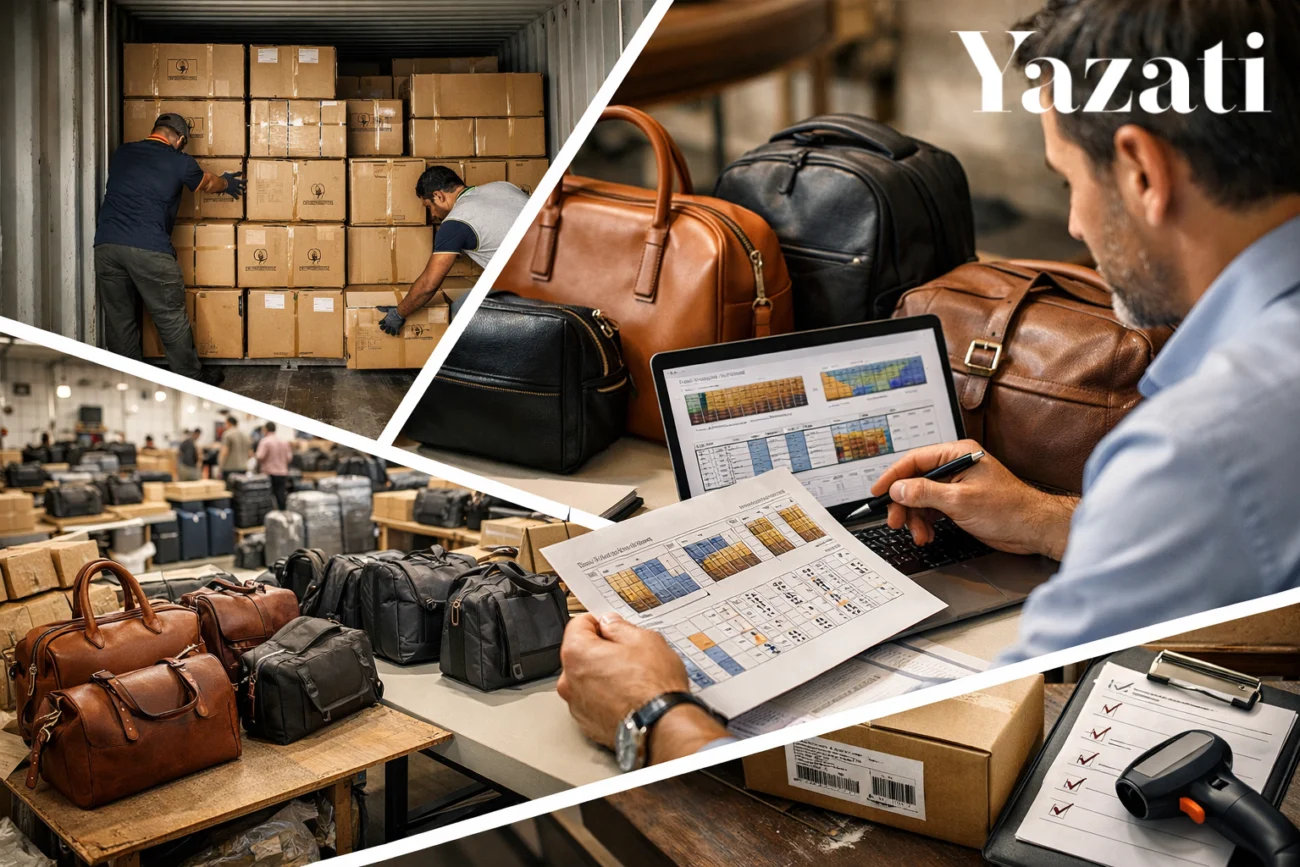
Understanding Mixed Container Shipments
What Are Mixed Container Shipments?
Mixed container shipments refer to combining multiple types of goods—such as different styles, sizes, or SKUs of bags—into a single shipping container. This can involve:
- Multiple suppliers
- Different product categories
- Various packaging formats
This method is especially useful when your order volume doesn’t fill an entire container with one product type.
Why Use Mixed Container Shipping for Bag Imports?
There are several advantages:
- Cost Efficiency: Share container space to reduce freight costs
- Flexibility: Import multiple bag styles in one shipment
- Inventory Optimization: Avoid overstocking a single product
- Faster Market Testing: Try different designs in smaller quantities
Types of Container Shipping Methods
Full Container Load (FCL)
- Entire container is used by one importer
- Ideal for large-volume shipments
- Lower cost per unit when fully utilized
Less than Container Load (LCL)
- Shared container space with other importers
- Suitable for small shipments
- Slightly higher cost per cubic meter
Buyer’s Consolidation
- Multiple suppliers ship goods to one consolidation warehouse
- Goods are combined into one container before export
Step-by-Step Guide on How to Plan Mixed Container Shipments for Bag Imports
Step 1: Analyze Your Product Mix
Start by evaluating:
- Bag types (handbags, duffels, backpacks)
- Sizes and weights
- Packaging dimensions
Create a SKU list and categorize products based on volume and priority.
Step 2: Calculate Total Shipment Volume (CBM)
Understanding cubic meters (CBM) is essential:
- Measure each carton (Length × Width × Height)
- Multiply by quantity
- Sum total volume
This helps determine whether to choose LCL or FCL.
Step 3: Choose the Right Suppliers
If you’re sourcing from multiple vendors:
- Ensure consistent quality standards
- Confirm production timelines
- Check export experience
Reliable suppliers reduce delays and errors in mixed shipments.
Step 4: Coordinate a Consolidation Plan
You have two options:
1. Origin Consolidation:
- Suppliers send goods to a warehouse in the exporting country
2. Freight Forwarder Consolidation:
- Your logistics partner handles the merging process
Make sure all suppliers follow:
- Uniform labeling
- Standard packaging
- Delivery deadlines
Step 5: Optimize Packaging for Space Efficiency
Efficient packaging can save significant costs:
- Use stackable cartons
- Avoid oversized packaging
- Compress soft bags when possible
- Standardize carton sizes
Step 6: Work with an Experienced Freight Forwarder
A good freight forwarder will:
- Manage consolidation
- Handle customs clearance
- Provide documentation support
- Optimize shipping routes
They act as your logistics backbone.
Step 7: Understand Customs and Documentation
Prepare the following:
- Commercial Invoice
- Packing List
- Bill of Lading
- Certificate of Origin (if required)
Ensure all product descriptions are accurate to avoid customs delays.
Step 8: Plan Delivery and Distribution
Once goods arrive:
- Arrange warehouse storage
- Inspect shipments
- Distribute to retailers or customers
Efficient last-mile planning ensures smooth operations.
Cost Optimization Strategies
Combine Orders Strategically
Instead of frequent small shipments:
- Group orders into one larger mixed container
- Reduce per-unit freight costs
Negotiate Freight Rates
- Compare multiple forwarders
- Ask for volume discounts
- Lock rates during peak seasons
Reduce Packaging Waste
- Minimize void space
- Use lightweight materials
- Standardize carton dimensions
Common Challenges and How to Overcome Them
1. Delays from Multiple Suppliers
Solution:
Set strict deadlines and monitor production progress regularly.
2. Mislabeling and Inventory Confusion
Solution:
Use barcode systems and clear labeling standards.
3. Damage During Transit
Solution:
- Use protective packaging
- Ensure proper stacking
- Choose reliable carriers
4. Customs Issues
Solution:
Work with experienced brokers and ensure accurate documentation.
Best Practices for Efficient Mixed Container Shipments
- Maintain clear communication with all suppliers
- Use digital tracking systems
- Plan shipments well in advance
- Conduct quality inspections before shipping
- Keep buffer time for unexpected delays
Technology and Tools to Simplify Shipping
Modern tools can help:
- Inventory management software
- Shipment tracking platforms
- Freight comparison tools
- ERP systems for supply chain visibility
These tools improve accuracy and efficiency.
Sustainability in Bag Imports
Eco-friendly shipping is becoming important:
- Use recyclable packaging
- Optimize container space to reduce emissions
- Choose environmentally responsible logistics partners
FAQs: How to Plan Mixed Container Shipments for Bag Imports
1. What is the main benefit of mixed container shipping?
It reduces shipping costs by maximizing container space and combining multiple products.
2. Is LCL or FCL better for bag imports?
It depends on volume. LCL is ideal for small shipments, while FCL is cost-effective for larger volumes.
3. How do I avoid delays in mixed shipments?
Coordinate timelines with suppliers and use a reliable freight forwarder.
4. Can I mix different bag types in one container?
Yes, as long as they are properly packed and documented.
5. What documents are required for importing bags?
Commercial invoice, packing list, bill of lading, and possibly a certificate of origin.
6. How can I reduce shipping costs further?
Optimize packaging, consolidate shipments, and negotiate freight rates.
Conclusion
Mastering How to Plan Mixed Container Shipments for Bag Imports can significantly improve your logistics efficiency and reduce costs. By carefully analyzing your product mix, coordinating suppliers, optimizing packaging, and working with experienced logistics partners, you can streamline your import process and stay competitive in the market.
Mixed container shipping isn’t just a cost-saving strategy—it’s a smart, scalable approach to modern global trade. With the right planning and execution, you’ll be well on your way to building a reliable and efficient import system.
✨ Discover Global Sourcing Excellence with Netyex ✨
Netyex is your trusted B2B sourcing partner, connecting international buyers with India’s finest manufacturers and curated product lines—from handicrafts and home décor to kitchenware, textiles, hospitality essentials, and more. With verified suppliers and end-to-end support, we make global procurement seamless, reliable, and efficient.
👉 Elevate your sourcing experience—explore Netyex today.
📦 Bulk orders & customisation | 🌍 Worldwide delivery | 🤝 Trusted by global buyers
Visit Netyex to source premium Indian products with confidence.