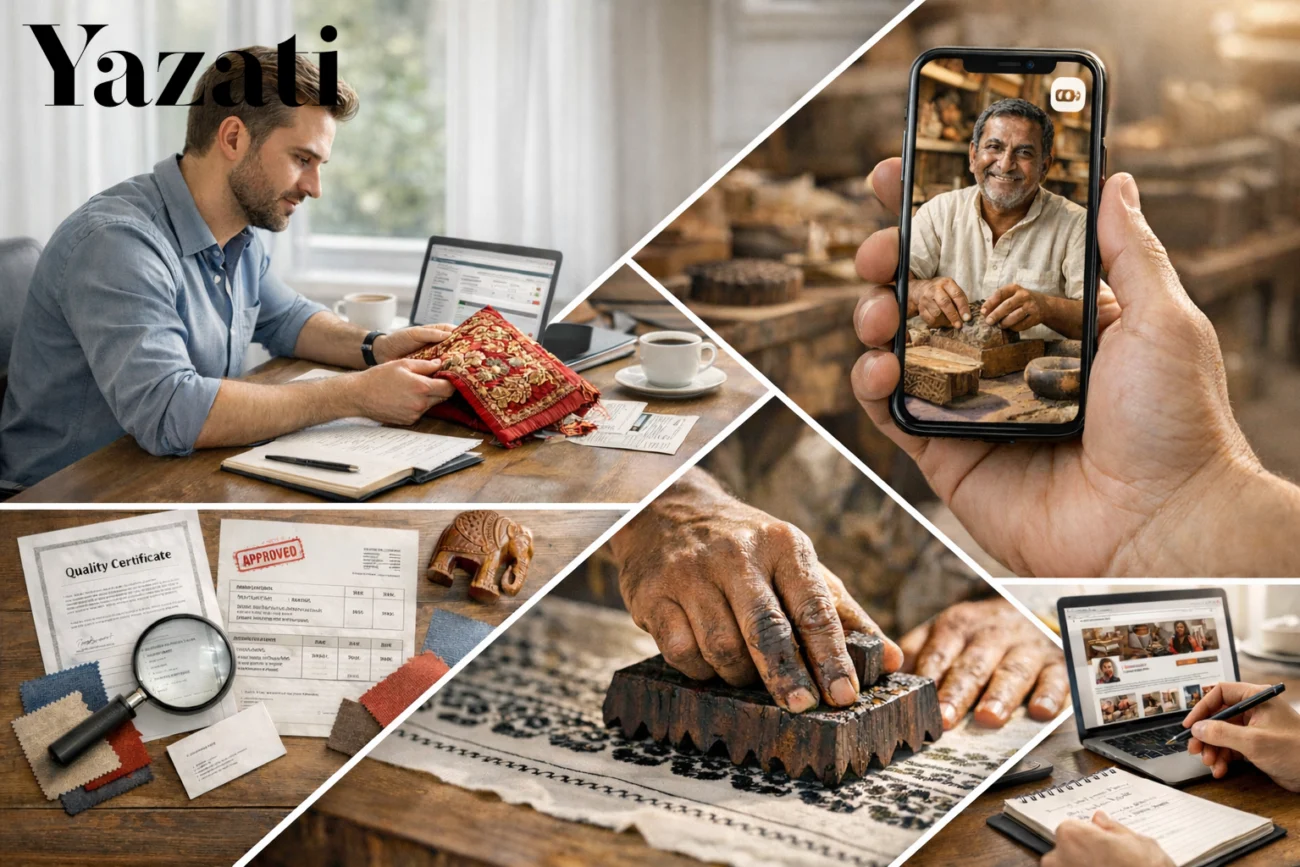
Introduction to How to Verify Authentic Indian Handicraft Suppliers Before You Buy
Understanding How to Verify Authentic Indian Handicraft Suppliers Before You Buy is essential for global importers seeking genuine products, consistent quality, and long-term business partnerships. Indian handicrafts are globally admired for their artistry, cultural richness, and craftsmanship. From handwoven textiles and wooden carvings to metal art and pottery, these products hold strong appeal in international markets.
However, the increasing demand for Indian handicrafts has also led to risks such as counterfeit goods, inconsistent quality, and unreliable suppliers. Importers must follow a structured verification process before committing to bulk purchases.
This guide provides step-by-step methods to verify authenticity and ensure safe sourcing.
Growing Global Demand for Indian Handicrafts
Indian handicrafts are valued for:
- Handmade craftsmanship
- Cultural heritage
- Sustainable production methods
- Unique artistic designs
Retailers and wholesalers worldwide seek authentic products that stand out in competitive markets.
Risks of Working with Unverified Suppliers
Without proper verification, buyers may face:
- Poor-quality goods
- Delivery delays
- Fraudulent transactions
- Misrepresentation of handmade products
- Financial losses
Careful due diligence reduces these risks significantly.
Understanding the Indian Handicraft Export Market
Major Categories of Indian Handicrafts
Common export categories include:
- Textiles and embroidery
- Wooden carvings
- Metal handicrafts
- Pottery and ceramics
- Stone art
- Jewelry
Each category may involve different production techniques and compliance requirements.
Key Handicraft Production Clusters
Handicrafts are often produced in regional clusters known for specific crafts. Cluster-based production helps preserve traditional methods but requires proper verification.
Step 1: Verify Business Registration and Legal Status
Checking Company Registration Documents
Request:
- Business registration certificate
- Company incorporation documents
- Tax identification number
Valid documentation confirms legal operation.
Confirming Export Licenses and Tax Identification
Export-oriented suppliers should possess appropriate export licenses and tax registration.
Step 2: Review Export Experience and Track Record
Years in Operation
Established suppliers with several years of experience are generally more reliable.
Previous Export Markets and Client References
Ask about:
- Countries they export to
- Client testimonials
- Past shipment records
References provide credibility.
Step 3: Assess Product Authenticity and Craftsmanship
Evaluating Handmade vs Machine-Made Products
Authentic handicrafts often show minor natural variations. Perfect uniformity may indicate machine production.
Checking Material Quality and Finishing
Examine:
- Wood quality
- Fabric weave
- Metal polish
- Durability
High-quality materials reflect authenticity.
Step 4: Request Samples Before Bulk Orders
Sample Evaluation Checklist
Inspect:
- Craftsmanship consistency
- Material durability
- Packaging quality
- Color accuracy
Testing samples prevents surprises.
Comparing Samples with Final Shipment Quality
Ensure bulk shipments match approved samples.
Step 5: Conduct Supplier Background Checks
Online Presence and Business Reputation
Check:
- Website credibility
- Social media activity
- Online reviews
A professional online presence supports authenticity.
Third-Party Verification Services
Independent verification agencies can confirm supplier legitimacy.
Step 6: Visit the Factory or Workshop
Physical Inspection Benefits
On-site visits allow buyers to:
- Observe production processes
- Meet artisans
- Verify facilities
Personal inspection builds confidence.
Virtual Factory Tours as an Alternative
If travel is not possible, request live video tours of workshops.
Step 7: Confirm Certifications and Compliance
Quality Certifications
Certain handicraft categories may require compliance certifications depending on materials used.
Ethical and Fair Trade Standards
Suppliers adhering to fair labor and ethical practices enhance brand reputation.
Step 8: Evaluate Communication and Professionalism
Response Time and Transparency
Professional suppliers respond promptly and provide clear information.
Clarity in Pricing and Terms
Transparent quotations should include:
- Unit price
- Packaging cost
- Shipping terms
- Payment terms
Avoid vague pricing structures.
Step 9: Review Payment Terms and Contract Agreements
Secure Payment Methods
Preferred methods include:
- Letter of credit
- Partial advance with balance before shipment
- Bank transfers
Avoid risky payment arrangements.
Written Contracts and Specifications
Ensure contracts clearly define:
- Product specifications
- Delivery timelines
- Quality standards
- Dispute resolution terms
Clear agreements prevent misunderstandings.
Step 10: Arrange Pre-Shipment Inspection
Quality Control During Production
Monitor production stages for consistency.
Final Inspection Before Dispatch
A final inspection ensures compliance before shipping.
Common Red Flags to Avoid
Unrealistically Low Prices
Extremely low prices may indicate compromised quality or fraud.
Incomplete Documentation
Missing business documents or vague certifications should raise concerns.
Building Long-Term Partnerships with Verified Suppliers
Maintaining Regular Communication
Frequent communication fosters trust and reliability.
Monitoring Performance Over Time
Evaluate:
- Delivery accuracy
- Quality consistency
- Responsiveness
Continuous assessment strengthens partnerships.
FAQs on How to Verify Authentic Indian Handicraft Suppliers Before You Buy
1. Why is supplier verification important?
It prevents fraud and ensures product authenticity.
2. Should I always request samples?
Yes, sample evaluation is crucial before bulk orders.
3. Is visiting the factory necessary?
It is highly recommended, but virtual tours can also help.
4. What is the safest payment method?
Letter of credit or structured bank transfers offer security.
5. How can I confirm products are handmade?
Look for natural variations and ask about production methods.
6. Can third-party inspections help?
Yes, independent inspections increase reliability.
Conclusion: Making Safe and Smart Handicraft Import Decisions
Mastering How to Verify Authentic Indian Handicraft Suppliers Before You Buy ensures safe, profitable, and sustainable sourcing. Indian handicrafts offer exceptional artistic value, but successful importing requires careful verification and due diligence.
By checking legal documents, evaluating samples, confirming certifications, conducting inspections, and establishing clear contracts, buyers can minimize risks and build trustworthy partnerships.
Authenticity and quality are the foundation of successful handicraft imports. With structured verification processes, importers can confidently invest in India’s rich craftsmanship heritage while protecting their business interests.
✨ Discover Global Sourcing Excellence with Netyex ✨
Netyex is your trusted B2B sourcing partner, connecting international buyers with India’s finest manufacturers and curated product lines—from handicrafts and home décor to kitchenware, textiles, hospitality essentials, and more. With verified suppliers and end-to-end support, we make global procurement seamless, reliable, and efficient.
👉 Elevate your sourcing experience—explore Netyex today.
📦 Bulk orders & customisation | 🌍 Worldwide delivery | 🤝 Trusted by global buyers
Visit Netyex to source premium Indian products with confidence.