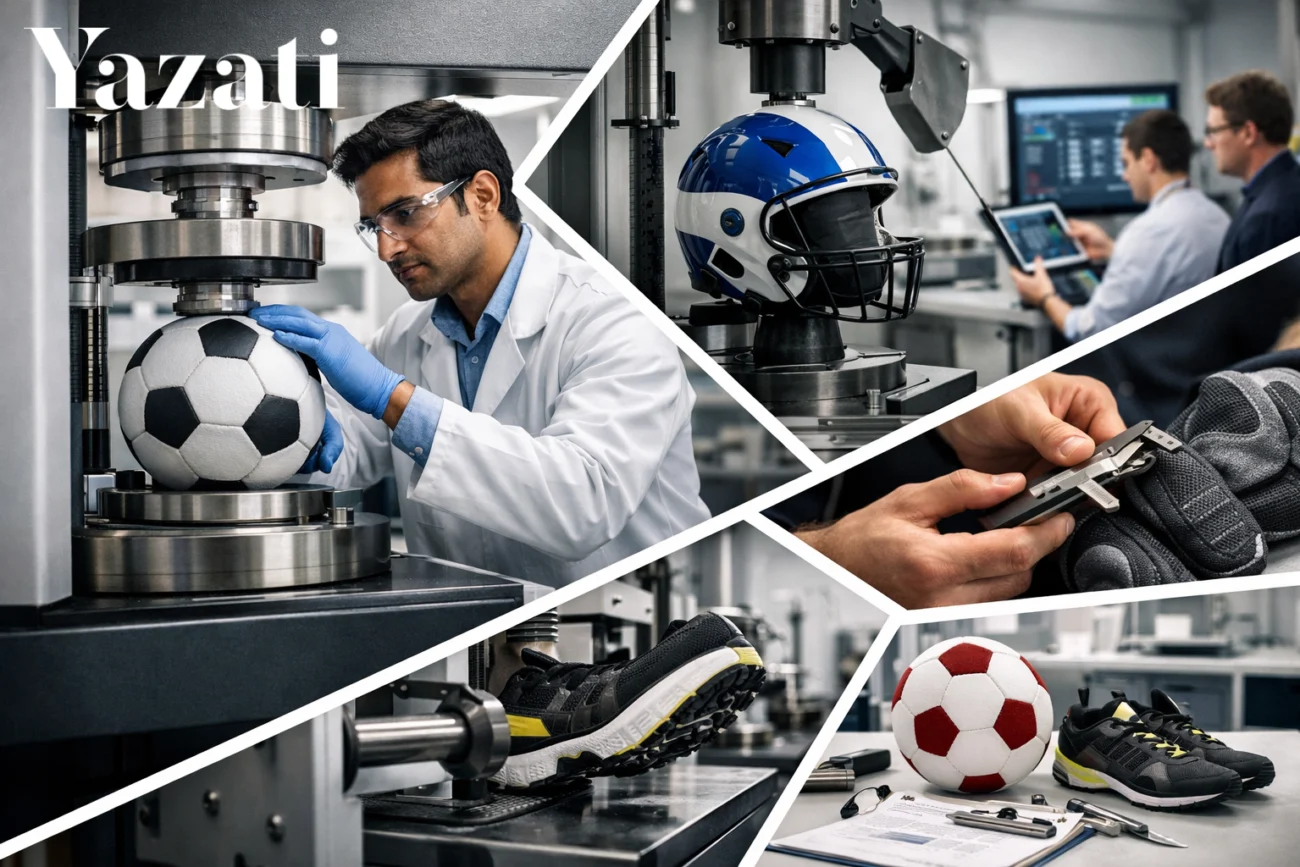
Understanding the Importance of Safety in Sports Equipment
Safety is one of the most important aspects of sports equipment design. Athletes depend on their gear to protect them from injuries while helping them perform at their best.
Sports equipment such as helmets, pads, shoes, and protective gear absorb impact, provide support, and reduce the risk of accidents. If these products fail during use, the consequences can be serious.
Key reasons why safety in sports equipment matters include:
- Injury prevention – Properly designed gear reduces impact and protects vulnerable areas of the body.
- Performance support – Safe equipment allows athletes to focus on their game without fear of malfunction.
- Durability and reliability – Strong materials and testing ensure the equipment lasts longer.
- Athlete confidence – Players trust equipment that has been thoroughly tested.
Because of these reasons, companies must invest in advanced testing systems and strict quality control procedures. Yazati has developed a structured process to ensure each product meets safety requirements before reaching customers.
How Yazati Ensures Safety and Testing for Sports Equipment
To maintain high product standards, Yazati follows a multi-stage process that evaluates safety, durability, and functionality. The company combines advanced technology with expert engineering to test equipment thoroughly.
Comprehensive Product Design Evaluation
The safety process begins during the design phase. Engineers analyze how the product will be used, the type of stress it will experience, and the potential risks involved.
Design teams create prototypes that simulate real-world sports environments. During this stage, they focus on:
- Structural strength
- Impact resistance
- Ergonomic comfort
- Weight distribution
- Athlete mobility
By identifying design weaknesses early, Yazati reduces the risk of manufacturing faulty equipment.
High-Quality Material Selection
Materials determine how strong and reliable sports equipment will be. Yazati carefully selects materials based on performance, durability, and safety requirements.
Common materials used in sports equipment include:
| Material | Purpose | Safety Benefit |
|---|---|---|
| High-density foam | Shock absorption | Reduces impact injuries |
| Reinforced plastics | Structural support | Prevents breakage |
| Carbon fiber | Lightweight strength | Enhances durability |
| Rubber compounds | Grip and traction | Prevents slipping |
Each material undergoes testing to ensure it can withstand pressure, temperature changes, and repeated use.
Advanced Laboratory Testing Procedures
Before equipment reaches the market, it undergoes multiple laboratory tests. These tests simulate real sports conditions and ensure the gear can handle intense use.
Testing may include:
- Impact resistance testing – Simulating collisions or falls
- Stress testing – Measuring how much force equipment can handle
- Fatigue testing – Repeating movements to evaluate long-term durability
- Environmental testing – Checking performance under heat, cold, and moisture
This controlled testing environment allows Yazati engineers to gather precise data and make improvements when necessary.
Quality Control During Manufacturing
Safety is not only about design and testing. Consistency during manufacturing is equally important. Yazati follows strict quality control protocols to ensure every product meets the same high standard.
Automated Production Monitoring
Modern manufacturing systems use automated monitoring tools that track production in real time. These tools detect defects early and prevent faulty equipment from moving to the next stage.
Key monitoring checks include:
- Material thickness consistency
- Structural alignment
- Component integration
- Weight balance
Automation reduces human error and ensures reliable product quality.
Manual Inspection by Safety Experts
In addition to automated systems, experienced inspectors review each batch of sports equipment. These professionals check for:
- Structural damage
- Sharp edges or defects
- Material weaknesses
- Assembly accuracy
This extra layer of inspection ensures that any hidden issues are detected before the equipment is shipped.
Real-World Performance Testing
Laboratory tests provide important data, but real sports conditions can reveal additional challenges. Yazati performs field testing to observe how equipment behaves during actual use.
Athletes and trainers test equipment during training sessions and simulated competitions. This stage evaluates:
- Comfort during movement
- Durability during extended play
- Stability under intense impact
- Adaptability to different environments
Feedback from athletes helps engineers refine the design and improve performance.
Compliance With International Safety Standards
To maintain credibility and trust, sports equipment manufacturers must follow international safety guidelines. Yazati ensures that its products meet recognized standards in the sports industry.
These standards define requirements for:
- Impact resistance
- Material safety
- Structural durability
- Product labeling and instructions
Compliance with global safety frameworks demonstrates that the equipment has passed strict testing and meets professional requirements.
Continuous Research and Innovation
The sports industry evolves quickly. New materials, technologies, and training methods constantly influence equipment design.
Yazati invests in research and development to stay ahead of these changes. Their innovation teams explore:
- Smart materials for improved shock absorption
- Lightweight protective technologies
- Advanced aerodynamics
- Sustainable manufacturing materials
Continuous innovation ensures that future equipment becomes safer and more efficient.
Athlete Feedback and Product Improvement
Athletes play an important role in improving sports equipment. Their real-world experience provides insights that laboratory tests cannot always capture.
Yazati collects feedback through:
- Professional athlete testing programs
- Customer surveys
- Performance reviews
- Sports training partnerships
This feedback loop helps engineers identify potential improvements and create better designs for future products.
Safety Training and Employee Expertise
Producing safe sports equipment requires skilled professionals. Yazati invests heavily in employee training to ensure all team members understand safety protocols and quality standards.
Training programs include:
- Material handling and safety
- Equipment assembly procedures
- Quality inspection techniques
- Safety compliance regulations
Well-trained employees reduce production errors and maintain consistent product quality.
Environmental and Sustainability Considerations
Safety is not only about protecting athletes. It also involves responsible manufacturing practices that protect the environment.
Yazati integrates sustainability into its production processes by:
- Reducing waste during manufacturing
- Using recyclable materials where possible
- Improving energy efficiency in factories
- Developing eco-friendly packaging
These efforts contribute to a safer and more sustainable sports equipment industry.
Benefits of Yazati’s Safety-Focused Approach
By prioritizing safety and testing, Yazati provides several advantages for athletes and sports organizations.
Improved Athlete Protection
Rigorous testing ensures that equipment absorbs impact effectively and reduces injury risks.
Enhanced Performance
High-quality equipment supports athlete movement, comfort, and endurance.
Long-Lasting Durability
Strong materials and stress testing increase product lifespan.
Trust and Brand Reliability
Consistent safety standards build trust among athletes, coaches, and sports organizations.
Challenges in Sports Equipment Safety Testing
Even with advanced technology, manufacturers face several challenges when ensuring equipment safety.
Some common challenges include:
- Rapid technological changes in sports gear
- Balancing lightweight design with durability
- Adapting equipment for different sports environments
- Meeting evolving international safety regulations
Overcoming these challenges requires continuous research, innovation, and collaboration between engineers and athletes.
Future Trends in Sports Equipment Safety
The future of sports equipment safety will likely involve advanced technologies and smarter materials.
Emerging trends include:
- Smart sensors that track impact and performance
- AI-assisted design for improved structural safety
- 3D printing for custom-fit protective gear
- Biodegradable materials for eco-friendly sports equipment
These technologies will help manufacturers create safer and more personalized equipment for athletes.
Frequently Asked Questions (FAQs)
1. Why is safety testing important for sports equipment?
Safety testing ensures that equipment can withstand impact, pressure, and repeated use without failing. This reduces the risk of injuries during sports activities.
2. What types of tests are used for sports equipment?
Common tests include impact testing, stress testing, fatigue testing, and environmental testing to simulate real-world sports conditions.
3. How does material quality affect sports equipment safety?
High-quality materials provide better strength, flexibility, and shock absorption, which helps protect athletes from injuries.
4. Do athletes participate in sports equipment testing?
Yes, many companies involve professional athletes in real-world testing to gather performance feedback and improve equipment design.
5. How often should sports equipment be inspected?
Sports equipment should be inspected regularly, especially before competitions or intense training sessions, to ensure there are no defects or damage.
6. What role does technology play in sports equipment safety?
Technology helps manufacturers design stronger materials, perform advanced testing, and monitor product performance more accurately.
Conclusion
Safety and reliability are essential in sports equipment manufacturing. Athletes depend on their gear to protect them, support performance, and withstand demanding conditions. Understanding how Yazati ensures safety and testing for sports equipment reveals a detailed system built on design evaluation, material selection, laboratory testing, and real-world performance analysis.
Through strict quality control, advanced research, and athlete feedback, Yazati maintains high safety standards across its products. By continuously improving testing methods and embracing new technologies, the company contributes to a safer and more innovative sports industry.
Athletes, coaches, and sports organizations can perform with confidence knowing their equipment has undergone thorough testing and meets strict safety requirements.
✨ Discover Global Sourcing Excellence with Netyex ✨
Netyex is your trusted B2B sourcing partner, connecting international buyers with India’s finest manufacturers and curated product lines—from handicrafts and home décor to kitchenware, textiles, hospitality essentials, and more. With verified suppliers and end-to-end support, we make global procurement seamless, reliable, and efficient.
👉 Elevate your sourcing experience—explore Netyex today.
📦 Bulk orders & customisation | 🌍 Worldwide delivery | 🤝 Trusted by global buyers
Visit Netyex to source premium Indian products with confidence.