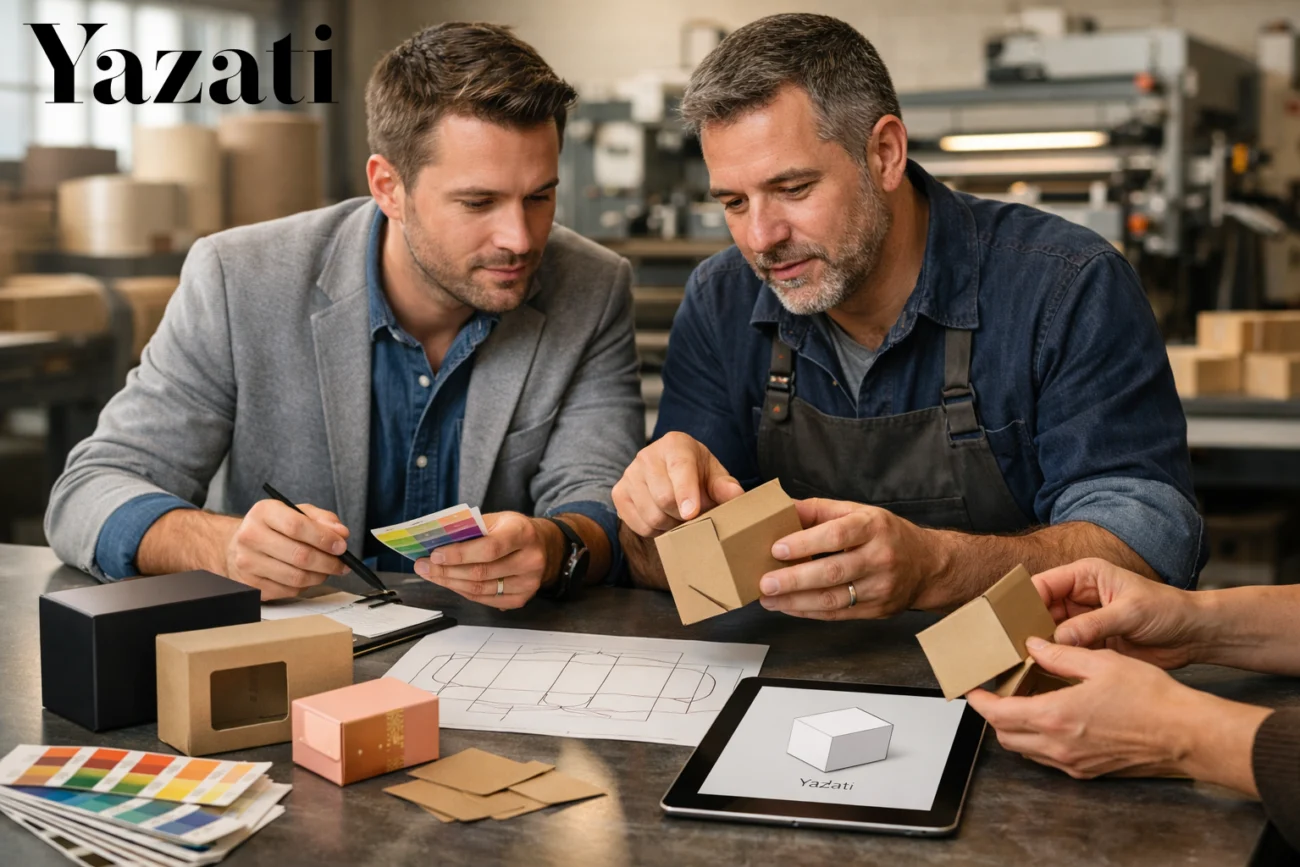
The Importance of Aligning Brand Design and Packaging
Brand design includes elements such as:
- Logo placement
- Color schemes
- Typography
- Visual identity
- Brand messaging
Packaging manufacture involves:
- Material selection
- Structural engineering
- Printing technology
- Finishing processes
- Production scaling
When these two areas work together, the result is packaging that not only protects products but also communicates brand identity clearly and consistently.
Concept Development: Starting with Brand Strategy
Integration begins at the concept stage.
Yazati’s approach may involve:
- Understanding brand values
- Identifying target audience preferences
- Defining product positioning
- Aligning packaging goals with marketing strategy
By starting with brand strategy, packaging decisions reflect the company’s personality and objectives.
In-House Design Collaboration
One of the key strengths in integration is collaborative design.
A unified workflow may include:
- Graphic designers
- Structural packaging engineers
- Production specialists
- Quality control teams
When creative and technical teams collaborate from the beginning, design ideas are practical, cost-effective, and production-ready.
Structural Engineering Meets Creative Design
Packaging must balance aesthetics and functionality.
Integration ensures:
- Attractive yet durable box structures
- Efficient use of materials
- Safe product protection
- Easy assembly and storage
Creative design is supported by engineering precision, preventing design flaws during manufacturing.
Material Selection Aligned with Brand Identity
Different materials convey different brand messages.
For example:
- Kraft paper suggests eco-friendliness
- Rigid boxes imply luxury
- Corrugated cartons communicate durability
By integrating brand design with manufacturing, material selection aligns with brand positioning and customer expectations.
Advanced Printing Technology Integration
Printing plays a vital role in packaging appearance.
Yazati may integrate design with production through:
- Color calibration systems
- Digital proofing before mass production
- Offset and digital printing capabilities
- Special finishes like embossing or foil stamping
This ensures that brand colors and graphics remain consistent across large production volumes.
How Yazati Integrates Brand Design with Packaging Manufacture for Consistency
Consistency is critical for brand recognition.
Integration ensures:
- Accurate color matching across batches
- Uniform logo placement
- Standardized typography
- Repeatable production quality
Brand consistency strengthens trust and enhances market presence.
Prototyping and Sampling Process
Before mass production, prototypes are developed.
Benefits of prototyping include:
- Visualizing final packaging
- Testing structural durability
- Reviewing print accuracy
- Gathering client feedback
This step ensures alignment between design vision and manufacturing output.
Scalability and Production Planning
Once design approval is complete, manufacturing scalability becomes important.
Integration allows for:
- Smooth transition from small batches to bulk production
- Optimized production schedules
- Cost-efficient material sourcing
- Timely delivery coordination
Scalable solutions support growing businesses without compromising brand quality.
Sustainability Considerations
Modern brands prioritize eco-friendly packaging.
Integration supports sustainability by:
- Selecting recyclable materials
- Reducing excess packaging
- Using eco-friendly inks
- Optimizing packaging dimensions for shipping efficiency
Sustainable practices enhance brand reputation and meet global compliance standards.
Quality Control Throughout the Process
Quality assurance is embedded at every stage.
This includes:
- Pre-press design verification
- Material inspections
- Print quality checks
- Final packaging audits
Continuous monitoring ensures high-quality output aligned with brand expectations.
Cost Optimization Through Integrated Workflow
When design and manufacturing are aligned, cost efficiency improves.
Advantages include:
- Reduced redesign expenses
- Minimized material waste
- Streamlined communication
- Fewer production delays
Efficient integration saves both time and money.
Customization for Different Market Segments
Integrated packaging solutions allow brands to customize packaging for:
- Regional markets
- Seasonal promotions
- Limited-edition releases
- Corporate events
Flexible production capabilities support diverse branding needs.
Faster Time-to-Market
In competitive industries, speed matters.
Integration accelerates:
- Design approval cycles
- Production planning
- Sampling and testing
- Order fulfillment
Faster execution allows businesses to respond quickly to market trends.
Long-Term Brand Partnerships
Integrated services encourage long-term collaboration.
Benefits include:
- Familiarity with brand guidelines
- Consistent packaging upgrades
- Continuous improvement processes
- Reliable reordering systems
Long-term partnerships improve operational efficiency.
Competitive Advantage in Retail Environments
Integrated packaging enhances shelf impact.
Effective packaging:
- Captures consumer attention
- Communicates brand value
- Protects product integrity
- Differentiates from competitors
Strong shelf presence increases sales potential.
Summary of Integration Benefits
| Benefit | Business Impact |
|---|---|
| Brand Consistency | Stronger recognition |
| Cost Efficiency | Reduced production waste |
| Faster Production | Quicker market entry |
| Customization Flexibility | Adaptable branding |
| Sustainable Solutions | Positive brand image |
Integrated design and manufacturing create measurable value.
Frequently Asked Questions (FAQs)
1. Why is integration important in packaging?
It ensures consistent brand presentation and efficient production processes.
2. How does integrated design reduce costs?
It minimizes errors, reduces material waste, and streamlines workflows.
3. Can integrated packaging support small businesses?
Yes, scalable solutions accommodate businesses of all sizes.
4. Does integration improve quality control?
Yes, continuous monitoring across design and production stages ensures quality.
5. How does packaging influence brand perception?
High-quality packaging enhances professionalism and customer trust.
6. Is sustainable packaging part of integrated solutions?
Yes, material selection and production planning often include eco-friendly options.
Conclusion
Understanding How Yazati Integrates Brand Design with Packaging Manufacture highlights the value of aligning creativity with technical expertise. By combining brand strategy, structural engineering, advanced printing, and scalable production, businesses achieve cohesive and impactful packaging solutions.
Integrated workflows reduce costs, improve efficiency, enhance quality, and strengthen brand identity. In a competitive marketplace where packaging influences purchasing decisions, seamless integration between design and manufacture provides a significant advantage.
As brands continue to prioritize consistency, sustainability, and innovation, integrated packaging solutions will remain a cornerstone of modern business success.
✨ Discover Global Sourcing Excellence with Netyex ✨
Netyex is your trusted B2B sourcing partner, connecting international buyers with India’s finest manufacturers and curated product lines—from handicrafts and home décor to kitchenware, textiles, hospitality essentials, and more. With verified suppliers and end-to-end support, we make global procurement seamless, reliable, and efficient.
👉 Elevate your sourcing experience—explore Netyex today.
📦 Bulk orders & customisation | 🌍 Worldwide delivery | 🤝 Trusted by global buyers
Visit Netyex to source premium Indian products with confidence.