Introduction to Container Space Optimization
Why Container Utilization Matters in Bulk Shipping
Bulk shipments often involve large volumes of goods with varying shapes, weights, and packaging requirements. Poor container utilization leads to:
- Higher shipping costs per unit
- Increased number of containers required
- Greater risk of cargo movement and damage
- Inefficient use of port and transport resources
Optimizing container space directly improves profitability and competitiveness in international markets.
Challenges of Inefficient Container Loading
Common issues include uneven weight distribution, excessive void space, over-packaging, and incompatible product combinations. These problems not only increase costs but also create compliance and safety risks during transit.
Overview of Yazati’s Logistics Expertise
Yazati’s Role in Global Bulk Shipments
Yazati specializes in managing complex bulk shipments across international routes. Its experience spans diverse product categories, each with unique handling and loading requirements. This practical knowledge forms the foundation of its container optimization strategy.
Core Principles Behind Yazati’s Optimization Strategy
Yazati’s approach is guided by three key principles:
- Maximum space utilization without compromising safety
- Cost efficiency across the supply chain
- Consistency and repeatability in loading methods
How Yazati Optimizes Container Space for Bulk Shipments Through Planning
Shipment Analysis and Volume Forecasting
Before loading begins, Yazati conducts a detailed shipment analysis. This includes measuring product dimensions, weight, packaging type, and shipment volume. Accurate forecasting allows planners to select the right container size and loading configuration.
Product Categorization and Load Compatibility
Products are grouped based on compatibility factors such as weight tolerance, fragility, and stacking ability. This prevents inefficient mixing and ensures that space is used logically and safely.
Smart Packaging and Unitization Methods
Standardization of Packaging Dimensions
One of the most effective ways Yazati optimizes container space is through packaging standardization. Uniform carton sizes and pallet dimensions reduce gaps and allow for tighter stacking.
Stackability and Load Stability
Packaging is designed or selected to support vertical stacking. This maximizes container height usage while maintaining load stability, reducing the need for excessive fillers.
Use of Data and Technology in Container Optimization
Load Planning and Simulation Techniques
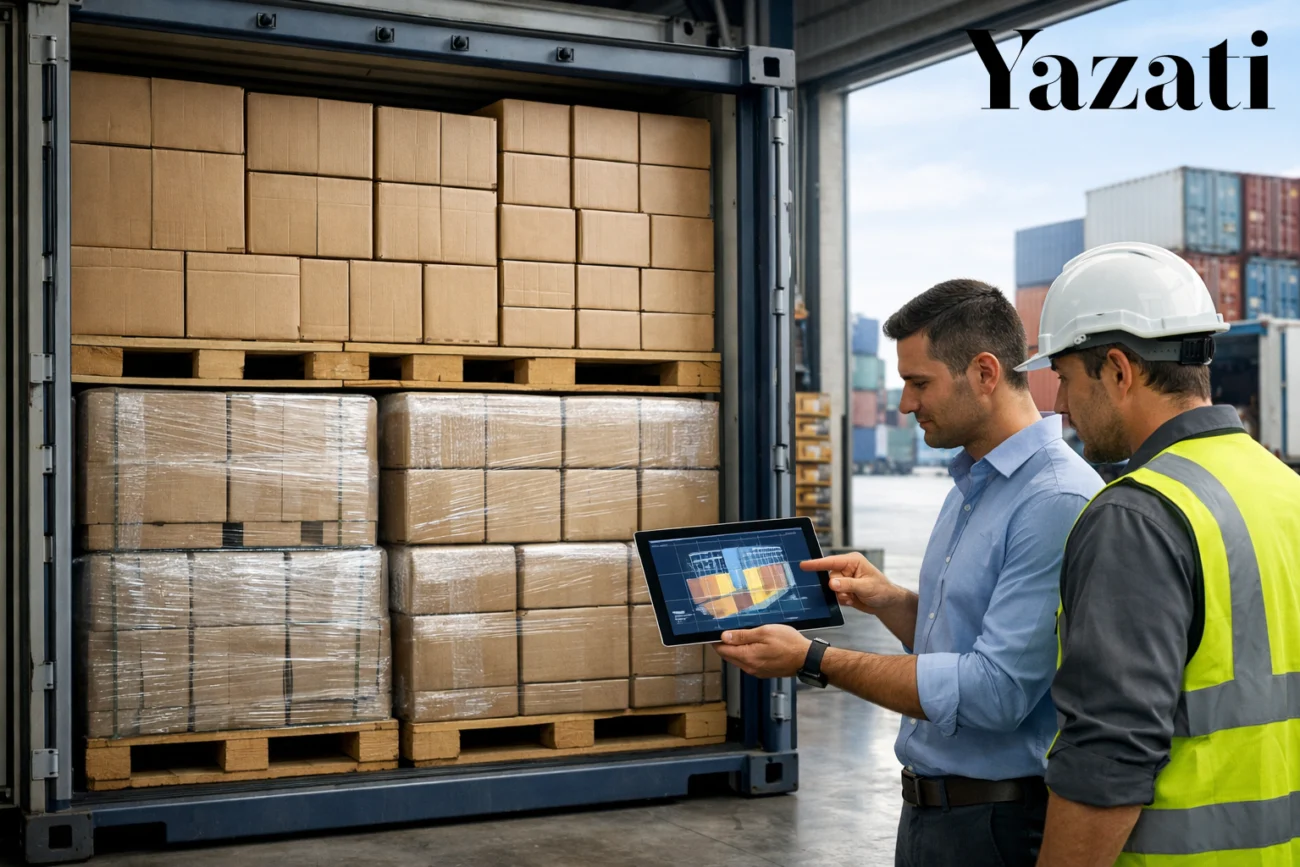
Yazati relies on load planning tools and simulations to visualize container layouts before physical loading begins. These simulations identify potential inefficiencies and allow adjustments in advance.
Reducing Empty Space and Dead Zones
Through precise calculations, Yazati minimizes unused areas such as corners, gaps between pallets, and overhead voids. Even small improvements compound into significant cost savings over multiple shipments.
Optimized Loading Techniques and Best Practices
Weight Distribution and Balance
Proper weight distribution is critical for container safety and compliance. Yazati ensures heavier items are placed strategically to maintain balance and prevent shifting during transit.
Maximizing Vertical and Horizontal Space
By combining floor loading, palletized stacking, and tiered arrangements, Yazati uses both vertical and horizontal space efficiently, ensuring containers are filled close to optimal capacity.
Cost Reduction Through Better Container Utilization
Lower Freight Cost per Unit
When more goods fit into a single container, the shipping cost per unit decreases. This directly improves margins for exporters and makes pricing more competitive in international markets.
Fewer Shipments and Reduced Carbon Footprint
Optimized containers mean fewer shipments are needed overall. This reduces fuel consumption, emissions, and handling costs, supporting more sustainable logistics operations.
Risk Management and Cargo Safety
Minimizing Damage in Bulk Shipments
Efficient loading reduces cargo movement, which is a leading cause of damage in bulk shipments. Secure, well-fitted loads arrive in better condition, lowering return and insurance costs.
Compliance With International Shipping Standards
Proper container loading helps meet international safety and transport regulations, reducing the risk of inspections, delays, or penalties.
Benefits for Exporters and Supply Chain Partners
Faster Turnaround and Predictable Delivery
Optimized loading speeds up container stuffing and de-stuffing, improving turnaround times at ports and warehouses.
Improved Profit Margins
Lower freight costs, fewer damages, and efficient operations translate into higher profitability for exporters and logistics partners.
Common Challenges in Bulk Container Optimization
Product Irregularity and Mixed Loads
Not all products are uniform. Yazati addresses this by customizing loading plans and using modular packaging approaches where possible.
Time Constraints and Port Limitations
Tight schedules can limit optimization efforts. Yazati mitigates this through pre-planned loading templates and trained teams that execute efficiently under time pressure.
FAQs on Container Space Optimization
1. What does container space optimization mean?
It refers to maximizing the usable volume of a shipping container while maintaining safety and compliance.
2. How does Yazati reduce empty space in containers?
Through detailed planning, standardized packaging, and optimized loading configurations.
3. Does optimization increase loading time?
No. Pre-planning and simulations often reduce loading time by eliminating guesswork.
4. Is container optimization suitable for mixed bulk shipments?
Yes, with proper categorization and customized load plans.
5. How does optimization impact shipping costs?
It lowers cost per unit by fitting more goods into fewer containers.
6. Does better container utilization improve sustainability?
Yes, fewer containers mean lower fuel use and reduced emissions.
Conclusion: Why Yazati’s Approach Sets a Benchmark
Understanding How Yazati Optimizes Container Space for Bulk Shipments reveals the strategic importance of planning, packaging, and precision in modern logistics. Container optimization is not just about fitting more goods—it is about creating a safer, more cost-effective, and more sustainable supply chain.
By combining expertise, data-driven decision-making, and practical loading techniques, Yazati sets a benchmark for bulk shipment efficiency. For exporters aiming to stay competitive in global markets, adopting such an optimized approach is no longer optional—it is essential.
✨ Discover Global Sourcing Excellence with Netyex ✨
Netyex is your trusted B2B sourcing partner, connecting international buyers with India’s finest manufacturers and curated product lines—from handicrafts and home décor to kitchenware, textiles, hospitality essentials, and more. With verified suppliers and end-to-end support, we make global procurement seamless, reliable, and efficient.
👉 Elevate your sourcing experience—explore Netyex today.
📦 Bulk orders & customisation | 🌍 Worldwide delivery | 🤝 Trusted by global buyers
Visit Netyex to source premium Indian products with confidence.