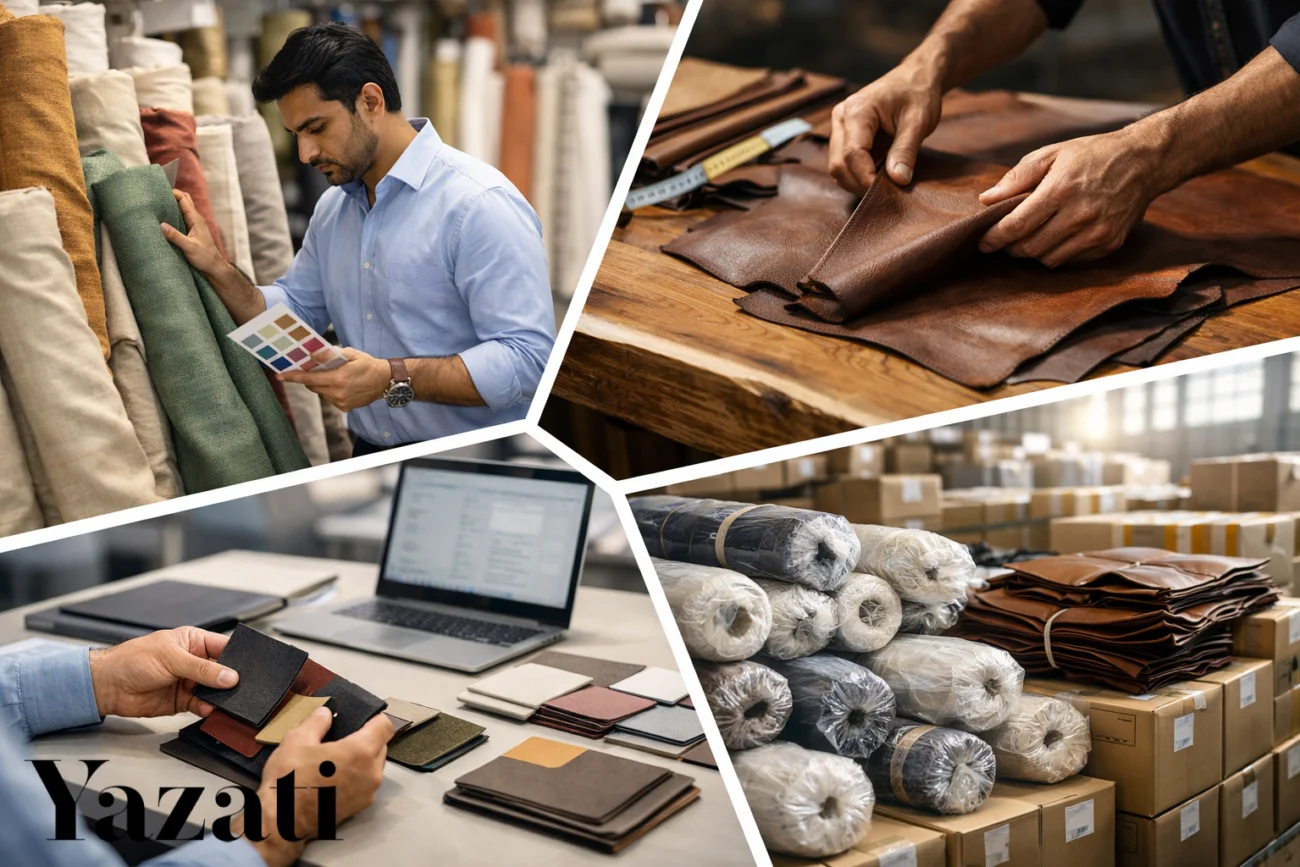
Why End-to-End Sourcing Matters in Bag Manufacturing
Before diving into the process, it’s important to understand why end-to-end sourcing is critical.
Fabric and leather impact:
- Product durability
- Appearance and texture
- Cost structure
- Environmental footprint
- Customer satisfaction
Without proper sourcing control, manufacturers risk:
- Inconsistent quality
- Production delays
- Color mismatches
- Compliance issues
Yazati addresses these challenges through a structured and systematic sourcing model.
1. Strategic Supplier Identification and Vetting
The foundation of strong sourcing begins with supplier selection.
Supplier Evaluation Criteria
Yazati carefully evaluates suppliers based on:
- Production capacity
- Quality standards
- Raw material origin
- Sustainability practices
- Financial stability
- Compliance certifications
Only suppliers that meet strict benchmarks are approved for partnership.
Long-Term Relationships for Stability
Instead of switching suppliers frequently, Yazati builds long-term relationships. This ensures:
- Consistent material quality
- Better pricing agreements
- Reliable delivery schedules
- Strong communication channels
Stability in sourcing creates stability in production.
2. Direct Access to Diverse Fabric Options
Yazati sources a wide range of fabrics to meet different market needs.
Common Fabric Categories
- Canvas
- Cotton
- Polyester
- Nylon
- Recycled fabrics
- Blended textiles
Each fabric is selected based on the final bag application—whether it’s a school backpack, travel duffel, eco tote, or fashion handbag.
Material Customization Support
Clients can request:
- Specific GSM (fabric thickness)
- Custom colors
- Special coatings (waterproof, anti-stain)
- Printed patterns
This flexibility helps brands maintain unique product identities.
3. Premium Leather Sourcing Standards
Leather sourcing requires extra attention due to quality variations and environmental regulations.
Types of Leather Sourced
- Full-grain leather
- Top-grain leather
- Genuine leather
- PU (synthetic) leather
Each type is chosen according to product positioning and price range.
Strict Leather Evaluation Process
Yazati examines:
- Grain consistency
- Thickness uniformity
- Tanning method
- Flexibility
- Surface finishing
Only materials that pass quality checks are approved for production.
4. Sustainable and Ethical Sourcing Practices
Modern buyers demand transparency and sustainability.
Sustainability Measures Include
- Sourcing organic cotton
- Supporting vegetable tanning methods
- Reducing harmful chemical usage
- Encouraging recycled materials
- Partnering with compliant tanneries
Yazati integrates responsible sourcing into every stage of material procurement.
This approach not only protects the environment but also enhances brand credibility for global clients.
5. In-House Quality Control and Testing
Quality control is a major pillar of how Yazati supports end-to-end fabric and leather sourcing.
Fabric Testing Includes
- Tear resistance tests
- Colorfastness checks
- Shrinkage testing
- Waterproof performance tests
- Tensile strength evaluation
Leather Testing Includes
- Flexibility testing
- Abrasion resistance
- Color stability
- Moisture resistance
- Surface crack assessment
These tests ensure durability before materials enter production.
6. Inventory Planning and Supply Chain Management
Reliable sourcing requires proper planning.
Inventory Management Systems
Yazati maintains:
- Material stock tracking
- Lead time forecasting
- Seasonal demand planning
- Safety stock reserves
This prevents:
- Production interruptions
- Raw material shortages
- Emergency purchases at high prices
A well-managed supply chain ensures smooth operations from order confirmation to shipment.
7. Collaboration with Clients for Material Selection
Transparency and communication are key strengths.
Client Involvement Includes
- Sharing material samples
- Explaining fabric benefits
- Discussing cost implications
- Suggesting alternative options
- Aligning with target market needs
By working closely with clients, Yazati ensures the final material selection matches brand expectations.
8. Compliance with Global Standards
Export markets often have strict regulations regarding fabric and leather.
Yazati ensures materials comply with:
- Restricted chemical limits
- Non-toxic dye standards
- Environmental regulations
- Country-specific import requirements
This reduces risks of shipment rejection or customs delays.
9. Continuous Improvement and Innovation
The sourcing landscape constantly evolves. New materials and technologies emerge regularly.
Yazati stays competitive by:
- Monitoring global material trends
- Testing innovative eco-friendly fabrics
- Exploring plant-based leather alternatives
- Improving sourcing efficiency
Continuous improvement keeps the supply chain modern and adaptable.
Challenges in Fabric and Leather Sourcing (And How Yazati Overcomes Them)
| Challenge | Yazati’s Solution |
|---|---|
| Color inconsistency | Pre-production color matching |
| Material defects | Multi-stage inspections |
| Delayed deliveries | Backup supplier network |
| Environmental compliance issues | Certified sourcing partners |
| Price fluctuations | Long-term contracts |
Proactive planning reduces sourcing risks significantly.
Benefits of End-to-End Sourcing Support
By managing the entire sourcing journey, Yazati offers:
- Greater quality consistency
- Reduced production delays
- Better cost control
- Improved sustainability compliance
- Enhanced brand trust
Clients benefit from peace of mind knowing materials are carefully managed.
How End-to-End Sourcing Improves Final Product Quality
When materials are controlled from the beginning:
- Stitching performs better
- Zippers align properly
- Structure remains stable
- Products last longer
Quality sourcing leads directly to satisfied customers.
Frequently Asked Questions (FAQs)
1. What does end-to-end fabric sourcing mean?
It means managing every stage—from supplier selection to final material approval and testing.
2. Does Yazati source both fabric and leather?
Yes, Yazati handles a wide range of fabric and leather materials for different bag categories.
3. How does Yazati ensure leather quality?
Through grain inspection, thickness checks, tanning evaluation, and durability testing.
4. Are sustainable materials available?
Yes, organic cotton, recycled fabrics, and eco-friendly leather alternatives are supported.
5. Can clients customize material specifications?
Absolutely. Clients can choose thickness, color, coating, and finishing preferences.
6. How does Yazati prevent material shortages?
Through inventory planning, supplier partnerships, and demand forecasting.
Conclusion
Understanding How Yazati Supports End-to-End Fabric and Leather Sourcing highlights the company’s commitment to quality, sustainability, and reliability. From strategic supplier selection and premium material evaluation to sustainability compliance and advanced testing, every stage is carefully managed.
This structured sourcing system ensures consistent material quality, smooth production workflows, and dependable deliveries. For global buyers seeking durable, compliant, and well-crafted bags, Yazati’s end-to-end sourcing support provides a strong foundation for long-term success.
In today’s competitive market, strong materials create strong brands—and Yazati ensures both.
✨ Discover Global Sourcing Excellence with Netyex ✨
Netyex is your trusted B2B sourcing partner, connecting international buyers with India’s finest manufacturers and curated product lines—from handicrafts and home décor to kitchenware, textiles, hospitality essentials, and more. With verified suppliers and end-to-end support, we make global procurement seamless, reliable, and efficient.
👉 Elevate your sourcing experience—explore Netyex today.
📦 Bulk orders & customisation | 🌍 Worldwide delivery | 🤝 Trusted by global buyers
Visit Netyex to source premium Indian products with confidence.