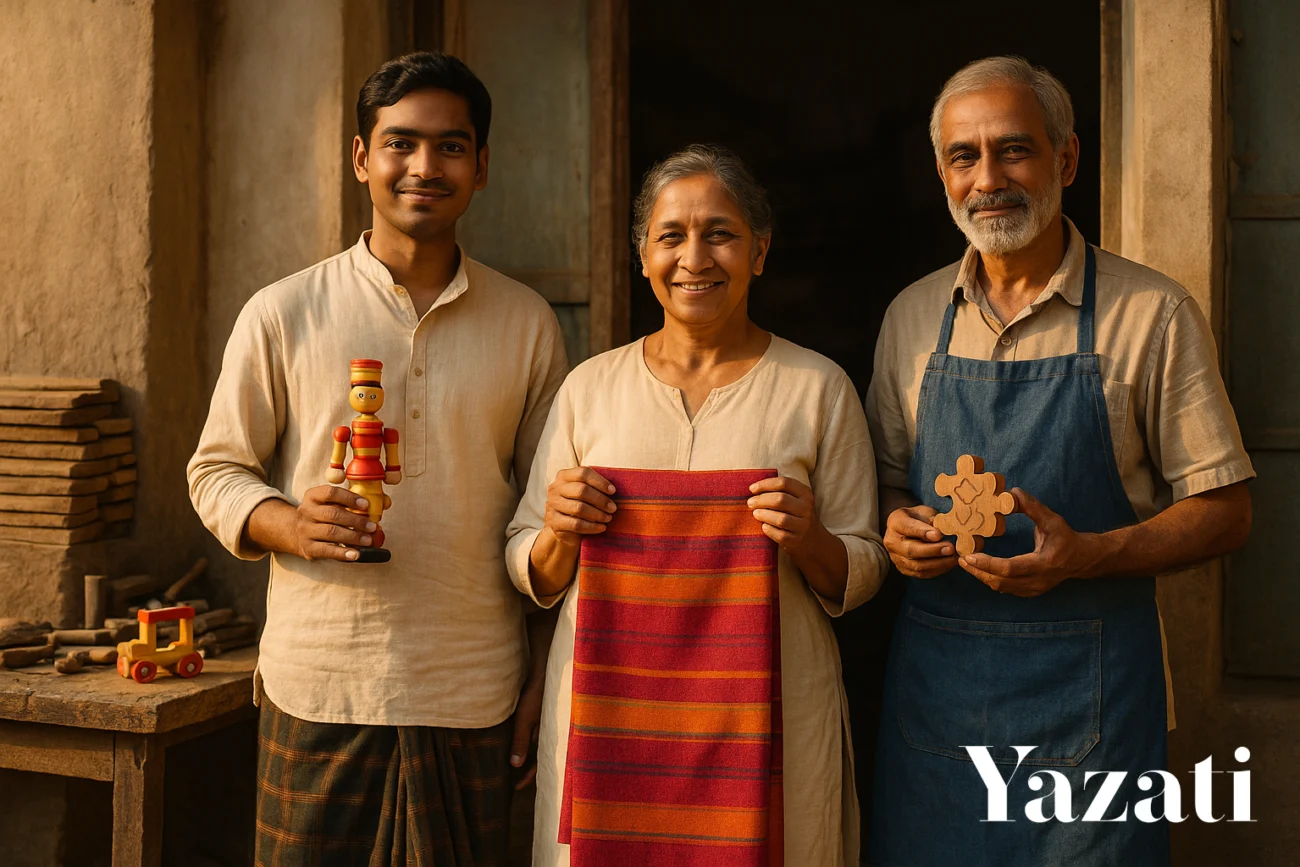
Introduction: Reviving India’s Handcrafted Heritage with Yazati
India’s cultural fabric is woven with the artistry of its local craftspeople — individuals who carry centuries of heritage, skill, and soul in every creation. Yet, in the age of mass production, their craftsmanship often struggles for survival. This is where Yazati, a socially driven brand, steps in with a mission: to uplift, empower, and sustain local artisan communities across India.
Yazati is more than a marketplace; it’s a movement to reconnect consumers with the human touch behind every handmade product. Through fair wages, sustainable practices, and nationwide programs, Yazati ensures that artisans not only survive but thrive in a rapidly evolving economy.
Understanding Yazati’s Vision and Mission
The Birth of Yazati: A Movement Rooted in Tradition
Founded with the idea that commerce can coexist with compassion, Yazati began its journey as a small initiative connecting rural weavers to global markets. Over time, it has grown into a powerful ecosystem that nurtures over a thousand artisans across multiple Indian states.
Empowering Rural India through Ethical Commerce
At its core, Yazati promotes ethical sourcing, fair-trade practices, and sustainable livelihoods. By ensuring artisans receive direct payment without intermediaries, Yazati eliminates exploitative middlemen and gives creators their rightful recognition and income.
India’s Artisan Economy: A Cultural and Economic Pillar
The Historical Significance of Local Craftsmanship
From Rajasthan’s blue pottery to Odisha’s silver filigree, Indian craftsmanship has always symbolized the nation’s diversity and artistry. These local crafts form a vital part of India’s GDP and represent the identity of countless rural families.
Challenges Faced by Artisans in the Modern Marketplace
Despite their talent, artisans face issues like limited market access, unfair pricing, lack of digital literacy, and declining demand. Yazati directly addresses these challenges through education, fair pricing, and digital inclusion initiatives.
How Yazati Supports Local Artisan Communities Across India
Direct Artisan Partnerships: Fair Wages and Sustainable Livelihoods
Yazati works directly with artisans, cutting out exploitative supply chains. Each craftsman earns above-average wages, ensuring financial stability while maintaining the authenticity of their craft.
Training and Skill Development Programs for Craftsmen
Workshops on modern design, packaging, and online marketing enable artisans to stay relevant in contemporary markets. Yazati collaborates with NGOs to conduct digital skill training and entrepreneurial education.
Bridging Urban Consumers and Rural Creators through Digital Platforms
Through its online platform, Yazati connects global consumers with authentic handmade products. Customers can trace each purchase back to the artisan who made it, adding emotional and cultural value to every transaction.
Promoting Gender Equality and Empowering Women Artisans
Women form nearly 60% of Yazati’s artisan network. The brand supports women-led cooperatives, enabling them to achieve financial independence and social empowerment.
Preserving Indigenous Art Forms and Regional Techniques
Yazati emphasizes cultural preservation — from Gujarat’s Bandhani to Tamil Nadu’s Kanchipuram silk weaving. Each purchase supports not just artisans but also centuries-old traditions.
Yazati’s Regional Initiatives Across India
| Region | Major Crafts Supported by Yazati |
| North India | Pashmina weaving, Phulkari embroidery |
| West India | Pottery, Bandhani, Block printing |
| South India | Kalamkari, Handloom weaving, Bronze casting |
| East India | Madhubani painting, Dokra metalwork |
Northern India: Reviving the Art of Pashmina and Phulkari
By working with local cooperatives, Yazati helps revive declining art forms like Phulkari embroidery and Pashmina weaving, offering artisans digital access and modern marketing tools.
Western India: Empowering Potters, Weavers, and Block Printers
In Gujarat and Rajasthan, Yazati supports potters and block printers through microloans and community fairs that promote regional craftsmanship globally.
Southern India: Supporting Handloom and Kalamkari Artists
Southern India has long been a hub of intricate textile artistry, from Kanchipuram silk to Kalamkari paintings. Yazati collaborates with local cooperatives in Tamil Nadu, Andhra Pradesh, and Karnataka to revive traditional weaving and natural dyeing practices.
By investing in organic cotton sourcing and hand-spun yarn, Yazati ensures each product remains environmentally friendly while staying true to its cultural origins. Artisans receive design training and business mentorship to help them adapt to changing trends without losing authenticity.
Empowering Local Clusters
Yazati’s presence in southern clusters such as Srikalahasti and Chennai has created new employment opportunities for hundreds of women artisans. Through community centers, Yazati provides access to tools, looms, and training resources — transforming forgotten crafts into flourishing livelihoods.
Eastern India: Promoting Madhubani and Dokra Artisans
In eastern states like Bihar and Odisha, Yazati partners with Madhubani painters and Dokra metalworkers, ensuring their timeless crafts gain recognition in national and international markets.
These art forms often rely on generational transmission of skills — yet declining interest and mass-produced imitations threaten their survival. Yazati intervenes by promoting authentic, handcrafted originals with artist certification and storytelling-based marketing.
Fair Pricing and Recognition
Each Yazati product highlights the artisan’s name, village, and story — creating a transparent, emotional connection between buyers and makers. This not only ensures fair pricing but also gives artisans the dignity and visibility they deserve.
Sustainability and Ethical Sourcing at Yazati
Eco-Friendly Production and Zero-Waste Initiatives
Sustainability is woven into Yazati’s philosophy. From natural dyeing and biodegradable packaging to zero-waste workshops, every process aligns with eco-conscious values. Fabric scraps are upcycled into accessories, and organic materials are prioritized over synthetic ones.
Transparent Supply Chain and Community Accountability
Yazati’s supply chain model is completely traceable. Consumers can scan QR codes to learn where their products were made, by whom, and under what conditions. This transparency builds trust and accountability, aligning Yazati with global ethical trade standards.
Impact Assessment: Measuring Yazati’s Social Footprint
Quantifying Artisan Incomes and Employment Growth
Since its inception, Yazati has empowered over 4,000 artisans across India, increasing their average household income by 40%. The brand’s fair-trade initiatives and direct sourcing have led to measurable improvements in education, healthcare, and quality of life in rural areas.
Environmental and Social Responsibility Metrics
Yazati’s environmental policies have reduced production waste by 30% and water usage by 25% in the last three years. The company also invests in tree-planting drives and renewable energy adoption for workshops — proving that ethical business can be profitable and sustainable.
Collaborations, Partnerships, and NGO Support
Partnering with Government and Non-Profits
Yazati collaborates with several NGOs, including Dastkar, Crafts Council of India, and Development Alternatives, to scale its reach and deepen community engagement. Joint programs focus on artisan education, digital access, and microfinance opportunities.
International Recognition and Fair Trade Certification
Yazati’s commitment has earned it Fair Trade certification, validating its ethical sourcing and labor practices. The brand’s products are now showcased in global exhibitions, celebrating India’s heritage on an international stage.
🔗 For more insights on fair trade practices, visit World Fair Trade Organization.
Customer Involvement: How You Can Make a Difference
Conscious Shopping: Supporting Handmade with Purpose
Every purchase from Yazati directly contributes to sustaining India’s artisan economy. By choosing handmade products, customers help preserve traditional techniques and empower rural communities to remain self-reliant.
Joining Yazati’s Community Outreach Programs
Yazati encourages consumers to participate in artisan village tours, skill-sharing workshops, and volunteer programs. These initiatives create a bridge between conscious buyers and creators, fostering empathy and cultural appreciation.
Success Stories: Voices of India’s Artisans
From Struggle to Sustainability: Real Artisan Experiences
- Sarla Devi, a Phulkari embroiderer from Punjab, shares how Yazati’s partnership doubled her income and allowed her to educate her daughters.
- Ramesh Patel, a clay potter from Gujarat, credits Yazati’s training workshops for turning his small pottery business into a profitable enterprise.
- Lakshmi, a handloom weaver from Andhra Pradesh, highlights how Yazati’s online marketplace gave her international recognition for her designs.
Each of these stories reflects Yazati’s dedication to nurturing real, lasting change in rural India.
Future Vision: Scaling Impact Across Rural India
Expanding Digital Access for Artisans
Yazati plans to launch mobile-friendly digital platforms for artisans to upload, price, and sell their creations directly. The brand aims to bring 5,000 new artisans online by 2026, ensuring they’re not left behind in the digital revolution.
Integrating AI and E-Commerce for Local Empowerment
By leveraging AI-driven personalization and blockchain-based supply tracking, Yazati intends to modernize the artisan economy without compromising its traditional essence. This blend of innovation and tradition is the key to long-term sustainability.
Frequently Asked Questions (FAQs)
1. What is Yazati’s main goal?
Yazati aims to empower local artisans across India by providing fair wages, digital access, and sustainable market opportunities.
2. How does Yazati ensure products are authentic?
Each item is verified with artisan certification and regional authenticity tags, ensuring every product is genuinely handmade.
3. Does Yazati work only with rural artisans?
While most of Yazati’s partners are rural, the brand also supports urban craftsmen working in traditional sectors.
4. How can customers support Yazati’s initiatives?
Customers can buy directly from Yazati’s platform, join community programs, or spread awareness about sustainable handmade crafts.
5. What kind of products does Yazati sell?
Yazati offers textiles, home décor, accessories, and pottery — all handcrafted and ethically produced.
6. Is Yazati a certified fair-trade organization?
Yes, Yazati is officially Fair Trade certified and recognized for its ethical practices and community empowerment programs.
Conclusion: The Road Ahead for India’s Artisans with Yazati
Yazati stands as a beacon of hope for India’s local artisan communities — a brand that intertwines culture, sustainability, and compassion. By connecting traditional creators with modern consumers, Yazati not only revives ancient crafts but also reshapes the narrative of rural empowerment.
Its vision transcends profit — it’s about people, pride, and purpose. With every handcrafted piece, Yazati brings us closer to a world where artistry thrives, heritage lives on, and every artisan’s story is heard.
✨ Discover Timeless Elegance with Yazati ✨
At Yazati, we bring you a world of handcrafted luxury—from exquisite brass, copper, and wooden decor to artisanal kitchenware, elegant rugs, and premium hospitality essentials. Whether you’re an interior designer, wellness enthusiast, or retail buyer, our curated collections are crafted to inspire and impress.
👉 Elevate your space or gift with grace—explore Yazati today.
📦 Bulk customization available | 🌍 Worldwide shipping | 🛍️ B2B & B2C Friendly