Introduction
The global gemstone industry is beautiful but complicated. From sparkling diamonds to colorful sapphires, gemstones carry immense value. However, one persistent problem has always troubled buyers and sellers alike: authenticity.
Many customers worry whether a gemstone is natural, ethically sourced, or even genuine. Traditional certification methods help, but they can sometimes be forged, misplaced, or difficult to verify.
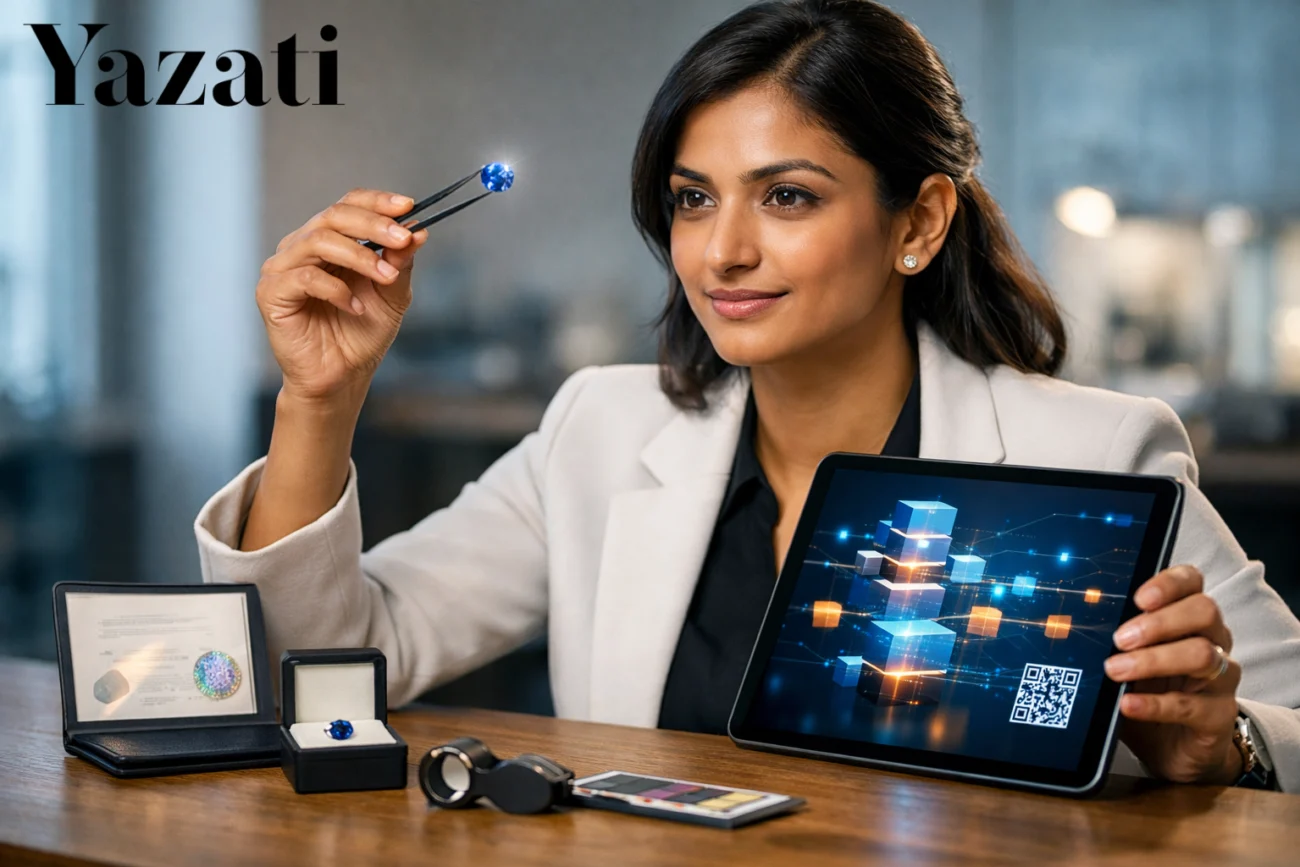
This is where modern technology steps in. How Yazati Uses Blockchain for Gemstone Authenticity represents a revolutionary approach that combines blockchain technology with gemstone certification. By using blockchain’s transparent and tamper-proof system, Yazati ensures that every gemstone has a verifiable digital identity.
In this article, we will explore how Yazati integrates blockchain technology to guarantee gemstone authenticity, why this matters for buyers and sellers, and how it could reshape the entire jewelry industry.
Understanding the Problem of Gemstone Authenticity
Why Authenticity Matters in the Gemstone Industry
Gemstones are valuable not only because of their beauty but also because of their rarity and origin. Authentic stones often take millions of years to form and require careful mining and processing.
If authenticity cannot be guaranteed, buyers face several risks:
- Paying high prices for synthetic or treated stones
- Purchasing gems with unknown origins
- Supporting unethical mining practices
- Losing resale value
Because gemstones often change hands many times before reaching the final customer, maintaining accurate records becomes extremely difficult.
Traditional Certification Methods
Historically, gemstones are certified by gemological laboratories. These certificates provide information about:
- Carat weight
- Color grade
- Clarity
- Cut quality
- Origin
However, traditional certificates have limitations:
- Paper certificates can be lost or forged
- Verification may require contacting the issuing laboratory
- Records are often stored in isolated databases
These limitations create opportunities for fraud or misinformation.
What Is Blockchain Technology?
A Simple Explanation of Blockchain
Blockchain is a digital ledger that records transactions across multiple computers in a secure and transparent way. Once information is added to the blockchain, it becomes extremely difficult to change or delete.
Each record, called a block, contains:
- Transaction data
- A timestamp
- A unique cryptographic signature
- A link to the previous block
Because each block connects to the previous one, the system forms a chain of verified records.
Why Blockchain Is Ideal for Authentication
Blockchain technology has several characteristics that make it ideal for verifying valuable items like gemstones:
- Transparency: All transactions are visible to authorized participants.
- Immutability: Records cannot easily be altered.
- Traceability: Every step in a product’s journey can be tracked.
- Security: Cryptography protects data from tampering.
These features make blockchain an excellent tool for tracking gemstones from the mine to the final buyer.
How Yazati Uses Blockchain for Gemstone Authenticity
Yazati integrates blockchain technology to create a secure and permanent digital record for each gemstone. This digital record tracks the gemstone throughout its entire lifecycle.
Below are the key ways Yazati uses blockchain to ensure authenticity.
1. Creating a Unique Digital Identity for Every Gemstone
When a gemstone enters Yazati’s system, it receives a unique blockchain-based digital identity.
This digital identity contains essential gemstone information, including:
- Type of gemstone
- Carat weight
- Color and clarity
- Cut and shape
- Certification details
- Source location
Once recorded on the blockchain, this information becomes permanent and verifiable.
Even if the gemstone changes owners multiple times, its identity remains intact and accessible.
2. Recording the Gemstone’s Journey
One of the most powerful features of blockchain is traceability.
Yazati records every stage of a gemstone’s lifecycle on the blockchain, such as:
- Mining
- Transportation
- Cutting and polishing
- Certification
- Distribution
- Retail sale
Each step adds a new blockchain entry. Because the blockchain cannot be altered, the gemstone’s history remains secure and trustworthy.
This creates a transparent supply chain where every participant can verify the gemstone’s path.
3. Preventing Fraud and Counterfeiting
Fraud is a major concern in the gemstone industry. Some sellers may attempt to pass synthetic stones as natural gems or exaggerate quality grades.
By using blockchain verification, Yazati reduces this risk significantly.
Here’s how:
- Every gemstone record is permanently stored on the blockchain.
- Any attempt to alter information would require changing the entire blockchain network.
- Buyers can instantly verify gemstone data through digital records.
This makes counterfeiting extremely difficult.
4. Enhancing Consumer Trust
Trust plays a huge role in luxury purchases. Customers want to feel confident about the authenticity and origin of their gemstone.
Yazati’s blockchain system allows buyers to:
- View the gemstone’s complete history
- Confirm certification details
- Verify ethical sourcing
Instead of relying solely on paper documentation, buyers can access digital proof of authenticity.
This transparency builds long-term trust between sellers and customers.
5. Supporting Ethical and Responsible Sourcing
Ethical sourcing has become a major concern in the jewelry industry.
Some gemstones may come from regions where mining practices harm workers or the environment. Without traceability, it can be difficult to verify the origin of stones.
Yazati’s blockchain system helps address this issue by recording:
- Mining location
- Supply chain participants
- Ethical sourcing confirmations
This allows customers to choose gemstones that align with their values.
6. Simplifying Ownership Transfers
Gemstones often change ownership multiple times, especially for investment pieces or heirloom jewelry.
Traditional ownership records can be complicated and incomplete.
With blockchain, Yazati simplifies the process.
When a gemstone is sold:
- The new ownership is recorded on the blockchain.
- The digital certificate updates automatically.
- The previous owner’s record remains part of the historical chain.
This ensures a clear and permanent ownership record.
7. Creating Digital Certificates That Cannot Be Lost
Paper certificates can easily be misplaced or damaged. Blockchain-based certificates solve this problem.
Yazati provides digital gemstone certificates stored securely on the blockchain.
Benefits include:
- Permanent storage
- Instant verification
- No risk of physical loss
- Easy sharing during resale
This modern approach makes certification more reliable and convenient.
Benefits of Yazati’s Blockchain System
For Consumers
Consumers gain several advantages when purchasing blockchain-verified gemstones:
- Greater confidence in authenticity
- Transparent supply chain information
- Secure digital certification
- Higher resale value
These benefits make buying gemstones less risky and more enjoyable.
For Retailers
Retailers also benefit from blockchain authentication.
Advantages include:
- Stronger customer trust
- Reduced fraud risk
- Streamlined certification management
- Enhanced brand credibility
Retailers can demonstrate transparency, which strengthens their reputation.
For the Gemstone Industry
Blockchain adoption could transform the gemstone industry in several ways:
- Increased transparency
- Reduced counterfeit trade
- Improved supply chain efficiency
- Better ethical sourcing practices
By digitizing gemstone records, companies like Yazati help modernize a traditionally complex industry.
Challenges of Implementing Blockchain in Gemstones
While blockchain offers many benefits, there are still challenges to overcome.
Technology Adoption
Some industry participants may hesitate to adopt new technology. Smaller mining operations and traditional traders might require training and infrastructure support.
Data Accuracy
Blockchain records cannot be altered, so the initial data must be accurate. Ensuring reliable information at the entry point is critical.
Integration with Existing Systems
Many gemstone businesses still rely on traditional databases. Integrating blockchain with these systems may take time and investment.
Despite these challenges, the long-term advantages outweigh the obstacles.
Future of Blockchain in the Jewelry Industry
Blockchain technology is expected to play a major role in the future of jewelry and gemstone verification.
Possible future developments include:
- Digital gemstone passports
- Blockchain-based insurance verification
- Smart contracts for gemstone transactions
- AI-powered gemstone identification linked to blockchain
As technology advances, systems like the one used by Yazati could become the industry standard for gemstone authentication.
Frequently Asked Questions (FAQs)
1. What does blockchain authentication mean for gemstones?
Blockchain authentication means recording a gemstone’s details and history on a secure digital ledger that cannot easily be altered. This ensures that the gemstone’s origin, certification, and ownership are verifiable.
2. How does Yazati verify gemstones using blockchain?
Yazati assigns each gemstone a unique digital identity stored on the blockchain. The gemstone’s journey—from mining to sale—is recorded in a permanent, transparent ledger.
3. Can blockchain prevent fake gemstones?
While blockchain cannot physically identify a stone, it prevents fraud by ensuring that gemstone records cannot be altered or falsified after they are recorded.
4. Is blockchain certification better than paper certificates?
Yes. Blockchain certificates are more secure because they cannot be lost, forged, or easily altered. They also allow instant verification.
5. Can customers access the gemstone’s blockchain record?
Yes. Buyers can view the gemstone’s history and certification details through the blockchain record, giving them full transparency.
6. Will blockchain become common in the gemstone industry?
Many experts believe blockchain will become widely used because it improves transparency, reduces fraud, and strengthens consumer trust.
Conclusion
The gemstone industry has long struggled with issues of authenticity, traceability, and transparency. Traditional certification systems, while helpful, are not always foolproof.
Understanding How Yazati Uses Blockchain for Gemstone Authenticity reveals how modern technology can solve these challenges. By creating permanent digital identities, tracking gemstone journeys, preventing fraud, and ensuring transparent ownership records, Yazati is helping reshape how gemstones are verified and trusted.
Blockchain offers a powerful combination of security, transparency, and efficiency. As adoption grows, systems like Yazati’s could become the foundation for a more trustworthy and ethical gemstone market.
In the end, technology is doing more than just protecting gemstones—it is protecting consumer confidence and industry integrity.
✨ Discover Global Sourcing Excellence with Netyex ✨
Netyex is your trusted B2B sourcing partner, connecting international buyers with India’s finest manufacturers and curated product lines—from handicrafts and home décor to kitchenware, textiles, hospitality essentials, and more. With verified suppliers and end-to-end support, we make global procurement seamless, reliable, and efficient.
👉 Elevate your sourcing experience—explore Netyex today.
📦 Bulk orders & customisation | 🌍 Worldwide delivery | 🤝 Trusted by global buyers
Visit Netyex to source premium Indian products with confidence.