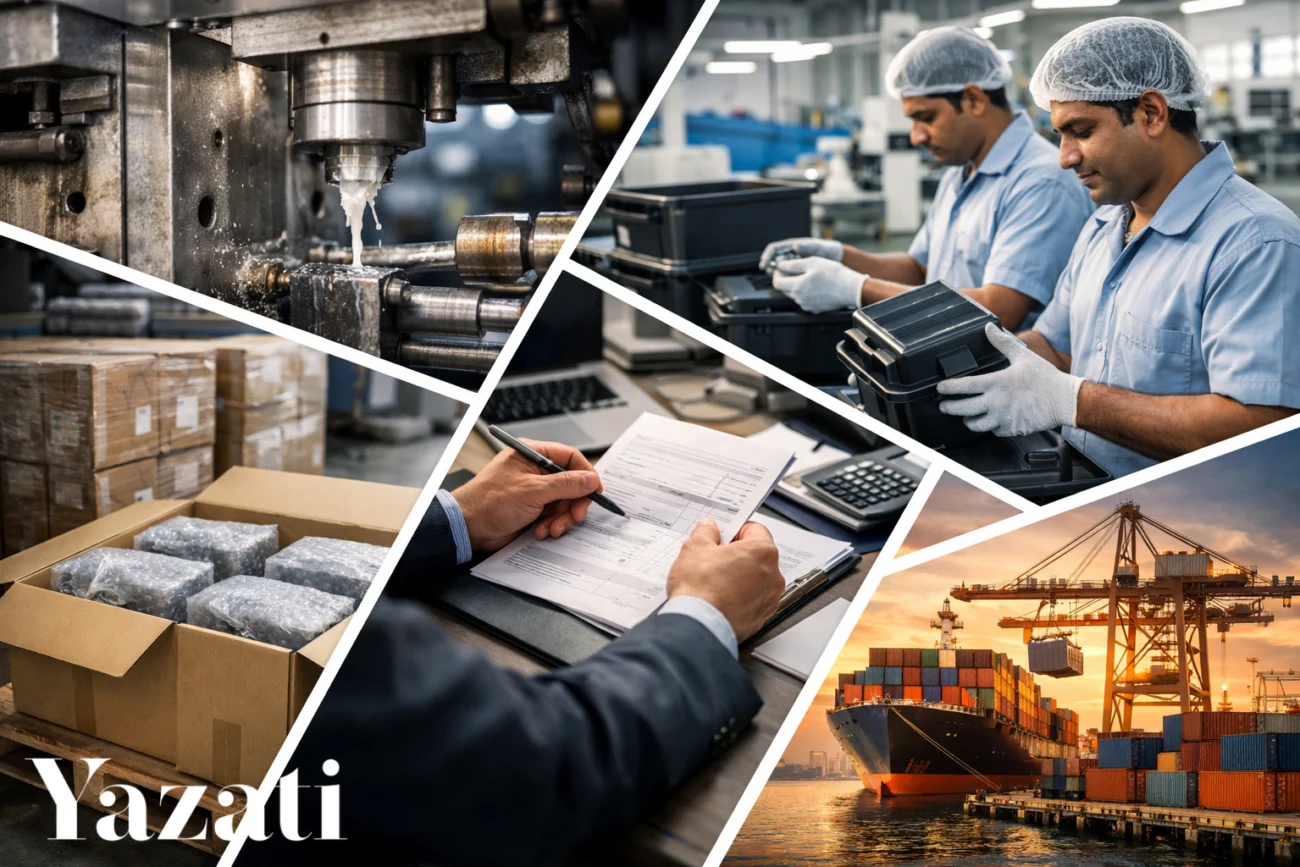
Introduction to India’s Plastic Moulding Industry
Plastic moulded goods are essential in modern manufacturing. They are used in automotive parts, consumer electronics, medical devices, packaging, and household products. As global demand grows, companies are seeking reliable and cost-effective suppliers.
India has emerged as a competitive manufacturing hub for injection moulded and blow moulded plastic products. With modern machinery, skilled engineers, and strong export infrastructure, the country offers attractive opportunities for importers.
This article provides a complete roadmap for Importing Plastic Moulded Goods from India: Step-by-Step Guide, ensuring buyers understand each phase of the sourcing process.
Why Choose India for Plastic Moulded Goods
India offers several strategic advantages:
- Competitive labor costs
- Skilled technical workforce
- Advanced injection moulding machinery
- Strong tooling expertise
- Established export systems
These factors allow Indian manufacturers to produce high-quality plastic components at competitive prices.
Major Manufacturing Clusters
Industrial regions specializing in plastic moulding provide:
- Injection moulding units
- Blow moulding facilities
- Tool and die workshops
- Testing laboratories
Cluster-based production increases efficiency and reduces production lead times.
Types of Plastic Moulded Products Available
Indian manufacturers produce a wide range of plastic moulded goods, including:
- Automotive components
- Electrical housings
- Packaging containers
- Medical-grade plastic parts
- Consumer goods casings
- Industrial components
- Plastic fittings and connectors
Product diversity allows importers to source multiple categories from one region.
Step 1: Define Product Specifications Clearly
Clear specifications prevent costly errors.
Importers should define:
- Material type (PP, ABS, PVC, HDPE, etc.)
- Color requirements
- Surface finish
- Dimensional tolerances
- Weight limits
- Load-bearing capacity
- Compliance requirements
Providing CAD drawings and technical documentation improves production accuracy.
Step 2: Identify and Verify Reliable Suppliers
Supplier selection is critical.
Due Diligence Checklist
Before placing an order:
- Verify company registration
- Check export license
- Review ISO certifications
- Request client references
- Confirm production capacity
- Assess experience in similar products
Working with certified manufacturers reduces operational risk.
Factory Audits and Certifications
Factory visits or third-party audits help verify:
- Machinery condition
- Quality management systems
- Worker safety standards
- Environmental compliance
Audit reports provide transparency.
Step 3: Request Quotations and Negotiate Terms
After selecting potential suppliers, request detailed quotations.
Cost Breakdown Should Include
- Raw material cost
- Tooling cost (if new molds required)
- Production cost
- Packaging cost
- Freight terms (FOB, CIF, etc.)
Negotiation Tips
- Clarify mold ownership rights
- Negotiate long-term pricing agreements
- Confirm minimum order quantities (MOQs)
- Structure payment terms (commonly 30% deposit, 70% before shipment)
Clear agreements prevent misunderstandings.
Step 4: Tooling, Sampling & Prototype Approval
Tooling is a critical stage in plastic moulding.
Mold Development Process
If a new mold is required:
- Mold design approval
- Tool manufacturing
- Sample production
- Prototype testing
- Final approval
Mold quality determines product precision and longevity.
Always test samples for dimensional accuracy and performance before mass production.
Step 5: Production Planning and Quality Control
Structured quality control ensures consistency.
Inspection Stages
- Raw material verification
- In-process inspection
- Dimensional measurement testing
- Functional performance testing
- Final batch inspection
Third-party inspection agencies provide independent validation.
Quality assurance protects brand reputation.
Step 6: Compliance, Testing & Documentation
Plastic products may require regulatory compliance depending on destination country.
Common Requirements
- Material safety data sheets (MSDS)
- RoHS compliance (for electronics components)
- REACH compliance (for EU markets)
- Food-grade certifications (for packaging)
Proper documentation prevents customs clearance issues.
Step 7: Packaging, Shipping & Customs Clearance
Efficient logistics are essential for bulk shipments.
Packaging Considerations
- Protective wrapping
- Moisture control
- Palletization
- Carton reinforcement
Shipping Methods
- Sea freight (cost-effective for bulk orders)
- Air freight (faster for urgent shipments)
Upon arrival, importers must:
- Submit required documents
- Pay applicable duties
- Arrange inland transportation
Understanding tariff classifications helps calculate import duties accurately.
Risk Management & Payment Security
International trade involves financial risks.
Best practices include:
- Written contracts specifying quality standards
- Defined delivery schedules
- Shipment insurance coverage
- Clear dispute resolution clauses
Avoid full upfront payments to new suppliers.
Letters of Credit may be suitable for large transactions.
Common Challenges and Solutions
Challenge: Mold Defects
Solution: Conduct thorough prototype testing before approving mass production.
Challenge: Material Inconsistency
Solution: Specify material grade clearly and require batch certification.
Challenge: Shipping Delays
Solution: Plan production schedules with buffer time.
Preparation reduces unexpected setbacks.
Step-by-Step Import Summary
To follow Importing Plastic Moulded Goods from India: Step-by-Step Guide, importers should:
- Define technical specifications
- Identify verified suppliers
- Conduct factory audits
- Approve quotations and payment terms
- Finalize mold design
- Approve prototypes
- Monitor production
- Conduct inspections
- Arrange shipping
- Complete customs clearance
Structured execution ensures successful importing.
Frequently Asked Questions
1. Is importing plastic moulded goods from India cost-effective?
Yes. Competitive manufacturing costs support strong margins.
2. Who owns the mold after production?
Ownership terms should be clearly defined in the contract.
3. How long does mold development take?
Tooling typically takes 3–8 weeks depending on complexity.
4. Are quality certifications available?
Many manufacturers hold ISO certifications and comply with global standards.
5. What is the safest shipping method?
Sea freight is economical for bulk shipments; air freight suits urgent needs.
6. Is third-party inspection recommended?
Yes. Independent inspections reduce quality risk.
Conclusion
Plastic moulded goods are vital components across industries, and sourcing them efficiently requires careful planning.
By following Importing Plastic Moulded Goods from India: Step-by-Step Guide, buyers can navigate supplier selection, tooling development, compliance requirements, production monitoring, and shipping logistics with confidence.
India’s growing manufacturing expertise, competitive pricing, and export readiness make it a strong sourcing destination for global importers.
With structured preparation and proactive risk management, importing plastic moulded goods from India can be both profitable and reliable.
✨ Discover Global Sourcing Excellence with Netyex ✨
Netyex is your trusted B2B sourcing partner, connecting international buyers with India’s finest manufacturers and curated product lines—from handicrafts and home décor to kitchenware, textiles, hospitality essentials, and more. With verified suppliers and end-to-end support, we make global procurement seamless, reliable, and efficient.
👉 Elevate your sourcing experience—explore Netyex today.
📦 Bulk orders & customisation | 🌍 Worldwide delivery | 🤝 Trusted by global buyers
Visit Netyex to source premium Indian products with confidence.