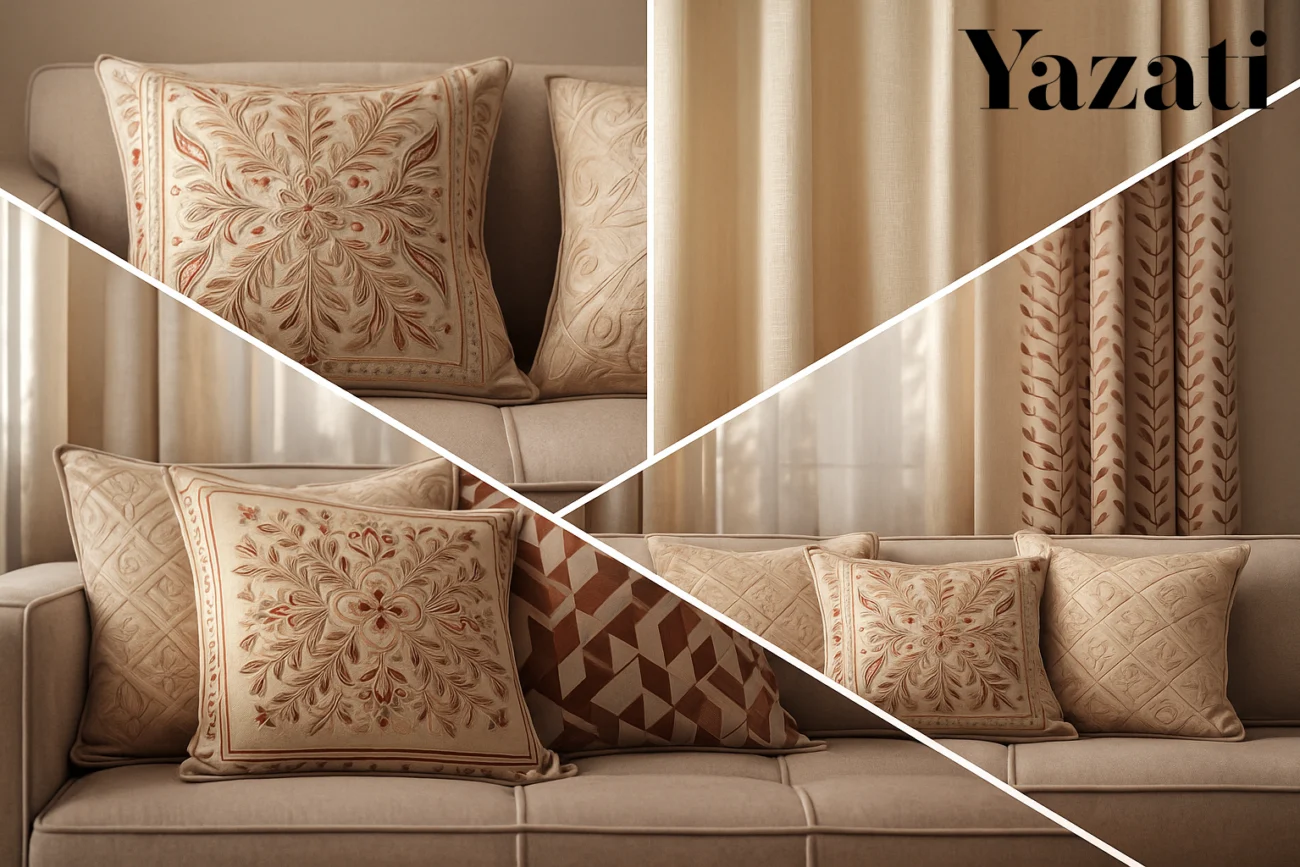
Introduction: The Rise of Indian Home Textiles in Global Markets
Indian home décor is undergoing a remarkable global transformation. Among its most celebrated exports, Indian cushion covers and curtains have captured worldwide attention for their vibrant artistry, intricate craftsmanship, and sustainable appeal. As international buyers shift toward authenticity and eco-conscious design, Indian textiles are finding a cherished place in homes across Europe, North America, and the Middle East.
The rise of these textiles is not just a style movement—it’s a cultural exchange. From Jaipur’s block-printed cottons to Banaras’ luxurious silks, India’s diverse textile traditions reflect centuries of storytelling and craftsmanship. Today, these designs aren’t merely decorative; they represent India’s heritage reshaped for the modern world.
Understanding the Artistry Behind Indian Cushion Covers and Curtains
Traditional Handloom Techniques and Modern Adaptations
Indian cushion covers and curtains are born from traditional handloom practices that date back thousands of years. Regions like Gujarat, Rajasthan, and Tamil Nadu boast distinct weaving styles, each with unique patterns and textures. Artisans skillfully blend ancient techniques with contemporary trends—creating products that appeal to both heritage lovers and modern minimalists.
The evolution of looms, digital printing, and sustainable dyeing technologies has enabled Indian producers to balance authenticity with innovation. These changes ensure that while the soul of traditional craftsmanship remains intact, the final product meets international quality and design expectations.
Role of Regional Craftsmanship in Design Diversity
India’s strength lies in its diversity. Each region contributes something unique—Kashmiri crewel embroidery, Rajasthani block printing, or Tamil Nadu’s fine handloom weaving. This regional variety not only enriches global design palettes but also preserves India’s cultural heritage.
Why Indian Cushion Covers Are Becoming a Global Sensation
Blend of Aesthetics and Functionality
Indian cushion covers combine form and function effortlessly. They’re not just beautiful; they’re designed for everyday use. Durable fabrics, meticulous stitching, and colorfast dyes make them ideal for both traditional and contemporary spaces.
These covers often feature motifs inspired by nature, mythology, and local folklore—adding a personal and cultural touch to any room.
Sustainable and Ethical Production Practices
With the world moving toward eco-conscious living, India’s handcrafted textiles stand out for their minimal environmental footprint. Natural fabrics like cotton and jute, paired with vegetable dyes and low-waste processes, make them a preferred choice among sustainability enthusiasts.
How Indian Designs Appeal to International Consumers
Global consumers are increasingly drawn to products with a story. Indian cushion covers and curtains offer that narrative—heritage craftsmanship, ethical sourcing, and artistic beauty. This storytelling element transforms décor items into meaningful pieces of art.
The Global Influence of Indian Curtains in Interior Design
The Cultural Symbolism Behind Indian Drapery
Indian curtains are more than functional window coverings—they’re cultural emblems. From vibrant zari borders to block-printed motifs, every detail narrates India’s design philosophy: balance, color, and energy.
Modern Trends Inspired by Indian Textiles
Contemporary designers are reimagining Indian drapery by merging traditional prints with modern fabrics like linen and organza. This fusion caters to global aesthetics while preserving Indian authenticity.
Fabric and Texture: The Heart of Indian Cushion Covers & Curtains
Popular Fabrics: Cotton, Silk, and Linen
Cotton and silk remain the cornerstones of Indian textiles. While cotton brings breathability and comfort, silk adds luxury and sheen. Increasingly, linen and bamboo fibers are being introduced for sustainable luxury.
Embroidery, Block Prints, and Hand-Painted Patterns
Indian textiles thrive on intricate detailing—mirror work, kantha embroidery, madhubani prints, and kalamkari art. These embellishments enhance the visual depth and uniqueness of every piece.
The Role of Indian Artisans in Shaping Global Home Décor
Empowering Rural Communities Through Handcrafted Excellence
The rise of Indian cushion covers and curtains has empowered thousands of rural artisans. Cooperative societies and fair-trade organizations ensure that craftsmen receive fair wages and recognition for their work.
Government and NGO Initiatives Supporting the Textile Sector
Programs like “Make in India” and “Crafts Cluster Development” aim to boost traditional industries. NGOs are also promoting female artisanship, ensuring skill transmission to future generations.
How Indian Cushion Covers and Curtains Reflect Sustainability
Eco-Friendly Dyes and Recycled Materials
From natural indigo to pomegranate peel dyes, eco-friendly colorants are redefining the textile palette. Many brands now upcycle fabric scraps into patchwork designs, reducing waste and promoting circular fashion.
Fair Trade and Ethical Consumerism
Consumers today value ethics over extravagance. Indian brands certified by Fair Trade organizations showcase transparency in sourcing, labor rights, and production processes.
The Digital Revolution: Indian Home Décor in E-commerce
Global Online Marketplaces Promoting Indian Textiles
The digital era has transformed how Indian cushion covers and curtains reach global audiences. E-commerce platforms like Etsy, Amazon Handmade, and Pepperfry Global have become powerful gateways for Indian artisans to showcase their creations. Small-scale weavers and independent designers can now directly connect with international buyers, bypassing middlemen and maximizing their profits.
This digital democratization has also led to a rise in homegrown online brands such as Chumbak, The Decor Kart, and India Circus, all of which blend Indian artistry with modern sensibilities. These platforms emphasize storytelling — describing how each product is handmade, dyed naturally, or inspired by a particular region. This personal connection builds emotional value and loyalty among global consumers.
Influencers and Interior Designers Driving Demand
Social media has played a pivotal role in globalizing Indian décor. Influencers and interior designers on Instagram, Pinterest, and YouTube often feature Indian-inspired interiors — showcasing spaces filled with rich textiles, earthy tones, and handcrafted furnishings.
Global icons like Joanna Gaines and Marie Kondo have praised Indian handwoven fabrics for their authenticity and soul. Even minimalist Western homes are incorporating Indian cushion covers and curtains as statement pieces, offering pops of color and personality.
Setting the Mood: Styling Tips with Indian Cushion Covers and Curtains
Creating Themed Interiors Using Indian Motifs
Whether it’s a bohemian living room, a modern minimalist bedroom, or a traditional ethnic setup, Indian cushion covers and curtains can instantly uplift any space.
- Boho Chic: Mix kantha-stitched covers with jute or wicker furniture.
- Royal Elegance: Use silk or brocade curtains with gold-thread embroidery.
- Earthy Minimalism: Pair cotton block-printed covers with wooden accents.
Each design tells a story — elephants for strength, paisleys for fertility, and lotus motifs for purity. By blending these cultural elements with contemporary interiors, homeowners create spaces that feel both global and personal.
Pairing Colors, Patterns, and Fabrics for a Balanced Look
Color harmony is key when styling Indian textiles. For vibrant cushion covers, opt for neutral-toned curtains to maintain visual balance. Conversely, if your curtains feature intricate prints, choose solid-colored cushions to prevent clutter. Layering different textures — like silk with linen or cotton with velvet — adds depth and sophistication to the décor.
Case Studies: Global Brands Embracing Indian Designs
IKEA’s Collaboration with Indian Artisans
In recent years, IKEA has collaborated with Indian artisans under initiatives like IKEA’s Social Entrepreneurs Program, highlighting handwoven textiles made in rural India. These products showcase the blend of Scandinavian minimalism and Indian craftsmanship — a fusion that resonates with global buyers seeking authenticity and sustainability.
Boutique Brands Showcasing Indian Heritage Worldwide
Luxury labels such as Good Earth, Nicobar, and Anokhi have gained international recognition for their refined Indian aesthetic. They emphasize eco-friendly materials, traditional printing methods, and timeless motifs. Their growing international clientele proves that Indian designs are no longer niche — they are global lifestyle choices.
FAQs About Indian Cushion Covers & Curtains Setting Global Trends
1. Why are Indian cushion covers and curtains so popular globally?
Because they offer a perfect mix of tradition, craftsmanship, and sustainability. Each piece is unique and handcrafted, telling a story that appeals to modern consumers who value authenticity.
2. Are Indian home décor textiles eco-friendly?
Yes. Many Indian brands use natural fabrics, vegetable dyes, and low-waste production processes, making them both stylish and sustainable.
3. What fabrics are commonly used in Indian cushion covers and curtains?
Cotton, silk, linen, and jute are the most popular. Recently, bamboo fiber and organic blends have also gained popularity for eco-conscious homes.
4. How can I style Indian textiles in a modern home?
Use Indian cushion covers as accent pieces. Combine them with minimalist furniture and solid color palettes to create a sophisticated fusion of East and West.
5. Where can I buy authentic Indian cushion covers and curtains online?
You can explore trusted platforms like Etsy, Amazon Handmade, and Good Earth. Always look for sellers who mention handcrafted or ethically sourced materials.
6. How do Indian textiles contribute to local communities?
Purchasing handcrafted décor directly supports rural artisans, preserving traditional weaving techniques and empowering women-led craft clusters across India.
Conclusion: India’s Timeless Influence on Global Interior Design Trends
Indian cushion covers and curtains have evolved from being traditional household items to becoming global symbols of heritage, artistry, and sustainability. Their universal appeal lies in their ability to merge ancient craftsmanship with contemporary design sensibilities.
In an era where mass production dominates, Indian textiles stand apart — handcrafted, meaningful, and sustainable. From eco-conscious consumers to luxury homeowners, everyone finds a piece of India in their living spaces.
As global design trends continue to embrace cultural fusion, India’s home décor legacy will remain a guiding light — reminding the world that true beauty lies in craftsmanship, culture, and consciousness.
✨ Discover Global Sourcing Excellence with Netyex ✨
Netyex is your trusted B2B sourcing partner, connecting international buyers with India’s finest manufacturers and curated product lines—from handicrafts and home décor to kitchenware, textiles, hospitality essentials, and more. With verified suppliers and end-to-end support, we make global procurement seamless, reliable, and efficient.
👉 Elevate your sourcing experience—explore Netyex today.
📦 Bulk orders & customisation | 🌍 Worldwide delivery | 🤝 Trusted by global buyers
Visit Netyex to source premium Indian products with confidence.