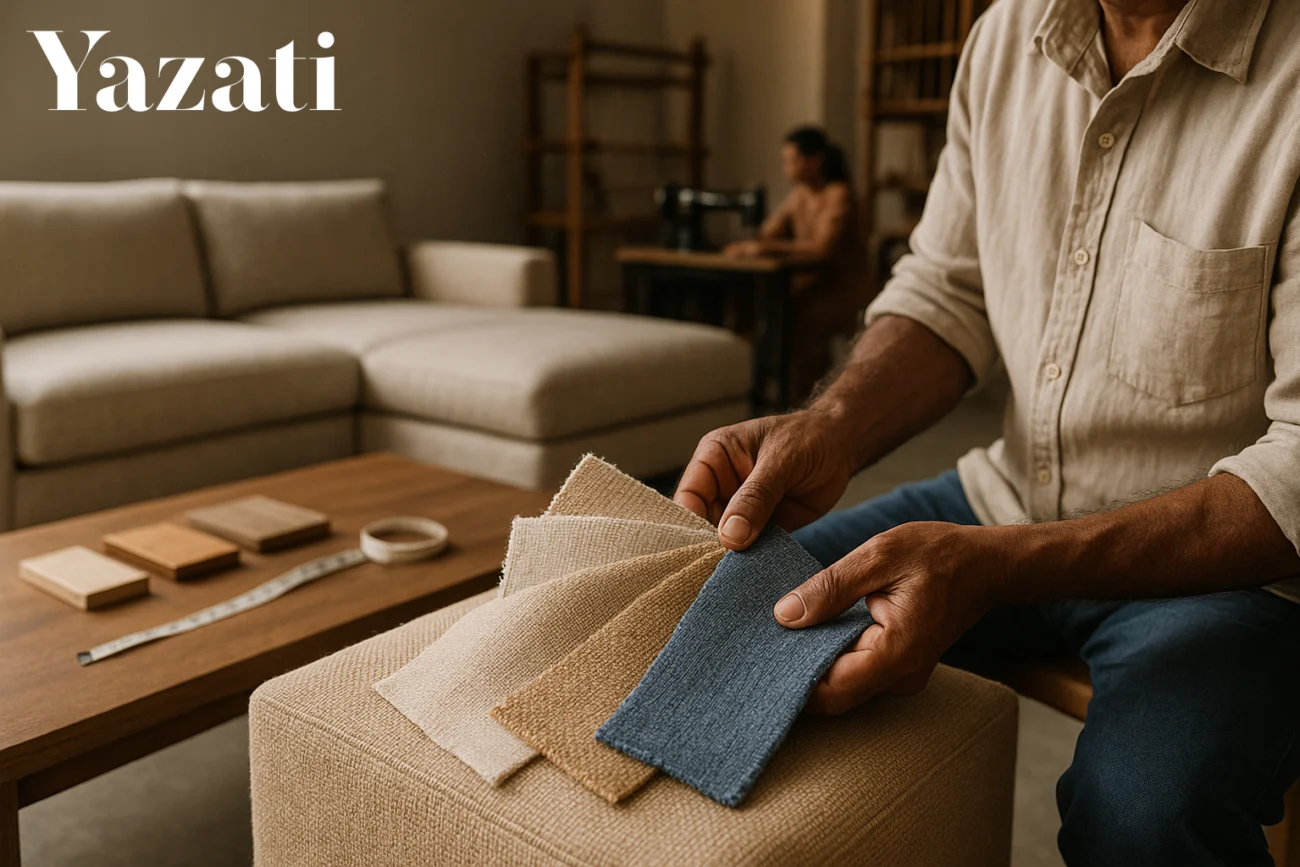
Introduction: The Rising Global Demand for Indian Fabrics
In today’s global design market, the demand for Indian fabrics for global furniture brands is soaring. With their unmatched craftsmanship, sustainability, and vibrant textures, Indian textiles have become a cornerstone of luxury furniture manufacturing. Among the key players enabling this transformation, Yazati stands out as a pioneer in connecting traditional Indian artisans with international furniture brands through a transparent, ethical, and efficient supply chain model.
The modern consumer’s preference for authenticity, eco-conscious materials, and cultural depth has positioned Indian textiles as the go-to choice for high-end furniture design across continents—from minimalist Scandinavian interiors to opulent European estates.
Why Indian Textiles Are Revolutionizing Global Furniture Design
Indian fabrics have always been known for their rich colors, handwoven textures, and intricate designs. But beyond beauty, they bring durability and sustainability, key attributes that global furniture manufacturers value today.
Designers worldwide are increasingly integrating Indian cottons, silks, and jute blends into sofas, chairs, and draperies. Their adaptability, paired with Yazati’s ability to scale production without compromising on authenticity, has made them the backbone of a new design revolution.
The Role of Sustainable and Ethical Fabric Production
Global furniture brands are turning toward sustainability as a defining principle. Yazati’s network of eco-friendly textile mills and artisan clusters ensures that every yard of fabric is produced using low-impact dyes, organic fibers, and minimal water consumption.
This approach not only reduces the environmental footprint but also preserves the livelihoods of thousands of skilled weavers and artisans in rural India.
Understanding the Indian Textile Heritage
A Legacy of Craftsmanship: From Handlooms to Modern Mills
India’s textile heritage dates back over 5,000 years, evolving from handlooms to advanced mills that blend ancient techniques with modern precision. Regions like Kanchipuram, Bhuj, and Varanasi have contributed to a diverse tapestry of textile traditions.
Key Textile Hubs: Surat, Jaipur, Varanasi, and Beyond
- Surat – Known for its synthetic blends and jacquard weaves.
- Jaipur – Celebrated for block prints and eco-friendly cottons.
- Varanasi – Famous for luxurious silk brocades and zari work.
- Panipat – India’s hub for upholstery and home furnishing fabrics.
Iconic Indian Fabrics Used in Furniture Manufacturing
| Fabric Type | Key Features | Common Furniture Use |
| Khadi | Organic, handspun cotton | Upholstery, cushion covers |
| Ikat | Dyed before weaving, geometric patterns | Drapes, chairs |
| Jute | Eco-friendly, durable | Sofas, floor mats |
| Brocade | Rich woven silk with metallic threads | Luxury sofas, statement pieces |
The Yazati Supply Chain: Bridging Indian Artistry with Global Brands
Overview of Yazati’s Global Operations
Yazati acts as a bridge between Indian fabric manufacturers and international furniture companies, managing sourcing, logistics, quality control, and certification.
How Yazati Connects Indian Weavers to International Markets
Yazati collaborates with clusters of artisans across India, ensuring fair trade partnerships. Through digital tracking and transparent documentation, every product can be traced back to its origin.
Supply Chain Transparency and Traceability
Yazati employs blockchain-based systems to maintain end-to-end traceability—from raw cotton procurement to final upholstery fabric delivery.
Sustainable Practices in Yazati’s Fabric Production
Eco-Friendly Dyes and Low-Impact Manufacturing
Yazati promotes natural dyes and energy-efficient machinery that minimizes carbon emissions and waste.
Fair-Trade Partnerships with Indian Artisans
The company ensures fair wages, safe working conditions, and inclusive growth for the weaver communities it supports.
The Competitive Edge of Indian Fabrics in Global Furniture
Superior Quality and Craftsmanship
Each fabric tells a story of heritage and skill. Indian artisans blend aesthetics with functionality, producing textiles that meet global durability standards.
Price Efficiency and Scalability for Furniture Brands
Through economies of scale, Yazati provides high-quality fabrics at globally competitive rates—helping brands maintain profit margins without compromising ethics.
Case Study: Global Brands Using Yazati Fabrics
European Furniture Houses Adopting Indian Textiles
Luxury European brands like Maison du Tissu and Atelier Nordique have adopted Yazati’s Indian linens for sustainable furniture lines.
American and Asian Brands in Collaboration with Yazati
American minimalists and Asian luxury brands alike are sourcing Yazati’s organic cotton blends for eco-friendly furniture collections.
Quality Control and Certification Standards
International Textile Compliance and Sustainability Labels
Yazati adheres to global standards such as OEKO-TEX, GOTS, and Fairtrade certifications.
Yazati’s Quality Assurance Protocols
Every batch undergoes rigorous inspection, including thread count analysis, dye fastness, and abrasion resistance testing.
Technology Integration in the Yazati Supply Chain
AI and IoT in Fabric Tracking and Forecasting
Yazati integrates AI for demand forecasting and IoT-enabled tracking for real-time supply chain visibility.
Digitization for Global Supply Chain Efficiency
By digitizing procurement and logistics, Yazati reduces lead times and enhances collaboration with overseas partners.
Challenges and Opportunities in Exporting Indian Fabrics
Overcoming Logistic and Regulatory Barriers
Yazati’s integrated logistics model simplifies customs clearance and ensures timely deliveries.
Future Prospects for Indian Textile Exports
With sustainability as a global trend, India’s textile exports are projected to grow by 15% annually, positioning Yazati as a key industry leader.
FAQs about Indian Fabrics and the Yazati Supply Chain
1. What makes Indian fabrics ideal for furniture manufacturing?
Their durability, texture, and eco-friendliness make them perfect for upholstery and decor applications.
2. How does Yazati ensure ethical sourcing?
Yazati partners directly with artisan clusters and enforces strict fair-trade standards.
3. Are Yazati’s fabrics environmentally friendly?
Yes, Yazati uses organic fibers and low-impact dyes in all its fabric lines.
4. Which countries import Yazati fabrics the most?
The USA, Germany, Japan, and France are top importers.
5. What certifications do Yazati fabrics carry?
They meet GOTS, OEKO-TEX, and Fairtrade certification standards.
6. How can brands collaborate with Yazati?
Through Yazati’s global procurement portal or direct sourcing channels listed on their website.
Conclusion: The Future of Indian Fabrics in Global Furniture Manufacturing
Indian fabrics are no longer just cultural artifacts—they are global design assets. Through Yazati’s sustainable and transparent supply chain, these textiles are reaching elite furniture brands across the world. As sustainability and craftsmanship continue to drive consumer preference, Yazati’s model stands as a testament to how Indian tradition and modern logistics can coexist beautifully, setting new standards for ethical luxury in global interiors.
✨ Discover Global Sourcing Excellence with Netyex ✨
Netyex is your trusted B2B sourcing partner, connecting international buyers with India’s finest manufacturers and curated product lines—from handicrafts and home décor to kitchenware, textiles, hospitality essentials, and more. With verified suppliers and end-to-end support, we make global procurement seamless, reliable, and efficient.
👉 Elevate your sourcing experience—explore Netyex today.
📦 Bulk orders & customisation | 🌍 Worldwide delivery | 🤝 Trusted by global buyers
Visit Netyex to source premium Indian products with confidence.