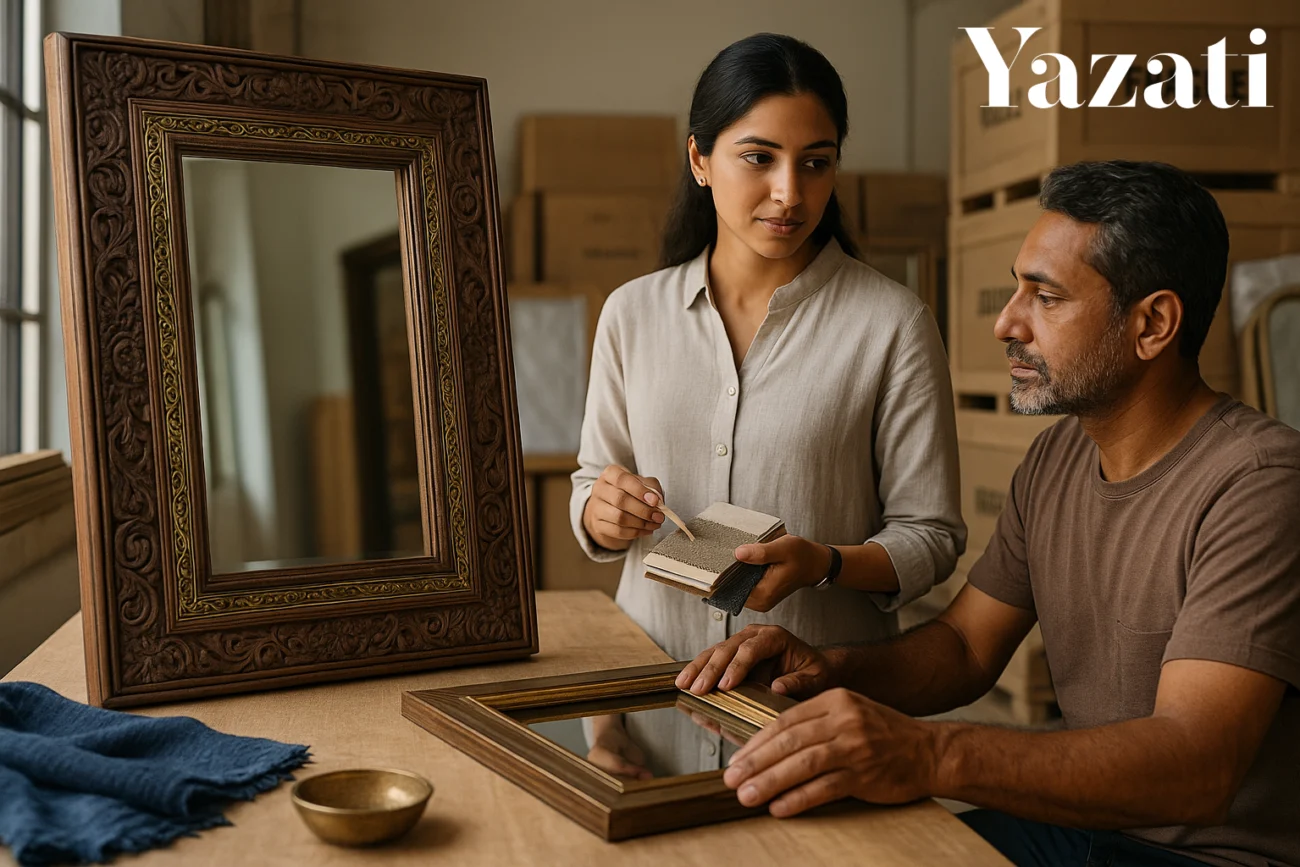
Introduction: The Rise of Indian Mirrors and Frames in the Global Market
In recent years, Indian mirrors and frames have quietly emerged as one of the most sought-after exports in the global home décor and interior design sectors. With their intricate carvings, artistic finishes, and cultural symbolism, these handcrafted pieces from India are captivating homes, hotels, and design studios worldwide.
From luxury villas in Dubai to bohemian apartments in New York, Indian mirrors and frames have become synonymous with elegance and authenticity. Their rise as a hidden export gem represents not just growing international demand but also India’s creative spirit—rooted deeply in tradition yet adaptable to modern trends.
Historical Legacy of Mirror and Frame Craftsmanship in India
Ancient Techniques and Royal Patronage
The art of mirror-making and frame craftsmanship in India dates back several centuries. During the Mughal and Rajput eras, artisans perfected the art of mirror inlay (Sheesh Mahal)—a design technique still admired in royal palaces of Rajasthan. These designs, combining glasswork and ornamental frames, symbolized opulence and spiritual reflection.
Royal courts supported skilled artisans, who used precious materials like sandalwood, silver, ivory, and hand-polished glass. The intricate frames often told stories—mythological motifs, floral vines, and geometric symmetry represented not only beauty but also cultural narratives.
Evolution Through Colonial and Post-Independence Eras
Under British rule, the demand for decorative items surged, as mirrors and frames began reflecting Western tastes blended with Indian artistry. Post-independence, India’s craft clusters continued evolving—combining handcrafted precision with small-scale industrial production. This fusion enabled artisans to reach larger audiences and lay the foundation for today’s export-driven handicraft sector.
The Cultural Significance of Mirrors and Frames in Indian Artistry
Symbolism and Aesthetic Roles in Indian Homes
In Indian culture, mirrors symbolize self-reflection, purity, and light. They’re not just functional objects but spiritual symbols often used in Vastu Shastra to enhance positive energy in homes. Frames, on the other hand, serve as protectors of memory—guarding photographs, paintings, and mirrors with artistic devotion.
Traditional Regional Styles: From Rajasthan to Tamil Nadu
Each region of India contributes its unique style. Rajasthan is known for its hand-carved wooden frames with intricate jali work, while Saharanpur is renowned for rosewood craftsmanship. In Tamil Nadu, brass and bronze frame designs reflect Dravidian art influences. Meanwhile, Kutch artisans in Gujarat create mirror embroidery known as Abhla Bharat, incorporating mirrors into textiles and frames alike.
Indian Mirrors and Frames in the Global Export Landscape
Export Growth and Market Potential
According to recent reports, India’s handicraft exports have crossed USD 4 billion annually, with mirrors and frames forming a growing share of this value. Western markets, particularly the United States, United Kingdom, and Middle East, have shown increasing demand for ethically sourced, handcrafted décor products.
The global trend toward eco-friendly and artisan-made interiors has created fertile ground for Indian exporters. Indian mirrors and frames combine artistry with affordability, giving them a competitive edge in both premium and mass-market segments.
Top Export Destinations and Demand Drivers
Major export destinations include the United States, Germany, France, the UAE, and Australia. These regions value handcrafted home décor for its authenticity and cultural depth. The key demand drivers include:
- Rising interest in sustainable interiors.
- Preference for unique, handmade pieces over factory-made décor.
- Growth of e-commerce platforms promoting Indian craft brands globally.
Key Materials and Designs That Define Indian Craftsmanship
Wood, Metal, Bone, and Glass: The Material Heritage
Indian mirrors and frames are crafted using a diverse range of materials—each telling a unique story:
- Mango wood and Sheesham wood: Common in Rajasthan and Uttar Pradesh.
- Brass and copper: Used in South India for their regal appeal.
- Bone and horn inlay: Distinct to Rajasthan and Gujarat artisans.
- Recycled glass and mirror fragments: Promoting eco-conscious design.
Modern Design Innovations Inspired by Tradition
Today’s artisans experiment with minimalistic aesthetics, pastel tones, and fusion designs. Combining ancient inlay work with geometric patterns, they cater to global tastes while retaining Indian roots—a hallmark of modern Indian craftsmanship.
Leading Production Hubs for Mirrors and Frames in India
Jodhpur and Jaipur: The Art Capitals of Wooden Craft
Jodhpur and Jaipur dominate the export of wooden mirrors and frames. Workshops here employ thousands of artisans skilled in carving, inlaying, and antique finishing. These regions are also home to sustainable woodcraft initiatives promoting eco-friendly production.
Saharanpur and Moradabad: Blending Metal and Wood Mastery
Saharanpur in Uttar Pradesh is famous for detailed woodcarving, while Moradabad excels in metal inlay and brass finishing. Together, they supply a significant portion of India’s handcrafted décor exports—a perfect blend of tradition and innovation.
How Indian Artisans Are Blending Tradition with Modern Aesthetics
Handcrafted Techniques Meeting Contemporary Design Trends
The new generation of Indian artisans has mastered the art of adapting. While traditional motifs remain popular, they now coexist with Scandinavian simplicity and boho-chic elegance. The result? Globally appealing décor with an unmistakable Indian soul.
Role of Women and Rural Communities in Craft Revival
Women-led cooperatives and NGOs have revitalized dying crafts by training rural artisans, creating employment, and promoting gender equity. Their work ensures that centuries-old skills remain alive—and globally admired.
Challenges in the Indian Mirror and Frame Export Sector
Supply Chain, Quality, and Global Compliance Issues
Despite their success, Indian exporters face challenges in maintaining consistent quality, meeting global compliance standards, and navigating complex logistics. Sustainable sourcing and packaging are emerging as crucial competitive differentiators.
Need for Branding and International Market Visibility
Many exporters still lack strong brand identities. Global buyers often recognize the artistry but not the origin. Strategic branding, storytelling, and digital marketing could help India capture a larger share of the premium market.
Government and Institutional Support for Exporters
Export Promotion Councils and Schemes
The Export Promotion Council for Handicrafts (EPCH) actively promotes Indian crafts through trade fairs and buyer-seller meets. Schemes such as the Market Access Initiative and Design Development Scheme further support exporters in expanding their reach.
Skill Development and Sustainability Initiatives
Government programs like Hastkala Setu Yojana focus on artisan training, sustainability, and fair wages—ensuring a brighter future for the craft ecosystem.
How Technology Is Reshaping the Indian Handicraft Export Industry
Digital Platforms and E-commerce Expansion
E-commerce has been a game-changer. Platforms like Etsy, Amazon Handmade, and IndiaMart have opened global markets to small-scale artisans. Exporters now showcase their products through digital catalogues and virtual trade fairs.
Global Trade Fairs and Virtual Showcases
Events like IHGF Delhi Fair and Ambiente Frankfurt spotlight Indian mirror and frame exporters, helping them connect with global buyers and establish brand credibility.
Sustainability and Ethical Production Practices
Eco-friendly Materials and Responsible Sourcing
As consumers grow conscious, the use of reclaimed wood, recycled glass, and natural dyes is becoming standard. Artisans are incorporating zero-waste practices to minimize environmental impact.
The Push Toward Fair Trade Certifications
Many exporters are now obtaining Fair Trade and Craftmark certifications—guaranteeing ethical labor practices and transparency across the supply chain.
Why Global Consumers Love Indian Mirrors and Frames
The Allure of Authentic Handcrafted Beauty
No two Indian mirrors are the same. Each bears the subtle imperfections that make handcrafted products special. This uniqueness attracts consumers who crave authenticity in an age of mass production.
Affordable Luxury and Artistic Diversity
Indian mirrors and frames offer luxury at an affordable price, combining heritage with versatility. Whether rustic, royal, or contemporary, they appeal to diverse global design sensibilities.
Business Opportunities for Exporters and Importers
Market Segments with Untapped Potential
Segments like boutique hotels, online décor retailers, and eco-conscious consumers remain underexplored. Exporters who target these niches can capture high-margin business.
Tips for Exporters to Boost Global Reach
- Leverage social media storytelling (Instagram, Pinterest).
- Collaborate with interior designers abroad.
- Invest in quality photography and digital catalogs.
- Obtain sustainability certifications for better trust.
Future Outlook: Positioning India as a Global Craft Leader
Trends Shaping the Next Decade of Handicraft Exports
The future looks promising. Global consumers are shifting toward handcrafted, sustainable décor. India’s vast artisan base and creative diversity make it a natural leader in this space.
The Role of Youth and Design Startups
Young designers and startups are bridging the gap between traditional artisans and international markets through design innovation, digital branding, and ethical entrepreneurship.
Frequently Asked Questions (FAQs)
1. Why are Indian mirrors and frames popular in global markets?
Because they combine unique handcrafting, cultural richness, and affordability, making them stand out in global home décor trends.
2. Which materials are most used in Indian mirror and frame production?
Mango wood, Sheesham wood, brass, bone inlay, and recycled glass are among the most commonly used materials.
3. What are the major export destinations for Indian mirrors and frames?
The United States, Germany, France, UAE, and Australia are top markets for these handcrafted items.
4. How can exporters improve visibility internationally?
By creating strong brand stories, participating in trade fairs, and leveraging digital platforms like Etsy and Amazon Handmade.
5. Are Indian mirror and frame exports sustainable?
Yes, many producers now follow eco-friendly methods using reclaimed materials and ethical labor practices.
6. What is the future of this export sector?
With increasing global demand for handmade and sustainable décor, India’s mirror and frame exports are expected to grow steadily in the coming decade.
Conclusion: The Shining Future of Indian Mirrors and Frames
The world is finally recognizing what India has always known—true beauty lies in craftsmanship. Indian mirrors and frames, once hidden gems, are now illuminating homes and hearts worldwide. As sustainability, storytelling, and authenticity dominate design trends, India stands poised to lead the next wave of artisanal exports—rooted in tradition, shaped by innovation, and polished for the world stage.
✨ Discover Global Sourcing Excellence with Netyex ✨
Netyex is your trusted B2B sourcing partner, connecting international buyers with India’s finest manufacturers and curated product lines—from handicrafts and home décor to kitchenware, textiles, hospitality essentials, and more. With verified suppliers and end-to-end support, we make global procurement seamless, reliable, and efficient.
👉 Elevate your sourcing experience—explore Netyex today.
📦 Bulk orders & customisation | 🌍 Worldwide delivery | 🤝 Trusted by global buyers
Visit Netyex to source premium Indian products with confidence.