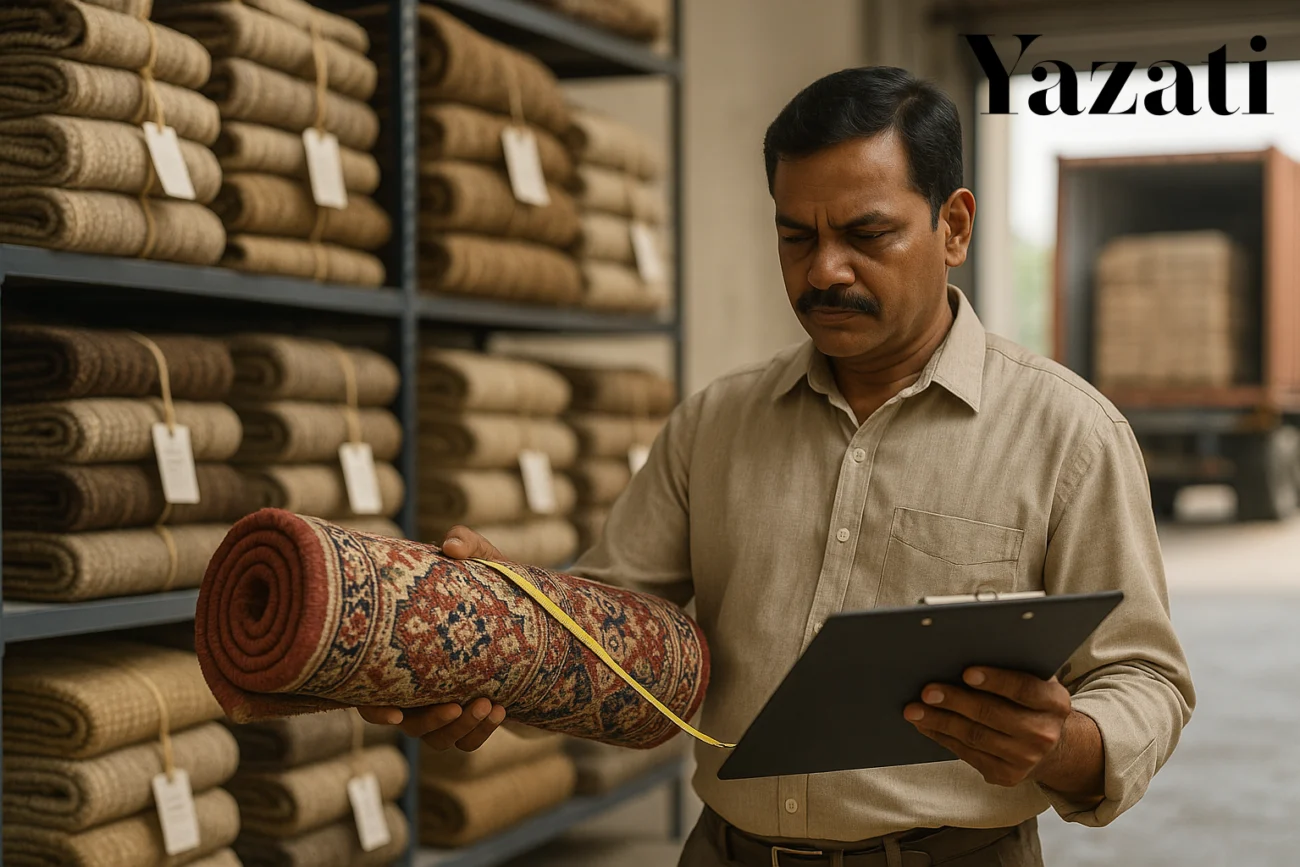
Introduction: The Timeless Art of Indian Rugs and Carpets
Few art forms tell the story of India’s heritage as beautifully as its rugs and carpets. With vibrant colors, intricate designs, and centuries-old techniques, Indian Rugs and Carpets are more than decorative items—they are woven pieces of history. Today, India stands as one of the world’s largest exporters of handmade carpets, contributing billions to its economy while preserving a craft that spans generations.
From the royal courts of the Mughals to the living rooms of modern homes in New York and London, Indian carpets continue to charm the world. This billion-dollar industry is not just an economic success story but also a testament to the resilience and artistry of rural India.
Historical Evolution of Indian Rug and Carpet Weaving
Origins of Carpet Weaving in the Mughal Era
Carpet weaving in India traces its roots to the 16th century, during the reign of Emperor Akbar. Inspired by Persian craftsmanship, he invited skilled weavers from Persia to teach local artisans. Over time, these techniques fused with Indian motifs, giving birth to a unique style that blended elegance with cultural symbolism.
The earliest Indian carpets, made in Agra, Lahore, and Jaipur, featured intricate floral patterns, geometric borders, and natural dyes. They were often woven with fine silk or wool and adorned the floors of palaces and temples.
Regional Craftsmanship: A Patchwork of Traditions
As the art spread across regions, every area developed its signature style.
- Kashmir became famous for silk carpets with Persian-inspired motifs.
- Bhadohi and Mirzapur earned fame for high-quality hand-knotted wool rugs.
- Jaipur specialized in vivid block-printed dhurries, while Panipat focused on affordable handloom carpets.
Each region’s carpets tell a story—of its people, its landscapes, and its traditions.
The Indian Carpet Industry: A Global Powerhouse
Export Growth and Economic Significance
India accounts for nearly 40% of global handmade carpet exports, making it the largest exporter in the world. The industry’s annual export value exceeds USD 1.8 billion, with demand rising steadily from the U.S., Germany, and the Middle East.
This growth isn’t just about numbers—it reflects how Indian craftsmanship has captured international markets while adapting to modern trends in design and sustainability.
India’s Key Export Markets and Trading Partners
The primary markets for Indian carpets include:
- United States – accounting for nearly 60% of exports.
- Germany, UK, and France – major importers of hand-knotted rugs.
- Middle East and Japan – growing demand for high-end silk carpets.
India’s export ecosystem thrives on quality, customization, and heritage branding, making it a global leader in luxury floor coverings.
Government Policies Supporting the Carpet Sector
The Carpet Export Promotion Council (CEPC) plays a pivotal role in expanding exports. Supported by the Ministry of Textiles, CEPC promotes trade fairs, organizes design competitions, and facilitates international collaborations.
Initiatives like Make in India, Skill India, and Handloom Export Schemes further empower weavers and exporters to reach global markets.
Major Carpet-Weaving Hubs Across India
Bhadohi and Mirzapur: The Carpet City of India
Known as the “Carpet Belt of India,” Bhadohi and Mirzapur in Uttar Pradesh produce nearly 75% of the country’s handmade carpets. This region employs over 500,000 artisans, creating masterpieces ranging from traditional Persian-style rugs to modern geometric designs.
Jaipur and Kashmir: Heritage Meets Modern Design
- Jaipur, Rajasthan, is renowned for dhurries and hand-tufted rugs that blend modern aesthetics with traditional dyeing methods.
- Kashmir, on the other hand, remains synonymous with silk carpets of unmatched fineness, often featuring the iconic “Tree of Life” motif.
Panipat: The Hub of Handloom and Handmade Carpets
Panipat, Haryana, is an industrial powerhouse producing affordable handwoven and handloom carpets. Its emphasis on sustainable materials and mass exports has helped India maintain a balance between tradition and scale.
Materials and Techniques: The Craftsmanship Behind Indian Rugs
Wool, Silk, and Cotton: The Soul of Indian Carpets
Indian carpets are made from natural fibers such as wool, silk, cotton, and jute, each bringing a unique texture and aesthetic appeal. The choice of material depends on regional tradition and export demand.
The Intricate Art of Knotting and Dyeing
The true magic of an Indian carpet lies in its knot density and natural dyes. Each rug can have up to 900 knots per square inch, requiring months or even years to complete. Artisans use vegetable-based dyes for rich, long-lasting hues that age gracefully.
Innovations in Sustainable Carpet Production
Today’s industry is embracing eco-friendly dyeing techniques, recycled materials, and organic fibers to meet global sustainability standards. Initiatives like GoodWeave certification ensure ethical and child-labor-free production.
Design Diversity: From Traditional to Contemporary Styles
Persian Influence and Local Inspirations
Traditional Indian rugs often reflect Persian and Mughal influences, featuring motifs like medallions, vines, and arabesques. However, local designs incorporate elements of Indian flora, fauna, and folklore, creating a style that’s globally admired.
Modern Trends and Global Design Adaptations
Contemporary rug designers are merging minimalism with heritage, creating pieces that fit modern homes. Abstract patterns, pastel tones, and geometric weaves are now being exported in bulk, especially to Western markets.
Economic Impact: How Carpets Contribute to India’s GDP
Employment Generation and Rural Empowerment
The Indian rug and carpet industry isn’t just an economic engine—it’s a lifeline for rural artisans. Over two million people are directly or indirectly employed in this sector, with most belonging to rural and semi-rural communities.
Weaving clusters like Bhadohi, Mirzapur, Jaipur, and Panipat provide stable employment to thousands of families. In these regions, carpet weaving is often a family craft, passed down through generations, blending skill with artistry.
What makes this sector special is its low capital requirement and high labor intensity, making it one of India’s most inclusive industries. Women, in particular, play a pivotal role—many manage home-based looms, enabling them to contribute to family income without leaving their villages.
Role of Women in the Indian Carpet Industry
Women form nearly 60% of the workforce in the Indian carpet sector. They handle key aspects like knotting, trimming, spinning, and finishing. Beyond economic independence, this has brought significant social empowerment—enhancing education, health, and quality of life in rural areas.
Organizations such as SEWA (Self Employed Women’s Association) and GoodWeave India work to ensure fair wages, better working conditions, and opportunities for women artisans to become entrepreneurs in their communities.
Challenges Facing the Indian Carpet Export Sector
Competition from Other Countries
While India dominates the handmade carpet market, it faces stiff competition from Pakistan, Iran, Turkey, Nepal, and China. These countries also offer high-quality rugs with competitive pricing.
Moreover, the global demand for machine-made carpets—especially from China and Turkey—poses an increasing challenge to India’s traditional, labor-intensive handwoven sector.
To stay competitive, Indian exporters are focusing on product differentiation, branding, and sustainable craftsmanship that appeals to environmentally conscious consumers.
Issues of Child Labor and Ethical Sourcing
One of the most pressing concerns in the industry has been the issue of child labor. Although conditions have significantly improved due to strict government regulations and NGO monitoring, the stigma still affects India’s brand image in certain global markets.
Initiatives like GoodWeave, Care & Fair, and Rugmark have been crucial in addressing this. They ensure traceability, certification, and ethical sourcing practices, which enhance India’s reputation as a responsible exporter.
The Shift Toward Machine-Made Carpets
As global consumers seek affordable options, machine-made carpets are becoming increasingly popular. These are faster to produce and cost less, but they lack the artistry and durability of handmade rugs.
Indian manufacturers are responding with hybrid models—combining traditional designs with modern manufacturing efficiency—to cater to broader markets without compromising craftsmanship.
Government and NGO Initiatives for Artisans
Skill Development Programs and Training Centers
The Government of India, through the Ministry of Textiles, has launched several programs to uplift weavers and promote exports.
Notable among them are:
- Samarth Scheme – Provides skill training for youth in traditional crafts.
- Handloom Cluster Development Program – Enhances infrastructure and market linkages.
- Carpet Export Promotion Council (CEPC) – Conducts workshops, exhibitions, and design innovation programs to expand export opportunities.
These initiatives have helped local artisans adapt to modern market trends while preserving their heritage skills.
Certification and Global Fair Trade Initiatives
Certifications such as ISO, GoodWeave, and Fair Trade have become vital for exporters seeking access to premium global markets.
They ensure buyers that products are eco-friendly, ethically produced, and free from child labor—increasing trust and transparency in international trade.
The Rise of E-Commerce and Global Marketing
Digital Platforms and Online Exports
The digital revolution has transformed the rug and carpet industry. Platforms like Etsy, Amazon Handmade, and IndiaMART have enabled small artisans to directly reach global customers.
Exporters are now leveraging digital marketing, 3D visualization tools, and AI-based customization to attract buyers worldwide.
E-commerce allows rural weavers to showcase their art globally without relying solely on middlemen—boosting profit margins and ensuring fair compensation.
The Role of International Exhibitions and Trade Fairs
Global trade events such as the India Carpet Expo, Domotex Germany, and The Rug Show USA play a crucial role in connecting Indian exporters with global buyers.
These exhibitions showcase India’s craftsmanship, innovation, and sustainability focus—reinforcing its position as the world’s leading handmade carpet producer.
Future Prospects of the Indian Rug and Carpet Industry
Sustainable Growth and Eco-Friendly Practices
The future of Indian carpets lies in sustainability and conscious craftsmanship. With increasing global awareness of environmental impact, buyers now prefer carpets made with natural fibers, organic dyes, and minimal waste production.
Innovations like recycled PET yarns, solar-powered dyeing units, and zero-waste weaving are being adopted by forward-thinking manufacturers.
This shift not only enhances export potential but also aligns the industry with the United Nations Sustainable Development Goals (SDGs).
Leveraging Technology for Global Reach
Emerging technologies such as blockchain and AI are being introduced to track product origins, ensure quality assurance, and streamline exports.
Digital design tools are enabling custom rug production for global clients, while virtual reality showrooms help buyers experience carpets online before purchase.
As India continues to combine technology with tradition, its carpet industry is poised to expand beyond USD 3 billion in exports by 2030.
Frequently Asked Questions (FAQs)
1. What makes Indian rugs and carpets unique?
Indian rugs are renowned for their hand-knotting techniques, natural dyes, and intricate designs. Each piece is handcrafted, representing a blend of art, history, and culture.
2. Which regions in India are famous for carpet weaving?
Major carpet hubs include Bhadohi, Mirzapur, Jaipur, Panipat, and Kashmir. Each specializes in distinct weaving styles and materials.
3. How big is India’s carpet export industry?
The Indian carpet export industry exceeds USD 1.8 billion annually, accounting for nearly 40% of global handmade carpet exports.
4. How does the government support the carpet sector?
The Carpet Export Promotion Council (CEPC), under the Ministry of Textiles, organizes trade fairs, offers financial aid, and provides skill training to artisans.
5. Are Indian carpets sustainable and eco-friendly?
Yes. Many manufacturers use natural fibers, vegetable dyes, and ethical labor practices certified by organizations like GoodWeave and Fair Trade International.
6. What are the latest trends in Indian carpet exports?
Current trends include minimalist designs, organic materials, custom-made rugs, and eco-conscious production to meet international market preferences.
Conclusion: Preserving Heritage, Powering the Future
The story of Indian Rugs and Carpets is one of artistry, endurance, and evolution. From the royal looms of the Mughals to the digital storefronts of today, this craft has woven its way into the global economy—becoming a billion-dollar export powerhouse that sustains millions of lives.
While challenges persist, the industry’s commitment to sustainability, innovation, and ethical practices ensures a bright future. As India continues to marry tradition with technology, its carpets will remain not just floor coverings—but woven legacies of beauty, culture, and resilience.
✨ Discover Global Sourcing Excellence with Netyex ✨
Netyex is your trusted B2B sourcing partner, connecting international buyers with India’s finest manufacturers and curated product lines—from handicrafts and home décor to kitchenware, textiles, hospitality essentials, and more. With verified suppliers and end-to-end support, we make global procurement seamless, reliable, and efficient.
👉 Elevate your sourcing experience—explore Netyex today.
📦 Bulk orders & customisation | 🌍 Worldwide delivery | 🤝 Trusted by global buyers
Visit Netyex to source premium Indian products with confidence.