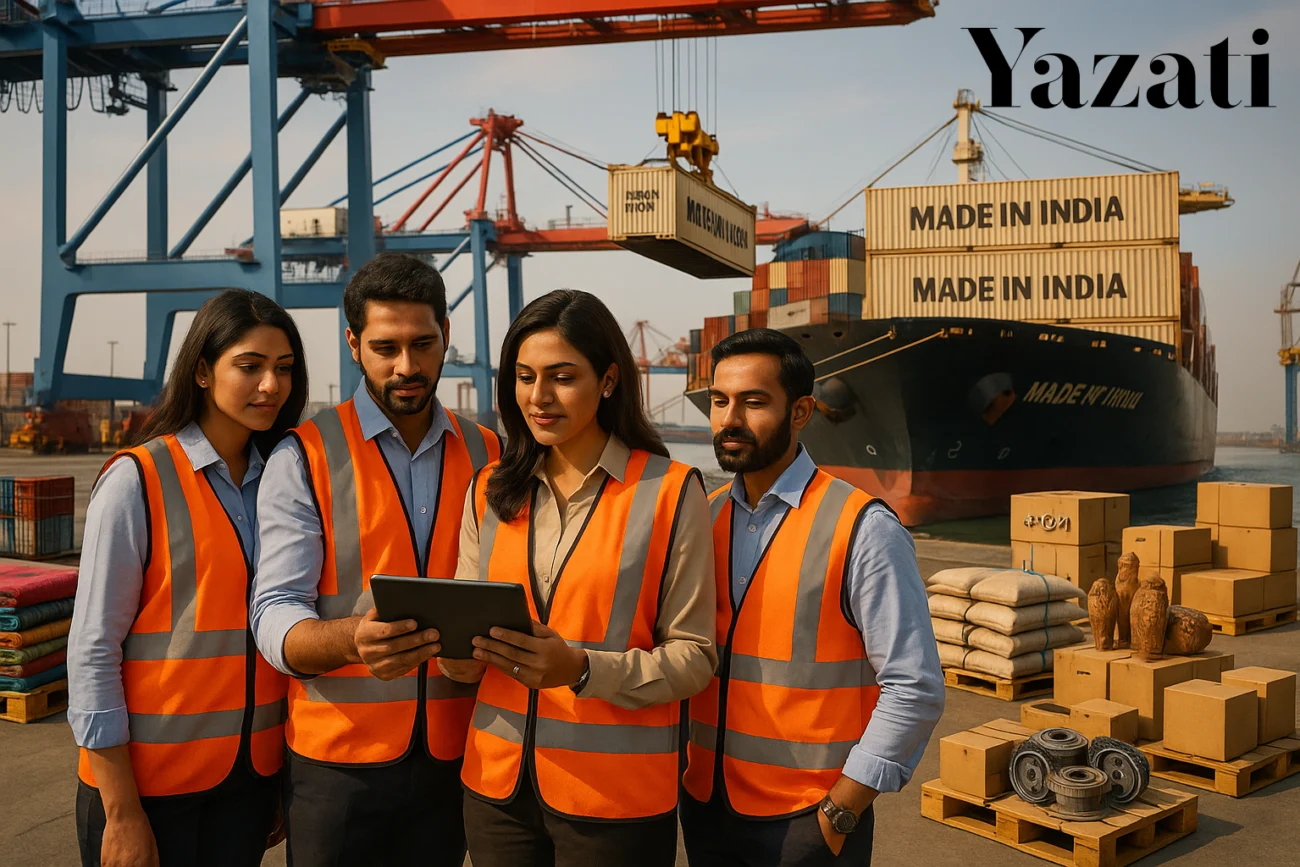
Introduction: The Rise of India as a Global Export Powerhouse
India has undergone a remarkable transformation in its export landscape, evolving from small-scale cottage industries to a dynamic global export hub. Today, the country’s products reach over 190 nations, ranging from handcrafted textiles to sophisticated pharmaceuticals and IT services. This journey reflects not only India’s economic resilience but also its growing integration into the global value chain.
In recent years, India’s export sector has been a cornerstone of its economic growth, accounting for a significant share of GDP. Initiatives like Make in India, Digital India, and Production Linked Incentive (PLI) schemes have modernized manufacturing, enhanced competitiveness, and attracted foreign investors. With exports crossing $770 billion in 2023-24, India is now positioning itself as a future global trade leader.
Historical Overview of India’s Export Landscape
Pre-Independence Trade and Colonial Impact
Before independence, India was renowned for its rich handicrafts, textiles, and spices. However, colonial rule redirected India’s trade priorities to serve British interests, reducing local industries to suppliers of raw materials. The decline of artisanal workshops marked a period of economic dependency that took decades to reverse.
Post-Independence Reforms and Industrialization
After 1947, India focused on self-sufficiency and import substitution. The early decades were marked by protectionist policies and licensing systems that limited export growth. Despite these constraints, sectors like textiles, tea, and jute maintained India’s export presence globally.
Liberalization of the 1990s: The Turning Point
The 1991 economic reforms revolutionized India’s trade environment. Tariff reductions, currency liberalization, and export incentives opened doors to global markets. This period witnessed an explosion in export diversity, from IT services to engineering goods, marking the dawn of India’s export renaissance.
Drivers Behind India’s Export Transformation
Government Policies and Trade Reforms
India’s government has continuously evolved its export framework through policies like the Foreign Trade Policy (FTP), Export Promotion Capital Goods (EPCG) scheme, and Special Economic Zones (SEZs). Bilateral trade agreements and free trade partnerships have also enhanced market access for Indian products.
Technological Advancement and Digitalization
Digital tools have redefined how Indian exporters operate. Platforms like ICEGATE (for customs automation) and DGFT online portals simplify export documentation, reducing turnaround times. Technology adoption has also enabled even small businesses to compete globally.
Rise of MSMEs and Startups in Export Ecosystem
Micro, Small, and Medium Enterprises (MSMEs) contribute nearly 45% of India’s total exports. Empowered by e-commerce and government incentives, these enterprises are driving innovation, particularly in sectors like handicrafts, organic food, and eco-friendly goods.
Key Export Sectors Fueling India’s Global Reach
Textiles and Handicrafts: The Traditional Pillars
India’s textile heritage remains a vital export contributor, with handmade products admired across Europe and the US. Regions like Surat, Tirupur, and Jaipur have evolved from local workshop clusters to international export hubs.
Pharmaceuticals, IT, and Engineering Goods
India’s pharmaceutical exports exceed $25 billion annually, driven by affordable generics and global trust in quality. Similarly, IT giants like Infosys and TCS dominate the digital export landscape, contributing billions to India’s export revenue.
Agricultural Exports and Food Processing Industry
India’s agri-exports—spices, rice, tea, and seafood—have reached record highs, supported by improved cold chains and quality standards. The rise of processed food exports shows how India is adding value to its agricultural produce.
Infrastructure and Logistics: Building the Global Supply Chain
India’s logistics backbone has undergone massive modernization. Projects like Sagarmala, Bharatmala, and Dedicated Freight Corridors enhance port connectivity and cargo efficiency.
Smart Warehousing and Logistics Hubs
Modern warehouses equipped with AI-based inventory systems and robotics are reducing export lead times. These “global warehouses” ensure seamless movement of goods across continents.
Government Initiatives like Sagarmala and Make in India
By strengthening port-led industrialization, Sagarmala has turned coastal states into export powerhouses. Make in India continues to encourage domestic manufacturing for global markets.
Challenges in India’s Export Ecosystem
While India’s export journey has been impressive, several challenges continue to test its competitiveness and long-term sustainability. These challenges range from infrastructural gaps to stringent global standards that exporters must consistently meet.
Regulatory and Bureaucratic Barriers
Despite the government’s push for “Ease of Doing Business,” exporters still face multiple layers of regulatory compliance. Lengthy customs procedures, documentation delays, and inconsistent state-level policies often increase export transaction costs. Small exporters, in particular, struggle with limited access to trade finance and foreign market intelligence.
Quality Standards and Global Competition
In the global marketplace, quality determines longevity. Indian products often face scrutiny due to inconsistent quality checks, packaging, and adherence to international standards. Moreover, competitors like China, Vietnam, and Bangladesh offer aggressive pricing and faster logistics turnaround, forcing Indian exporters to innovate continuously and adopt smart quality systems.
The Role of Digital Transformation in Exports
The digital revolution has become a major equalizer in India’s export story, bridging gaps between small producers and global consumers.
E-commerce Giants and Cross-border Trade
Global e-commerce platforms like Amazon Global Selling and Etsy have made it possible for Indian artisans and SMEs to reach international markets directly. In 2024 alone, over 125,000 Indian sellers joined global marketplaces, exporting handicrafts, apparel, and wellness products to over 200 countries.
Blockchain, AI, and Smart Trade Systems
Emerging technologies like blockchain and AI are enhancing transparency and efficiency in trade logistics. Blockchain ensures authenticity and traceability, particularly for food and pharmaceuticals, while AI-driven analytics optimize demand forecasting and inventory management. The introduction of e-RUPI and UPI International payments has also simplified cross-border financial transactions.
Case Studies: Success Stories of Indian Exporters
To understand India’s export transformation better, it’s essential to explore the stories of companies that have transcended boundaries and become global success icons.
Tata Consultancy Services (TCS) and Infosys
TCS and Infosys exemplify how Indian innovation meets global demand. These IT powerhouses export digital services worth billions annually, providing software solutions to Fortune 500 companies. Their growth reflects India’s move from a labor-driven to a knowledge-driven export economy.
Amul, Patanjali, and Indian Agricultural Brands
Brands like Amul and Patanjali have taken Indian dairy and wellness products global. Amul exports to more than 60 countries, while Patanjali’s herbal and organic products have found strong demand in markets like the Middle East and Africa. These success stories highlight how traditional Indian industries are adopting modern marketing, packaging, and e-commerce strategies to scale globally.
Future Prospects: India’s Roadmap to a $2 Trillion Export Economy
India has set an ambitious goal to achieve $2 trillion in exports by 2030, with a balanced mix of goods and services. Reaching this milestone requires continued innovation, infrastructure investment, and global collaboration.
Sustainability and Green Export Growth
The global demand for eco-friendly products presents a major opportunity. India is increasingly focusing on sustainable textiles, electric vehicles, and renewable energy exports. Solar panel manufacturing and green hydrogen exports could become the next big export frontiers.
Trade Agreements and Global Alliances
Recent Free Trade Agreements (FTAs) with the UAE, Australia, and the EU have opened new markets for Indian exporters. By negotiating favorable tariffs and reducing non-tariff barriers, India is ensuring its products remain globally competitive. Active participation in global forums like the WTO and G20 also enhances India’s trade diplomacy.
FAQs About India’s Export Transformation
1. What are India’s top export commodities?
India’s leading exports include petroleum products, gems and jewelry, pharmaceuticals, machinery, and IT services. Agricultural products such as rice, spices, and tea also contribute significantly.
2. How has digitalization improved India’s export process?
Digitalization has simplified customs clearance, online documentation, and financial transactions. Platforms like ICEGATE and DGFT Portal enable exporters to track shipments and manage paperwork efficiently.
3. What role do MSMEs play in India’s export growth?
MSMEs contribute about 45% of India’s total exports and are pivotal in sectors like textiles, handicrafts, and processed foods. Government schemes provide them with financial support and digital tools for global reach.
4. Which countries are India’s largest export partners?
The United States, United Arab Emirates, China, Bangladesh, and the Netherlands are among India’s top export destinations.
5. What initiatives support India’s export infrastructure?
Major initiatives include Sagarmala for port-led development, Bharatmala for highway connectivity, Make in India for manufacturing growth, and PLI schemes to promote industrial competitiveness.
6. What is the future outlook for India’s export sector?
The outlook is highly positive. With growing global demand, technological upgrades, and trade reforms, India is on track to become one of the world’s top five exporting nations by 2030.
Conclusion: From Local Workshops to Global Warehouses
India’s export transformation is more than an economic success story — it’s a reflection of resilience, adaptability, and innovation. From artisans in Jaipur weaving handcrafted textiles to engineers in Bengaluru exporting IT solutions, every sector contributes to this dynamic growth narrative.
The journey from local workshops to global warehouses showcases India’s ability to merge tradition with technology. As digital trade platforms expand and green manufacturing takes center stage, India is poised to redefine global supply chains in the coming decade.
By 2030, with a strong policy framework, technological innovation, and a skilled workforce, India’s dream of a $2 trillion export economy is not just achievable — it’s inevitable.
✨ Discover Global Sourcing Excellence with Netyex ✨
Netyex is your trusted B2B sourcing partner, connecting international buyers with India’s finest manufacturers and curated product lines—from handicrafts and home décor to kitchenware, textiles, hospitality essentials, and more. With verified suppliers and end-to-end support, we make global procurement seamless, reliable, and efficient.
👉 Elevate your sourcing experience—explore Netyex today.
📦 Bulk orders & customisation | 🌍 Worldwide delivery | 🤝 Trusted by global buyers
Visit Netyex to source premium Indian products with confidence.