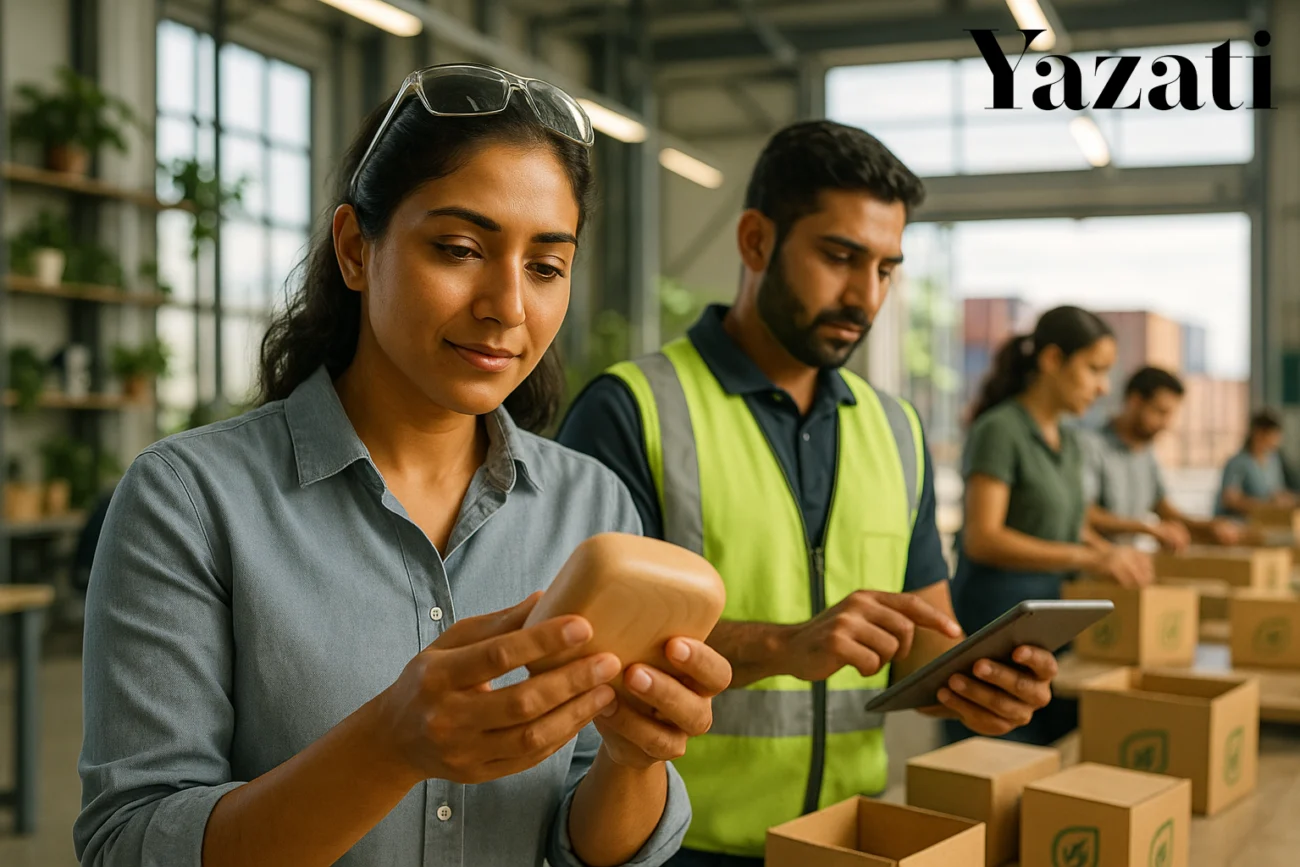
1. Understanding Green Manufacturing in India
1.1 What Is Green Manufacturing?
Green manufacturing refers to the production of goods using sustainable, eco-friendly, and energy-efficient methods. It emphasizes minimizing waste, reducing carbon emissions, and utilizing renewable resources. This approach ensures that industrial growth doesn’t come at the cost of environmental health.
India, a fast-developing economy, has recognized the urgency of adopting such practices to tackle pollution, resource depletion, and energy inefficiency. As global consumers increasingly demand sustainable products, Indian industries are reimagining their production lines to stay competitive and responsible.
1.2 Global Context: The Rise of Eco-Friendly Industries
Globally, industries are pivoting toward low-carbon technologies and circular economy models. Nations like Germany, Japan, and Sweden have already embedded sustainability into their manufacturing DNA. India’s alignment with this global movement marks a significant transformation, not only for environmental goals but also for its export competitiveness.
According to the International Energy Agency (IEA), the global green manufacturing market is expected to surpass $12 trillion by 2030. India’s commitment to sustainability positions it as a rising star in this lucrative domain.
2. India’s Sustainability Revolution in the Industrial Sector
2.1 Government Policies Promoting Eco Manufacturing
The Indian government has introduced several initiatives to push the green manufacturing agenda. Key policies include:
- Make in India 2.0 – Integrating sustainability into industrial development.
- National Clean Energy Fund (NCEF) – Supporting renewable projects.
- Perform, Achieve, and Trade (PAT) – Encouraging energy efficiency across sectors.
- National Solar Mission – Promoting solar energy use in manufacturing.
These efforts signal India’s shift from a resource-intensive economy to a sustainable industrial powerhouse.
2.2 Role of Technology and Innovation in Sustainability
Technological innovation is the backbone of India’s sustainability revolution. Companies now leverage:
- AI-driven efficiency analytics to optimize energy use.
- IoT-based sensors to monitor emissions in real-time.
- Blockchain for supply chain transparency.
- 3D printing and automation to reduce material waste.
Through digital transformation, India is redefining how factories operate — making them smart, sustainable, and globally compliant.
3. The Role of Yazati in India’s Green Transformation
3.1 Yazati’s Vision and Core Values
At the forefront of India’s green revolution stands Yazati, an emerging eco export leader committed to sustainability and innovation. Yazati’s philosophy revolves around “Green Growth for Global Good”, aligning profitability with environmental preservation.
The company’s mission is clear — to create products that benefit people and the planet. From raw material selection to packaging, every step reflects Yazati’s deep environmental commitment.
3.2 Key Industries and Export Markets
Yazati operates across several eco-friendly sectors including:
- Sustainable textiles
- Organic agricultural exports
- Recycled industrial components
- Renewable energy equipment
Its exports reach key global markets such as Europe, North America, and Southeast Asia, where demand for green-certified products is surging.
4. Yazati’s Eco Export Model: A Sustainable Blueprint
4.1 Circular Economy and Waste Reduction Practices
Yazati’s eco export model is built on the circular economy principle, where waste is minimized, and resources are reused or recycled. By repurposing manufacturing byproducts, Yazati reduces landfill waste and conserves raw materials — achieving both cost efficiency and environmental stewardship.
4.2 Sustainable Supply Chain Management
A truly green enterprise must also ensure sustainability beyond its own operations. Yazati collaborates with ethical suppliers who follow responsible sourcing standards. It employs digital tracking systems to ensure traceability and transparency, helping international buyers verify the sustainability of each shipment.
4.3 Renewable Energy Integration in Production
A major component of Yazati’s model is its integration of renewable energy. Solar panels, biomass systems, and energy-efficient machinery reduce the company’s carbon footprint while stabilizing operational costs. This proactive energy strategy also safeguards Yazati against volatile fuel markets.
5. Economic and Environmental Impact of Yazati’s Model
5.1 Boosting Export Competitiveness through Sustainability
Yazati’s green practices give it a competitive edge in international trade. Many global buyers now prioritize suppliers with strong sustainability credentials. By adopting eco-compliance frameworks like ISO 14001 and LEED certifications, Yazati has gained access to premium markets and higher-margin opportunities.
5.2 Reducing Carbon Footprint and Energy Costs
Yazati’s initiatives have led to a remarkable 20–30% reduction in energy consumption and a 40% reduction in waste generation. Such results underscore how sustainability isn’t just a moral choice — it’s a strategic business advantage that enhances efficiency and brand reputation alike.
6. Challenges in India’s Green Manufacturing Transition
6.1 Infrastructure and Technology Gaps
While India’s green manufacturing drive has gained momentum, infrastructure limitations remain a major hurdle. Many manufacturing zones lack reliable access to renewable energy grids, and green technologies—like electric furnace systems and waste heat recovery units—are still limited to large corporations.
Furthermore, the integration of Industry 4.0 technologies (AI, IoT, robotics) remains inconsistent across smaller enterprises. The majority of Micro, Small, and Medium Enterprises (MSMEs) still rely on conventional production techniques that are neither energy-efficient nor digitally enabled.
Bridging this gap will require public-private partnerships that provide affordable technology access and skill development programs tailored to sustainable manufacturing.
6.2 Cost Barriers and Financing Green Innovation
Transitioning to green manufacturing often involves high upfront costs — from installing renewable energy infrastructure to obtaining sustainability certifications. For smaller manufacturers, this can pose significant challenges.
To overcome this, India’s financial institutions and the government are introducing:
- Green credit lines and low-interest loans for sustainable projects.
- Carbon credit incentives for emission reduction achievements.
- Subsidies on renewable energy equipment and waste management systems.
Yazati, through its collaborations with eco-finance partners, showcases how financial innovation can empower sustainability even among cost-sensitive manufacturers.
7. Future Outlook: The Road Ahead for Green Manufacturing in India
7.1 Policy Support and Public-Private Collaboration
The next decade will be transformative for India’s green industry. The government’s National Green Hydrogen Mission and Production Linked Incentive (PLI) schemes for renewable technologies are laying the foundation for an eco-industrial ecosystem.
Public-private collaborations, such as those between Yazati and government-backed export promotion councils, are expected to accelerate green tech adoption and sustainability reporting among Indian exporters. This alignment between policy and innovation will help India achieve its Net Zero 2070 target faster.
7.2 Green Exports as India’s Global Advantage
As sustainability becomes a key differentiator in global trade, green exports are India’s ticket to a leadership position in the global marketplace.
Buyers in Europe, North America, and Japan now enforce strict Environmental, Social, and Governance (ESG) standards — and India’s green-certified exports already meet many of these criteria.
Yazati’s Eco Export Model serves as a replicable framework for other Indian exporters, demonstrating how sustainability can drive brand trust, profitability, and long-term competitiveness.
8. FAQs about India’s Shift Toward Green Manufacturing
Q1. What does “green manufacturing” mean in simple terms?
Green manufacturing refers to producing goods in ways that minimize pollution, conserve energy, and reduce waste — without compromising quality or output.
Q2. Why is India shifting toward green manufacturing?
India’s shift is driven by the need to reduce environmental degradation, meet international trade standards, and enhance the global competitiveness of its industries.
Q3. What makes Yazati’s Eco Export Model unique?
Yazati’s model combines circular economy principles, renewable energy use, and ethical supply chain management — creating a sustainable export framework that benefits both the environment and the economy.
Q4. How do government policies support green manufacturing in India?
Policies like Make in India 2.0, National Clean Energy Fund, and Green Hydrogen Mission provide incentives, funding, and regulatory frameworks to encourage sustainability across sectors.
Q5. What are the major challenges in implementing green manufacturing?
Key challenges include high setup costs, limited renewable energy infrastructure, and lack of awareness or training among small and medium-sized manufacturers.
Q6. How can small businesses adopt green manufacturing affordably?
They can start by implementing energy-efficient systems, using recyclable materials, and partnering with green export facilitators like Yazati to access sustainable supply chains and certifications.
9. Conclusion: A Sustainable Future Powered by Yazati’s Vision
India’s industrial transformation toward green manufacturing represents more than just a policy shift — it’s a mindset revolution. With the rise of sustainability-conscious consumers and stringent international regulations, India’s industries must evolve to thrive in the new global order.
Yazati’s Eco Export Model stands as a beacon of this evolution — proving that environmental responsibility and economic growth can coexist harmoniously. Through renewable energy adoption, circular production systems, and transparent sourcing, Yazati has demonstrated how sustainable manufacturing can lead to global competitiveness and national pride.
As India continues its journey toward a carbon-neutral economy, models like Yazati’s will serve as roadmaps for future generations of manufacturers, reinforcing the message that the green path is not just ethical — it’s profitable, scalable, and inevitable.
✨ Discover Global Sourcing Excellence with Netyex ✨
Netyex is your trusted B2B sourcing partner, connecting international buyers with India’s finest manufacturers and curated product lines—from handicrafts and home décor to kitchenware, textiles, hospitality essentials, and more. With verified suppliers and end-to-end support, we make global procurement seamless, reliable, and efficient.
👉 Elevate your sourcing experience—explore Netyex today.
📦 Bulk orders & customisation | 🌍 Worldwide delivery | 🤝 Trusted by global buyers
Visit Netyex to source premium Indian products with confidence.