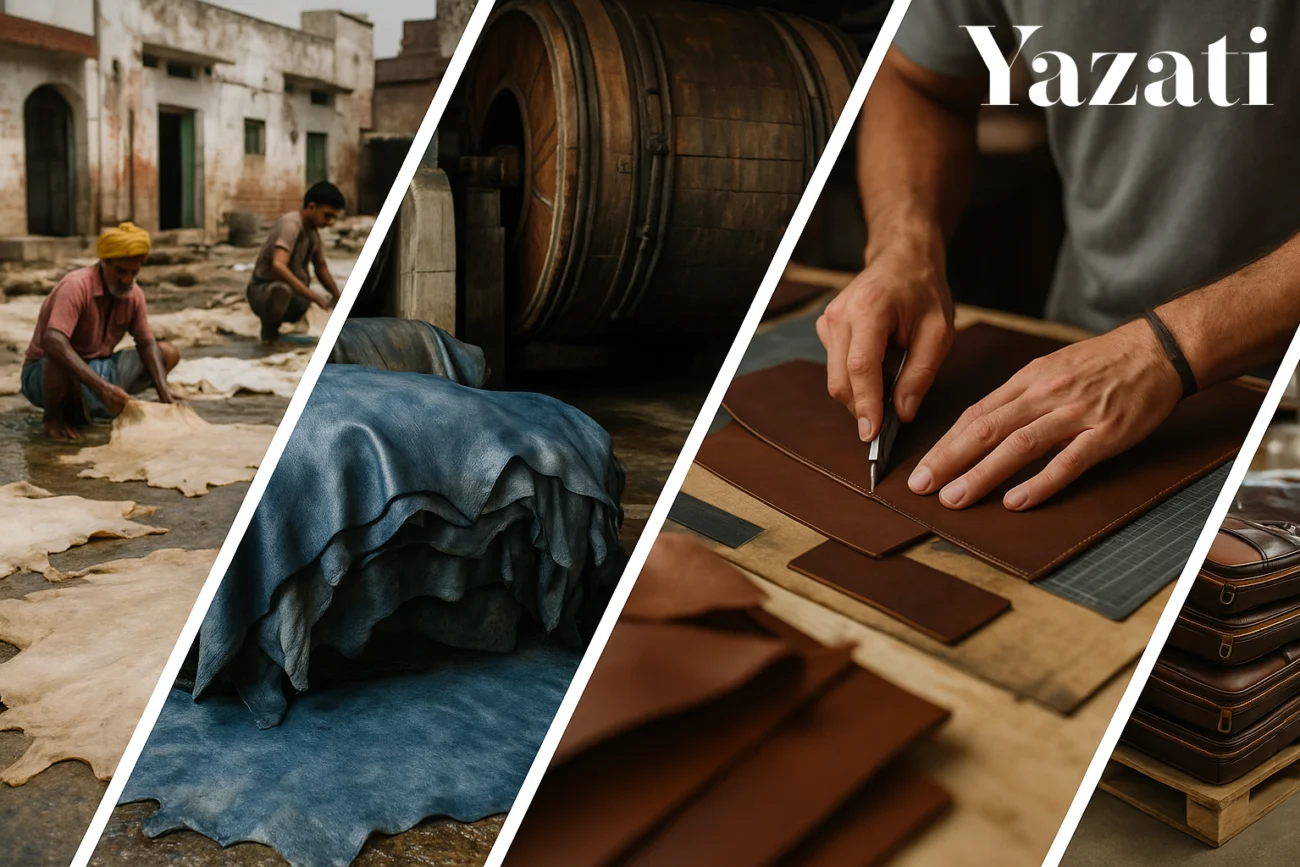
Introduction: Understanding India’s Leather Industry Landscape
India’s leather industry stands as one of the most diverse and dynamic sectors in the global manufacturing ecosystem. As one of the world’s top producers and exporters of leather and leather goods, India combines ancient craftsmanship with modern manufacturing prowess. The industry is a cornerstone of the country’s export economy, employing over 4 million people, many of whom are women, and generating billions in annual foreign exchange earnings.
Leather production in India isn’t merely an industry—it’s an art form woven into the nation’s cultural and economic fabric. From intricate hand-tooling to cutting-edge tanning technologies, Indian leather reflects a blend of heritage and innovation that continues to attract global buyers.
Historical Roots of Leather Crafting in India
The origins of leather crafting in India trace back thousands of years, with archaeological findings in the Indus Valley Civilization revealing early tanning techniques. Over time, regional styles evolved—Rajasthan became known for leather accessories, while Tamil Nadu emerged as a tanning powerhouse. The artistry was refined through centuries of royal patronage and global trade interactions.
The Global Reputation of Indian Leather
Indian leather holds a special place in international markets due to its durability, versatility, and aesthetic appeal. Countries such as Germany, Italy, the United States, and the United Kingdom remain key buyers of Indian leather products, particularly footwear, handbags, and garments. The sector’s growth is also supported by favorable trade policies, cost competitiveness, and a highly skilled labor force.
Overview of India’s Leather Supply Chain
India’s leather supply chain is vast and complex, encompassing everything from rural hide collection to urban export hubs. The process involves multiple stakeholders — including farmers, tanners, artisans, manufacturers, and exporters — all contributing to a system that transforms raw hides into premium global goods.
Major Stages: From Raw Hides to Finished Leather
The journey of leather in India typically follows five main stages:
- Raw material sourcing (animal hides and skins)
- Tanning (conversion into usable leather)
- Finishing (coloring, polishing, texturing)
- Manufacturing (crafting into goods)
- Export and distribution
Each stage adds value, requiring precision and compliance with international standards.
Key States and Cities Driving Leather Production
Several Indian states dominate the country’s leather supply chain:
- Uttar Pradesh (Kanpur, Agra) – Known for its leather footwear and saddlery.
- Tamil Nadu (Chennai, Vellore, Ambur) – Home to some of the world’s largest tanneries.
- West Bengal (Kolkata) – Specializes in leather bags and gloves.
- Maharashtra and Punjab – Emerging centers for sustainable leather production.
Sourcing Raw Materials: The First Step in the Leather Chain
Leather manufacturing begins with raw hides and skins, primarily derived from cattle, buffalo, sheep, and goats. India’s vast livestock base provides a steady supply of hides, making it one of the largest producers globally.
Livestock and Hide Collection Process
After animals are slaughtered (usually for the meat industry), hides are preserved using salting or chilling methods to prevent decay. These are then collected by small-scale traders who act as intermediaries between abattoirs and tanneries.
Role of Small-Scale Collectors and Regional Traders
Small collectors form the backbone of this supply network, particularly in rural India. They aggregate hides from villages and transport them to urban tanneries, often under tight time constraints to maintain quality.
Inside the Tannery: How Raw Hides Are Transformed
A tannery is where the magic — and science — of leather production truly begins. Raw hides undergo chemical and mechanical processes to become soft, flexible, and durable.
Tanning Processes: Chrome, Vegetable, and Synthetic Methods
- Chrome Tanning: The most common process, known for producing supple, water-resistant leather.
- Vegetable Tanning: An eco-friendlier method using natural tannins from plants.
- Synthetic Tanning: Utilizes modern chemicals for specific finishes and textures.
Environmental and Health Concerns in Tanneries
Tanneries are resource-intensive, using significant water and chemicals. Improper waste disposal can cause pollution, making environmental compliance a major concern. India has introduced stringent effluent treatment norms to tackle these issues.
Technological Innovations Improving Sustainability
Today, modern tanneries are adopting zero-liquid discharge systems, eco-friendly chemicals, and waste recycling technologies. Companies like Tata International and Superhouse Group are setting benchmarks for green practices.
Leather Finishing and Product Manufacturing
Once tanned, leather undergoes further processing to achieve the desired color, texture, and sheen. The finishing process is crucial to defining the final look and feel of the product.
From Wet Blue to Finished Leather: Stages Explained
“Wet blue” leather, the semi-processed form after tanning, is further dyed, conditioned, and polished. Skilled artisans then transform it into a variety of products such as footwear, handbags, belts, upholstery, and garments.
Leather Product Clusters: Footwear, Bags, Garments, and Accessories
- Footwear: Accounts for 45% of India’s total leather exports.
- Garments: Renowned for quality stitching and design.
- Bags and Accessories: Popular in European markets for their craftsmanship.
Quality Control and Compliance in India’s Leather Industry
Maintaining consistent quality across a complex and decentralized supply chain is one of India’s greatest challenges—and strengths. To meet international standards, every batch of leather undergoes rigorous testing for color fastness, tear resistance, and chemical safety.
Government Standards and Export Certification Requirements
The Indian government enforces strict compliance measures through organizations like the Bureau of Indian Standards (BIS) and the Central Leather Research Institute (CLRI). These bodies ensure that exported leather meets ISO, REACH, and RoHS certification standards demanded by markets in Europe and North America.
Key certifications include:
- ISO 9001 – Quality management
- REACH Compliance – Restricts harmful chemicals
- Eco-label Certifications – For environmentally friendly leather
Role of the Council for Leather Exports (CLE)
The Council for Leather Exports (CLE) acts as a bridge between the government and industry stakeholders. It promotes Indian leather in global trade fairs, facilitates export documentation, and supports quality upgradation initiatives. Through training programs and financial assistance, CLE ensures India remains globally competitive.
Export Dynamics: India’s Position in Global Trade
India ranks among the top five exporters of leather goods globally, supplying over $5 billion worth of products annually to major markets such as the EU, USA, and UK. The sector’s diversity—from footwear and handbags to leather garments—gives it a significant edge in global commerce.
Top Importers of Indian Leather Goods
The biggest buyers of Indian leather are:
- Germany
- Italy
- United States
- United Kingdom
- France
Together, these countries account for nearly 70% of India’s leather exports.
Competitive Edge: Labor, Craftsmanship, and Design
India’s competitive advantage lies in its skilled workforce and handcrafted expertise. Unlike mass-produced synthetic leather goods from some countries, Indian leather stands out for its artisanal detailing, design innovation, and durable quality.
Key Export Hubs and Port Logistics
Major export hubs include Chennai, Kolkata, Mumbai, and Delhi, supported by ports like Chennai Port, JNPT (Navi Mumbai), and Kolkata Port. Efficient logistics and digitalized customs processes have streamlined the export mechanism, ensuring timely delivery to international buyers.
Sustainability and Ethical Challenges in the Leather Supply Chain
While leather is prized for its longevity, the production process often raises environmental concerns. Tanneries, particularly small and unregulated ones, can contribute to water pollution, waste mismanagement, and toxic chemical use.
Water Pollution and Waste Management Issues
Traditional tanning requires large volumes of water and generates waste that contains chromium, sulfides, and organic matter. Improper disposal contaminates local waterways and soil. Cities like Kanpur have faced scrutiny for their tannery pollution affecting the Ganga River.
Initiatives for Cleaner Production and Green Tanning
To counter these challenges, the industry is transitioning toward Cleaner Production (CP) technologies. Examples include:
- Effluent Treatment Plants (ETPs) and Common Effluent Treatment Plants (CETPs)
- Zero-Liquid Discharge (ZLD) systems in Tamil Nadu
- Use of biodegradable tanning agents
- Partnerships with environmental NGOs and UNIDO for sustainable development
These measures are not just eco-conscious but also boost India’s credibility among global eco-conscious buyers.
The Rise of Synthetic and Vegan Leather Alternatives
As global consumers shift toward sustainability and animal welfare, the vegan leather segment is gaining traction. These materials mimic the look and feel of leather without animal hides.
How Faux Leather Is Impacting the Market
Faux leather—made from polyurethane (PU), polyvinyl chloride (PVC), or plant-based fibers like pineapple leaves (Piñatex)—is reshaping consumer preferences. Brands are increasingly incorporating vegan options to appeal to ethical buyers.
However, synthetic leather has its drawbacks—many variants are petroleum-based and not biodegradable. This has led Indian innovators to explore bio-based alternatives, such as mushroom leather and apple peel leather.
Opportunities and Threats for India’s Traditional Tanning Sector
The rise of vegan leather poses a dual challenge:
- Threat: Reduced demand for animal-derived leather in Western markets.
- Opportunity: New business lines in eco-friendly leather alternatives.
Forward-looking Indian companies are diversifying to include both traditional and sustainable product lines, ensuring resilience in a changing market.
Government Policies and Initiatives Supporting the Leather Sector
Recognizing the sector’s export potential, the Indian government has launched several initiatives under “Make in India” and “Atmanirbhar Bharat.”
Make in India and Export Promotion Schemes
Policies such as the Indian Footwear, Leather & Accessories Development Programme (IFLADP) and Integrated Leather Development Scheme (ILDP) provide:
- Subsidies for modern machinery and infrastructure
- Funding for effluent treatment systems
- Support for Mega Leather Clusters (MLCs)
- Export promotion incentives and market access assistance
Skill Development and Employment Generation Programs
India’s leather industry heavily relies on manual craftsmanship. The Skill India Mission collaborates with CLRI and FDDI (Footwear Design & Development Institute) to train thousands of artisans annually, helping improve productivity and product quality.
Future Outlook: What Lies Ahead for India’s Leather Industry
The future of India’s leather supply chain hinges on sustainability, innovation, and global branding. With increasing scrutiny on environmental impact, the sector is pivoting toward eco-friendly tanning and traceable supply chains.
Adapting to Global Sustainability Trends
Exporters are integrating blockchain technology for transparency and traceability in sourcing. Buyers can now verify where leather was produced and whether ethical labor standards were maintained—an emerging requirement in Western markets.
Boosting Technological Upgradation and Digital Traceability
Automation in cutting, stitching, and finishing is enhancing efficiency while reducing waste. Digital tools also enable predictive maintenance in tanneries, ensuring better yield and consistency.
India’s next leap will come from embracing “green competitiveness”—producing leather that is as ethical as it is beautiful.
FAQs About India’s Leather Supply Chain
1. What makes India a leading player in the global leather industry?
India’s large livestock base, skilled artisans, and strong manufacturing infrastructure make it one of the top five global exporters of leather and leather goods.
2. Which cities in India are most famous for leather production?
Chennai, Kanpur, Kolkata, and Agra are the key leather clusters, known for tanning, footwear, and high-quality leather products.
3. How is India addressing pollution from tanneries?
The government mandates effluent treatment plants and promotes zero-liquid discharge systems to control water pollution.
4. What is the difference between genuine leather and vegan leather?
Genuine leather comes from animal hides, while vegan leather is made from synthetic or plant-based materials like PU or pineapple fibers.
5. Does India export finished leather or raw hides?
India primarily exports finished leather and leather goods such as footwear, handbags, and garments, rather than raw hides.
6. What’s the future of the leather industry in India?
The future looks promising with a focus on eco-friendly tanning, export diversification, and digital traceability, making India a hub for sustainable leather.
Conclusion: The Road Ahead for India’s Leather Exports
India’s leather supply chain is a testament to resilience, craftsmanship, and evolution. From the bustling tanneries of Tamil Nadu to the export hubs of Chennai and Kolkata, the journey of leather in India is both a story of heritage and a blueprint for modernization.
As the world leans toward sustainable and ethical consumption, India’s leather industry stands at a crossroads. By embracing innovation, transparency, and eco-conscious practices, it can not only retain but strengthen its position as a global leader in leather exports.
For those looking to explore or invest in the sector, understanding India’s unique blend of tradition and technology is the key to unlocking its immense potential.
✨ Discover Global Sourcing Excellence with Netyex ✨
Netyex is your trusted B2B sourcing partner, connecting international buyers with India’s finest manufacturers and curated product lines—from handicrafts and home décor to kitchenware, textiles, hospitality essentials, and more. With verified suppliers and end-to-end support, we make global procurement seamless, reliable, and efficient.
👉 Elevate your sourcing experience—explore Netyex today.
📦 Bulk orders & customisation | 🌍 Worldwide delivery | 🤝 Trusted by global buyers
Visit Netyex to source premium Indian products with confidence.