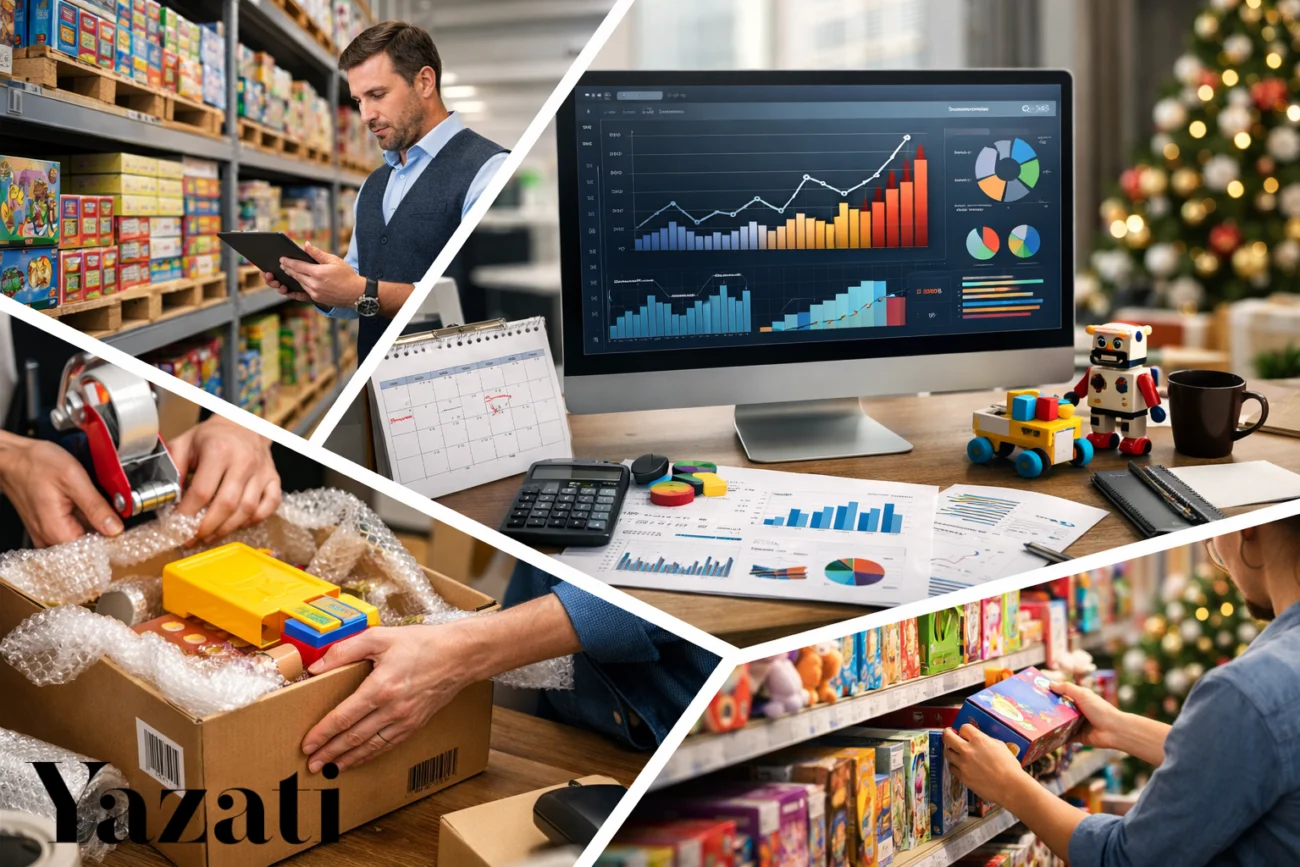
Introduction to Seasonal Toy Demand Challenges
Why Toy Demand Is Highly Seasonal
Unlike everyday products, toys are deeply tied to emotions, celebrations, and trends. Demand typically surges during:
- Christmas and holiday seasons
- Back-to-school periods
- Black Friday and Cyber Monday
- Movie releases and viral trends
Children’s preferences change quickly. A toy popular today may be forgotten tomorrow. This unpredictability creates extreme sales peaks followed by slow periods.
The Financial Risks of Overstocking and Stockouts
Two major risks dominate toy retail:
Overstocking
- Increased storage costs
- Discounted clearance sales
- Cash flow constraints
Stockouts
- Lost sales opportunities
- Damaged brand reputation
- Reduced customer loyalty
Striking the right balance is crucial—and that’s where predictive ordering shines.
Understanding Predictive Ordering in Retail
What Is Predictive Ordering?
Predictive ordering uses historical sales data, market trends, and advanced analytics to forecast future demand. Instead of relying on guesswork, retailers use data-driven insights to determine:
- How much inventory to order
- When to reorder
- Which products will perform best
It replaces intuition with measurable forecasting models.
How Data Drives Demand Forecasting
Predictive systems analyze patterns such as:
- Year-over-year sales comparisons
- Weekly seasonal fluctuations
- Consumer buying cycles
- Promotional performance
By identifying patterns, retailers can prepare for upcoming surges months in advance.
Key Data Sources for Accurate Forecasting
Historical Sales Trends
Past performance is the foundation of accurate forecasting. Reviewing at least 2–3 years of sales data reveals:
- Peak selling weeks
- Slow-moving SKUs
- Best-performing product categories
This historical lens provides clarity about recurring patterns.
Market Trends and Consumer Behavior
Social media trends, influencer endorsements, and entertainment releases significantly impact toy sales. Monitoring:
- Trending hashtags
- Pre-order volumes
- Industry reports
helps retailers anticipate demand shifts before they happen.
Promotions, Events, and Holiday Cycles
Seasonal promotions amplify demand spikes. Retailers must account for:
- Discount events
- Loyalty campaigns
- Advertising pushes
Ignoring promotional effects can distort forecasts.
Benefits of Managing Seasonal Toy Demand with Predictive Ordering
Implementing predictive ordering doesn’t just improve accuracy—it transforms operations.
Improved Inventory Accuracy
Forecasting models reduce human error. Retailers can:
- Order optimal quantities
- Minimize dead stock
- Reduce manual adjustments
Accurate data leads to smarter purchasing decisions.
Reduced Storage Costs
Excess inventory consumes warehouse space and capital. Predictive ordering ensures:
- Leaner stock levels
- Faster turnover rates
- Lower storage fees
Efficiency equals profitability.
Increased Customer Satisfaction
When popular toys remain in stock during peak seasons, customers trust the brand. Reliable availability builds loyalty and repeat business.
Technologies Powering Predictive Ordering
AI and Machine Learning Tools
Artificial Intelligence analyzes large datasets instantly. Machine learning models:
- Detect demand patterns
- Improve forecasts over time
- Adjust predictions based on new data
The more data they process, the smarter they become.
POS and ERP Integration
Point-of-sale systems provide real-time sales data. ERP systems manage inventory and supply chains. When integrated, they:
- Automatically trigger reorders
- Track stock levels
- Align purchasing with demand
Cloud-Based Forecasting Platforms
Cloud solutions allow centralized data access across multiple locations. Benefits include:
- Scalability
- Real-time collaboration
- Remote monitoring
Retailers can oversee seasonal planning from anywhere.
Step-by-Step Implementation Strategy
Step 1: Data Collection and Cleanup
Before forecasting, ensure data accuracy. Remove:
- Duplicate records
- Inconsistent SKU labeling
- Incomplete sales entries
Clean data ensures reliable predictions.
Step 2: Forecast Model Selection
Common forecasting models include:
- Time-series analysis
- Regression models
- Machine learning algorithms
The best model depends on business size and data complexity.
Step 3: Continuous Monitoring and Adjustment
Forecasting isn’t a one-time process. Retailers must:
- Compare predictions with actual sales
- Adjust models regularly
- Refine safety stock levels
Continuous improvement ensures long-term accuracy.
Handling Holiday Surges and Promotional Spikes
Black Friday and Christmas Planning
Holiday seasons can generate up to 50% of annual toy sales. Retailers should:
- Begin forecasting 6–9 months in advance
- Secure supplier commitments early
- Increase safety stock for bestsellers
Preparation prevents last-minute chaos.
Managing Limited-Edition and Trending Toys
Some toys become instant sensations due to viral trends. Predictive systems monitor:
- Pre-order demand
- Social media growth
- Early sales velocity
Rapid adjustments help capture peak profitability.
Risk Management and Contingency Planning
Supplier Diversification
Relying on one supplier increases risk. Diversified sourcing ensures:
- Backup inventory options
- Reduced disruption during shortages
- Faster replenishment
Safety Stock Optimization
Safety stock acts as a buffer during unexpected demand spikes. However, excess safety stock defeats efficiency. Predictive analytics calculate:
- Optimal buffer quantities
- Risk-adjusted reorder points
Balance is everything.
Real-World Example of Predictive Ordering Success
Consider a mid-sized toy retailer preparing for the holiday season. Historically, they overstocked by 20%, leading to heavy January discounts. After implementing predictive ordering:
- Overstock reduced by 15%
- Stockouts decreased by 30%
- Profit margins increased by 12%
By analyzing sales trends and adjusting order cycles, the retailer turned seasonal unpredictability into structured planning.
Common Mistakes to Avoid
- Ignoring historical data
- Over-relying on intuition
- Failing to update forecasts
- Not accounting for promotions
- Neglecting supplier lead times
Avoiding these errors strengthens forecasting accuracy.
Future Trends in Toy Demand Forecasting
The future looks promising. Emerging technologies include:
- Real-time AI demand sensing
- Predictive analytics powered by big data
- Automated supply chain adjustments
- Blockchain-based supplier tracking
Retailers who embrace innovation will stay competitive.
Frequently Asked Questions (FAQs)
1. What is predictive ordering in toy retail?
Predictive ordering uses data analytics to forecast future toy demand and optimize inventory levels accordingly.
2. Why is seasonal demand so extreme in the toy industry?
Toy sales are heavily influenced by holidays, promotions, entertainment releases, and viral trends, creating sharp demand spikes.
3. How far in advance should retailers plan for holiday demand?
Ideally, forecasting should begin 6–9 months before peak seasons to secure supplier commitments and optimize stock levels.
4. Can small retailers use predictive ordering?
Yes. Many affordable cloud-based forecasting tools are designed specifically for small and medium-sized businesses.
5. What happens if forecasts are wrong?
Continuous monitoring allows adjustments. Safety stock and supplier flexibility help manage forecasting errors.
6. Does predictive ordering eliminate stockouts completely?
While it significantly reduces stockouts, no system guarantees perfection. However, accuracy improves with data quality and ongoing refinement.
Conclusion: Turning Seasonal Chaos into Predictable Success
Seasonal demand doesn’t have to feel like a rollercoaster. With the right strategy, data-driven insights can replace uncertainty with clarity. Managing Seasonal Toy Demand with Predictive Ordering empowers retailers to balance inventory, reduce financial risks, and maximize profitability during peak seasons.
By investing in forecasting technology, cleaning data consistently, and refining predictive models, toy retailers transform seasonal chaos into controlled growth. Instead of reacting to demand spikes, they anticipate them.
In today’s competitive retail environment, success belongs to those who plan ahead. And when it comes to toys—where trends move fast and holidays drive massive sales—predictive ordering isn’t just helpful. It’s essential.
✨ Discover Global Sourcing Excellence with Netyex ✨
Netyex is your trusted B2B sourcing partner, connecting international buyers with India’s finest manufacturers and curated product lines—from handicrafts and home décor to kitchenware, textiles, hospitality essentials, and more. With verified suppliers and end-to-end support, we make global procurement seamless, reliable, and efficient.
👉 Elevate your sourcing experience—explore Netyex today.
📦 Bulk orders & customisation | 🌍 Worldwide delivery | 🤝 Trusted by global buyers
Visit Netyex to source premium Indian products with confidence.