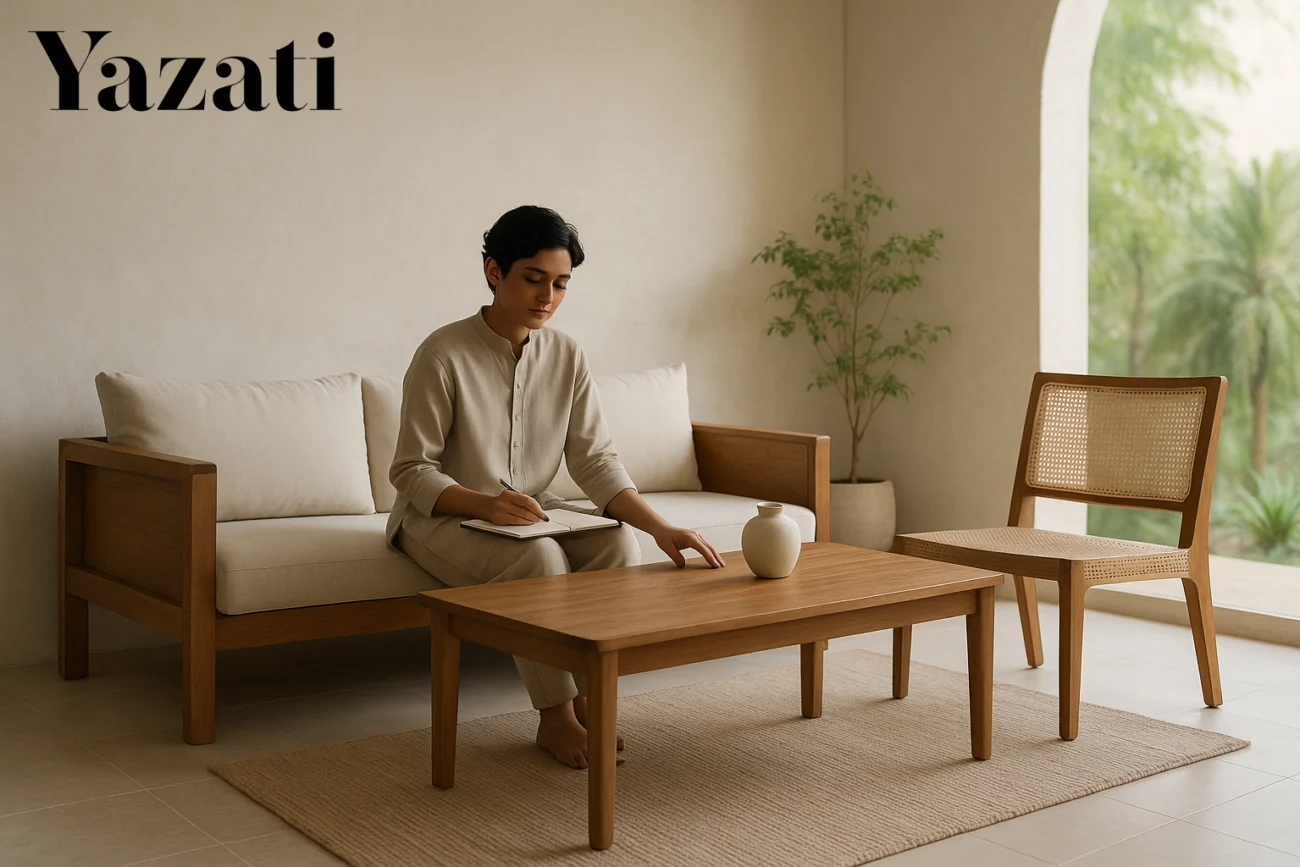
Introduction: Minimalism Through an Indian Lens
The Art of Minimalist Indian Furniture Design represents a quiet yet powerful shift in how Indian craftsmanship is interpreted for contemporary living. While India is often associated with ornate detailing and rich embellishment, minimalist Indian furniture reveals another side of its design legacy—one rooted in restraint, balance, and purpose.
Minimalism in the Indian context is not about emptiness. It is about intention. Each line, surface, and material choice serves a function, reflecting a philosophy that values harmony between people, objects, and space. This approach has gained strong global relevance as modern lifestyles increasingly favor calm, uncluttered environments.
Understanding Minimalist Furniture Design
Minimalist furniture design focuses on reducing form to its essentials. It emphasizes:
- Clean, simple lines
- Functional design
- Neutral or natural color palettes
- Absence of unnecessary decoration
The goal is not austerity, but clarity. Furniture is designed to support living rather than dominate it. This philosophy aligns naturally with many traditional Indian principles that prioritize balance, usability, and longevity.
Indian Design Philosophy and Simplicity
Indian design traditions have long embraced simplicity, even if expressed differently across regions. In India, everyday objects were historically designed for practical use, durability, and ease of repair.
Concepts such as balance, proportion, and respect for materials are deeply ingrained in Indian craft traditions. Minimalist Indian furniture draws from these values by:
- Letting materials speak for themselves
- Reducing visual noise
- Focusing on proportion and comfort
This philosophical grounding gives minimalist Indian furniture a sense of quiet depth rather than superficial simplicity.
Evolution of Minimalist Furniture in India
Minimalist Indian furniture design has evolved through a blend of tradition and modern influence. As urban living spaces became smaller and global design exposure increased, Indian designers and artisans began reinterpreting traditional furniture forms.
Key influences include:
- Modern urban lifestyles
- Global minimalist movements
- Demand for multifunctional furniture
The result is furniture that feels contemporary yet rooted—bridging old-world craftsmanship with modern design sensibilities.
Core Elements of Minimalist Indian Furniture
Clean Lines and Functional Forms
Minimalist Indian furniture is defined by clarity of form. Straight lines, gentle curves, and balanced proportions replace heavy ornamentation.
Design focuses on:
- Structural integrity
- Visual lightness
- Ease of use
Every element has a purpose, reinforcing the idea that good design is as much about what is removed as what remains.
Natural Materials and Honest Craft
Materials play a central role in The Art of Minimalist Indian Furniture Design. Commonly used materials include:
- Solid wood with visible grain
- Natural stone
- Cane and woven fibers
- Metal with subtle finishes
These materials are often minimally treated, allowing natural textures and imperfections to become part of the design language.
Role of Craftsmanship in Minimalist Design
Minimalist design leaves no room for error. Without ornamentation to hide flaws, craftsmanship must be precise. Indian artisans bring exceptional skill to minimalist furniture by:
- Ensuring clean joinery
- Achieving smooth, consistent finishes
- Maintaining structural balance
The human touch is subtle but present, giving minimalist furniture warmth and character rather than cold uniformity.
Material Choices That Define Minimalism
Material selection in minimalist Indian furniture prioritizes longevity and sustainability. Solid woods such as teak, mango, and ash are favored for their durability and natural beauty.
Materials are chosen not for excess but for:
- Strength and stability
- Aging gracefully over time
- Low environmental impact
This thoughtful approach reinforces the idea that minimalist furniture is an investment rather than a disposable commodity.
Color Palettes in Minimalist Indian Furniture
Color in minimalist Indian furniture is intentionally restrained. Common palettes include:
- Warm wood tones
- Soft neutrals such as beige, grey, and off-white
- Muted earth tones
These colors create calm, adaptable interiors that work across different spaces and cultures. The focus remains on form, texture, and proportion rather than visual drama.
Functionality Over Ornamentation
One of the defining traits of The Art of Minimalist Indian Furniture Design is its commitment to functionality. Furniture is designed to serve real needs:
- Comfortable seating
- Efficient storage
- Flexible use in compact spaces
Multi-functional designs—such as benches with storage or modular seating—are especially popular, reflecting modern living requirements.
Sustainability and Conscious Living
Minimalist Indian furniture aligns strongly with sustainable living. Its emphasis on quality over quantity supports:
- Reduced consumption
- Longer product lifecycles
- Lower waste generation
Handcrafted production methods further reduce environmental impact, making minimalist furniture a natural choice for conscious consumers.
Minimalist Indian Furniture in Global Interiors
Globally, minimalist Indian furniture is appreciated for its versatility. It blends seamlessly with:
- Scandinavian interiors
- Modern Western homes
- Japandi and contemporary spaces
Its neutral aesthetics and artisanal quality allow it to complement diverse design styles while maintaining a distinct identity.
Challenges in Designing Minimalist Furniture
Designing minimalist furniture is not easy. Challenges include:
- Achieving visual balance without decoration
- Maintaining consistency in handmade production
- Educating buyers about the value of simplicity
However, when executed well, minimalist design offers enduring appeal and commercial longevity.
FAQs on Minimalist Indian Furniture Design
1. Is minimalist Indian furniture different from Western minimalism?
Yes. It blends simplicity with warmth, craftsmanship, and cultural depth.
2. What materials are most common in minimalist Indian furniture?
Solid wood, cane, metal, and natural stone.
3. Does minimalist furniture lack character?
No. Subtle craftsmanship and natural materials add quiet character.
4. Is minimalist Indian furniture suitable for small homes?
Yes, it is ideal due to its functional and space-efficient design.
5. How does craftsmanship influence minimalist design?
Precision and skill are essential, as there is no ornamentation to mask flaws.
6. Is minimalist Indian furniture sustainable?
Often yes, due to durable materials and low-waste production.
Conclusion
The Art of Minimalist Indian Furniture Design demonstrates that simplicity can be deeply expressive. Rooted in traditional values yet shaped by modern needs, this design approach offers furniture that is calm, functional, and enduring.
By focusing on craftsmanship, natural materials, and purposeful design, minimalist Indian furniture creates spaces that feel grounded and timeless. In a world increasingly overwhelmed by excess, this quiet design language offers not just aesthetic appeal, but a more thoughtful way of living.
✨ Discover Global Sourcing Excellence with Netyex ✨
Netyex is your trusted B2B sourcing partner, connecting international buyers with India’s finest manufacturers and curated product lines—from handicrafts and home décor to kitchenware, textiles, hospitality essentials, and more. With verified suppliers and end-to-end support, we make global procurement seamless, reliable, and efficient.
👉 Elevate your sourcing experience—explore Netyex today.
📦 Bulk orders & customisation | 🌍 Worldwide delivery | 🤝 Trusted by global buyers
Visit Netyex to source premium Indian products with confidence.