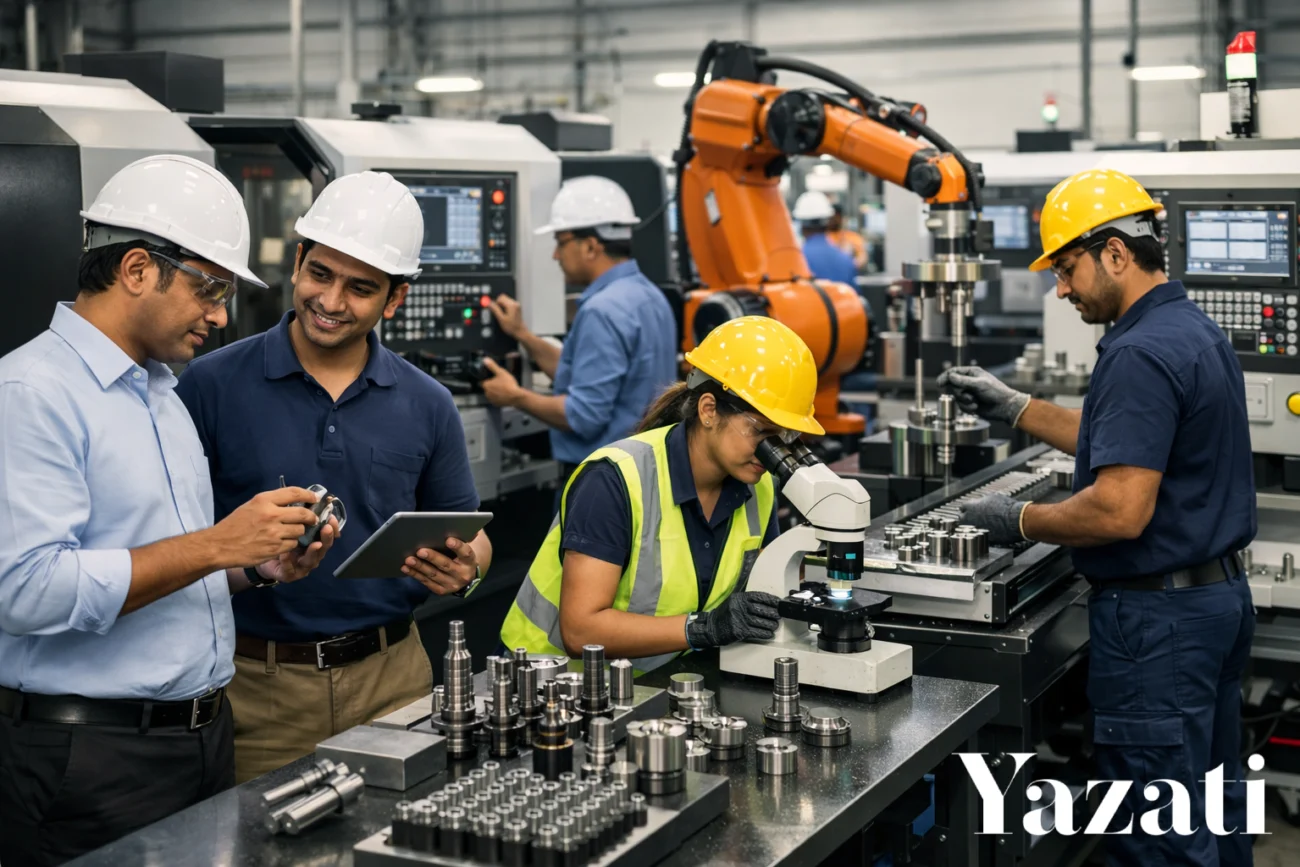
Introduction to Automation in Tool Manufacturing
The The Automation Revolution in India’s Tool Manufacturing is transforming the industrial landscape like never before. Over the past decade, India has witnessed a remarkable shift from traditional manufacturing methods to highly automated and technology-driven systems. This transformation is not just about machines replacing human labor—it’s about enhancing precision, improving efficiency, and positioning India as a global manufacturing powerhouse.
What is Tool Manufacturing?
Tool manufacturing involves the design and production of tools, dies, molds, and precision instruments used in industries such as automotive, aerospace, electronics, and construction. These tools are essential for shaping, cutting, and assembling products.
Traditionally, this sector relied heavily on manual labor and conventional machines. However, with increasing demand for accuracy and speed, automation has become a necessity rather than a choice.
The Rise of Automation in India
India’s push toward automation has been fueled by rapid industrialization, digital transformation, and global competition. Manufacturers are now adopting advanced technologies such as robotics, artificial intelligence, and IoT to streamline operations and reduce costs.
Historical Evolution of India’s Manufacturing Sector
Pre-Automation Era Challenges
Before automation, India’s tool manufacturing sector faced several challenges:
- Inconsistent product quality
- High dependency on skilled manual labor
- Slow production rates
- Limited scalability
These issues often restricted growth and reduced competitiveness in global markets.
Early Adoption of Mechanization
The first step toward automation began with mechanization. Basic machines replaced manual tools, improving efficiency to some extent. However, these machines still required significant human intervention.
Key Drivers of Automation in India
Government Initiatives and Policies
Government programs promoting manufacturing growth have played a major role in encouraging automation. Policies focused on industrial development have motivated companies to invest in advanced technologies.
Demand for Precision and Quality
Modern industries demand high precision. Even the smallest error can lead to product failure. Automation ensures consistent quality, making it indispensable.
Global Competition and Export Growth
To compete globally, Indian manufacturers must meet international standards. Automation helps achieve this by improving production quality and reducing lead times.
Technologies Powering the Automation Revolution
Robotics and CNC Machines
Robotic systems and CNC (Computer Numerical Control) machines are at the heart of modern tool manufacturing. These machines can perform complex tasks with high accuracy.
Benefits of CNC Integration
- Reduced human error
- High repeatability
- Faster production
- Improved safety
Artificial Intelligence and Machine Learning
AI and machine learning are enabling smarter manufacturing systems. Machines can now learn from data and optimize processes automatically.
Predictive Maintenance Systems
AI-driven predictive maintenance helps detect machine failures before they occur. This reduces downtime and increases efficiency.
Internet of Things (IoT) in Manufacturing
IoT connects machines, systems, and processes. Manufacturers can monitor operations in real-time and make data-driven decisions.
Impact on Productivity and Efficiency
Reduction in Human Error
Automation minimizes human involvement in repetitive tasks, significantly reducing errors. This leads to higher-quality products.
Faster Production Cycles
Automated systems operate continuously without fatigue. This speeds up production and helps meet tight deadlines.
Workforce Transformation
Skill Development and Upskilling
Automation has shifted the demand from manual labor to skilled professionals. Workers now need training in operating advanced machines and software.
Job Displacement vs Job Creation
While automation may reduce certain manual jobs, it also creates new opportunities in:
- Machine programming
- Data analysis
- Maintenance and system management
Challenges in Implementing Automation
High Initial Investment Costs
One of the biggest barriers is the cost of adopting automation technologies. Small businesses often struggle to afford these investments.
Resistance to Change
Employees and management may resist adopting new technologies due to fear of job loss or lack of understanding.
Infrastructure Limitations
Reliable power supply and digital infrastructure are essential for automation. In some regions, these are still developing.
Role of SMEs in Automation Adoption
Barriers Faced by Small Manufacturers
Small and medium enterprises (SMEs) face unique challenges:
- Limited capital
- Lack of technical expertise
- Difficulty accessing advanced technologies
Government Support for SMEs
Various support programs aim to help SMEs adopt automation by providing financial assistance and training.
Case Studies of Automation Success
Automotive Tooling Industry
The automotive sector has been a leader in adopting automation. Advanced tooling systems have improved production speed and quality.
Precision Engineering Firms
Precision engineering companies have leveraged automation to achieve micron-level accuracy, making them globally competitive.
Sustainability and Environmental Benefits
Reduced Waste Production
Automation ensures precise material usage, reducing waste and lowering costs.
Energy Efficiency Improvements
Modern automated systems are designed to be energy-efficient, contributing to sustainable manufacturing.
Future Trends in Tool Manufacturing
Smart Factories and Industry 4.0
The future lies in smart factories where machines communicate and make decisions autonomously. This concept is central to Industry 4.0.
Integration of Digital Twins
Digital twins allow manufacturers to create virtual models of machines and processes, enabling better planning and optimization.
The Global Position of India in Tool Manufacturing
Export Opportunities
India is emerging as a key exporter of tools and precision components. Automation is helping meet global standards.
Competing with Global Leaders
With advanced technologies, India is now competing with established manufacturing nations, strengthening its global position.
Strategic Recommendations for Businesses
Investing in Technology
Businesses must prioritize investment in automation technologies to stay competitive.
Building Skilled Workforce
Continuous training and skill development are essential to maximize the benefits of automation.
FAQs
1. What is The Automation Revolution in India’s Tool Manufacturing?
It refers to the shift from manual processes to automated, technology-driven manufacturing systems in India’s tool industry.
2. Why is automation important in tool manufacturing?
Automation improves precision, reduces errors, increases productivity, and enhances global competitiveness.
3. Does automation reduce jobs in India?
While some manual jobs may decline, automation creates new roles requiring advanced technical skills.
4. What technologies are driving automation in India?
Key technologies include robotics, CNC machines, artificial intelligence, and IoT.
5. How can SMEs adopt automation?
SMEs can leverage government support, training programs, and affordable technology solutions to implement automation.
6. What is the future of tool manufacturing in India?
The future includes smart factories, digital twins, and increased global competitiveness.
Conclusion
The The Automation Revolution in India’s Tool Manufacturing is not just a trend—it’s a transformative movement reshaping the entire industry. By embracing automation, India is improving efficiency, enhancing quality, and strengthening its position in the global market.
While challenges remain, the opportunities far outweigh them. With the right investments, policies, and workforce development, India’s tool manufacturing sector is set to achieve unprecedented growth in the coming years.
✨ Discover Global Sourcing Excellence with Netyex ✨
Netyex is your trusted B2B sourcing partner, connecting international buyers with India’s finest manufacturers and curated product lines—from handicrafts and home décor to kitchenware, textiles, hospitality essentials, and more. With verified suppliers and end-to-end support, we make global procurement seamless, reliable, and efficient.
👉 Elevate your sourcing experience—explore Netyex today.
📦 Bulk orders & customisation | 🌍 Worldwide delivery | 🤝 Trusted by global buyers
Visit Netyex to source premium Indian products with confidence.