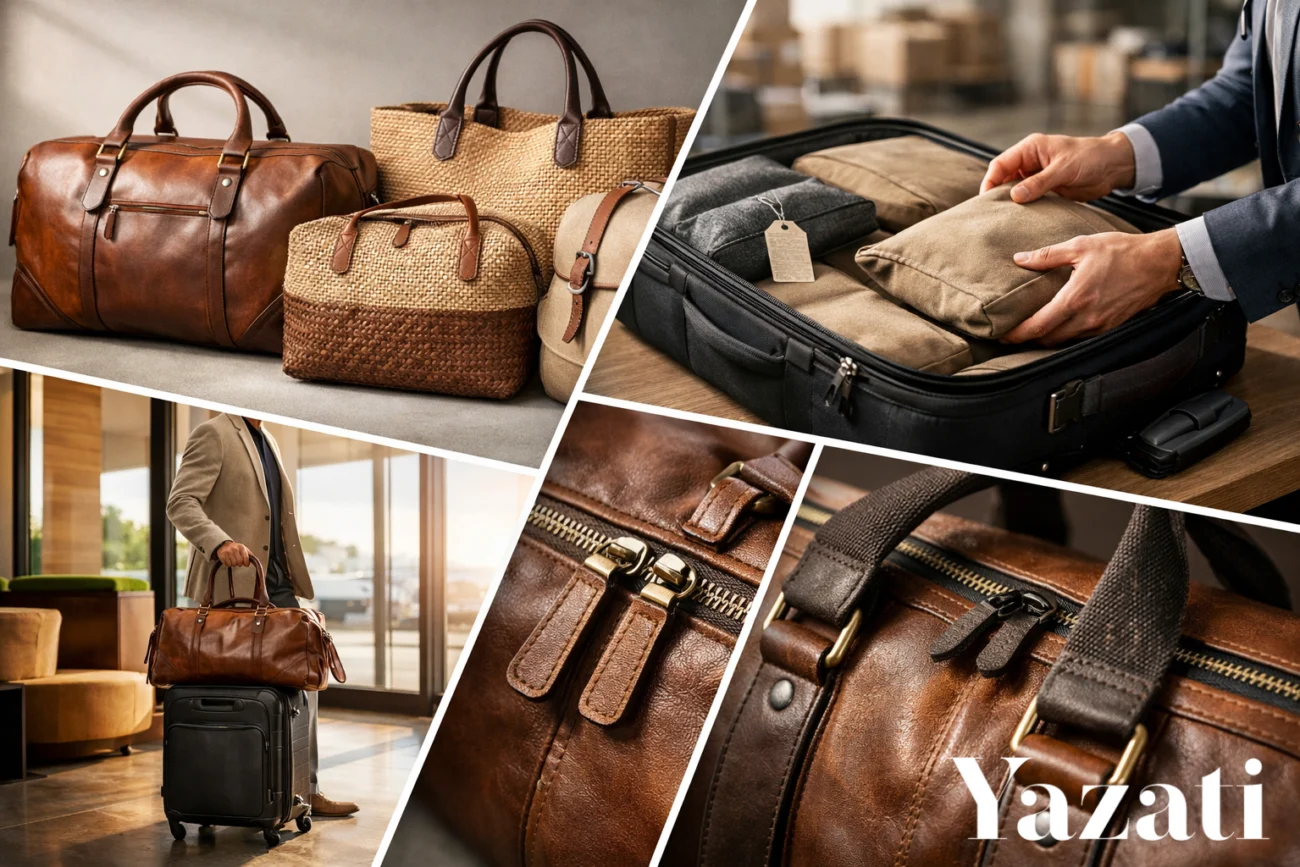
The Complete Buyer’s Guide to Importing Indian Bags & Luggage
Bags and luggage are among the most competitive yet profitable product categories in global trade. Consumers expect durability, comfort, design appeal, and value—all at once. For buyers who source strategically, this category offers repeat purchases, strong brand loyalty, and broad market reach. Understanding The Complete Buyer’s Guide to Importing Indian Bags & Luggage helps importers navigate complexity while building a scalable, margin-protected sourcing program.
Sourcing from India gives buyers access to material diversity, skilled manufacturing, and flexible production models—but success depends on structure, not assumptions.
Introduction: Why Bags & Luggage Are a High-Potential Import Category
Global Demand for Functional & Stylish Carry Solutions
From everyday backpacks and handbags to travel luggage and business cases, bags are used across lifestyles, professions, and age groups. This makes the category resilient and adaptable to trends.
Why India Plays a Key Role
India combines traditional craftsmanship with modern manufacturing, enabling buyers to source everything from handcrafted lifestyle bags to durable, performance-oriented luggage components.
Understanding the Indian Bags & Luggage Industry
Product Categories and Specializations
Indian manufacturers produce a wide range of products, including:
- Handbags and totes
- Backpacks and travel bags
- Duffels and weekenders
- Business and utility bags
- Soft luggage and organizers
This category depth allows buyers to consolidate sourcing.
Handcrafted vs Industrial Production
India supports both:
- Craft-led production for lifestyle and premium brands
- Industrial and semi-industrial manufacturing for volume programs
Buyers can choose the model that fits their brand and price positioning.
The Complete Buyer’s Guide to Importing Indian Bags & Luggage
A Structured Importing Approach
Successful importers follow a clear process—defining specifications, locking samples, managing quality, and planning logistics early.
Risk Reduction Through Planning
Most sourcing issues arise from unclear expectations rather than manufacturing limitations.
Step 1: Define Your Bag or Luggage Product Strategy
Target Market and Use Case
Clarify whether products are intended for:
- Daily use
- Travel and mobility
- Professional or lifestyle segments
This defines material strength, size, and construction standards.
Price Positioning and Volume Planning
Decide early if your brand targets mass, mid-market, or premium pricing. This impacts sourcing decisions and cost structure.
Step 2: Choose the Right Indian Suppliers
Export Experience and Capability
Export-ready suppliers understand:
- International quality expectations
- Packaging for long-distance shipping
- Documentation and timelines
Evaluating Beyond Samples
A good sample is important, but buyers should also assess:
- Production capacity
- Quality control systems
- Repeat-order consistency
Step 3: Materials, Construction, and Performance Standards
Fabrics, Leather, Hardware, and Components
Clearly define:
- Fabric type and weight
- Leather grade or alternatives
- Zippers, buckles, and trims
Strength, Durability, and User Comfort
Performance factors include:
- Stitch density and seam strength
- Load-bearing capability
- Strap comfort and ergonomics
Step 4: Sampling, Prototyping, and Reference Locking
Samples as Binding Benchmarks
Approved samples must define:
- Materials and colors
- Construction methods
- Hardware quality
Preventing Sample-to-Bulk Deviations
Samples should be treated as fixed references—not indicative examples.
Step 5: Pricing, Costing, and Margin Planning
Unit Cost vs Landed Cost
True cost includes:
- Product and packaging
- Freight and duties
- Local handling and storage
Avoiding Hidden Cost Risks
Poor quality, rework, or transit damage often costs more than initial savings.
Step 6: Quality Control for Bags & Luggage
Stitching, Load, and Wear Testing
Quality checks should focus on:
- Stitch integrity
- Stress points
- Hardware durability
Consistency Across Bulk Orders
Defined inspection checkpoints ensure uniform output across volumes.
Step 7: Branding, Labeling, and Customization
Private Label and OEM Opportunities
India supports:
- Private label programs
- Custom colors and trims
- Brand-specific packaging
Market-Specific Branding Needs
Branding and labeling must align with destination market regulations and consumer expectations.
Step 8: Packaging and Export Logistics
Protecting Shape and Finish During Transit
Bags and luggage require packaging that maintains shape and prevents creasing or abrasion.
Container Planning and Shipment Modes
Shipment planning balances cost efficiency with delivery timelines, especially for seasonal programs.
Step 9: Compliance and Documentation
Material Declarations and Labeling Rules
Accurate declarations reduce customs delays and compliance risk.
Destination Market Requirements
Regulations vary by market and must be addressed early in development.
Step 10: Scaling and Long-Term Sourcing
From Trial Orders to Core Programs
Start with pilot orders, then scale once quality and logistics are proven.
Building Supplier Stability
Long-term partnerships improve pricing, innovation, and consistency.
Common Mistakes Importers Make
Chasing Low Prices Over Performance
Low-cost bags often fail under real-world use, damaging brand trust.
Poor Specification Discipline
Unclear specs are the leading cause of disputes and quality issues.
FAQs on Importing Indian Bags & Luggage
1. Is India suitable for large bag and luggage orders?
Yes. India supports both small batches and bulk production.
2. Are Indian bags durable enough for global markets?
Yes, when materials and construction standards are clearly defined.
3. Can bags be customized or private-labeled?
Absolutely. Customization is widely supported.
4. Are eco-friendly bag options available?
Yes. Many suppliers offer sustainable materials and processes.
5. Is importing bags from India cost-effective?
Yes, especially when landed costs are planned correctly.
6. Can buyers scale quickly once demand grows?
Yes. Scaling is smoother after initial systems are established.
Conclusion: Turning Indian Sourcing into a Competitive Advantage
The Complete Buyer’s Guide to Importing Indian Bags & Luggage demonstrates that success in this category comes from clarity, discipline, and partnership—not shortcuts. India offers an exceptional combination of design capability, material access, and production flexibility.
By defining strategy clearly, selecting export-ready suppliers, locking specifications, controlling quality, and planning logistics carefully, buyers can turn Indian bag and luggage sourcing into a long-term competitive advantage—supporting strong margins, brand trust, and scalable growth.
✨ Discover Global Sourcing Excellence with Netyex ✨
Netyex is your trusted B2B sourcing partner, connecting international buyers with India’s finest manufacturers and curated product lines—from handicrafts and home décor to kitchenware, textiles, hospitality essentials, and more. With verified suppliers and end-to-end support, we make global procurement seamless, reliable, and efficient.
👉 Elevate your sourcing experience—explore Netyex today.
📦 Bulk orders & customisation | 🌍 Worldwide delivery | 🤝 Trusted by global buyers
Visit Netyex to source premium Indian products with confidence.