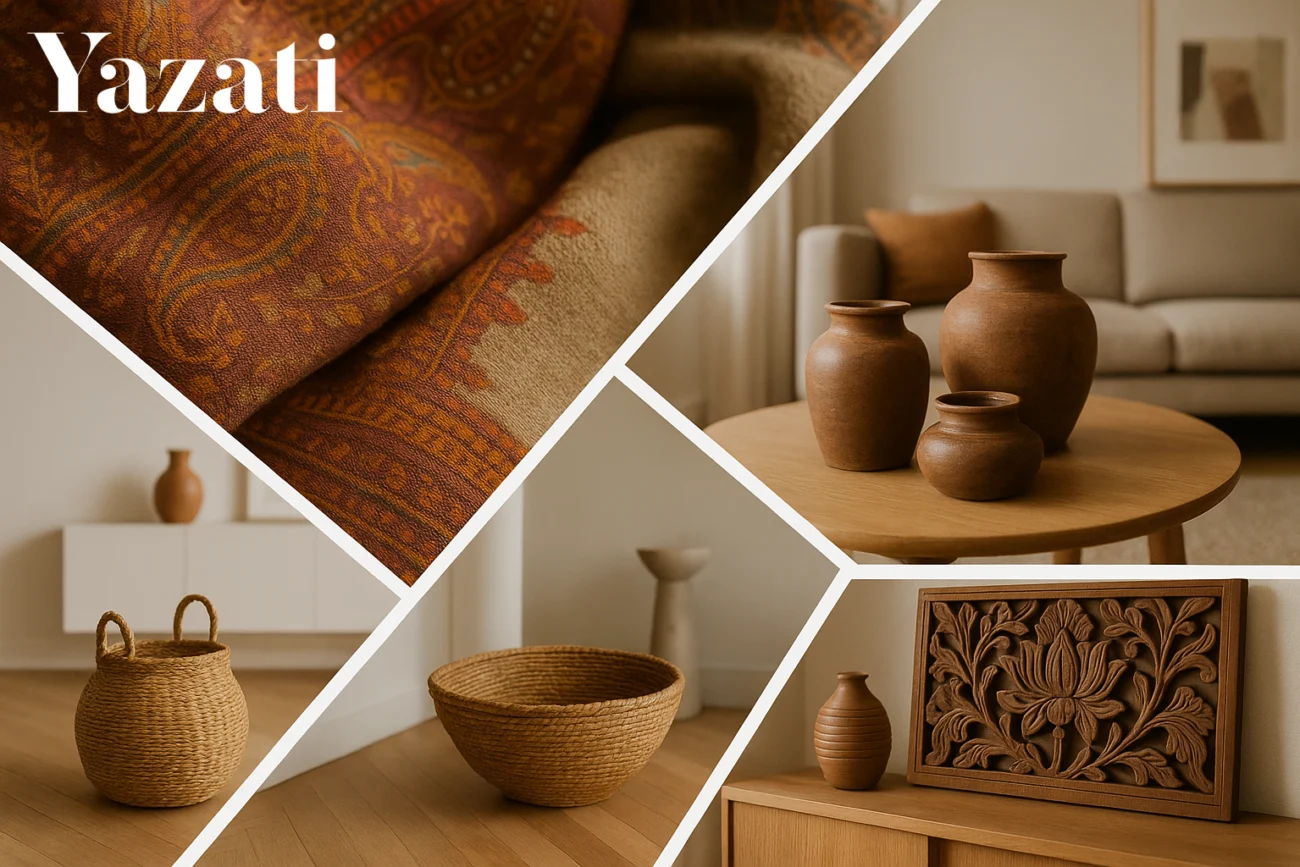
Introduction: A Timeless Legacy in Modern Design
The phrase “The Cultural Value of Indian Handicrafts in Global Design Spaces” captures an extraordinary journey — one that fuses tradition with modern aesthetics. Indian handicrafts are not just products; they are living stories of heritage, skill, and emotion passed down through generations. In an age where mass production dominates, handcrafted Indian art stands as a refreshing symbol of authenticity and cultural depth.
Across the world, from Parisian boutiques to Tokyo design studios, Indian textiles, pottery, metalwork, and woodcrafts are redefining global design trends. They represent more than just décor — they embody the soul of a civilization that celebrates creativity, sustainability, and spirituality.
The Global Renaissance of Handcrafted Aesthetics
Global design trends are witnessing a return to the roots. Consumers, tired of synthetic and uniform products, now crave pieces that tell a story. This shift toward authenticity has reignited interest in handcrafted works — particularly Indian handicrafts known for their vibrant diversity and detail. From handwoven Banarasi silks to intricate Rajasthani blue pottery, every artifact carries a unique narrative.
Why Indian Handicrafts Continue to Inspire Contemporary Designers
Modern designers find immense inspiration in Indian craft traditions. Whether it’s Sabyasachi’s textile revival on global runways or IKEA’s collaboration with Indian artisans, the craftsmanship speaks a universal language — one that values the human touch over mechanical perfection.
Historical Context of Indian Handicrafts
Ancient Artisanal Roots: From the Indus Valley to Modern India
India’s legacy of craftsmanship dates back over 5,000 years to the Indus Valley Civilization, known for its terracotta figurines, jewelry, and pottery. These artifacts were not merely decorative but symbolic — reflecting cultural, religious, and social beliefs.
Colonial Impact and Post-Independence Revival
British colonization disrupted local crafts through industrial imports, but post-independence India saw a resurgence. Leaders like Mahatma Gandhi emphasized swadeshi and hand-spun khadi, promoting indigenous arts as both cultural pride and economic empowerment.
The Role of Regional Diversity in Craft Traditions
India’s regional diversity fuels its creative spectrum — Kashmiri papier-mâché, Madhubani paintings from Bihar, and Kanchipuram silks from Tamil Nadu each reflect distinct local identities. This diversity enriches the country’s artistic reputation in global design forums.
Cultural Significance and Symbolism of Indian Handicrafts
The Language of Motifs, Colors, and Textures
Indian handicrafts are visual languages. Lotus motifs symbolize purity, elephants denote strength, and peacocks represent beauty. Each color — saffron, indigo, emerald — carries spiritual resonance, turning every object into a cultural dialogue.
Craftsmanship as an Expression of Identity and Spirituality
For Indian artisans, creating a piece is a meditative act. The rhythmic process of weaving or carving often intertwines with prayer or ritual, transforming craftwork into a spiritual extension of self.
Handicrafts in Indian Rituals, Festivals, and Daily Life
From clay diyas at Diwali to handwoven saris at weddings, handicrafts shape the rhythm of Indian life. These creations transcend material purpose — they embody blessings, tradition, and continuity.
The Global Appeal of Indian Handicrafts in Modern Design Spaces
From Local Workshops to Global Boutiques
Thanks to globalization and digital marketplaces, Indian handicrafts now grace homes and galleries worldwide. Designers integrate them into bohemian, eclectic, and even minimalist interiors.
How Western Designers Incorporate Indian Elements
Western brands increasingly adopt Indian techniques like block printing, mirror work, and hand embroidery. The fusion creates cross-cultural aesthetics, bridging East and West.
Case Studies: FabIndia, Good Earth, and Anthropologie
Brands such as FabIndia and Good Earth have successfully positioned Indian crafts in luxury markets. Similarly, Anthropologie collaborates with Indian artisans to blend traditional art with contemporary sensibilities.
The Role of Sustainability and Ethical Production
Eco-Friendly Materials and Traditional Techniques
One of the most significant aspects of The Cultural Value of Indian Handicrafts in Global Design Spaces lies in their sustainable nature. Long before “eco-friendly” became a global buzzword, Indian artisans had perfected techniques that respected nature’s balance.
They relied on biodegradable materials — clay, bamboo, jute, silk, cotton, and natural dyes extracted from plants, roots, and minerals. For example, the age-old art of Kalamkari uses natural colors derived from turmeric and indigo, while Dhokra metal casting employs the lost-wax technique with zero industrial waste. These methods minimize environmental impact and preserve local ecosystems, reflecting India’s ancient ecological consciousness.
Supporting Artisan Communities through Fair Trade
In today’s global economy, sustainability extends beyond materials — it encompasses fair labor and economic equity. Fair trade initiatives like Dastkar, Crafts Council of India, and Ten Thousand Villages promote ethical sourcing and ensure artisans receive fair compensation.
This not only sustains livelihoods but also empowers women and rural communities. Many global brands now proudly partner with Indian artisans to combine ethical production with exquisite craftsmanship — a model that values people as much as profit.
Technological Innovations Transforming Indian Handicrafts
E-commerce and Digital Storytelling Platforms
Technology has revolutionized the way Indian handicrafts reach global design audiences. Platforms like Etsy, Amazon Karigar, and GoCoop allow rural artisans to showcase their work directly to international buyers, bypassing traditional middlemen.
Social media, too, plays a vital role. Instagram and Pinterest act as digital galleries where artisans narrate the stories behind each creation — merging technology with tradition in unprecedented ways.
The Role of AI and Design Tech in Preserving Heritage
Emerging technologies like Artificial Intelligence (AI) and 3D design mapping are being used to digitally archive ancient motifs and patterns. AI-driven design tools can help replicate endangered crafts virtually, ensuring preservation even if physical traditions wane.
This integration of modern innovation with traditional heritage ensures that Indian handicrafts not only survive but evolve gracefully in global design spaces.
Challenges Facing Indian Artisans in the Global Market
Imitation, Mass Production, and Cultural Appropriation
Despite their global popularity, Indian artisans face serious challenges. One pressing issue is mass-produced imitations that devalue authentic craftsmanship. Factories in other countries often replicate Indian motifs cheaply, stripping them of cultural meaning.
Additionally, cultural appropriation — when global brands adopt Indian aesthetics without crediting or compensating creators — remains a growing concern. This exploitation undermines centuries of artistic heritage and damages the livelihoods of genuine artisans.
Lack of Recognition and Intellectual Property Protection
India still lacks robust mechanisms to protect traditional designs under intellectual property laws. While certain crafts have Geographical Indication (GI) tags — like Kanchipuram silk or Pochampally ikat — thousands remain unprotected. Without recognition and legal frameworks, artisans struggle to compete in the global marketplace.
The Cultural Economy of Indian Handicrafts
How Handicrafts Contribute to India’s GDP and Global Trade
The handicraft industry contributes significantly to India’s cultural economy. According to the Ministry of Textiles, it employs over 7 million artisans and contributes billions to export revenues annually. Indian handicrafts — from carpets and jewelry to textiles and woodwork — reach over 100 countries, with the U.S., U.K., and Germany being key markets.
More importantly, the sector sustains rural economies, offering livelihoods where industrial jobs are scarce. Each piece sold globally carries the spirit of India’s cultural and economic resilience.
Government Initiatives and International Collaborations
Government-led schemes like “Make in India,” “Skill India,” and “Ambedkar Hastshilp Vikas Yojana” aim to revive traditional crafts through training, digital literacy, and financial inclusion. International collaborations with UNESCO and design institutions have also spotlighted Indian crafts in exhibitions worldwide, such as the London Design Biennale and Paris Maison & Objet Fair.
The Emotional and Aesthetic Connection in Global Design
Why Consumers Seek Authentic, Handcrafted Narratives
Today’s global consumers crave more than just visually appealing products; they seek emotional connection. Indian handicrafts fulfill that desire by offering authenticity — something no machine-made item can replicate.
Owning a handwoven shawl or a terracotta sculpture feels like holding a fragment of human history, a personal link to the artisan’s story. In an impersonal, industrialized world, these handcrafted items restore emotional warmth and individuality.
Blending Minimalism with Indian Craft Maximalism
Modern global design trends often favor minimalism — clean lines, neutral tones, and understated elegance. Yet, Indian crafts introduce a striking contrast: vibrant colors, complex motifs, and intricate detailing. Designers now experiment with “global fusion” — blending minimalistic spaces with handcrafted Indian accents to achieve balance.
For instance, a minimalist Scandinavian interior featuring handwoven Indian rugs or brass lamps creates a rich, cross-cultural aesthetic celebrated by top interior designers worldwide.
The Future of Indian Handicrafts in Global Spaces
Empowering New Generations of Artisans
The future of Indian handicrafts depends on nurturing young talent. Encouraging art education, providing access to global design schools, and promoting digital literacy among rural artisans are vital.
Organizations like Crafts Museum Delhi and Design Village Noida collaborate with young designers to reinterpret traditional crafts in modern forms — from eco-friendly packaging to wearable art.
Integrating Tradition with Innovation for Global Audiences
To sustain global appeal, artisans must strike a balance between preserving authenticity and adapting to contemporary tastes. The introduction of fusion products — such as handloom sneakers, upcycled bags, and artisanal furniture — demonstrates how tradition and innovation can coexist harmoniously.
Indian handicrafts are evolving, not fading. They continue to serve as a bridge between the past and future, the local and the global, the spiritual and the material.
FAQs about The Cultural Value of Indian Handicrafts in Global Design Spaces
1. Why are Indian handicrafts important in global design?
They symbolize authenticity, sustainability, and cultural storytelling, making them essential elements in global design movements.
2. How do Indian handicrafts contribute to sustainability?
Most crafts use eco-friendly materials, natural dyes, and zero-waste processes, reflecting India’s ancient ecological awareness.
3. What challenges do artisans face today?
Key challenges include imitation, cultural appropriation, poor global recognition, and lack of intellectual property protection.
4. How are Indian handicrafts being modernized?
Through e-commerce, digital storytelling, design collaborations, and the integration of AI for craft preservation.
5. Which Indian crafts are most popular globally?
Banarasi textiles, Kashmiri carpets, Rajasthani blue pottery, and Madhubani paintings enjoy immense international demand.
6. How can consumers support Indian artisans?
By buying directly from artisan collectives, fair trade organizations, or verified online platforms that promote authentic crafts.
Conclusion: Preserving Heritage through Global Collaboration
The Cultural Value of Indian Handicrafts in Global Design Spaces reminds us that artistry transcends borders. These handcrafted treasures are not relics of the past but vibrant expressions of culture that continue to shape the world’s aesthetic landscape.
By valuing authenticity, promoting ethical trade, and embracing technological innovation, we can ensure that the heart and soul of Indian craftsmanship thrive in the modern age. Every handwoven thread and hand-carved detail tells a story — one that deserves to be cherished, shared, and celebrated across the globe.
✨ Discover Global Sourcing Excellence with Netyex ✨
Netyex is your trusted B2B sourcing partner, connecting international buyers with India’s finest manufacturers and curated product lines—from handicrafts and home décor to kitchenware, textiles, hospitality essentials, and more. With verified suppliers and end-to-end support, we make global procurement seamless, reliable, and efficient.
👉 Elevate your sourcing experience—explore Netyex today.
📦 Bulk orders & customisation | 🌍 Worldwide delivery | 🤝 Trusted by global buyers
Visit Netyex to source premium Indian products with confidence.