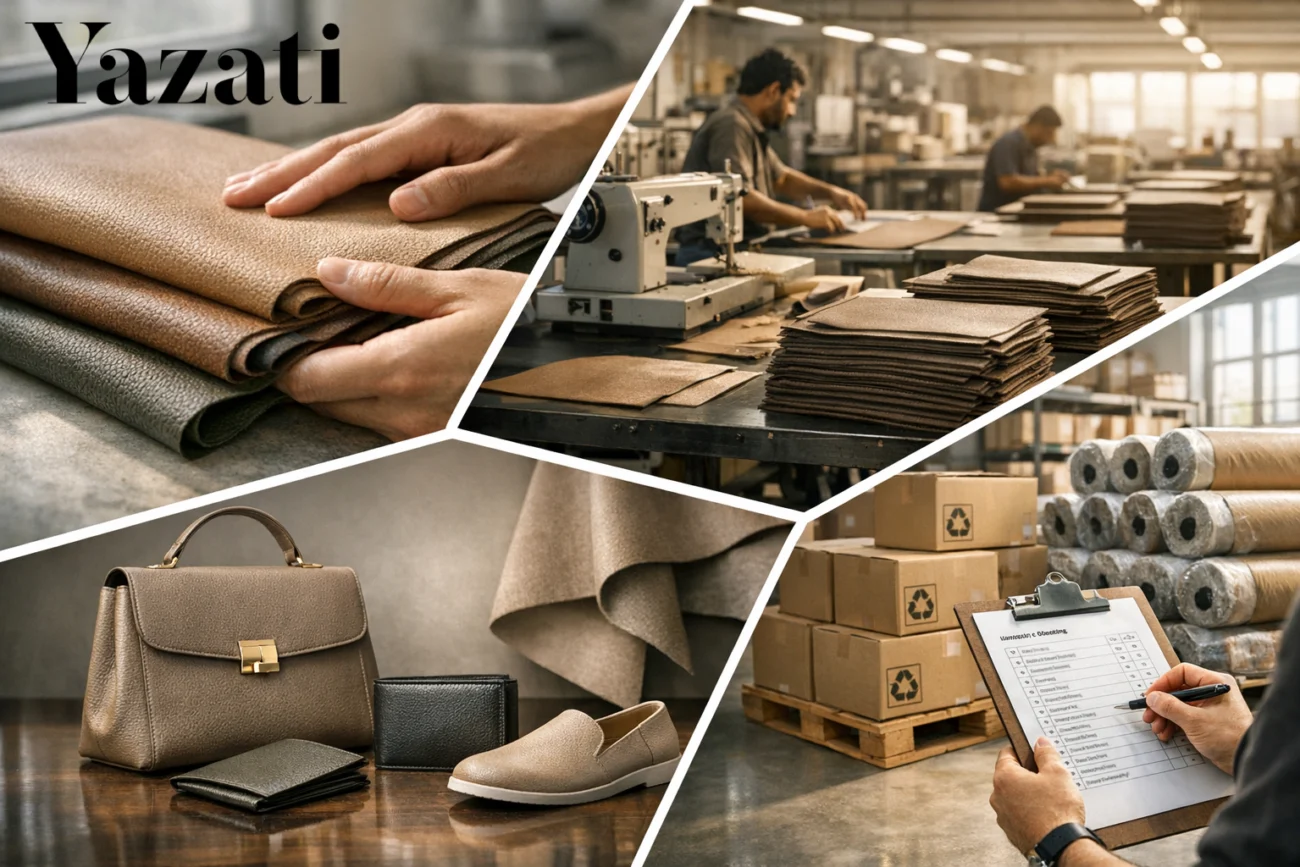
What Is Eco-Leather?
Eco-leather refers to environmentally friendly alternatives to traditional leather. It can include:
- PU (polyurethane) leather
- Water-based synthetic leather
- Plant-based leather alternatives
- Recycled leather composites
- Low-impact tanned genuine leather
Unlike conventional leather production, which can involve heavy chemical processing, eco-leather focuses on reducing harmful environmental effects.
Why the Eco-Leather Trend Is Growing Globally
Several global factors are accelerating demand.
1. Rising Environmental Awareness
Consumers are more informed than ever. They want products that align with their values. Eco-friendly materials attract conscious buyers who care about:
- Reducing pollution
- Lowering carbon footprints
- Supporting ethical production
2. Stricter Environmental Regulations
Many countries now regulate:
- Chemical usage
- Waste disposal
- Water consumption
- Animal welfare practices
Brands must comply with these regulations to stay competitive.
3. Demand for Cruelty-Free Alternatives
Younger consumers especially prefer materials that do not involve animal products. This has fueled the rapid growth of synthetic and plant-based leather alternatives.
Key Benefits of Eco-Leather
Eco-leather offers advantages that go beyond sustainability.
Environmental Benefits
- Reduced chemical discharge
- Lower water usage
- Minimal toxic residue
- Better waste management
Performance Benefits
- Lightweight structure
- Flexible texture
- Wide range of finishes
- Easy maintenance
These qualities make eco-leather ideal for bags, wallets, and accessories.
How Yazati Leads Eco-Leather Production
When discussing The Eco-Leather Trend and How Yazati Leads Its Production, it’s important to examine the company’s structured approach.
1. Responsible Material Sourcing
Yazati carefully selects suppliers who:
- Follow environmental compliance standards
- Use low-impact production methods
- Provide certified materials
- Maintain transparency in sourcing
Supplier evaluation ensures eco-leather meets both quality and sustainability expectations.
2. Advanced Manufacturing Techniques
Eco-leather production requires precision.
Yazati uses:
- Modern lamination systems
- Water-based coating technologies
- Automated cutting machinery
- Controlled finishing processes
These technologies reduce waste and improve consistency.
3. Strict Quality Control Systems
Sustainability should never compromise durability.
Yazati conducts:
- Abrasion resistance testing
- Flexibility checks
- Colorfastness evaluation
- Surface crack testing
- Load-bearing assessments
This ensures eco-leather products perform just as well as traditional materials.
4. Customization and Design Flexibility
Eco-leather is highly versatile.
Yazati offers:
- Various textures (smooth, grain, matte, glossy)
- Custom color matching
- Embossing options
- Private labeling support
This flexibility helps brands maintain their identity while adopting sustainable materials.
5. Commitment to Continuous Innovation
The eco-leather industry evolves quickly. Yazati actively explores:
- Plant-based leather alternatives
- Recycled composite materials
- Bio-based coatings
- Improved durability formulations
Innovation keeps Yazati ahead in a competitive market.
Comparing Eco-Leather and Traditional Leather
| Feature | Eco-Leather | Traditional Leather |
|---|---|---|
| Environmental Impact | Lower | Higher |
| Water Usage | Reduced | High |
| Chemical Usage | Controlled | Often intensive |
| Cost | Moderate | Higher |
| Maintenance | Easy | Requires care |
This comparison explains why many global buyers are shifting toward eco-leather solutions.
Eco-Leather Applications in the Bag Industry
Eco-leather is widely used in:
- Handbags
- Laptop bags
- Backpacks
- Travel duffels
- Corporate gifting items
Its adaptability makes it suitable for both premium and mid-range markets.
Sustainability Without Compromising Style
One common misconception is that eco-friendly materials look less attractive.
In reality, modern eco-leather offers:
- Luxury finishes
- Vibrant color options
- High-end textures
- Elegant detailing
Yazati ensures products remain stylish while meeting sustainability standards.
How Eco-Leather Supports Brand Reputation
Brands adopting eco-leather benefit from:
- Positive customer perception
- Stronger brand loyalty
- Improved compliance with global regulations
- Reduced environmental criticism
Sustainability adds long-term value to businesses.
Challenges in Eco-Leather Production
Despite its benefits, eco-leather production presents challenges:
- Material cost fluctuations
- Technological adaptation requirements
- Maintaining durability standards
- Managing supply chain consistency
Yazati addresses these challenges through planning, supplier partnerships, and ongoing testing.
Future Outlook of the Eco-Leather Industry
The eco-leather market is expected to grow steadily due to:
- Increased sustainability regulations
- Consumer demand for ethical fashion
- Technological advancements
- Corporate environmental commitments
As demand rises, innovation will continue improving performance and sustainability.
Yazati is positioned to expand its leadership role as eco-friendly production becomes the industry norm.
Frequently Asked Questions (FAQs)
1. What is eco-leather made of?
Eco-leather can be made from PU, plant-based materials, recycled composites, or low-impact processed leather.
2. Is eco-leather durable?
Yes, when produced with proper quality control, it offers excellent durability and flexibility.
3. How does eco-leather reduce environmental impact?
It uses fewer harmful chemicals, reduces water consumption, and supports responsible sourcing.
4. Why is eco-leather popular in bag manufacturing?
It combines sustainability with versatility, style, and cost-effectiveness.
5. How does Yazati ensure eco-leather quality?
Through supplier vetting, advanced production methods, and strict testing standards.
6. Is eco-leather more affordable than genuine leather?
Generally, yes. It provides a luxury appearance at a more accessible price point.
Conclusion
Understanding The Eco-Leather Trend and How Yazati Leads Its Production highlights the powerful shift happening within the bag industry. Eco-leather is not just an alternative—it’s a forward-thinking solution that balances sustainability, durability, and style.
Through responsible sourcing, advanced manufacturing, rigorous testing, and continuous innovation, Yazati has positioned itself as a leader in eco-leather production. As global demand for sustainable products grows, companies that embrace eco-friendly materials will shape the future of fashion and manufacturing.
Eco-leather represents progress. And with strong systems and commitment, Yazati ensures that progress remains reliable, stylish, and sustainable.
✨ Discover Global Sourcing Excellence with Netyex ✨
Netyex is your trusted B2B sourcing partner, connecting international buyers with India’s finest manufacturers and curated product lines—from handicrafts and home décor to kitchenware, textiles, hospitality essentials, and more. With verified suppliers and end-to-end support, we make global procurement seamless, reliable, and efficient.
👉 Elevate your sourcing experience—explore Netyex today.
📦 Bulk orders & customisation | 🌍 Worldwide delivery | 🤝 Trusted by global buyers
Visit Netyex to source premium Indian products with confidence.