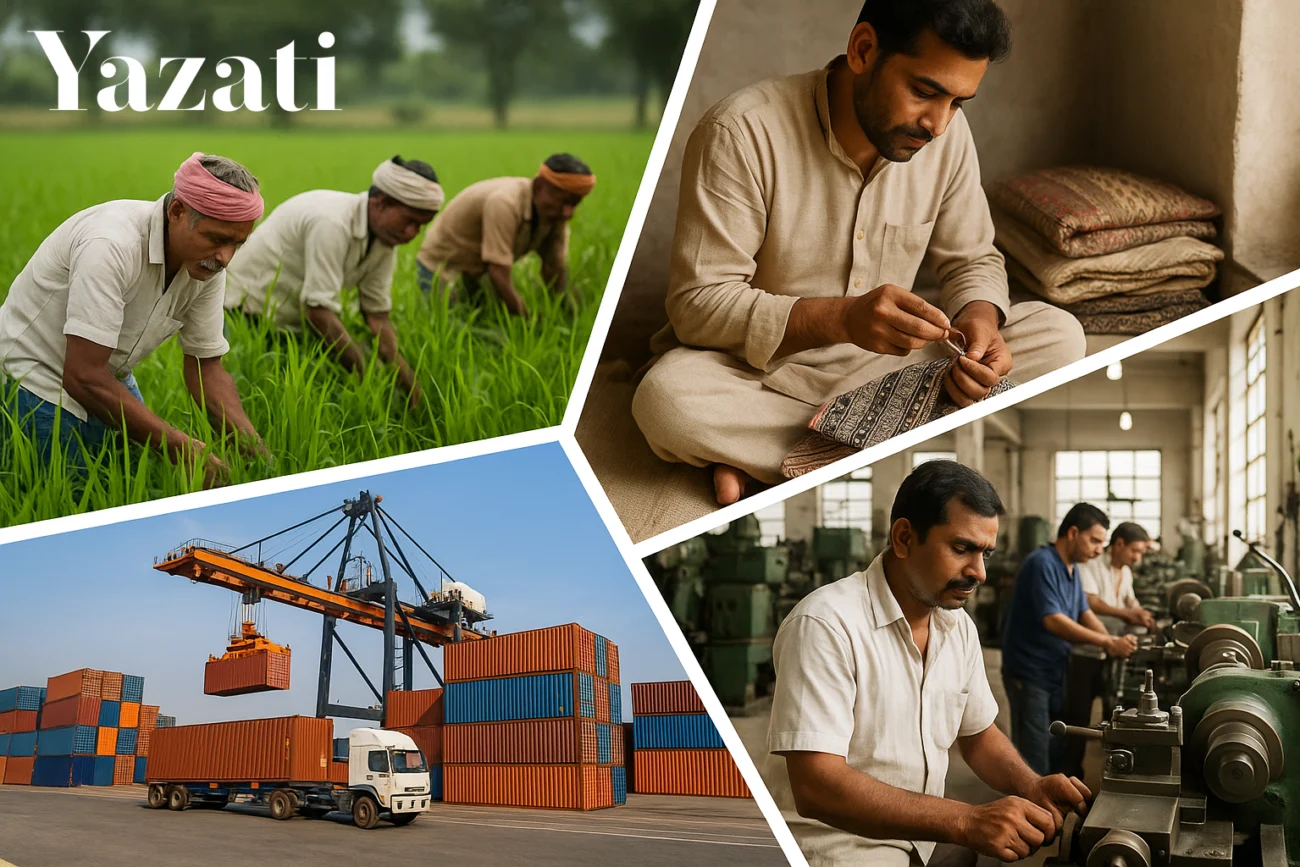
India’s exports have long been the backbone of its economic strength, but in recent years, their impact has gone far beyond urban factories and corporate boardrooms. The ripple effect of exports now reaches the heart of India — its rural landscape. From farmers shipping agricultural products overseas to artisans selling handicrafts through global e-commerce platforms, exports are reshaping rural livelihoods, creating jobs, and empowering millions.
In this article, we’ll explore the economic impact of Indian exports on rural employment, analyzing how global trade drives job creation, boosts incomes, and fosters sustainable development across India’s villages.
Introduction to Indian Exports and Rural Employment
India’s export sector is one of the most dynamic in the world, contributing over 21% of the country’s GDP. But its real power lies in its reach — nearly 65% of India’s population lives in rural areas, many of whom are directly or indirectly involved in export-linked industries.
Rural employment linked to exports spans across agriculture, handicrafts, textiles, agro-processing, and small-scale industries. The growth of these sectors not only provides income but also fuels rural development by encouraging local entrepreneurship and infrastructure growth.
Understanding India’s Export-Driven Economy
India’s export landscape is incredibly diverse — ranging from agricultural commodities to pharmaceuticals, IT services, and textiles. While urban centers handle much of the service exports, the manufacturing and agricultural exports are deeply rooted in rural areas.
Evolution of Indian Export Policy Since Independence
Post-independence, India adopted protectionist trade policies, limiting exports. However, with the 1991 economic liberalization, the government introduced reforms promoting globalization, deregulation, and export incentives. This shift helped rural industries such as textiles, leather, and handicrafts gain international visibility and market access.
The Link Between Exports and Rural Employment Growth
Exports act as a bridge connecting rural producers to global markets. As foreign demand increases, so does rural production and employment.
Agricultural Exports and Farm-Based Employment
Agriculture remains India’s largest rural employer. With India exporting commodities like rice, spices, tea, and cotton, farmers and agricultural laborers benefit directly. For example, the Basmati rice export industry supports over 2 million rural workers across Punjab and Haryana.
Handicrafts, Textiles, and Small-Scale Exports
India’s traditional crafts — from Kashmiri shawls to Tamil Nadu’s handlooms — have found global admirers. Export promotion councils and online platforms have allowed rural artisans to bypass middlemen, earning fair prices and creating stable employment.
Service Sector Exports and Indirect Rural Opportunities
Though IT exports are urban-centric, their ripple effect extends to rural areas through outsourcing, call centers, and tourism. Many villages have seen indirect employment due to rising demand for support services like food supply, logistics, and handicraft sales.
Regional Variations in Export-Driven Employment
Coastal States and Port Connectivity
States like Gujarat, Tamil Nadu, and Maharashtra thrive on export-led rural development thanks to port proximity and better logistics. For instance, Gujarat’s diamond polishing and agro-export hubs employ thousands from nearby rural districts.
Inland States and Their Export Challenges
Landlocked regions such as Bihar and Madhya Pradesh face higher transport costs and weaker export infrastructure. Addressing these challenges through better rail and road connectivity could unlock massive employment potential.
Economic Benefits of Indian Exports for Rural Areas
Exports bring prosperity to rural communities through income generation, skill enhancement, and infrastructure improvement.
Increased Rural Incomes and Consumption Patterns
Higher export demand boosts rural wages and purchasing power. This leads to improved housing, education, and healthcare access for rural families, driving local consumption.
Infrastructure Development and Supply Chain Expansion
Export activities spur the development of roads, storage units, cold chains, and logistics hubs, which further stimulate job creation in construction and transport.
Skill Development and Entrepreneurship Opportunities
Government-backed programs like Skill India and Start-Up India help rural youth acquire technical and entrepreneurial skills relevant to export industries.
Challenges Hindering the Full Potential of Exports on Rural Employment
Inadequate Infrastructure and Market Access
Rural exporters often struggle with poor transportation, warehousing, and internet connectivity, limiting their access to global markets.
Volatile Global Markets and Price Fluctuations
Global market instability can hurt rural livelihoods, especially in agriculture, where small farmers are vulnerable to international price shifts.
Policy Gaps and Bureaucratic Bottlenecks
Despite supportive schemes, slow customs processes, outdated regulations, and limited export finance remain hurdles.
Government Initiatives to Strengthen Rural Export Linkages
Export Promotion Schemes for MSMEs and Farmers
Programs like RoDTEP (Remission of Duties and Taxes on Exported Products), MEIS (Merchandise Exports from India Scheme), and the Agri Export Policy 2018 directly support rural exporters through tax relief and market linkages.
Rural Development and Skill India Programs
The government’s Skill India Mission, One District One Product (ODOP), and Digital India initiatives aim to empower rural youth to participate effectively in export-driven sectors.
The Role of Technology and Innovation in Rural Exports
E-commerce Platforms Connecting Rural Producers to Global Markets
Digital marketplaces like Amazon Karigar and Government e-Marketplace (GeM) have democratized exports, allowing artisans and farmers to sell directly to global buyers.
Digital Infrastructure and Payment Systems
Mobile banking and digital payment systems have enabled secure transactions, ensuring rural entrepreneurs get timely payments and better control over finances.
Future Outlook: Making Indian Exports More Inclusive for Rural Growth
Green Exports and Sustainable Rural Development
As the world moves towards sustainability, India’s rural exporters can tap into eco-friendly markets by adopting organic farming, renewable energy, and sustainable production practices.
Enhancing Global Competitiveness Through Rural Empowerment
By improving skills, product quality, and technology, rural India can significantly boost India’s export competitiveness and become a global trade leader.
FAQs about The Economic Impact of Indian Exports on Rural Employment
1. How do exports benefit rural India?
Exports generate income, create jobs, and encourage infrastructure development in rural areas by connecting producers to global markets.
2. Which sectors contribute most to rural export employment?
Agriculture, textiles, handicrafts, and food processing are the top rural export sectors driving employment.
3. How does technology help rural exporters?
Technology improves market access, payment systems, and logistics, enabling rural producers to participate in e-commerce and global trade.
4. What are the main challenges faced by rural exporters?
Poor infrastructure, market volatility, limited financing, and bureaucratic barriers are the biggest challenges.
5. What government schemes support rural exporters?
Programs like RoDTEP, ODOP, MEIS, and Agri Export Policy provide incentives, training, and infrastructure support.
6. What’s the future of rural employment in India’s export sector?
With digital integration, sustainability, and policy reforms, rural exports are expected to become a major driver of India’s inclusive economic growth.
Conclusion: Building a Sustainable Export-Led Rural Economy
The economic impact of Indian exports on rural employment is profound. It has transformed agriculture, empowered artisans, and fostered inclusive growth. Yet, to unlock its full potential, India must strengthen rural infrastructure, simplify policies, and invest in skill development.
By connecting every village to global value chains, India can create a sustainable, export-led rural economy where prosperity flows from the local to the global level — ensuring that globalization truly benefits every citizen.
✨ Discover Global Sourcing Excellence with Netyex ✨
Netyex is your trusted B2B sourcing partner, connecting international buyers with India’s finest manufacturers and curated product lines—from handicrafts and home décor to kitchenware, textiles, hospitality essentials, and more. With verified suppliers and end-to-end support, we make global procurement seamless, reliable, and efficient.
👉 Elevate your sourcing experience—explore Netyex today.
📦 Bulk orders & customisation | 🌍 Worldwide delivery | 🤝 Trusted by global buyers
Visit Netyex to source premium Indian products with confidence.