Introduction: The Evolution of B2B Global Sourcing
Global trade has entered a transformative era — one where digital platforms, data analytics, and automation have fundamentally changed how businesses source materials, manage suppliers, and handle cross-border transactions. The future of B2B global sourcing no longer relies on traditional procurement systems alone. Instead, companies are embracing hybrid and digital models to achieve agility, transparency, and competitive advantage in a rapidly shifting global economy.
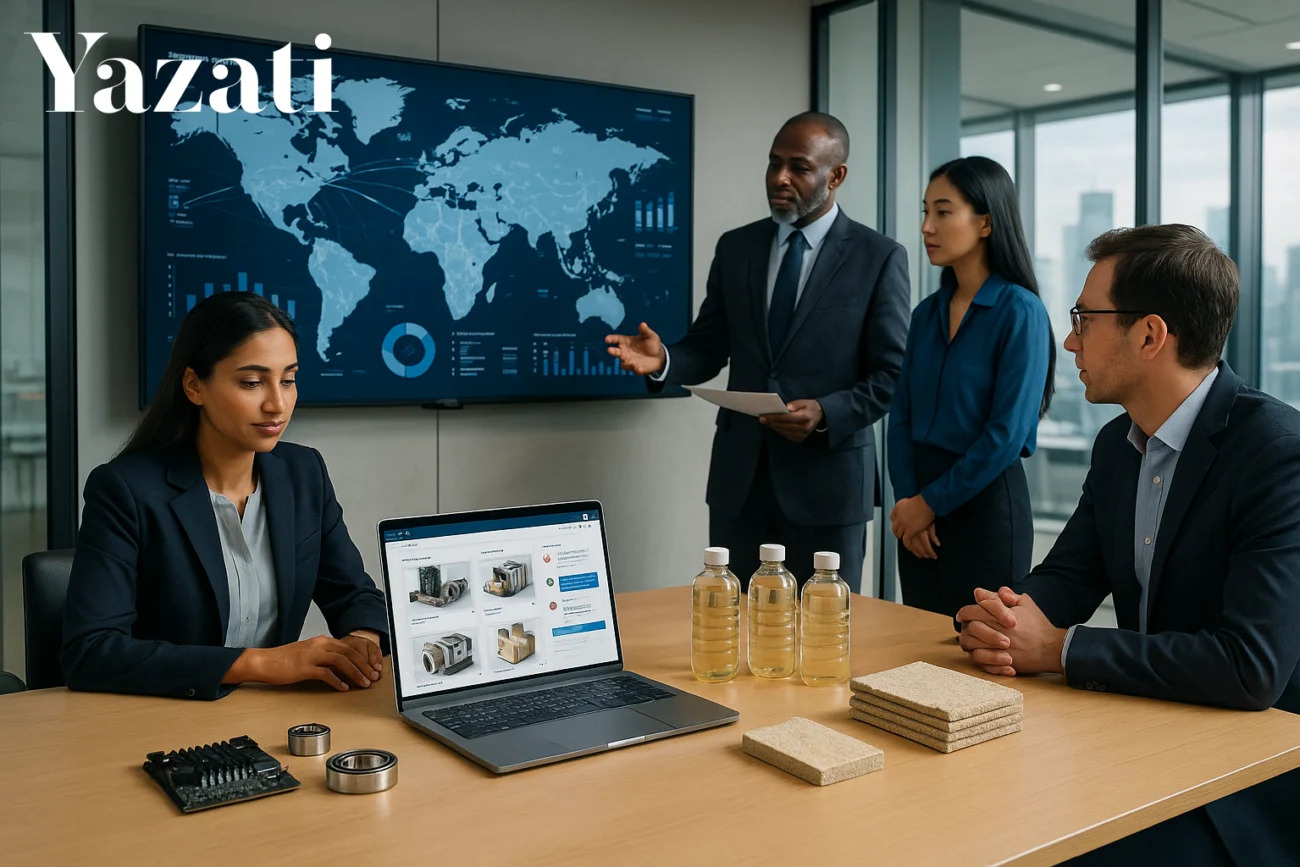
For decades, B2B sourcing involved lengthy negotiations, manual paperwork, and in-person meetings. However, as globalization accelerated and supply chains became more complex, this model struggled to keep up. The rise of hybrid models, combining physical trade relationships with digital procurement ecosystems, is bridging the gap between efficiency and trust.
The Rise of Hybrid & Digital Models in Global Trade
How Technology is Reshaping Supplier-Buyer Relationships
Hybrid sourcing integrates both offline relationships (such as trade fairs and direct partnerships) with online platforms that enable faster decision-making and wider supplier access. Buyers can now vet suppliers using AI-based reputation scores, while digital contract systems ensure compliance and reduce fraud risks.
Integration of AI, Automation, and Blockchain in Sourcing
AI-powered procurement tools analyze supplier performance, predict demand, and recommend sourcing strategies. Blockchain technology adds traceability — allowing companies to verify product origin, quality, and sustainability. Automation streamlines invoicing, payment, and logistics, minimizing human error.
Case Studies: Companies Embracing Hybrid Procurement Systems
Global leaders like Siemens, Alibaba, and Unilever have already moved toward hybrid sourcing systems. For instance, Alibaba’s B2B marketplace integrates AI-based sourcing assistants that match global buyers with vetted suppliers, while Siemens employs digital twins for supply chain optimization.
Key Advantages of Hybrid Sourcing Models
Cost Efficiency and Faster Decision-Making
Hybrid models allow businesses to cut operational costs by automating repetitive tasks such as order management and supplier verification. This results in faster decision cycles and reduced procurement lead times.
Improved Transparency and Trust in Global Supply Chains
Digitization improves transparency across the supply chain. Buyers can track products in real time, reducing disputes and promoting accountability between international partners.
Enhanced Risk Management and Flexibility
When global disruptions occur — such as the pandemic or geopolitical tensions — hybrid systems offer flexibility by enabling companies to switch suppliers seamlessly and maintain continuity through digital communication tools.
Digital Transformation in B2B Procurement
The Role of E-Marketplaces and B2B Platforms
Platforms like Alibaba.com, ThomasNet, and IndiaMART have democratized global trade by connecting millions of buyers and suppliers in one ecosystem. Businesses now leverage these platforms to source competitively and expand their reach.
Leveraging Data Analytics for Smarter Sourcing Decisions
Data-driven insights allow companies to monitor supplier performance, detect inefficiencies, and negotiate better contracts. Predictive analytics helps forecast future supply needs based on historical data and market trends.
Cloud-Based Collaboration and Remote Vendor Management
Cloud technologies allow procurement teams to collaborate across continents, share supplier evaluations, and conduct virtual audits — reducing the need for costly international travel.
Challenges in Adopting Hybrid & Digital Models
Cybersecurity Threats and Data Protection Issues
As procurement systems move online, cybersecurity becomes a top priority. Sensitive supplier data and pricing structures must be safeguarded from potential breaches and ransomware attacks.
Digital Divide Between Developed and Emerging Markets
Not all regions have the same level of digital readiness. While North America and Europe are rapidly digitizing, many small suppliers in emerging markets still rely on manual systems, creating integration challenges.
Cultural and Compliance Barriers in Global Trade
Differences in regulations, trade policies, and cultural communication styles can hinder seamless digital procurement. Businesses must adapt to local norms while maintaining consistent standards.
Future Trends Shaping B2B Global Sourcing
The next decade will witness a dramatic transformation in the global sourcing landscape. Digital and hybrid models will evolve from being efficiency-driven to strategically intelligent ecosystems, blending sustainability, AI, and global inclusivity.
The Shift Toward Sustainable and Ethical Sourcing
As climate change and ESG (Environmental, Social, Governance) pressures mount, companies are moving toward responsible sourcing. Hybrid platforms now integrate carbon footprint tracking, allowing buyers to evaluate suppliers based on environmental impact.
Corporations like Apple and IKEA are already leveraging digital systems to ensure ethical supply chains and reduce emissions.
Predictive Procurement and AI-Driven Forecasting
Artificial Intelligence is turning sourcing into a predictive science. With real-time market data, AI can forecast price fluctuations, raw material availability, and supplier performance risks. This predictive procurement enables companies to make proactive, cost-effective sourcing decisions.
The Emergence of Virtual Trade Shows and Smart Contracts
With remote work and globalization, virtual trade fairs are becoming the norm. Platforms like Alibaba’s Online Expo and Canton Fair Virtual allow suppliers and buyers to connect in real time. Meanwhile, smart contracts powered by blockchain automate payment releases upon delivery verification, ensuring faster and dispute-free transactions.
Strategies for Businesses to Adapt and Thrive
Transitioning to hybrid and digital sourcing models requires a strategic roadmap. Organizations must not only adopt technology but also reimagine procurement as a value-generating function rather than a cost center.
Building a Digital-First Procurement Strategy
Businesses must start by assessing their digital maturity and investing in scalable technologies that support automation, analytics, and integration. Implementing e-sourcing tools, digital contract management, and AI vendor evaluation systems sets the foundation for hybrid transformation.
Investing in Supplier Relationship Management (SRM) Tools
Digital SRM tools help manage multi-tier supplier networks by providing a 360-degree view of supplier performance, compliance, and risk exposure. Companies like SAP Ariba, Coupa, and Jaggaer offer robust SRM solutions that integrate seamlessly with ERP systems.
Upskilling Teams for the Digital Procurement Era
Technology adoption without workforce transformation leads to inefficiency. Procurement professionals must be trained in digital literacy, data analytics, and risk management to harness the full potential of hybrid models.
Leading organizations now invest in procurement academies to build data-driven sourcing capabilities.
Regional Perspectives: How Hybrid Models Differ Worldwide
While digital procurement is a global movement, the rate and style of adoption vary across regions due to differences in infrastructure, culture, and regulation.
North America’s Focus on Automation and Integration
The U.S. and Canada are pioneers in adopting AI, robotics, and analytics within procurement. Their focus lies in seamless integration — ensuring data flows smoothly across finance, supply chain, and vendor systems.
Europe’s Push for Sustainability and Compliance
European companies are leading the charge in green sourcing. Strict EU regulations drive transparency and sustainability. Digital models help businesses trace supplier origins, audit compliance, and ensure ethical practices throughout the chain.
Asia-Pacific’s Rapid Digital Marketplace Growth
Asia-Pacific has become the fastest-growing region for B2B digital marketplaces. Platforms like IndiaMART, Alibaba, and Made-in-China.com dominate global trade by providing small and medium enterprises (SMEs) access to international buyers. Hybrid sourcing enables local manufacturers to scale globally without large physical infrastructure.
Measuring ROI in Digital and Hybrid Sourcing Models
For businesses investing in transformation, tracking ROI (Return on Investment) is vital. The key lies in aligning sourcing goals with measurable performance outcomes.
Key Performance Indicators (KPIs) to Track Success
Some essential KPIs include:
- Cost Reduction Percentage: Savings from automation and supplier optimization.
- Procurement Cycle Time: Speed from requisition to purchase order.
- Supplier Performance Index: Based on quality, delivery time, and compliance.
- Digital Adoption Rate: Percentage of sourcing activities conducted via digital platforms.
- Sustainability Metrics: Tracking carbon emissions and ethical sourcing compliance.
How to Benchmark Digital Maturity in Procurement
Organizations can benchmark their digital maturity by assessing three dimensions:
- Technology Integration: How well tools like AI, RPA, and blockchain are embedded.
- Process Automation: Degree of automation in supplier management and payments.
- Data Utilization: Extent of analytics used for strategic decision-making.
Companies that score high across these areas typically achieve 20–30% cost savings and improved agility.
Conclusion: The Next Decade of B2B Global Sourcing
The future of B2B global sourcing is undeniably hybrid — a blend of human relationships and digital intelligence. Companies that embrace this duality will thrive in a world defined by volatility, complexity, and opportunity.
Hybrid and digital models are no longer optional; they’re essential to remain competitive, resilient, and sustainable. The convergence of AI, blockchain, cloud, and data analytics will redefine procurement from a transactional process to a strategic powerhouse driving growth and innovation.
In the next decade, success in global sourcing will depend on a company’s ability to balance technology with trust, efficiency with ethics, and innovation with inclusivity.
FAQs on the Future of B2B Global Sourcing
1. What are hybrid sourcing models in B2B trade?
Hybrid sourcing models combine both traditional offline procurement methods and digital platforms. This approach leverages personal supplier relationships while integrating automation and data-driven decision-making for greater efficiency.
2. How does digital transformation impact global sourcing?
Digital transformation streamlines sourcing through automation, AI-based insights, and real-time collaboration. It reduces costs, enhances transparency, and speeds up procurement cycles across borders.
3. Are hybrid models more cost-effective than traditional sourcing?
Yes. Hybrid models minimize manual labor, reduce travel expenses, and optimize supplier selection — resulting in cost reductions of up to 25% for digitally mature organizations.
4. What technologies drive digital procurement transformation?
Key technologies include Artificial Intelligence (AI), Blockchain, Cloud Computing, Internet of Things (IoT), and Robotic Process Automation (RPA) — all of which enhance speed, security, and traceability.
5. What challenges do companies face in global hybrid sourcing?
Major challenges include cybersecurity threats, digital skill gaps, regulatory differences, and data integration issues. Overcoming these requires investment in secure, scalable infrastructure and employee training.
6. How can businesses prepare for the future of B2B sourcing?
Businesses can prepare by creating a digital transformation roadmap, adopting hybrid platforms, investing in SRM tools, and fostering a culture of continuous learning and innovation within procurement teams.
✨ Discover Global Sourcing Excellence with Netyex ✨
Netyex is your trusted B2B sourcing partner, connecting international buyers with India’s finest manufacturers and curated product lines—from handicrafts and home décor to kitchenware, textiles, hospitality essentials, and more. With verified suppliers and end-to-end support, we make global procurement seamless, reliable, and efficient.
👉 Elevate your sourcing experience—explore Netyex today.
📦 Bulk orders & customisation | 🌍 Worldwide delivery | 🤝 Trusted by global buyers
Visit Netyex to source premium Indian products with confidence.