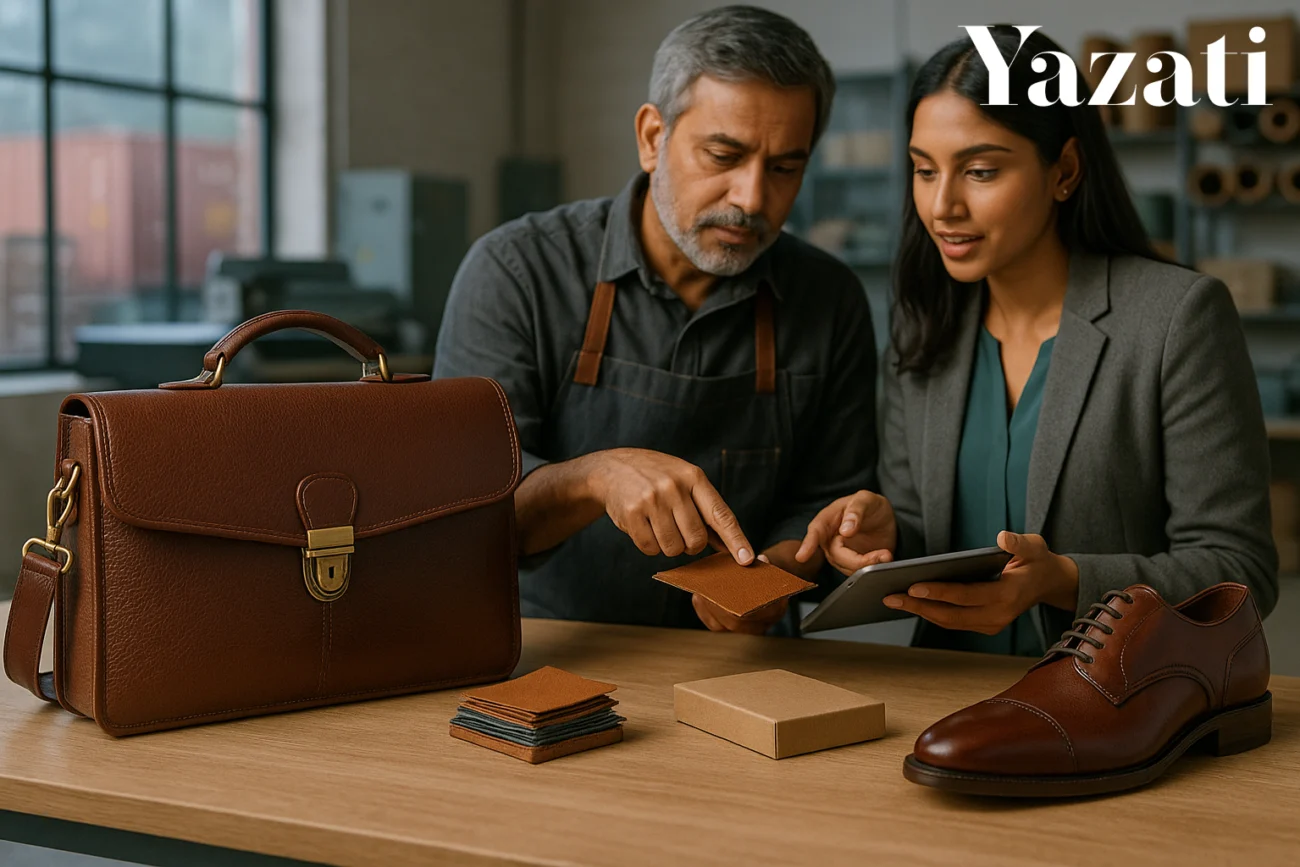
Introduction: A New Era for Indian Leather
The Indian leather industry, once synonymous with traditional craftsmanship, is now on the cusp of a technological and sustainability-driven revolution. As one of the top global exporters of leather and leather goods, India stands at a strategic crossroads where innovation, eco-conscious production, and international collaboration are reshaping its export potential.
With rising global awareness around sustainable sourcing and ethical manufacturing, the future of Indian leather exports is being defined by its ability to balance heritage artistry with technological modernization. From AI-integrated design systems to plant-based leather alternatives, India is redefining what “luxury” means in a circular economy.
Historical Overview of the Indian Leather Industry
Early Roots and Colonial Trade Influence
Leather craftsmanship in India dates back to the Indus Valley Civilization. However, during colonial times, the British harnessed India’s vast raw hide resources primarily for military and industrial purposes. This early foundation laid the groundwork for India’s robust post-independence leather export trade.
Post-Independence Growth and Export Evolution
Post-1947, the Indian government focused on formalizing the leather industry by establishing export councils, research institutions, and training centers. By the 1980s, India became a global hub for leather apparel and footwear exports, thanks to its skilled labor and cost competitiveness.
India’s Global Position in the Leather Market
Comparative Export Analysis with Global Competitors
India ranks among the top five exporters of leather globally, alongside Italy, China, and Vietnam. However, while countries like Italy dominate the premium leather goods segment, India’s strength lies in affordable, high-volume exports—a position that’s now shifting as quality and innovation become key differentiators.
Key Export Destinations and Their Economic Impact
Major export markets include the U.S., Germany, Italy, France, and the U.K., with increasing traction in the Middle East and East Asia. According to the Council for Leather Exports (CLE), Indian leather exports surpassed USD 4 billion in FY2025, signaling resilience and recovery post-pandemic.
Government Initiatives Driving Leather Export Growth
Make in India and Leather Sector Reforms
Under the Make in India initiative, the government has launched specialized clusters for leather goods manufacturing and upgraded tanneries to meet Zero Liquid Discharge (ZLD) standards, aligning with global sustainability goals.
Incentives and Schemes for Exporters
Schemes like the Indian Footwear, Leather & Accessories Development Programme (IFLADP) and Export Promotion Capital Goods (EPCG) aim to modernize manufacturing and improve export competitiveness through tax rebates and skill development.
Technological Advancements Transforming Leather Production
Automation and Smart Manufacturing in Tanneries
Automation has drastically improved efficiency and safety in Indian tanneries. Smart sensors now monitor tanning conditions in real time, while robotics handle precision cutting and stitching, reducing wastage and ensuring uniform quality.
Sustainable Leather Processing Technologies
Modern tanneries are embracing chrome-free tanning, waterless dyeing, and biodegradable chemicals. These advancements not only reduce environmental impact but also enhance compliance with stringent EU and U.S. import standards.
Rise of Eco-Friendly and Ethical Leather Alternatives
Bio-Leather and Plant-Based Innovations
One of the most exciting developments is the emergence of bio-leather—created from agricultural waste or mycelium (mushroom-based material). Startups across India, like Phool and Malai Biomaterials, are pioneering vegan leathers that retain the durability and aesthetics of traditional hides.
The Circular Economy and Recycling in Leather Manufacturing
Circular design is at the heart of India’s next-generation leather strategy. Companies are recycling leather scraps into composite materials, reducing landfill waste, and optimizing resource utilization across the production chain.
Changing Consumer Preferences in Global Markets
Demand for Ethical and Traceable Supply Chains
Modern consumers demand transparency. Brands exporting from India are increasingly adopting blockchain-based traceability to track raw material sourcing, ensuring ethical and sustainable origins.
Digital Marketplaces and D2C Leather Brands
Indian exporters are leveraging e-commerce platforms like Etsy, Amazon Global, and Alibaba to connect directly with international customers. This direct-to-consumer (D2C) model enhances profit margins while promoting authentic Indian craftsmanship globally.
Export Opportunities in Emerging Markets
South-East Asia and the Middle East Expansion Potential
As trade tensions rise in the West, markets like Singapore, UAE, and Saudi Arabia offer lucrative opportunities. These nations value premium handcrafted goods, where Indian exporters can leverage both price and craftsmanship advantages.
Africa: The Next Frontier for Indian Leather Exports
Africa’s growing middle class presents vast potential. Joint ventures in Ethiopia, Kenya, and South Africa are helping Indian companies establish localized manufacturing units, boosting bilateral trade.
Key Challenges Facing the Indian Leather Export Industry
Environmental Compliance and Global Regulations
Despite progress, India faces scrutiny over environmental practices. Stricter European Union standards and rising ESG expectations require the industry to adopt sustainable tanning and effluent management universally.
Labor and Skill Development Constraints
Although India has a vast labor pool, skill gaps in advanced machinery operations and digital design tools remain challenges. Government-backed training programs are addressing these through collaborations with design institutes and tech providers.
Future Trends: Smart Leathers and Tech-Integrated Fashion
AI in Design and Customization
Artificial Intelligence (AI) is now a game-changer for leather design. Predictive analytics helps brands forecast fashion trends, while AI-driven design software enables personalized product creation for global customers.
RFID, Blockchain, and Leather Traceability Systems
RFID tags and blockchain verification systems ensure authenticity and supply chain visibility. These tools help exporters comply with international trade norms and boost consumer trust.
Case Studies: Indian Brands Leading Leather Export Innovation
Hidesign: Merging Heritage with Innovation
Founded in Pondicherry, Hidesign has become a global luxury brand known for its eco-friendly vegetable-tanned leather and sustainable production processes. Its focus on ethical craftsmanship has set new benchmarks for Indian exporters.
Superhouse Group and Technological Transformation
The Superhouse Group, one of India’s largest leather exporters, has integrated ERP systems, AI forecasting, and digital supply chains to streamline operations and enhance export readiness.
Expert Insights: What Industry Leaders Predict for 2030
Global Collaboration and Digitalization
Industry experts predict a 25% growth in exports by 2030, driven by digital trade platforms, international collaborations, and smart manufacturing.
Sustainability as the Cornerstone of Growth
Sustainability is no longer optional—it’s a market necessity. By embracing eco-leather, renewable energy in tanneries, and digital transparency, India can redefine global standards.
FAQs about the Future of Indian Leather Industry
1. What is driving the future growth of the Indian leather industry?
Technological innovation, government support, and global demand for sustainable products are the key growth drivers.
2. Which countries import the most Indian leather products?
Major importers include the U.S., Germany, Italy, France, and the U.K., followed by UAE and Japan.
3. Are Indian leather exports environmentally sustainable?
Yes, many tanneries now adopt Zero Liquid Discharge systems and chrome-free tanning, aligning with international green norms.
4. How are Indian exporters competing globally?
By leveraging automation, D2C models, and sustainable materials, Indian exporters are bridging the quality gap with European brands.
5. What are the new opportunities in leather exports?
Emerging markets in Africa and Southeast Asia offer untapped potential for Indian exporters.
6. What role does technology play in the industry’s evolution?
AI, blockchain, and robotics are revolutionizing everything—from design and quality control to traceability and customer engagement.
Conclusion: Charting the Path Ahead for Indian Leather Exports
The future of the Indian leather industry is brimming with possibilities. As sustainability, digital transformation, and innovation converge, India is poised to become not just a global supplier, but a trendsetter in ethical and advanced leather manufacturing.
By integrating tradition with technology, India’s leather sector can confidently step into the global spotlight—exporting not just products, but a legacy of craftsmanship, innovation, and responsibility.
✨ Discover Global Sourcing Excellence with Netyex ✨
Netyex is your trusted B2B sourcing partner, connecting international buyers with India’s finest manufacturers and curated product lines—from handicrafts and home décor to kitchenware, textiles, hospitality essentials, and more. With verified suppliers and end-to-end support, we make global procurement seamless, reliable, and efficient.
👉 Elevate your sourcing experience—explore Netyex today.
📦 Bulk orders & customisation | 🌍 Worldwide delivery | 🤝 Trusted by global buyers
Visit Netyex to source premium Indian products with confidence.