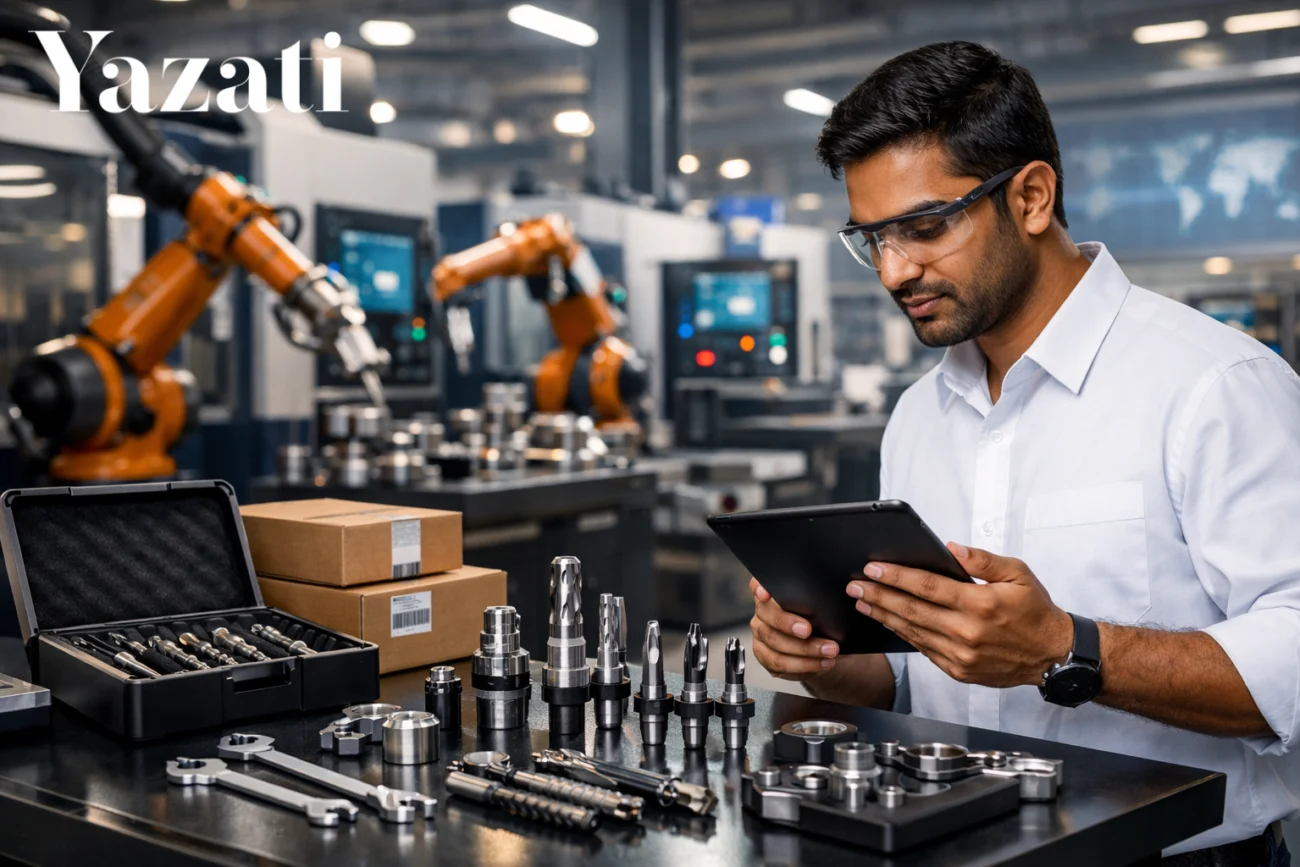
Introduction to Smart Manufacturing in India
The Future of Smart Manufacturing in Indian Tool Exports is shaping a new industrial era. India, long known for its strong manufacturing base, is now moving toward a smarter, more connected ecosystem. This shift is not just a trend—it’s a necessity driven by global competition, technological advancement, and rising quality expectations.
Smart manufacturing combines advanced technologies like automation, data analytics, and interconnected systems to improve production processes. In the tool export sector, this transformation is creating new opportunities for Indian manufacturers to compete globally.
What is Smart Manufacturing?
Smart manufacturing refers to the use of digital technologies to monitor, analyze, and optimize production. It includes tools like sensors, artificial intelligence, and cloud computing. These technologies work together to create a system that can make decisions, predict issues, and improve efficiency in real time.
Evolution of Tool Exports in India
India’s tool export industry has grown steadily over the years. From traditional manufacturing methods to CNC machining, the sector has continuously evolved. Today, exports include cutting tools, machine tools, dies, and molds. With smart manufacturing, this evolution is accelerating rapidly.
Key Drivers of Smart Manufacturing Adoption
The adoption of smart manufacturing in India is driven by several key factors that are transforming the tool export landscape.
Government Policies and Initiatives
The Indian government has introduced various initiatives to promote manufacturing, such as “Make in India” and “Digital India.” These programs encourage industries to adopt advanced technologies and improve global competitiveness.
Demand for High-Precision Tools
Global markets demand tools with high precision and consistent quality. Smart manufacturing helps meet these requirements by reducing human error and improving accuracy.
Global Competition and Export Pressure
Countries like Germany, China, and Japan are leaders in manufacturing. To compete with them, Indian exporters must adopt smart technologies that enhance productivity and quality.
Technologies Powering Smart Manufacturing
Modern technologies are the backbone of smart manufacturing. They enable real-time monitoring, automation, and data-driven decision-making.
Internet of Things (IoT) in Tool Production
IoT devices collect data from machines and processes. This data helps manufacturers track performance, detect issues, and improve efficiency.
Artificial Intelligence and Machine Learning
AI and machine learning analyze large amounts of data to identify patterns. They help predict machine failures, optimize production schedules, and improve product quality.
Robotics and Automation
Robots are increasingly used in manufacturing to perform repetitive tasks. They improve speed, accuracy, and safety while reducing labor costs.
Additive Manufacturing (3D Printing)
3D printing allows manufacturers to create complex tool designs quickly. It reduces material waste and speeds up product development.
Benefits of Smart Manufacturing for Indian Tool Exports
Smart manufacturing offers several advantages that are transforming the export sector.
Increased Productivity and Efficiency
Automation and real-time monitoring help reduce downtime and improve output. Machines can operate continuously with minimal supervision.
Improved Quality Control
Smart systems detect defects early in the production process. This ensures consistent quality and reduces rejection rates.
Cost Optimization
By reducing waste and improving efficiency, manufacturers can lower production costs. This makes Indian tools more competitive in global markets.
Faster Time-to-Market
With advanced technologies, production cycles are shorter. This allows manufacturers to deliver products faster and meet customer demands.
Challenges in Adopting Smart Manufacturing
Despite its benefits, the transition to smart manufacturing comes with challenges.
High Initial Investment
Setting up smart manufacturing systems requires significant investment in technology and infrastructure. This can be a barrier for small businesses.
Skill Gap in Workforce
Workers need new skills to operate advanced machines and analyze data. Training and education are essential for successful adoption.
Data Security Concerns
With increased connectivity comes the risk of cyber threats. Protecting sensitive data is a major concern for manufacturers.
Role of SMEs in Smart Manufacturing Transformation
Small and medium enterprises (SMEs) play a crucial role in India’s tool export industry.
Digital Adoption Among Small Manufacturers
Many SMEs are gradually adopting digital tools to improve efficiency. Cloud-based solutions and affordable automation are helping them transition.
Collaboration and Clusters
Industrial clusters allow SMEs to share resources and knowledge. This helps them adopt smart manufacturing more effectively.
Impact on Global Export Competitiveness
Smart manufacturing is enhancing India’s position in the global market.
Meeting International Standards
Advanced technologies ensure compliance with global quality standards. This improves trust among international buyers.
Expansion into New Markets
With improved quality and efficiency, Indian manufacturers can enter new markets and increase exports.
Sustainability and Green Manufacturing
Sustainability is becoming a key focus in manufacturing.
Energy Efficiency
Smart systems optimize energy usage, reducing costs and environmental impact.
Waste Reduction
Advanced technologies minimize material waste, making production more sustainable.
Future Trends in Indian Tool Exports
The future of smart manufacturing in Indian tool exports looks promising with several emerging trends.
Smart Factories
Factories of the future will be fully automated and connected. Machines will communicate with each other to optimize production.
Digital Twins and Simulation
Digital twins create virtual models of physical systems. They help manufacturers test and improve processes before implementation.
Predictive Maintenance
Predictive maintenance uses data to predict machine failures. This reduces downtime and improves efficiency.
Case Studies and Industry Examples
Leading Indian Tool Manufacturers
Several Indian companies are already adopting smart manufacturing. They are investing in advanced technologies to improve productivity and quality.
Export Success Stories
Many manufacturers have successfully increased exports by adopting smart technologies. Their success highlights the potential of this transformation.
Government and Industry Collaboration
Public-Private Partnerships
Collaboration between government and industry is essential for growth. Joint initiatives help promote innovation and investment.
Skill Development Programs
Training programs are helping workers gain the skills needed for smart manufacturing.
Investment Opportunities in Smart Manufacturing
Foreign Direct Investment
India is attracting foreign investment in manufacturing. This is boosting the adoption of advanced technologies.
Startup Ecosystem
Startups are developing innovative solutions for smart manufacturing. They are playing a key role in driving transformation.
Roadmap for the Future
Strategic Recommendations
- Invest in technology and infrastructure
- Focus on skill development
- Encourage collaboration between industries
Long-Term Vision
The goal is to create a globally competitive manufacturing ecosystem that leverages smart technologies for growth.
FAQs
1. What is smart manufacturing in the tool industry?
Smart manufacturing uses digital technologies like AI and IoT to improve production processes and efficiency.
2. How does smart manufacturing benefit Indian exports?
It improves quality, reduces costs, and increases competitiveness in global markets.
3. What challenges do Indian manufacturers face?
High investment costs, skill gaps, and data security concerns are major challenges.
4. Are SMEs adopting smart manufacturing in India?
Yes, many SMEs are gradually adopting digital tools and automation.
5. What technologies are used in smart manufacturing?
Key technologies include IoT, AI, robotics, and 3D printing.
6. What is the future of Indian tool exports?
The future is bright, with increased adoption of smart technologies and expansion into global markets.
Conclusion
The Future of Smart Manufacturing in Indian Tool Exports is full of potential and opportunity. As technology continues to evolve, Indian manufacturers are well-positioned to become global leaders in the tool export industry. By embracing innovation, investing in skills, and focusing on sustainability, India can build a strong and competitive manufacturing ecosystem.
The journey may have challenges, but the rewards are significant. Smart manufacturing is not just the future—it is the present, and those who adopt it early will lead the way.
✨ Discover Global Sourcing Excellence with Netyex ✨
Netyex is your trusted B2B sourcing partner, connecting international buyers with India’s finest manufacturers and curated product lines—from handicrafts and home décor to kitchenware, textiles, hospitality essentials, and more. With verified suppliers and end-to-end support, we make global procurement seamless, reliable, and efficient.
👉 Elevate your sourcing experience—explore Netyex today.
📦 Bulk orders & customisation | 🌍 Worldwide delivery | 🤝 Trusted by global buyers
Visit Netyex to source premium Indian products with confidence.