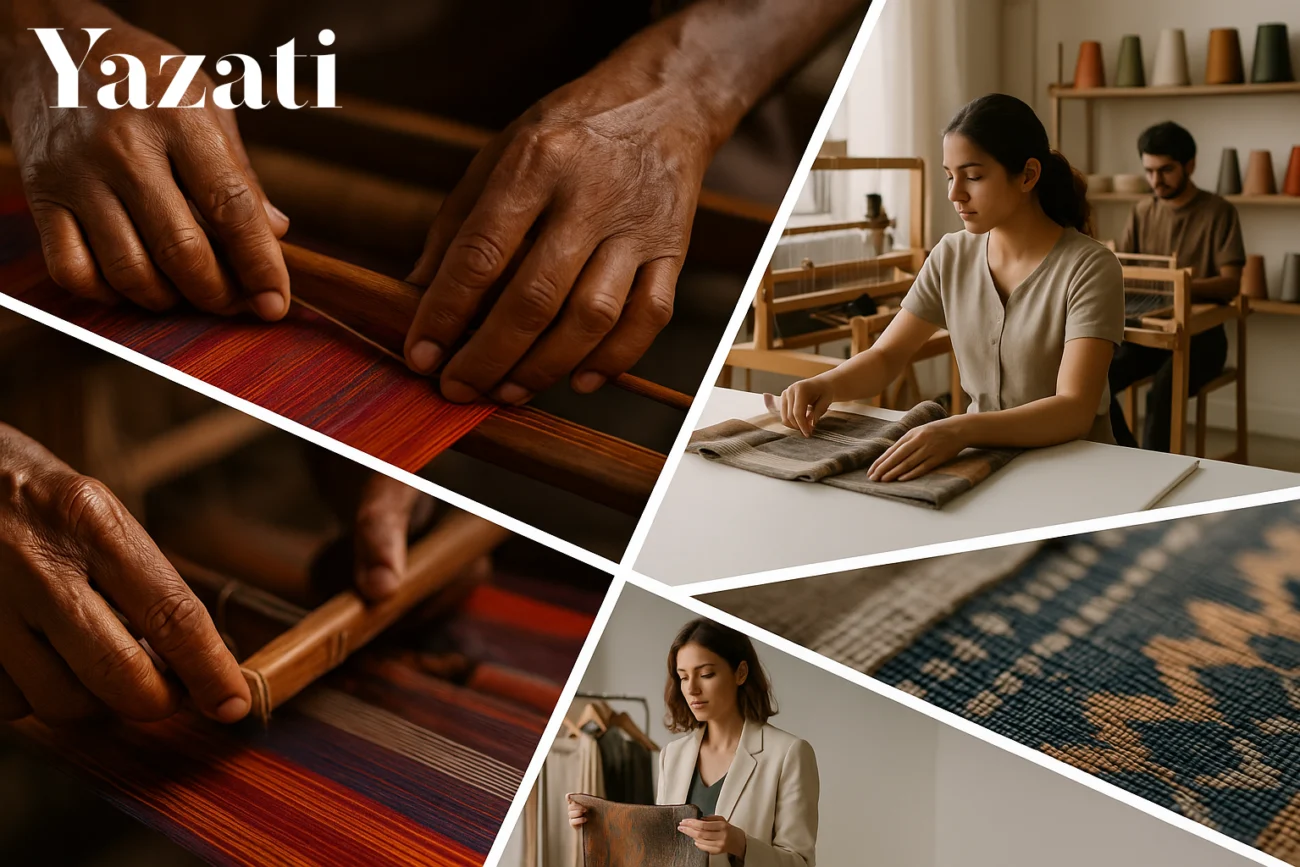
Introduction: Weaving the Story of India’s Textile Heritage
India’s handloom industry isn’t just a business — it’s a story woven through time, color, and culture. From the golden threads of Banarasi silk to the rustic charm of Khadi, Indian weaves embody centuries of craftsmanship, identity, and sustainability. Today, this age-old art is experiencing a global renaissance, driven by the rising demand for eco-conscious fashion and artisanal authenticity.
In a world overrun by fast fashion, the Indian handloom sector stands as a beacon of tradition meeting modern innovation — a symbol of how cultural heritage can thrive in the global market without losing its soul.
The Historical Tapestry: Evolution of Indian Handloom
Ancient Roots of Indian Weaving
India’s textile tradition dates back over 5,000 years, with references in the Rig Veda and findings from the Indus Valley Civilization. Cotton and silk weaving were already sophisticated crafts, attracting traders from Egypt, Greece, and China. The ancient ports of Bharuch and Masulipatnam were global trade hubs, exporting Indian fabrics long before the Silk Road flourished.
Handloom Traditions During the Mughal and Colonial Eras
The Mughal era was the golden period of Indian weaving — intricate brocades, fine muslins, and zari work reached royal courts across Asia and Europe. However, British colonization disrupted this prosperity. The influx of industrial textiles from Britain crippled India’s traditional handloom economy, pushing artisans into poverty.
Post-Independence Decline and Revival Efforts
After independence, leaders like Mahatma Gandhi revived Khadi as a symbol of self-reliance. Yet, modernization and machine-made fabrics again overshadowed handloom production. Fortunately, recent decades have witnessed a cultural and commercial revival, positioning Indian handloom on the global stage once more.
The Craftsmanship Behind Indian Weaves
Techniques and Textures: A Symphony of Skills
Every Indian weave tells a story — not just through design, but through its unique weaving technique. From tie-and-dye Ikat to block-printed Ajrakh and hand-spun Khadi, these crafts demand precision and patience. The weaver’s loom becomes an instrument, creating art from thread.
Regional Styles: Diversity Across the Loom
Banarasi Silk – The Pride of Varanasi
Banarasi silk sarees are woven with real gold and silver threads, featuring Mughal-inspired motifs. A single saree can take weeks to complete — a true masterpiece of patience.
Kanchipuram Silk – Southern Elegance
Originating from Tamil Nadu, Kanchipuram silk blends bold colors with traditional temple borders, making it a favorite for weddings worldwide.
Pochampally Ikat – Geometric Brilliance
Pochampally, from Telangana, is known for its complex geometric designs and meticulous tie-dye method, where both warp and weft threads are dyed before weaving.
Chanderi and Maheshwari – Central India’s Legacy
These lightweight, translucent fabrics are prized for their shimmer and simplicity — perfect for modern fashion adaptation.
The Cultural Significance of Handloom in India
Weaving as a Symbol of Identity and Tradition
In many Indian communities, weaving is more than an occupation — it’s identity. Each motif carries cultural symbolism, representing stories of faith, nature, and daily life. For tribal weavers in the North-East, motifs symbolize their connection with ancestors and the natural world.
Festivals, Rituals, and Fashion: The Role of Handloom
From festive sarees to ceremonial attire, handloom is deeply embedded in Indian life. During festivals like Durga Puja or Onam, regional handlooms take center stage, reflecting the spirit of unity in diversity.
The Global Renaissance: How the World Fell in Love with Indian Weaves Again
The Role of Sustainability and Slow Fashion Movement
As global consumers grow more eco-conscious, the slow fashion movement has fueled renewed interest in handcrafted, sustainable textiles. Handloom fabrics use less energy, zero chemicals, and often rely on natural dyes — making them an ethical alternative to synthetic materials.
Global Designers and Collaborations Elevating Indian Weaves
Indian weaves have made their mark on international runways, from Sabyasachi Mukherjee’s couture collections to international brands like Dior and Stella McCartney, who’ve collaborated with Indian artisans for limited editions. Such partnerships highlight the fusion of ancient craftsmanship with modern aesthetics.
Online Platforms and E-commerce Empowering Artisans
Platforms like Okhai, GoCoop, and Jaypore have bridged the gap between rural artisans and global buyers. Social media and online marketplaces allow weavers to showcase their art directly, ensuring fair trade and recognition.
Government Initiatives and NGO Contributions
Handloom Clusters, Fairs, and Export Promotion
The Indian government’s Handloom Export Promotion Council (HEPC), India Handloom Brand, and Crafts Council of India have played pivotal roles in branding and exporting handloom products. Events like the National Handloom Expo celebrate artisans and promote domestic and international sales.
Skill Development and Artisan Empowerment Schemes
Schemes like Deendayal Hathkargha Protsahan Yojana and National Handloom Development Programme focus on skill training, design innovation, and financial inclusion for weavers. NGOs such as Dastkar and Rangsutra help connect artisans with fair markets.
The Challenges Facing the Indian Handloom Sector
Competition from Machine-Made Fabrics
Power looms and synthetic fabrics flood the market with cheaper alternatives, making it difficult for handloom weavers to compete. Despite quality and cultural value, price sensitivity among consumers remains a major challenge.
Lack of Awareness Among Modern Consumers
Many urban buyers associate handloom with “traditional” or “old-fashioned” designs. Educating consumers about the heritage, sustainability, and artistry behind handloom is crucial for continued growth.
Economic and Infrastructural Barriers
Weavers often struggle with inconsistent electricity, limited access to raw materials, and financial insecurity. Strengthening cooperative societies and ensuring digital access can address these challenges.
Future Prospects: Weaving a Sustainable Tomorrow
Integrating Technology with Tradition
New-age entrepreneurs are merging AI, digital design, and e-commerce to streamline the handloom supply chain. Tech-enabled looms and virtual craft exhibitions make these traditional arts globally accessible.
Global Branding and Export Potential
Countries like Japan, France, and the US are increasingly importing Indian handloom. Establishing “Made in India” as a sustainable luxury brand can unlock massive export potential.
Youth Involvement and Innovation in Weaving
With design schools introducing textile innovation programs, young creators are redefining handloom aesthetics. Collaborations between rural artisans and urban designers are fostering fresh, contemporary styles.
Case Studies of Revival: Success Stories Across India
The Varanasi Weavers and the GI Tag Movement
The GI (Geographical Indication) tag for Banarasi sarees revived the city’s weaving economy, preventing imitation and ensuring authenticity in global markets.
The Khadi Movement and Modern Relevance
Khadi is no longer just a symbol of nationalism — it’s a global fashion statement. Brands like FabIndia and Khadi India have modernized Khadi for international appeal.
The North-East’s Loom to Luxury Story
Designers are collaborating with North-Eastern tribes to bring unique textiles like Eri silk and Muga silk to luxury stores worldwide.
FAQs About the Global Renaissance of Indian Handloom and Weaving Art
Q1. What is driving the global demand for Indian handloom products?
A: Sustainability, authenticity, and craftsmanship are key factors driving renewed international interest in Indian handloom.
Q2. How is the government supporting Indian handloom weavers?
A: Through programs like NHDP, Handloom Clusters, and various export incentives promoting training and financial aid.
Q3. Which regions of India are best known for handloom traditions?
A: Banaras (Uttar Pradesh), Kanchipuram (Tamil Nadu), Pochampally (Telangana), Chanderi (Madhya Pradesh), and Assam (North-East India).
Q4. Are Indian handloom fabrics eco-friendly?
A: Yes, most handlooms use minimal electricity, natural fibers, and dyes, making them one of the most sustainable textile options.
Q5. How can consumers support Indian weavers?
A: By purchasing authentic handloom products directly from verified platforms or craft exhibitions.
Q6. What’s the future of Indian handloom in global fashion?
A: With rising interest in ethical fashion, Indian handloom has immense potential to dominate global sustainable textile markets.
Conclusion: The Loom of Legacy Continues
The global renaissance of Indian handloom and weaving art is not just about reviving an industry — it’s about preserving India’s cultural soul. Each thread woven by a craftsman carries a story, a tradition, and a promise for a sustainable future.
As global consumers seek authenticity and meaning, India’s handloom stands tall — timeless, ethical, and elegant. The world may have gone digital, but in every handmade weave lies the rhythm of India’s timeless artistry.
✨ Discover Global Sourcing Excellence with Netyex ✨
Netyex is your trusted B2B sourcing partner, connecting international buyers with India’s finest manufacturers and curated product lines—from handicrafts and home décor to kitchenware, textiles, hospitality essentials, and more. With verified suppliers and end-to-end support, we make global procurement seamless, reliable, and efficient.
👉 Elevate your sourcing experience—explore Netyex today.
📦 Bulk orders & customisation | 🌍 Worldwide delivery | 🤝 Trusted by global buyers
Visit Netyex to source premium Indian products with confidence.