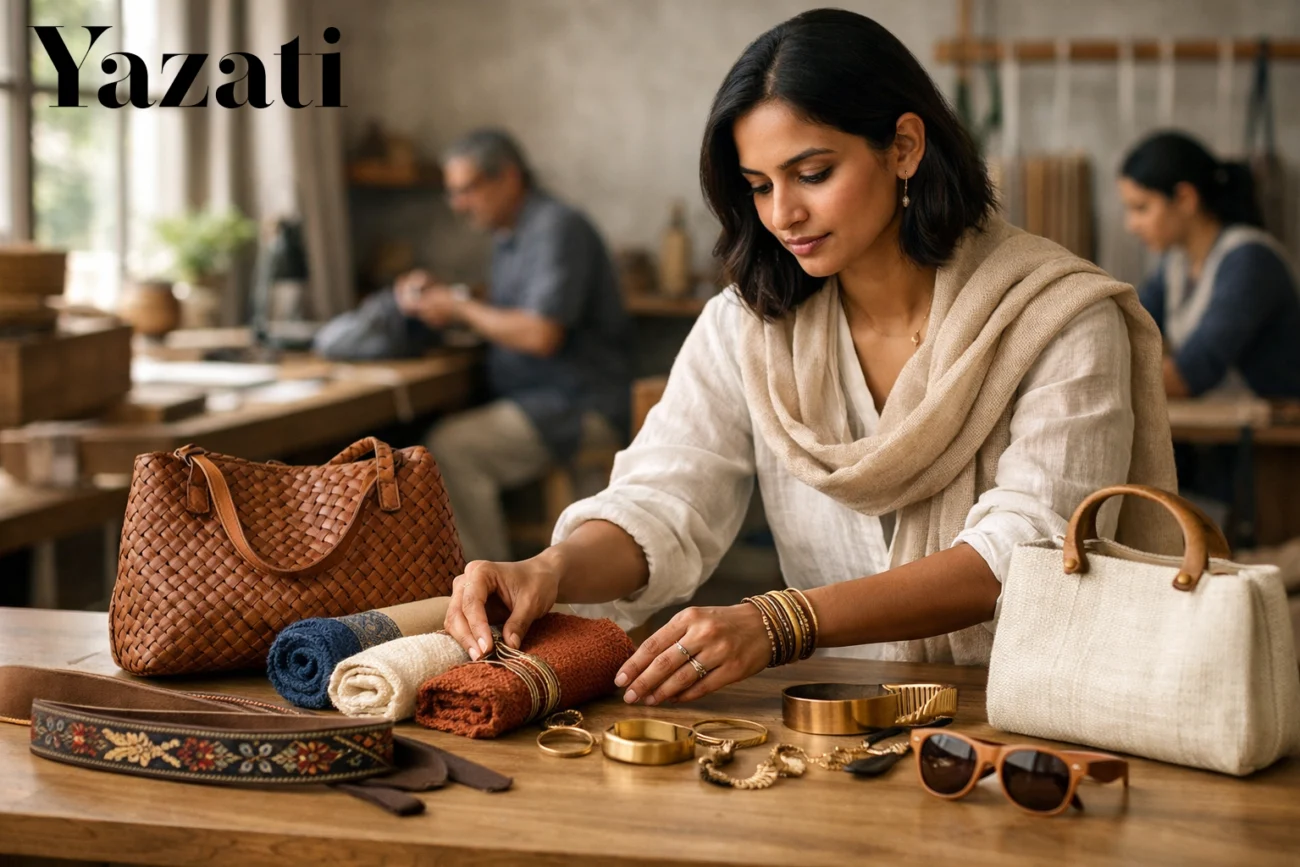
Introduction to Slow Fashion Accessories
The Growth of “Slow Fashion” Accessories — India Leads the Shift is more than just a trend; it’s a movement reshaping how people think about style, sustainability, and responsibility. Across the globe, consumers are stepping away from mass-produced goods and embracing products that tell a story. Accessories—like jewelry, bags, and footwear—have become a major part of this transformation.
Slow fashion focuses on quality over quantity. It promotes ethical production, eco-friendly materials, and timeless design. In India, this movement has gained strong momentum thanks to its deep-rooted traditions of craftsmanship and sustainability.
Unlike fast fashion, which encourages frequent buying and quick disposal, slow fashion invites people to invest in fewer but better items. Accessories are leading this change because they are versatile, expressive, and often handcrafted.
What is Slow Fashion?
Slow fashion is a mindful approach to clothing and accessories. It values durability, ethical labor, and environmental care. Instead of chasing trends, it focuses on timeless pieces that last longer.
This concept is inspired by the slow food movement, which promotes local and sustainable food production. Similarly, slow fashion encourages buyers to understand where their products come from and how they are made.
Key Principles of Slow Fashion
- Ethical production practices
- Sustainable and natural materials
- Fair wages for artisans
- Reduced waste and pollution
- Timeless and durable designs
Accessories fit perfectly into this philosophy. They are often handmade and require fewer resources compared to garments.
Why Accessories Are Driving the Movement
Accessories are becoming the face of slow fashion because they are easier to produce sustainably and appeal to a wide audience. A handcrafted necklace or eco-friendly bag can instantly elevate an outfit without contributing to excessive consumption.
Consumers are also more willing to experiment with accessories. This makes them a perfect entry point into the slow fashion lifestyle.
The Rise of Conscious Consumerism
Changing Buyer Mindsets
Today’s consumers are more informed than ever. They care about the environment, labor conditions, and the impact of their purchases. This shift in mindset has played a huge role in The Growth of “Slow Fashion” Accessories — India Leads the Shift.
People now ask questions like:
- Who made this product?
- What materials were used?
- Is it environmentally friendly?
This awareness is pushing brands to adopt ethical practices.
Sustainability Over Fast Trends
Fast fashion thrives on constant change. But slow fashion focuses on stability and sustainability. Consumers are choosing products that last longer and have minimal environmental impact.
Accessories, being long-lasting items, naturally align with this mindset.
India’s Role in the Slow Fashion Revolution
India stands at the heart of the slow fashion movement. Its rich heritage of handmade crafts, textiles, and traditional techniques gives it a unique advantage.
Traditional Craftsmanship Revival
India has a long history of artisanal work. Techniques like weaving, embroidery, and metalwork have been passed down through generations. Slow fashion has revived these traditions, giving them a modern twist.
Local Artisans and Ethical Production
Millions of artisans across India depend on handicrafts for their livelihood. Slow fashion supports these communities by ensuring fair wages and better working conditions.
Handloom and Handmade Culture
Handmade products are central to Indian culture. From handwoven fabrics to handcrafted jewelry, these items reflect skill, patience, and creativity. This aligns perfectly with slow fashion values.
Popular Slow Fashion Accessories in India
Handmade Jewelry
Handmade jewelry is one of the most popular slow fashion accessories. Crafted using materials like brass, silver, beads, and terracotta, these pieces are unique and eco-friendly.
Sustainable Bags
Eco-friendly bags made from jute, cotton, and recycled materials are gaining popularity. They are stylish, durable, and environmentally responsible.
Eco-Friendly Footwear
Footwear made from natural materials like leather alternatives, cork, and organic fabrics is becoming more common.
Organic and Natural Materials
Using organic materials reduces environmental impact. These materials are biodegradable and safer for both producers and consumers.
Benefits of Slow Fashion Accessories
Environmental Impact Reduction
Slow fashion reduces waste and pollution. By choosing durable products, consumers contribute to a healthier planet.
Supporting Local Economies
Buying handmade accessories supports local artisans and small businesses. This helps preserve traditional skills and boosts rural economies.
Long-Term Cost Efficiency
Although slow fashion products may seem expensive initially, they last longer. This makes them more cost-effective in the long run.
Challenges Facing Slow Fashion in India
Price Sensitivity Among Consumers
Many consumers still prefer cheaper options. Slow fashion products often cost more due to ethical production and quality materials.
Limited Awareness
Not everyone understands the importance of slow fashion. Educating consumers remains a key challenge.
Scaling Ethical Production
Producing handmade items in large quantities is difficult. Maintaining quality while scaling up is a major hurdle.
Role of Digital Platforms and Social Media
Instagram and Conscious Branding
Social media platforms have helped small brands reach a wider audience. They showcase stories behind products, making them more appealing.
E-commerce Boost
Online platforms have made slow fashion accessories more accessible. Consumers can now discover and support ethical brands بسهولة.
Government and Policy Support
Make in India Initiative
Government initiatives encourage local production and support artisans. This aligns with the goals of slow fashion.
Support for MSMEs and Handicrafts
Small businesses and handicraft industries receive support through funding and training programs.
Future of Slow Fashion Accessories
Innovation Meets Tradition
The future lies in blending traditional techniques with modern designs. This creates products that are both stylish and sustainable.
Global Demand for Indian Craft
Indian slow fashion accessories are gaining global recognition. Their uniqueness and quality make them highly desirable.
How Consumers Can Support the Movement
Smart Buying Habits
- Choose quality over quantity
- Support ethical brands
- Avoid impulse purchases
Caring for Products
Proper care extends the life of accessories. This reduces the need for frequent replacements.
Slow Fashion vs Fast Fashion Accessories
Key Differences Table
| Feature | Slow Fashion | Fast Fashion |
|---|---|---|
| Production | Ethical | Mass-produced |
| Materials | Sustainable | Synthetic |
| Durability | High | Low |
| Cost | Higher upfront | Cheaper |
| Environmental Impact | Low | High |
FAQs About Slow Fashion Accessories
1. What are slow fashion accessories?
Slow fashion accessories are ethically made, sustainable items designed to last longer and reduce environmental impact.
2. Why is India leading the slow fashion movement?
India’s strong tradition of craftsmanship and availability of skilled artisans make it a leader in slow fashion.
3. Are slow fashion accessories expensive?
They may cost more initially, but their durability makes them cost-effective over time.
4. How can I identify sustainable accessories?
Look for natural materials, ethical certifications, and transparency in production processes.
5. What materials are used in slow fashion accessories?
Common materials include organic cotton, jute, recycled metals, and natural fibers.
6. Can slow fashion replace fast fashion completely?
While challenging, slow fashion is steadily growing and influencing the industry toward sustainability.
Conclusion
The Growth of “Slow Fashion” Accessories — India Leads the Shift highlights a powerful transformation in the fashion industry. As consumers become more conscious, the demand for ethical and sustainable products continues to rise.
India, with its rich heritage and skilled artisans, is at the forefront of this movement. By embracing slow fashion accessories, consumers not only enhance their style but also contribute to a more sustainable and ethical world.
The journey may have challenges, but the direction is clear—slow, mindful, and meaningful fashion is here to stay.
✨ Discover Global Sourcing Excellence with Netyex ✨
Netyex is your trusted B2B sourcing partner, connecting international buyers with India’s finest manufacturers and curated product lines—from handicrafts and home décor to kitchenware, textiles, hospitality essentials, and more. With verified suppliers and end-to-end support, we make global procurement seamless, reliable, and efficient.
👉 Elevate your sourcing experience—explore Netyex today.
📦 Bulk orders & customisation | 🌍 Worldwide delivery | 🤝 Trusted by global buyers
Visit Netyex to source premium Indian products with confidence.