Introduction: India’s SMEs – The Unsung Heroes of Global Trade
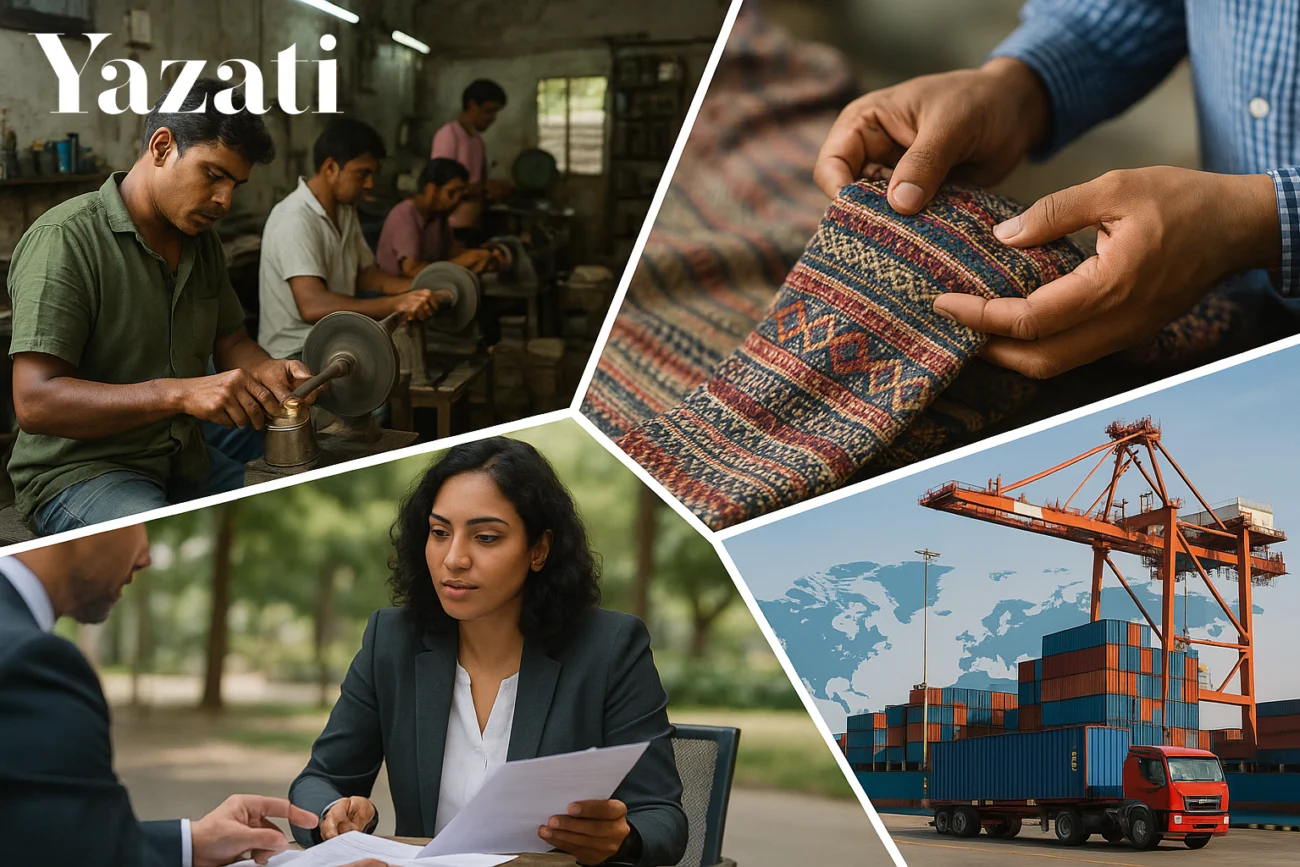
Small and Medium Enterprises (SMEs) have quietly become the backbone of India’s export-driven economy. While large corporations often dominate the headlines, it’s the SME exporters that form the true fabric of India’s international trade. These dynamic businesses have carved a niche for themselves across sectors — from textiles and handicrafts to IT services and machinery.
According to the Ministry of MSME, India is home to over 63 million SMEs, contributing nearly 45% of total exports and employing more than 110 million people. This massive sector represents innovation, resilience, and adaptability, driving India’s rise as a trusted global supplier.
In the following sections, we’ll explore how India’s SME exporters are shaping the global marketplace, overcoming challenges, and redefining what it means to be a “Made in India” brand.
The Rise of SME Exporters in India
Historical Growth of SMEs in India
India’s SME journey began in the post-independence era, focused initially on import substitution and self-reliance. Over the decades, economic reforms, especially the Liberalization, Privatization, and Globalization (LPG) reforms of 1991, opened the doors to global markets. Since then, SMEs have transitioned from local cottage industries to globally recognized export players.
Key Government Policies Shaping SME Exports
Government initiatives such as the Foreign Trade Policy (FTP), MSME Development Act (2006), and Make in India have strengthened the ecosystem. Programs like ‘Zero Defect, Zero Effect’ and Export Promotion Capital Goods (EPCG) have encouraged SMEs to improve quality while remaining globally competitive.
The Transition from Local to Global
In the last decade, India’s SMEs have moved from small-scale domestic players to exporters with international clients in over 200 countries. This transformation was fueled by improved infrastructure, digital tools, and global partnerships.
Understanding India’s SME Export Landscape
Definition and Scale
An SME exporter is defined by turnover and investment thresholds, typically employing fewer than 250 people and generating limited but growing export revenues. Collectively, they account for nearly half of India’s total exports, spanning diverse industries.
Major Export Sectors Dominated by SMEs
- Textiles and Apparel: India’s textile SMEs lead exports to the US and Europe.
- Engineering Goods: Small manufacturers supply critical components for global industries.
- Handicrafts and Jewelry: Traditional artisans bring India’s cultural heritage to the world.
- IT and Software Services: SMEs provide customized digital solutions globally.
Regional Hotspots for SME Exports
- Tamil Nadu & Gujarat: Textiles and auto components.
- Rajasthan: Handicrafts and gems.
- Kerala: Agro-based exports.
- Karnataka & Telangana: IT and tech-driven SMEs.
The Economic Impact of SME Exporters on India’s GDP
Contribution to GDP and Foreign Exchange
SME exporters are the lifeblood of India’s foreign trade, contributing about 30% to GDP and generating billions in foreign currency inflows annually.
Employment Generation
The sector provides massive employment, especially in rural and semi-urban areas, reducing urban migration and empowering local economies.
Empowering Rural India
Export-driven SMEs have uplifted countless rural communities by integrating traditional skills into the global economy — a true example of inclusive growth.
Technology and Innovation: Driving Global Competitiveness
Adoption of Digital Tools
SME exporters increasingly rely on digital payment gateways, CRM tools, and B2B e-commerce platforms to connect with global buyers.
Role of AI, Automation, and Data Analytics
From demand forecasting to quality control, technology helps SMEs improve efficiency, reduce waste, and enhance customer satisfaction.
Innovation and Quality Enhancement
The integration of R&D and product innovation has allowed SMEs to meet global standards such as ISO certification, ensuring trust among international buyers.
Government Support and Trade Facilitation for SME Exporters
Export Promotion Schemes
The Merchandise Exports from India Scheme (MEIS) and Service Exports from India Scheme (SEIS) provide incentives to boost export competitiveness.
Ease of Doing Business
Digital portals such as DGFT’s ICEGATE simplify export documentation, while Udyam Registration ensures faster access to credit and subsidies.
Role of EXIM Bank and MSME Ministry
The Export-Import Bank of India offers financial and advisory support, ensuring that even small exporters have access to global markets.
Challenges Faced by India’s SME Exporters
Financial Constraints
Despite progress, limited access to affordable credit remains a major bottleneck. SMEs often rely on informal sources due to stringent collateral requirements.
Regulatory Hurdles
Complex documentation, customs procedures, and compliance standards can delay shipments and inflate costs.
Global Competition
With nations like Vietnam and Bangladesh offering competitive pricing, Indian SMEs must focus on quality and niche markets to stay ahead.
Success Stories: Inspiring Indian SME Exporters
Tirupur’s Textile Titans
Known as the “Knitwear Capital of India,” Tirupur’s SMEs collectively export over $3 billion annually. They’ve embraced sustainability by adopting zero-liquid discharge technology.
Rajasthan’s Handicraft Revolution
Artisans from Jaipur and Jodhpur now sell globally through Etsy, Amazon Handmade, and Alibaba, connecting tradition with modern retail.
Tech SMEs Leading Innovation
Bengaluru-based startups like Zetwerk and Synersoft are empowering global manufacturing through digital integration.
SME Exporters and Sustainable Global Trade
Green Manufacturing
Eco-friendly production methods are helping Indian SMEs appeal to environmentally conscious buyers.
Ethical Sourcing
SMEs are increasingly aligning with fair-trade principles, ensuring ethical labor and transparent sourcing.
Global Sustainability Standards
Certifications like LEED, ISO 14001, and Fair Trade Certified are helping SMEs gain international recognition.
How Digital Transformation Is Empowering SME Exporters
Role of B2B Marketplaces
Platforms like IndiaMART, TradeIndia, and Alibaba provide exposure to millions of international buyers, reducing dependency on intermediaries.
Digital Marketing for Global Reach
SMEs are leveraging SEO, social media marketing, and influencer collaborations to build a strong brand presence abroad.
Cross-Border E-Commerce
Integration with logistics providers like DHL, FedEx, and Shiprocket has simplified export delivery mechanisms.
India’s SME Exporters in the Post-Pandemic Global Economy
Lessons from COVID-19
Despite disruptions, SMEs demonstrated remarkable adaptability through digital pivoting and local sourcing.
Make in India and Vocal for Local
Government campaigns have bolstered confidence in Indian manufacturing, promoting domestic innovation for global demand.
Global Recovery and Positioning
With global supply chains diversifying beyond China, India’s SMEs are emerging as reliable alternatives.
The Future of SME Exports: Opportunities in 2026 and Beyond
Emerging Markets
Africa, Latin America, and Eastern Europe offer untapped potential for Indian products.
Trade Partnerships
India’s bilateral agreements with UAE, UK, and ASEAN nations are opening new doors for exporters.
Vision for a $1 Trillion Export Economy
By 2030, SMEs are expected to contribute significantly toward India’s goal of achieving $1 trillion in exports.
FAQs about India’s SME Exporters
Q1: What percentage of India’s exports come from SMEs?
Around 45% of India’s total exports are generated by the SME sector.
Q2: What are the top export industries for Indian SMEs?
Textiles, engineering goods, IT services, and handicrafts lead the list.
Q3: What challenges do SME exporters face most often?
Limited credit access, regulatory complexity, and intense global competition.
Q4: How is the government helping SME exporters?
Through initiatives like MEIS, SEIS, Udyam Registration, and digital trade portals.
Q5: What role does technology play in SME exports?
Digital platforms, AI, and e-commerce tools enhance productivity and market reach.
Q6: What’s the future outlook for India’s SME exports?
With innovation, policy support, and global demand, the future is extremely promising.
Conclusion: The Global Future of India’s SMEs
The power of India’s SME exporters in the global market lies in their resilience, adaptability, and innovation. These enterprises are more than just economic contributors — they are ambassadors of India’s craftsmanship, creativity, and entrepreneurial spirit. As technology continues to blur borders, Indian SMEs are poised to lead the next wave of sustainable, inclusive global trade.
✨ Discover Global Sourcing Excellence with Netyex ✨
Netyex is your trusted B2B sourcing partner, connecting international buyers with India’s finest manufacturers and curated product lines—from handicrafts and home décor to kitchenware, textiles, hospitality essentials, and more. With verified suppliers and end-to-end support, we make global procurement seamless, reliable, and efficient.
👉 Elevate your sourcing experience—explore Netyex today.
📦 Bulk orders & customisation | 🌍 Worldwide delivery | 🤝 Trusted by global buyers
Visit Netyex to source premium Indian products with confidence.