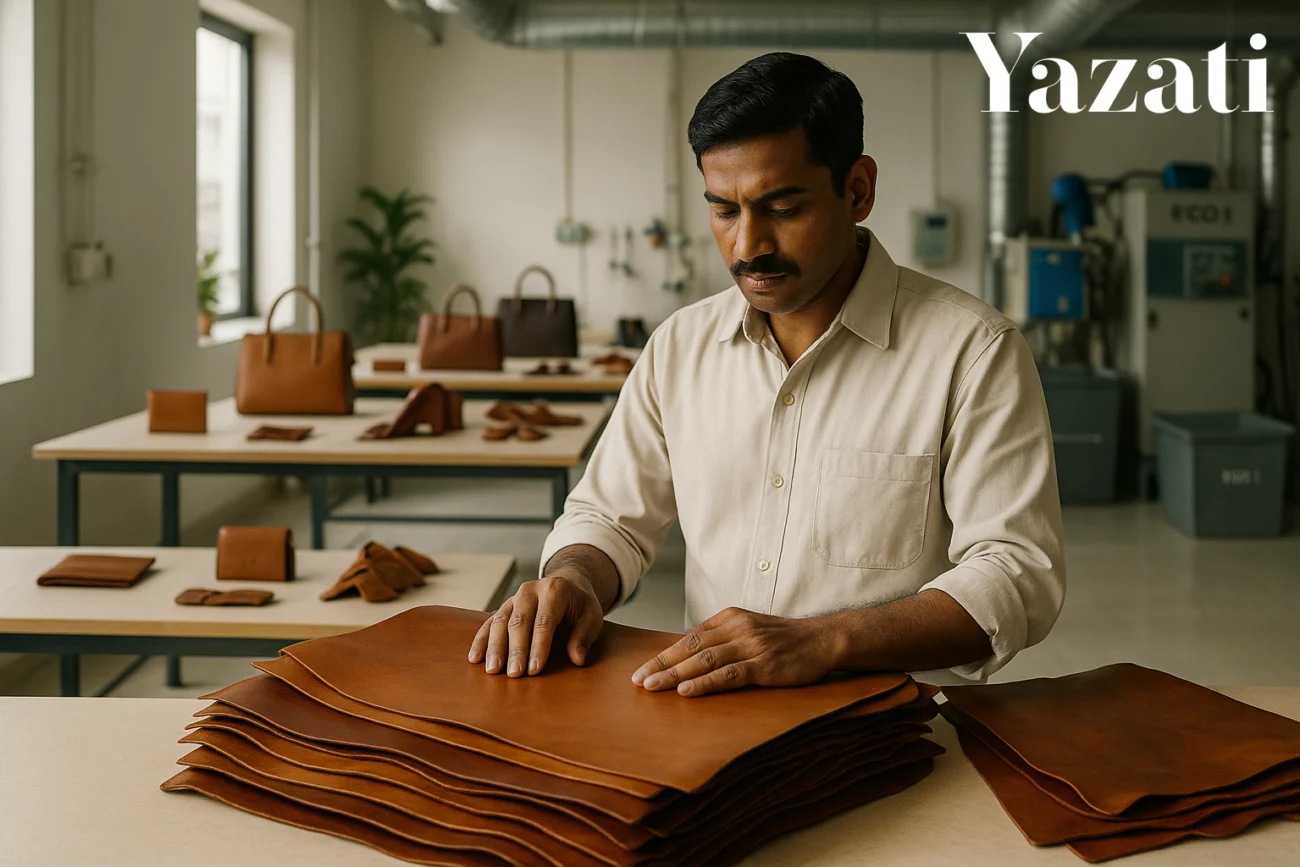
Introduction: The Evolution of Leather Manufacturing in India
India’s leather industry has long stood as one of the cornerstones of its manufacturing sector, known globally for its craftsmanship and diverse product range — from footwear and handbags to upholstery and accessories. However, for decades, the industry was also associated with environmental pollution, poor labor conditions, and opaque supply chains.
In recent years, this narrative has begun to change dramatically. With the global surge in conscious consumerism, sustainability, and ethical business practices, India’s leather industry has started a meaningful transformation. The rise of ethical leather manufacturing in India marks a significant shift toward balancing profitability with responsibility, tradition with innovation, and craftsmanship with compassion.
A Brief History of India’s Leather Industry
India’s leather legacy dates back over a thousand years. Traditional leather craftsmanship flourished under Mughal and colonial influences, particularly in cities like Kanpur, Chennai, Kolkata, and Agra. The country became one of the top global exporters of leather goods, employing millions of artisans.
Yet, the sector’s rapid industrialization brought environmental and social consequences. Tanneries discharged untreated effluents into rivers, and worker exploitation became a concern. This history forms the foundation upon which ethical reforms are now being built.
The Transition Toward Sustainability and Ethics
The shift toward ethical manufacturing didn’t happen overnight. It emerged from a confluence of factors — stricter global trade standards, increased consumer awareness, and local innovation. Today, the Indian leather industry is actively redefining itself by embracing sustainable materials, reducing pollution, and improving labor welfare.
Brands and tanneries alike are investing in eco-friendly technologies and certifications to ensure their operations meet international ethical benchmarks.
What Is Ethical Leather Manufacturing?
Defining Ethical Leather Production Practices
Ethical leather manufacturing refers to the production of leather products that respect the environment, animals, and people involved in the process. It integrates responsible sourcing, humane treatment of animals, eco-friendly tanning, and fair labor practices.
The Importance of Transparency and Traceability
Transparency is the cornerstone of ethical manufacturing. Brands today are expected to disclose their sourcing, tanning methods, and environmental impact. Traceability systems — such as blockchain tracking and digital certifications — are increasingly being adopted to ensure every step in the supply chain aligns with ethical standards.
How Ethical Leather Differs from Conventional Leather
Traditional leather production often relies on harsh chemicals like chromium and generates significant waste. Ethical leather, by contrast, uses vegetable-based tanning agents, recycles water, minimizes carbon emissions, and ensures humane animal sourcing — if animal leather is used at all.
Drivers Behind India’s Shift to Ethical Leather
Global Consumer Demand for Sustainable Products
Conscious consumers, especially in Europe and North America, are demanding products that align with their values. This shift has compelled Indian manufacturers to evolve, as ethical credentials have become a prerequisite for global competitiveness.
Government Regulations and Export Requirements
India’s Council for Leather Exports (CLE) and the Ministry of Commerce have implemented initiatives to modernize tanneries and encourage green technology adoption. Export markets now require compliance with strict environmental and labor standards, making sustainability not just desirable but necessary.
Role of Indian Designers and Sustainable Brands
Indian designers like Anita Dongre and brands like Hidesign and Nappa Dori have become champions of ethical craftsmanship. By integrating sustainability into their brand stories, they’ve inspired a new generation of ethical producers.
Eco-Friendly Leather Production Techniques in India
Vegetable Tanning vs. Chrome Tanning: A Sustainable Shift
Traditional chrome tanning involves heavy metal salts that are harmful to the environment. In contrast, vegetable tanning uses natural tannins derived from plants such as bark, leaves, and fruits. This method reduces toxicity and gives leather a unique, organic feel.
Water Recycling and Waste Management Practices
Many tanneries in Tamil Nadu and Uttar Pradesh are investing in water recycling plants. The Common Effluent Treatment Plants (CETPs) in places like Kanpur have drastically reduced water pollution and waste discharge.
Renewable Energy in Leather Tanneries
Some progressive manufacturers are adopting solar and biomass energy to power operations. This not only reduces carbon emissions but also lowers long-term energy costs, making ethical manufacturing economically viable.
Ethical Sourcing and Supply Chain Transparency
The Role of Traceability in Leather Production
Modern supply chains are integrating traceability tools — QR codes, RFID tags, and blockchain — to provide consumers with a transparent view of where their products come from.
Partnerships with Certified Suppliers and Farmers
Leather manufacturers are partnering with farms and suppliers that adhere to animal welfare and environmental protection guidelines, ensuring that sourcing aligns with ethical standards.
Worker Welfare and Fair Wage Policies
Ethical leather manufacturing also ensures social sustainability. Tanneries are increasingly adopting fair wage policies, providing safer working conditions, and supporting skill development among artisans.
Certifications and Standards for Ethical Leather in India
Key Global Certifications: LWG, ISO 14001, and SA8000
Ethical leather producers pursue certifications such as:
- LWG (Leather Working Group) – Ensures sustainable environmental practices.
- ISO 14001 – Focuses on environmental management systems.
- SA8000 – Ensures compliance with social responsibility standards.
Indian Initiatives Supporting Ethical Leather Manufacturing
India’s Leather Sector Skill Council (LSSC) and CLE are promoting green manufacturing standards through training programs and technology upgradation schemes.
Leading Ethical Leather Brands and Tanneries in India
Case Studies: Hidesign, Nappa Dori, and Other Pioneers
- Hidesign has set benchmarks in vegetable-tanned leather production.
- Nappa Dori blends artisanal craftsmanship with sustainable materials.
- Farida Group and Superhouse Ltd. are investing in cleaner technologies to meet global environmental standards.
Small-Scale Artisans Promoting Sustainable Leather
Across Rajasthan, West Bengal, and Tamil Nadu, small workshops are reviving age-old tanning techniques using plant-based dyes and natural oils, preserving both tradition and the planet.
Challenges Facing Ethical Leather Manufacturing in India
While the movement toward ethical leather manufacturing in India is gaining momentum, it faces several systemic challenges that hinder widespread adoption.
High Costs of Sustainable Production
Switching to sustainable raw materials, non-toxic tanning methods, and renewable energy often demands a significant financial investment. Many small and medium-sized enterprises (SMEs) struggle to afford these changes without external funding or government support. The initial costs of certification and green technologies can be prohibitively high, delaying adoption even among willing manufacturers.
Limited Awareness Among Local Consumers
While global buyers increasingly demand ethically made leather, the awareness among Indian consumers is still evolving. Many still associate “ethical” with “expensive,” creating a perception barrier. Domestic demand for sustainable products must rise to support the industry’s internal growth and resilience.
Supply Chain Complexities and Certification Barriers
The leather supply chain involves numerous intermediaries — from cattle farmers to tanneries to exporters. Ensuring ethical compliance at every stage is a complex task. Moreover, acquiring international certifications like LWG or SA8000 involves rigorous audits and documentation that smaller tanneries often find overwhelming.
The Future of Ethical Leather Manufacturing in India
Despite these challenges, the future of ethical leather manufacturing in India appears remarkably promising. The convergence of technology, government initiatives, and changing consumer values is setting the stage for a revolution in sustainable leather production.
Technological Innovations and Research in Sustainable Materials
Research institutions and startups are working on new technologies to make leather production cleaner and more efficient. Bio-based tanning agents, AI-driven quality control, and smart waste management systems are helping manufacturers reduce their environmental footprint.
Furthermore, India’s Central Leather Research Institute (CLRI) has developed low-sulfide and chrome-free tanning methods that promise to make the industry more sustainable and globally competitive.
The Rise of Vegan and Plant-Based Leather Alternatives
A noteworthy trend reshaping the leather industry is the emergence of vegan leather made from plants and recycled materials. Companies are experimenting with leather derived from pineapple leaves (Piñatex), coconut husks, mushroom mycelium, and even banana fibers.
These innovations are gaining traction not just as eco-friendly alternatives but as luxury materials in their own right. Several Indian startups are now exploring bio-fabricated leather to cater to both domestic and international markets.
Global Opportunities and Export Growth
The global market for sustainable leather is expanding rapidly. India’s reputation as a skilled manufacturing hub gives it a competitive edge in supplying ethically sourced leather goods to Europe, North America, and East Asia.
By 2030, the demand for ethically certified leather products is expected to double, providing Indian manufacturers an opportunity to lead the transformation in responsible fashion and accessories.
FAQs on Ethical Leather Manufacturing in India
1. What makes leather “ethical”?
Ethical leather is produced through environmentally responsible, socially fair, and animal-conscious practices. It minimizes harm by using eco-friendly tanning processes, reducing waste, ensuring fair wages, and maintaining transparency across the supply chain.
2. Is ethical leather cruelty-free?
Not always. Ethical leather still uses animal hides but ensures that animals are not raised solely for their skins. Instead, hides are sourced as by-products of the meat industry. However, vegan leather, made from plant-based materials, is 100% cruelty-free.
3. Which Indian cities lead in sustainable leather production?
Cities like Chennai, Kanpur, Ranipet, and Kolkata have taken significant strides toward ethical manufacturing. Chennai, in particular, is home to tanneries that employ vegetable tanning and water recycling systems.
4. How can consumers identify ethical leather products?
Look for certifications such as LWG (Leather Working Group), ISO 14001, or Fair Trade labels. Additionally, brands that disclose their sourcing practices and use natural tanning methods are likely producing ethical leather.
5. Are there eco-friendly alternatives to animal leather?
Yes. Alternatives like cork leather, Piñatex, mushroom leather, and apple leather are gaining popularity for their durability and sustainable profiles. These materials are biodegradable and often indistinguishable from animal leather.
6. What is the future outlook for India’s ethical leather exports?
India’s exports of ethical and sustainable leather products are projected to rise sharply in the next five years. With increasing adoption of eco-friendly practices and certifications, the country could become a global leader in sustainable leather manufacturing by 2030.
Conclusion: Paving the Way for a Greener, Ethical Leather Future
The rise of ethical leather manufacturing in India symbolizes a broader shift — one that redefines success not just by profit margins but by the planet’s well-being and people’s dignity. India’s transformation from a traditional leather powerhouse to a hub of sustainable innovation reflects both its rich heritage and its readiness to embrace the future.
Ethical leather is more than just a trend — it’s a movement toward conscious craftsmanship, responsible trade, and ecological preservation. With growing global awareness, supportive policies, and continuous technological advancements, India stands poised to lead the world in creating leather that’s beautiful, durable, and deeply ethical.
🌿 Key Takeaways
- Ethical leather manufacturing combines environmental, social, and animal welfare standards.
- India is emerging as a global hub for sustainable leather, with growing exports and innovation.
- Vegan and plant-based leathers are expanding market opportunities.
- Consumer education and government-backed initiatives are crucial to accelerating change.
- With continuous investment in green technologies, India’s leather industry is moving toward a truly ethical future.
✨ Discover Global Sourcing Excellence with Netyex ✨
Netyex is your trusted B2B sourcing partner, connecting international buyers with India’s finest manufacturers and curated product lines—from handicrafts and home décor to kitchenware, textiles, hospitality essentials, and more. With verified suppliers and end-to-end support, we make global procurement seamless, reliable, and efficient.
👉 Elevate your sourcing experience—explore Netyex today.
📦 Bulk orders & customisation | 🌍 Worldwide delivery | 🤝 Trusted by global buyers
Visit Netyex to source premium Indian products with confidence.