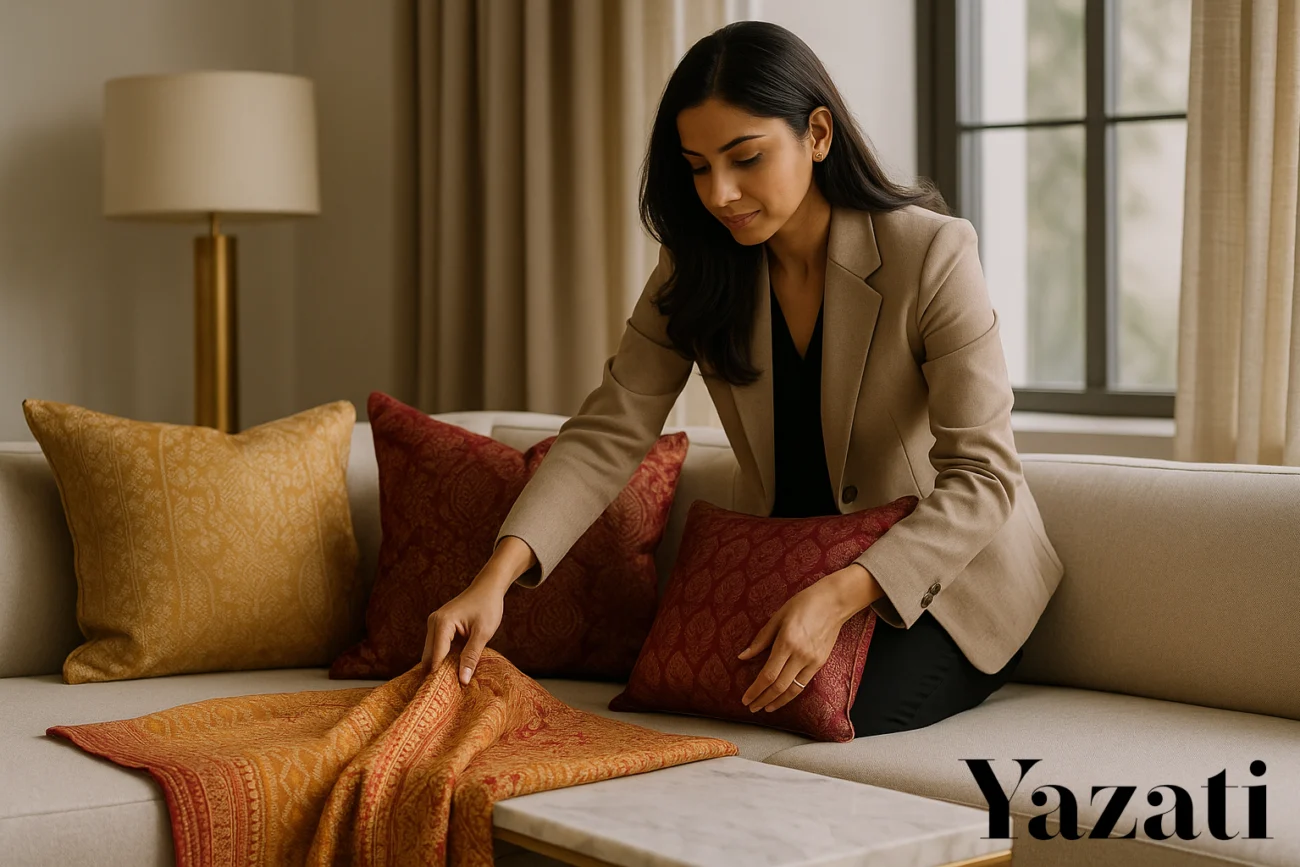
Introduction: India’s Timeless Textile Legacy
India’s textile heritage is one of the oldest and most diverse in the world, stretching back thousands of years. Known for its intricate craftsmanship, natural dyes, and diverse regional techniques, Indian textiles have not only clothed civilizations but also adorned homes and royal palaces. Today, this legacy finds renewed expression in global luxury home brands, where Indian fabrics symbolize artistry, sustainability, and timeless beauty.
Indian weaves are no longer limited to traditional attire or local decor—they now define luxury aesthetics across the world. From Parisian penthouses to New York studios, Indian fabrics are being celebrated for their handcrafted quality, sustainability, and cultural richness.
Evolution of Indian Textiles Through History
Early Origins: Handlooms and Natural Dyes
Indian weaving traditions began in ancient times with handlooms and organic fibers such as cotton, silk, and wool. Techniques like block printing and natural dyeing using indigo and madder roots were developed centuries before modern chemical processes existed. The famous “Muslin of Bengal” was once prized across the Roman Empire for its ethereal fineness.
Colonial Influence and Export Expansion
During the colonial era, Indian textiles became the backbone of global trade. European markets were captivated by Indian prints, chintz, and calicoes. Although industrialization threatened handloom industries, artisans continued preserving their craft, keeping alive regional styles that would later regain global recognition.
Post-Independence Revival and Modernization
After independence, India’s textile industry saw a resurgence through cooperative movements and government initiatives. Today, with increased global awareness of sustainability and handcrafted luxury, these heritage textiles have found new life in modern interior design.
Defining Luxury in the Global Home Décor Market
What Makes a Brand “Luxury”?
Luxury brands are defined not only by their price or exclusivity but by authenticity, craftsmanship, and storytelling. A handwoven fabric tells a story of human touch, patience, and regional artistry—values that perfectly align with modern luxury sensibilities.
The Growing Demand for Authentic, Handcrafted Textiles
As consumers move away from mass-produced goods, they increasingly seek unique, handcrafted pieces that carry a sense of history. Indian textiles, with their cultural depth and artisanal techniques, have become a natural choice for luxury home brands looking to infuse authenticity into their collections.
Why Indian Textiles Appeal to Global Luxury Brands
Unmatched Artistry and Regional Diversity
From the shimmering Banarasi silks of Uttar Pradesh to the geometric Ikats of Odisha, India’s textile landscape is a celebration of regional variety. This diversity allows designers to experiment with patterns, textures, and materials that are difficult to replicate elsewhere.
Ethical Sourcing and Sustainability in Focus
Indian textile production often relies on natural materials and traditional methods, which make it inherently sustainable. The revival of khadi, organic cotton, and handspun silk aligns perfectly with the global luxury sector’s shift toward eco-friendly practices.
Blend of Tradition and Innovation
Modern Indian designers and artisans are innovating with contemporary color palettes, minimalist weaves, and hybrid fabrics—making Indian textiles equally suitable for Scandinavian, Bohemian, and contemporary interiors.
Key Indian Textiles Featured in Global Luxury Homes
Banarasi Silk: The Fabric of Royalty
This opulent silk, known for its gold and silver zari motifs, is being reimagined as luxury upholstery and curtain fabric in global markets.
Ikat and Kalamkari: Artistry in Pattern and Color
Ikat’s resist-dyeing technique and Kalamkari’s hand-painted storytelling motifs add cultural depth to modern interior pieces like cushions, wall art, and rugs.
Khadi and Handwoven Cotton: Sustainable Luxury
Promoted by Mahatma Gandhi, Khadi has evolved into a symbol of sustainable luxury. Its raw texture and breathable quality make it a favorite among designers seeking eco-conscious elegance.
Indian Textile Clusters and Their Global Footprint
Varanasi, Kanchipuram, and Jaipur as Creative Hubs
These cities are renowned for their unique weaving styles and have become export centers for high-end décor textiles. For instance, Jaipur’s hand-block prints are featured in collections by brands like Anthropologie and Ralph Lauren Home.
Artisans Empowering Local Economies
Each cluster sustains hundreds of artisan families, ensuring that luxury production supports inclusive and ethical growth.
Partnerships Between Indian Artisans and Global Designers
Case Study: Hermès, Dior, and Indian Craft Collaborations
French luxury houses like Hermès and Dior have embraced Indian textiles for their home collections and accessories, emphasizing the artistry behind Indian craftsmanship.
Role of Indian Designers in International Markets
Indian designers like Anita Dongre, Ritu Kumar, and Abraham & Thakore have collaborated with international brands, bringing traditional textiles into luxury living spaces.
Sustainability and Ethical Craftsmanship: A New Luxury Standard
Organic Fibers, Natural Dyes, and Eco-Conscious Production
As the luxury market evolves, sustainability has emerged as its defining pillar. Indian textiles naturally embody this ethos. From organic cotton and handwoven silk to the use of natural dyes extracted from plants and minerals, the Indian textile industry has long practiced what the world now calls eco-luxury.
Textile clusters in Gujarat, Tamil Nadu, and Andhra Pradesh are leading a quiet revolution — producing high-quality fabrics through zero-waste production, water recycling, and biodegradable dyes. International luxury brands increasingly collaborate with these clusters to meet their sustainability goals without compromising artistry or authenticity.
Fair Trade and Empowerment of Rural Communities
A distinguishing feature of Indian textile production lies in its community-based structure. Each handloom piece sustains not just one artisan but entire rural ecosystems — from spinners and dyers to weavers and embroiderers. Fair trade organizations and ethical sourcing initiatives ensure artisans receive fair compensation, social benefits, and professional recognition.
Global luxury brands now highlight these collaborations as part of their identity. For consumers, knowing that a silk throw or cotton drape supports artisan livelihoods adds emotional and ethical value, turning a simple home accessory into a story of purpose and pride.
Challenges in Globalizing Indian Textiles
Mass Production vs. Artisanal Authenticity
While demand for Indian fabrics grows, scaling up production without losing authenticity remains a major challenge. Machine-produced imitations threaten the reputation of handcrafted textiles, often undercutting artisans who cannot compete with industrial speed and cost. The future of Indian textiles in global luxury depends on maintaining the delicate balance between tradition and modernization.
Intellectual Property and Design Imitation Issues
Another pressing issue is intellectual property theft. Indian patterns, motifs, and weaving techniques are often replicated by foreign manufacturers without credit or royalties. Although steps are being taken through Geographical Indication (GI) tags and copyright protections, stronger global enforcement is essential to safeguard artisan rights and heritage.
The Future of Indian Textiles in Global Luxury Homes
Digitalization and Global E-Commerce Expansion
Digital platforms have revolutionized how Indian artisans reach global consumers. Through e-commerce collaborations, virtual exhibitions, and online boutiques, handcrafted Indian textiles are entering homes across Europe, the U.S., and the Middle East. Brands like Good Earth, Raw Mango, and FabIndia exemplify how digital storytelling can transform local craftsmanship into international luxury narratives.
Revival of Heritage Weaves Through Modern Branding
The new generation of Indian designers is combining heritage weaving with minimalist global aesthetics. For example, modern interpretations of Pochampally Ikat or Chanderi silk now feature muted palettes and sleek finishes suited for high-end interiors. These innovations ensure that Indian textiles not only survive but thrive in contemporary luxury spaces.
How Luxury Brands Can Support Indian Craftsmanship
Building Transparent Supply Chains
Luxury brands can play a vital role in preserving textile heritage by creating transparent supply chains that trace every step of production — from raw fiber sourcing to the artisan’s loom. Transparency builds consumer trust and enhances the value proposition of authenticity and ethical luxury.
Promoting Artisans as Co-Creators, Not Just Suppliers
True luxury is about collaboration, not exploitation. When artisans are treated as co-creators, their input enriches design, storytelling, and innovation. Brands that acknowledge and celebrate artisan contributions not only elevate their own reputation but also invest in the future of sustainable craftsmanship.
FAQs: Understanding Indian Textiles in Luxury Branding
1. Why are Indian textiles considered luxurious?
Indian textiles represent centuries of skilled craftsmanship, intricate techniques, and handwoven artistry. The use of natural materials, traditional motifs, and sustainable methods makes them rare, valuable, and deeply tied to cultural heritage.
2. Which Indian fabrics are most popular in luxury home décor?
Banarasi silk, Khadi, Ikat, Kalamkari, and Chanderi are among the top choices. They’re prized for their texture, durability, and visual elegance—ideal for curtains, upholstery, and statement décor pieces.
3. How do global luxury brands collaborate with Indian artisans?
Brands like Hermès, Dior, and Ralph Lauren Home have partnered with Indian artisans for limited-edition collections. These collaborations often highlight craftsmanship, sustainability, and regional artistry.
4. Are Indian textiles environmentally friendly?
Yes. Many Indian fabrics are handwoven using natural fibers and organic dyes, making them highly sustainable. The minimal use of machines also reduces carbon emissions, aligning with eco-luxury principles.
5. What role does technology play in promoting Indian textiles globally?
Technology enables artisans and brands to connect directly with global consumers through online platforms. It also helps in preserving design archives, ensuring supply chain transparency, and promoting digital storytelling.
6. What challenges do Indian weavers face today?
Key challenges include market competition from machine-made imitations, inadequate marketing infrastructure, and inconsistent demand from global buyers. Support through fair trade and branding initiatives can mitigate these issues.
Conclusion: Weaving India’s Heritage into Global Luxury
The story of Indian textiles in global luxury home brands is one of resilience, artistry, and cultural pride. From handwoven khadi to luminous Banarasi silk, these textiles embody the essence of slow luxury — beauty born from time, patience, and human touch.
As the world redefines luxury through the lens of sustainability and authenticity, Indian weaves stand as timeless ambassadors of ethical elegance. By blending ancient craftsmanship with modern design and global collaboration, Indian textiles are not just adorning luxury homes — they’re weaving India’s heritage into the fabric of the world.
For readers and brands alike, embracing these textiles means participating in a story larger than fashion — a narrative of heritage, empowerment, and mindful living.
✨ Discover Global Sourcing Excellence with Netyex ✨
Netyex is your trusted B2B sourcing partner, connecting international buyers with India’s finest manufacturers and curated product lines—from handicrafts and home décor to kitchenware, textiles, hospitality essentials, and more. With verified suppliers and end-to-end support, we make global procurement seamless, reliable, and efficient.
👉 Elevate your sourcing experience—explore Netyex today.
📦 Bulk orders & customisation | 🌍 Worldwide delivery | 🤝 Trusted by global buyers
Visit Netyex to source premium Indian products with confidence.