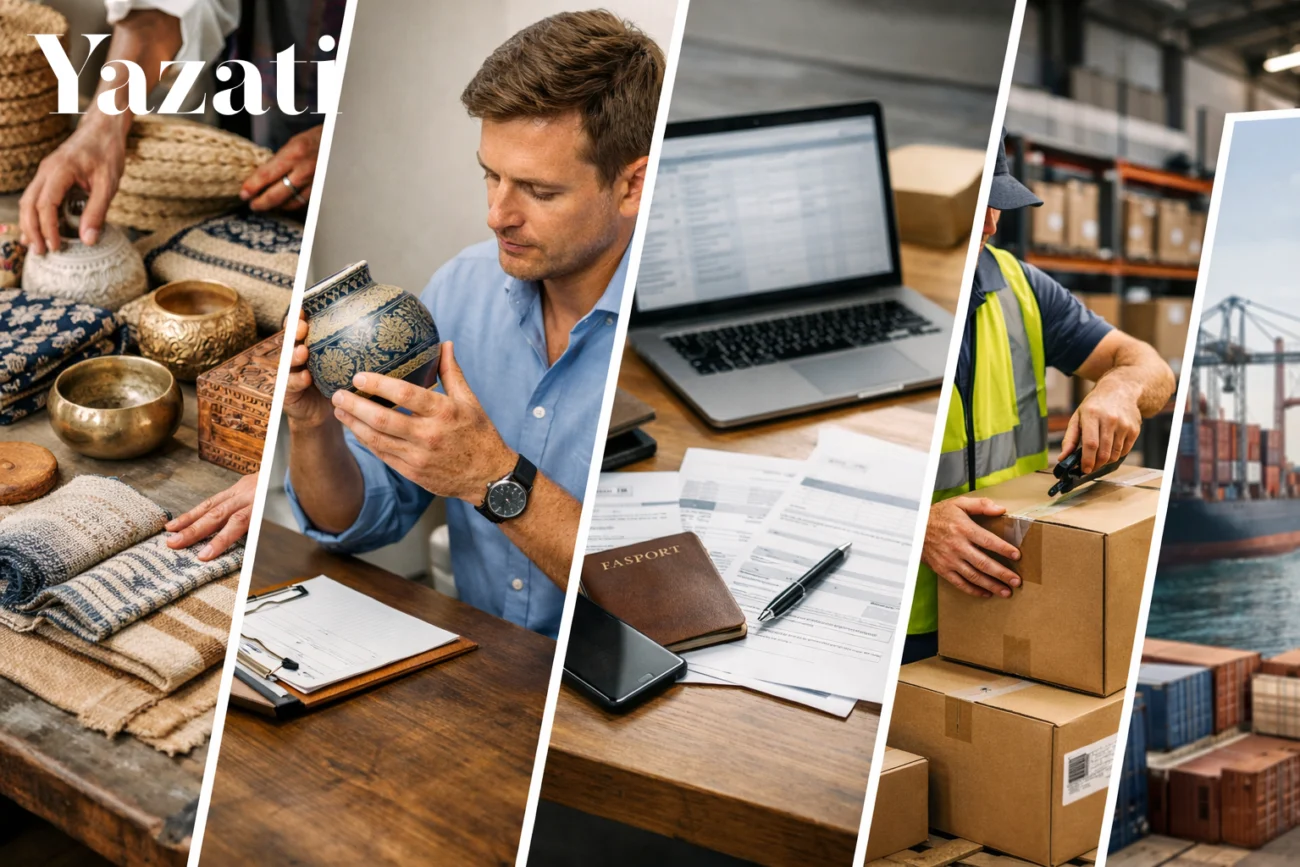
The Step-by-Step Guide to Importing Handmade Crafts from India
Handmade crafts hold a special place in global retail and lifestyle markets. They offer authenticity, cultural depth, and uniqueness that mass-produced goods cannot match. For buyers sourcing from India—one of the world’s richest craft-producing regions—opportunity is high, but so is complexity. That is why following The Step-by-Step Guide to Importing Handmade Crafts from India is essential for success.
This guide breaks the process into clear, manageable steps so buyers can import confidently while preserving authenticity, controlling costs, and reducing risk.
Introduction: Why Handmade Crafts from India Attract Global Buyers
The Global Appeal of Authentic Handcrafted Products
Consumers increasingly value products with a human story. Handmade crafts represent skill, tradition, and individuality—qualities that drive emotional connection and premium perception in global markets.
Why a Step-by-Step Approach Is Essential
Handmade crafts differ from factory-made goods. Without a structured approach, buyers risk quality disputes, delays, and misunderstandings about variation and timelines.
Step 1: Understanding Handmade Crafts and Buyer Expectations
Handmade vs Mass-Produced Goods
Handmade products are created primarily by hand using traditional techniques. Minor differences in size, color, or finish are natural and should be expected.
Defining Quality and Acceptable Variations
Before sourcing begins, buyers must define:
- What variations are acceptable
- What constitutes a defect
Clear definitions prevent disputes later.
Step 2: Researching and Selecting the Right Export Partner
Why Direct and Transparent Sourcing Matters
Direct sourcing reduces layers of intermediaries that may dilute authenticity or transparency.
Evaluating Experience and Export Readiness
A reliable export partner understands:
- Handicraft-specific quality management
- Export documentation
- Packaging and logistics for fragile items
Step 3: Defining Product Specifications Clearly
Materials, Dimensions, and Finishes
Even handmade products require clear specifications. Document materials, approximate dimensions, finishes, and functional requirements.
Samples and Reference Standards
Samples serve as visual and physical references for future production, helping maintain consistency without eliminating uniqueness.
Step 4: Understanding Pricing and Budget Planning
Product Cost vs Total Landed Cost
The quoted product price is only part of the budget. Buyers must also plan for:
- Inland transport
- Export handling
- Freight and insurance
- Import duties and local delivery
Common Hidden Costs to Plan For
Hidden costs may include repackaging, storage, delays, or damage if planning is weak.
Step 5: Sampling, Review, and Approval
Why Sampling Is Critical for Handmade Crafts
Sampling aligns expectations on aesthetics, feel, and workmanship—elements that cannot be fully described in writing.
Managing Revisions Without Delays
Feedback should be consolidated and communicated clearly to avoid repeated revisions that extend lead times.
Step 6: Placing the Order and Confirming Details
Purchase Orders and Timelines
A clear purchase order should include:
- Product description
- Quantity
- Price
- Delivery timeline
Payment Terms and Risk Awareness
Buyers should understand payment schedules and plan cash flow accordingly.
Step 7: Production Monitoring and Quality Control
Craft-Sensitive Quality Checks
Quality checks focus on functionality, safety, and durability while respecting handcrafted characteristics.
Distinguishing Variation from Defects
Natural variation is acceptable; cracks, structural weakness, or incorrect materials are not.
Step 8: Packaging and Export Preparation
Export-Grade Packaging for Fragile Crafts
Handmade items often require reinforced packaging to withstand long-distance shipping and multiple handling points.
Labeling and Handling Instructions
Clear labels reduce mishandling and damage during transit.
Step 9: Documentation and Compliance
Export Documentation Essentials
Accurate invoices, packing lists, and origin details are essential for smooth clearance.
Market-Specific Compliance Considerations
Different markets have different rules for materials, labeling, and safety. These must be addressed before shipment.
Step 10: Logistics and Shipping Planning
Sea vs Air Freight for Handmade Crafts
Sea freight is cost-effective for bulk shipments. Air freight may be used for urgent or high-value items.
Consolidation and Transit Time Planning
Combining multiple items into one shipment reduces cost but requires careful coordination.
Step 11: Customs Clearance and Import Handling
Buyer Responsibilities at Destination
Buyers typically handle import duties, taxes, and local delivery. Preparation reduces delays and storage charges.
Avoiding Clearance Delays
Clear documentation and correct product classification minimize inspections and holds.
Step 12: Delivery, Inspection, and Feedback
Arrival Checks and Issue Resolution
Goods should be inspected promptly upon arrival. Any issues should be documented clearly.
Improving Future Orders
Feedback helps refine specifications, packaging, and timelines for future shipments.
Common Mistakes to Avoid When Importing Handmade Crafts
Treating Handmade Goods Like Factory Products
Over-standardization removes the very qualities that make handicrafts valuable.
Underestimating Lead Times
Handcrafted production takes time. Rushed schedules often lead to quality issues.
FAQs on Importing Handmade Crafts from India
1. Are variations normal in handmade crafts?
Yes. Variation is part of authenticity when within agreed limits.
2. Can handmade crafts be imported at scale?
Yes, with realistic planning and structured sourcing.
3. Is quality control possible for handmade items?
Yes, using craft-sensitive quality frameworks.
4. Do handmade crafts cost more to import?
They often offer higher perceived value rather than lowest cost.
5. How long does the import process take?
Timelines vary, but planning several months ahead is recommended.
6. Are handmade crafts suitable for e-commerce?
Yes, their uniqueness and story perform strongly online.
Conclusion: Importing Handmade Crafts with Confidence
The Step-by-Step Guide to Importing Handmade Crafts from India shows that success lies in preparation, clarity, and respect for the craft. Handmade goods are not complicated—they are simply different from mass-produced products.
By following a structured process, setting realistic expectations, and valuing authenticity alongside quality, importers can build profitable, ethical, and scalable handicraft programs. With the right approach, importing handmade crafts becomes not just a sourcing activity, but a long-term strategic advantage.
✨ Discover Global Sourcing Excellence with Netyex ✨
Netyex is your trusted B2B sourcing partner, connecting international buyers with India’s finest manufacturers and curated product lines—from handicrafts and home décor to kitchenware, textiles, hospitality essentials, and more. With verified suppliers and end-to-end support, we make global procurement seamless, reliable, and efficient.
👉 Elevate your sourcing experience—explore Netyex today.
📦 Bulk orders & customisation | 🌍 Worldwide delivery | 🤝 Trusted by global buyers
Visit Netyex to source premium Indian products with confidence.