Introduction: The Timeless Allure of Indian Wooden Wall Art
India’s artistic heritage has always mesmerized the world — from intricate textiles to breathtaking sculptures. Among its most captivating creations lies a craft that fuses beauty, tradition, and history: wooden wall art. The story behind India’s iconic wooden wall art exports isn’t merely about trade; it’s a journey through centuries of craftsmanship, spirituality, and global admiration.
Indian wooden wall art has evolved from temple carvings and royal palaces to contemporary décor pieces adorning homes across continents. What makes these exports stand out is their soul — the intricate handiwork that breathes life into every wooden panel. Each carved design tells a story of devotion, patience, and inherited artistry.
A Brief History of India’s Wooden Art Heritage
Ancient Beginnings: From Temples to Royal Palaces
The origins of Indian wooden art date back over 2,000 years. In ancient temples of Tamil Nadu, Kerala, and Odisha, artisans carved mythological figures into massive wooden doors and ceilings. These motifs often depicted gods, goddesses, and celestial beings, reflecting the deep spiritual essence of Indian culture.
Royal courts also played a vital role in the evolution of wooden art. Kings of Rajasthan and Mysore commissioned artisans to create intricate panels for palaces, furniture, and wall décor — each symbolizing wealth, power, and devotion. These traditions laid the foundation for the wooden art we admire today.
Regional Art Styles and Their Unique Significance
India’s wooden art is not monolithic; it’s a mosaic of diverse regional expressions:
- Rajasthan – Known for ornate and colorful carvings depicting royal processions and folk stories.
- Kerala – Famous for temple woodwork featuring divine figures and traditional motifs.
- Gujarat – Recognized for geometric designs and mirror-inlaid wooden décor.
- Kashmir – Celebrated for its walnut wood carvings showcasing floral and paisley patterns.
Each region’s art form adds a distinct voice to India’s collective craftsmanship, enhancing the appeal of its wooden wall art exports globally.
The Craftsmanship Behind the Beauty
Types of Wood Used in Indian Wall Art
India’s climate and biodiversity provide artisans with a rich palette of woods — teak, rosewood, mango, and sandalwood being the most sought-after.
- Teak wood is prized for its durability and golden hue.
- Rosewood (or sheesham) brings a deep, reddish tone ideal for intricate carvings.
- Mango wood offers a sustainable, eco-friendly alternative often used for modern exports.
- Sandalwood, though rare, is used for sacred carvings due to its fragrance and smooth texture.
Traditional Carving Techniques Passed Through Generations
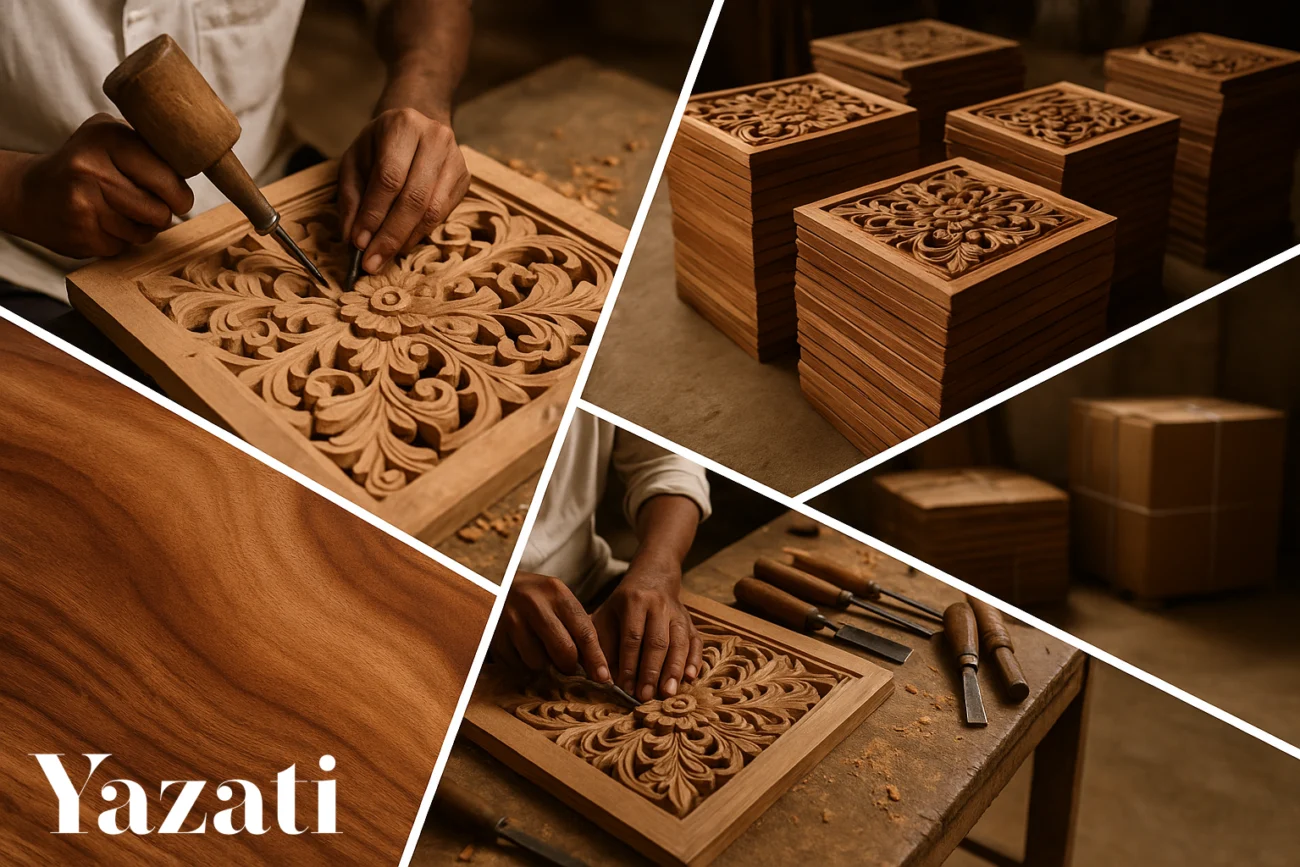
The art of wood carving is often a family legacy. Techniques are passed down orally — from father to son, from master to apprentice. Artisans use tools like chisels, gouges, and mallets, working patiently to bring out fine details. Each stroke reflects precision and reverence for tradition, making every piece truly one-of-a-kind.
From Local Workshops to Global Exports
India’s wooden wall art industry transitioned from humble village workshops to global prominence over the last few decades.
Government Support and Export Initiatives
Organizations such as the Export Promotion Council for Handicrafts (EPCH) and the Ministry of Textiles have played crucial roles in uplifting rural artisans. Initiatives like “Make in India” and “One District, One Product” promote regional crafts internationally.
The Role of Indian Artisans in Global Markets
Indian artisans have mastered the art of blending traditional motifs with global design trends. From minimalist Scandinavian interiors to bohemian Western homes, Indian wooden wall art now graces spaces across the U.S., Europe, and the Middle East.
Iconic Wooden Wall Art Styles That Captivated the World
Religious Motifs and Spiritual Symbolism
Exports of wall panels featuring Lord Ganesha, Buddha, and mandala patterns remain bestsellers. These motifs symbolize peace, prosperity, and balance — values universally cherished across cultures.
Modern Interpretations: Fusion of Tradition and Trend
Artisans are now integrating modern patterns, metallic accents, and eco-friendly finishes. This fusion of heritage and modern design has allowed India’s wooden art to appeal to younger, design-conscious buyers worldwide.
Economic Impact of Wooden Wall Art Exports
Export Data, Growth Rates, and Leading Destinations
India’s wooden handicraft exports were valued at over USD 500 million in 2024, with major buyers from the U.S., UK, UAE, and Germany. The growth rate averages 8–10% annually, driven by e-commerce and digital marketing.
Challenges Faced by Artisans and Exporters
Despite the success, artisans face issues like inconsistent raw material supply, rising costs, and competition from machine-made replicas. Yet, their commitment to quality and authenticity keeps India at the forefront of global handicraft exports.
Sustainability and Ethical Crafting Practices
With global demand rising, sustainability has become vital. Artisans now use reclaimed wood and natural dyes to reduce waste. Ethical sourcing and fair-trade practices are increasingly adopted to ensure that every exported piece respects both nature and artisan welfare.
How Technology Is Reshaping India’s Art Exports
E-commerce platforms like Etsy, Amazon Handmade, and IndiaMart have transformed how artisans reach global buyers. Through digital storytelling, artisans can showcase their work, share their heritage, and connect directly with customers worldwide.
Preserving Cultural Identity Through Art
Every piece of wooden wall art exported from India is more than décor — it’s a cultural ambassador. It bridges the gap between ancient craftsmanship and contemporary design, ensuring that India’s artistic spirit continues to shine globally.
Frequently Asked Questions (FAQs)
1. What makes Indian wooden wall art unique?
Each piece is handcrafted using traditional techniques, natural wood, and symbolic motifs rooted in India’s heritage.
2. Which types of wood are most used for exports?
Teak, rosewood, mango wood, and sandalwood are the most popular due to their texture and durability.
3. How do artisans maintain sustainability?
By using reclaimed wood, eco-friendly paints, and fair-trade practices.
4. Where are India’s wooden wall art exports most popular?
The U.S., Europe, and the Middle East are major importers of Indian wooden wall art.
5. Are these artworks suitable for modern interiors?
Absolutely! Many designs blend traditional motifs with contemporary aesthetics.
6. How can I buy authentic Indian wooden wall art?
Look for certified sellers on platforms like EPCH India or trusted online marketplaces such as Etsy.
Conclusion: The Legacy of Indian Wooden Wall Art in the Global Arena
The story behind India’s iconic wooden wall art exports is a tale of passion, tradition, and global admiration. What began in ancient temples has now become a symbol of India’s artistic resilience and innovation. As artisans continue to adapt, their creations not only beautify homes worldwide but also preserve a legacy that defines India’s soul.
✨ Discover Global Sourcing Excellence with Netyex ✨
Netyex is your trusted B2B sourcing partner, connecting international buyers with India’s finest manufacturers and curated product lines—from handicrafts and home décor to kitchenware, textiles, hospitality essentials, and more. With verified suppliers and end-to-end support, we make global procurement seamless, reliable, and efficient.
👉 Elevate your sourcing experience—explore Netyex today.
📦 Bulk orders & customisation | 🌍 Worldwide delivery | 🤝 Trusted by global buyers
Visit Netyex to source premium Indian products with confidence.