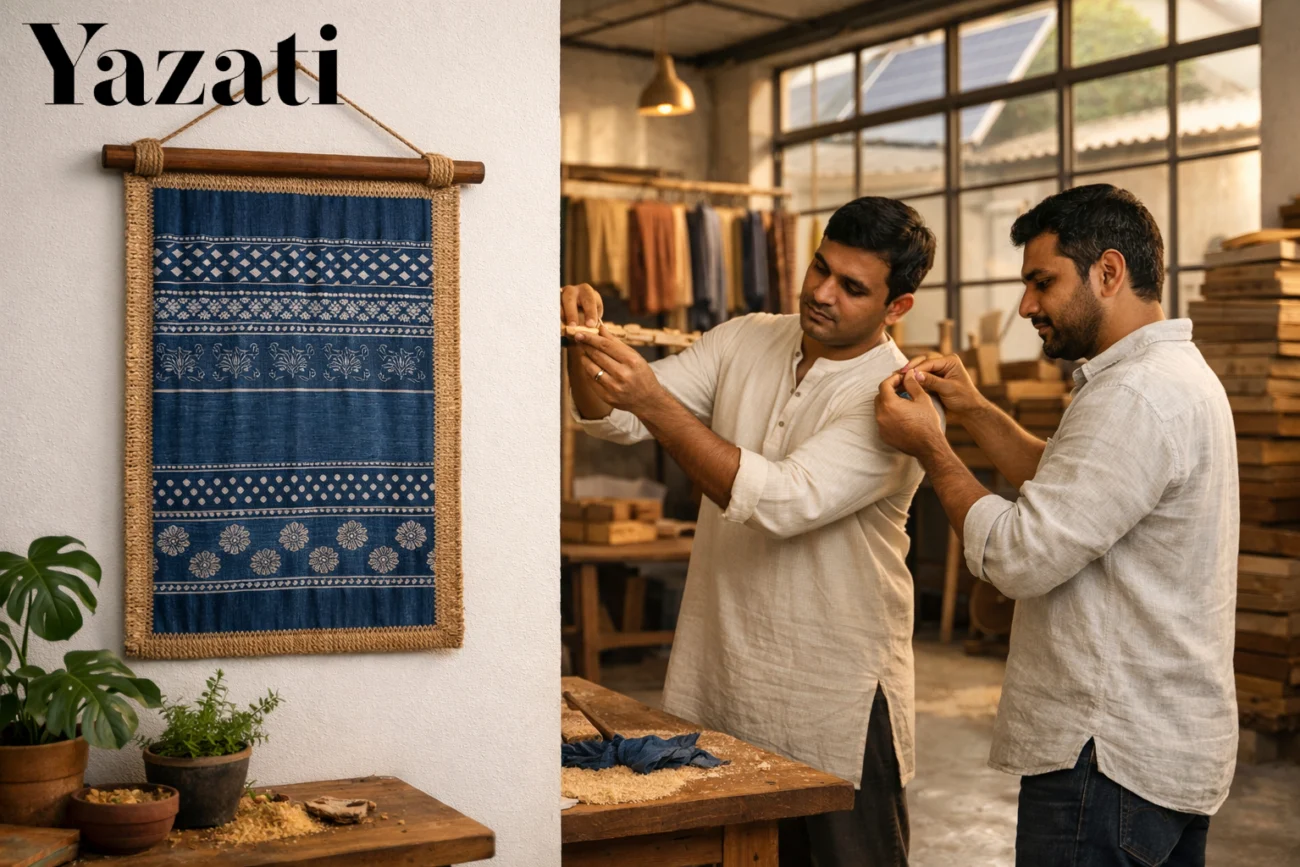
Understanding Sustainability in the Wall Décor Industry
What Does Sustainability Mean in Production?
Sustainability in production refers to manufacturing processes that minimize environmental impact while ensuring economic viability and social responsibility. It focuses on three pillars:
- Environmental protection
- Social responsibility
- Economic sustainability
In Indian wall décor production, this means using eco-friendly materials, conserving resources, and supporting artisan communities.
Why Sustainability Matters in Home Décor
Consumers today are increasingly aware of environmental issues. They prefer products that align with their values. Sustainable wall décor products appeal to buyers who care about:
- Eco-friendly sourcing
- Ethical labor practices
- Long-term durability
- Reduced carbon footprint
Sustainability enhances brand reputation in both domestic and international markets.
Traditional Craftsmanship and Sustainable Practices
Handmade Techniques with Low Environmental Impact
Indian wall décor often relies on handcrafted techniques. Unlike mass production, handmade methods consume less energy and produce less waste.
Traditional crafts such as:
- Wood carving
- Metal embossing
- Textile weaving
- Hand painting
Naturally align with sustainable production principles.
Use of Natural and Local Materials
Many Indian artisans use locally sourced materials, reducing transportation emissions. Local sourcing also supports rural economies.
Natural materials commonly used include:
- Wood
- Clay
- Jute
- Cotton
- Bamboo
These materials are biodegradable and environmentally friendly.
Eco-Friendly Materials in Indian Wall Décor
Reclaimed Wood and Bamboo
Reclaimed wood reduces deforestation and gives discarded materials new life. Bamboo, known for its rapid growth, is a renewable resource widely used in wall décor.
These materials add rustic charm while minimizing environmental harm.
Recycled Metal and Glass
Recycled metal and glass are popular in Indian decorative panels and sculptures. Using recycled materials reduces energy consumption compared to producing new raw materials.
This approach supports circular economy principles.
Organic Textiles and Natural Dyes
Textile-based wall décor often incorporates organic cotton, natural dyes, and traditional weaving techniques.
Natural dyes derived from plants and minerals reduce chemical pollution.
Energy Efficiency in Production Units
Use of Renewable Energy
Many production units are gradually adopting solar power and energy-efficient machinery.
Renewable energy reduces operational carbon footprints and supports long-term sustainability goals.
Reducing Carbon Footprint
Producers are optimizing supply chains and improving logistics to minimize emissions. Energy-efficient lighting and machinery further contribute to environmental responsibility.
Ethical Labor Practices and Artisan Welfare
Fair Wages and Safe Working Conditions
Sustainability extends beyond the environment. Social sustainability ensures fair wages, safe working environments, and respect for workers’ rights.
Ethical production enhances brand credibility in export markets.
Community Empowerment
Indian wall décor production often supports rural artisans and women-led self-help groups. Sustainable business practices create employment opportunities and preserve traditional crafts.
Community empowerment strengthens social impact.
Waste Management and Recycling Initiatives
Minimizing Production Waste
Efficient production planning reduces material wastage. Many manufacturers reuse leftover materials in smaller decorative items.
Waste reduction lowers costs and environmental impact.
Upcycling Scrap Materials
Scrap wood, metal, and fabric are often transformed into new decorative pieces. Upcycling adds creativity while promoting sustainability.
This innovative approach appeals to eco-conscious buyers.
Sustainable Packaging for Export Markets
Biodegradable and Recyclable Packaging
Exporters are increasingly using recyclable cartons, paper-based fillers, and biodegradable materials to protect products during shipping.
Sustainable packaging enhances brand image.
Reducing Plastic Usage
Minimizing plastic use in packaging reduces environmental pollution and aligns with global regulations.
Eco-friendly packaging supports responsible branding.
Compliance with International Sustainability Standards
Environmental Certifications
Exporters often pursue certifications that validate their sustainability efforts. These certifications strengthen trust among global buyers.
Certified compliance demonstrates commitment to environmental responsibility.
Meeting Global Buyer Expectations
International buyers increasingly demand sustainable sourcing and transparent supply chains.
Meeting these expectations ensures continued market access.
Challenges in Achieving Sustainable Production
Cost Implications
Sustainable materials and renewable energy investments can increase production costs initially.
However, long-term benefits often outweigh short-term expenses.
Supply Chain Complexity
Ensuring sustainability across the entire supply chain requires coordination and monitoring.
Producers must work closely with suppliers to maintain standards.
The Competitive Advantage of Sustainability in Exports
Sustainability enhances competitiveness by:
- Justifying premium pricing
- Attracting eco-conscious buyers
- Building brand loyalty
- Improving global reputation
In international markets, sustainability often differentiates suppliers from competitors.
Frequently Asked Questions (FAQs)
1. Why is sustainability important in Indian wall décor production?
It reduces environmental impact, supports artisans, and meets global buyer expectations.
2. What eco-friendly materials are commonly used?
Reclaimed wood, bamboo, recycled metal, organic textiles, and natural dyes.
3. Does sustainable production increase costs?
Initial investments may rise, but long-term savings and premium pricing offset costs.
4. How does sustainability benefit exports?
It enhances brand credibility and opens doors to environmentally conscious markets.
5. Are traditional crafts naturally sustainable?
Many traditional methods use low-energy processes and natural materials, aligning with sustainability.
6. What role does packaging play in sustainability?
Eco-friendly packaging reduces waste and supports responsible branding.
Conclusion
The Sustainability Factor in Indian Wall Décor Production is transforming the industry into a more responsible and globally competitive sector. By combining traditional craftsmanship with eco-friendly materials, renewable energy, ethical labor practices, and sustainable packaging, Indian producers are setting new standards.
Sustainability is no longer optional—it is a strategic necessity. As global demand for eco-conscious products continues to grow, Indian wall décor manufacturers who embrace sustainability will gain a strong competitive edge.
By prioritizing environmental protection, social responsibility, and innovation, the industry can ensure long-term success while preserving cultural heritage for future generations.
✨ Discover Global Sourcing Excellence with Netyex ✨
Netyex is your trusted B2B sourcing partner, connecting international buyers with India’s finest manufacturers and curated product lines—from handicrafts and home décor to kitchenware, textiles, hospitality essentials, and more. With verified suppliers and end-to-end support, we make global procurement seamless, reliable, and efficient.
👉 Elevate your sourcing experience—explore Netyex today.
📦 Bulk orders & customisation | 🌍 Worldwide delivery | 🤝 Trusted by global buyers
Visit Netyex to source premium Indian products with confidence.