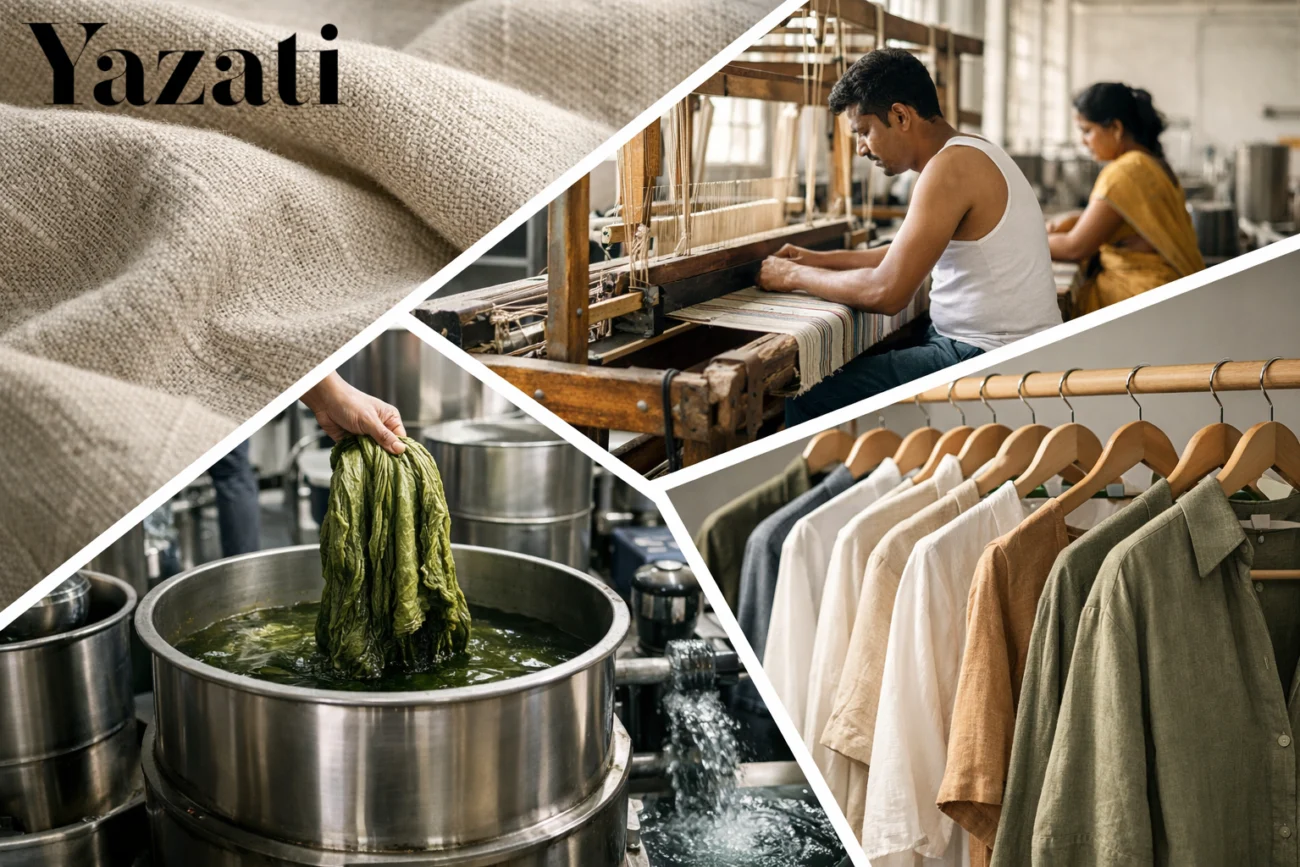
The Sustainable Advantage: Indian Textiles for Global Brands
Sustainability has shifted from a marketing narrative to a core business requirement for global brands. Consumers, regulators, and investors increasingly expect transparency, responsibility, and long-term environmental thinking—especially in textiles, one of the most resource-intensive industries in the world. Understanding The Sustainable Advantage: Indian Textiles for Global Brands reveals why sourcing from India offers a rare combination of environmental responsibility, social impact, and commercial scalability.
Indian textiles are not becoming sustainable because of trend pressure—they are sustainable by structure, tradition, and evolution.
Introduction: Sustainability as a Competitive Advantage
Why Sustainability Is No Longer Optional
Global brands now face:
- Environmental regulations
- Consumer scrutiny
- ESG reporting expectations
Textiles sit at the heart of these conversations because material choices directly influence carbon footprint, water use, and waste generation.
Textiles at the Center of Brand Responsibility
A brand’s sustainability claims are only as strong as its material sourcing. Indian textiles offer a credible foundation for these commitments.
Why India Is Central to Sustainable Textile Sourcing
Natural Fiber Heritage and Material Diversity
India has centuries of experience working with natural fibers such as cotton, linen, wool, and silk. This heritage reduces reliance on petroleum-based synthetics.
Scale Meets Sustainability
Unlike niche sustainable suppliers, India supports both responsible production and large-scale supply—critical for global brands.
The Sustainable Advantage: Indian Textiles for Global Brands
Sustainability by Design, Not Retrofit
Many Indian textile processes are inherently low-impact, relying on manual skill, natural fibers, and localized production rather than energy-heavy automation.
Long-Term Value Over Short-Term Claims
Sustainability in Indian textiles is driven by durability, repeatability, and reduced waste—not surface-level certifications alone.
Natural and Renewable Fiber Strength
Cotton, Linen, Wool, Silk, and Blends
Indian textiles excel in:
- Breathable cotton fabrics
- Durable linen blends
- Natural wool and silk
- Blended fabrics that enhance longevity
These materials are renewable, biodegradable, or recyclable.
Reduced Dependence on Synthetic Fibers
Lower synthetic content translates to fewer microplastics and a smaller environmental footprint.
Low-Impact Production Processes
Handloom, Semi-Manual, and Energy-Efficient Mills
A significant portion of Indian textile production uses:
- Handloom or semi-manual methods
- Smaller, energy-efficient mills
- Lower electricity consumption per unit
Lower Carbon Footprint per Unit
Reduced energy usage directly lowers carbon emissions, especially when compared to fully industrialized alternatives.
Water and Chemical Management Progress
Responsible Dyeing and Finishing
Indian textile exporters increasingly invest in:
- Efficient dyeing systems
- Controlled chemical usage
- Improved wastewater handling
Industry Shift Toward Cleaner Processes
Global demand has accelerated this shift, improving environmental outcomes across the sector.
Durability and Longevity as Sustainability
Textiles Designed to Last
Sustainability is not only about how a fabric is made—but how long it lasts. Indian textiles emphasize:
- Strong yarns
- Stable weaves
- Durable finishes
Reducing Replacement and Waste
Longer-lasting textiles reduce consumption cycles and waste generation.
Ethical Sourcing and Social Sustainability
Skilled Artisan and Worker Communities
Indian textiles support millions of skilled workers and artisan families, embedding social responsibility into supply chains.
Stability Through Long-Term Employment
Consistent orders create economic stability—an often overlooked pillar of sustainability.
Flexibility That Reduces Overproduction
Small-Batch and Made-to-Order Capability
Indian suppliers commonly support:
- Smaller initial runs
- Flexible scaling
- Custom programs
Smarter Inventory Planning
This flexibility helps brands avoid overproduction—one of the biggest sustainability failures in fashion and textiles.
Transparency and Traceability for Global Brands
Clear Supply Relationships
Defined supplier networks and direct sourcing improve transparency and traceability.
Supporting Brand ESG Reporting
Indian textile sourcing supports credible data collection for sustainability and ESG disclosures.
Why Global Brands Choose Indian Textiles Over Alternatives
Balanced Sustainability and Commercial Viability
Indian textiles deliver environmental and social benefits without pricing brands out of the market.
Authenticity Over Greenwashing
Sustainability is embedded in materials, methods, and communities—not just marketing language.
Common Misconceptions About Sustainable Indian Textiles
“Sustainable Means Expensive”
Efficient production and material access often keep costs competitive.
“Natural Fibers Are Less Consistent”
With modern controls, natural fibers are highly consistent at scale.
FAQs on Sustainable Indian Textiles
1. Are Indian textiles suitable for premium sustainable brands?
Yes. Many premium brands rely on Indian sourcing.
2. Can Indian textiles meet global sustainability expectations?
Yes, when sourced from export-ready suppliers.
3. Is scalability possible with sustainable textiles?
Yes. India uniquely combines sustainability with scale.
4. Are natural fibers durable enough for global use?
Yes. Durability depends on construction and finishing.
5. Does sustainability increase lead times?
Not significantly when programs are structured.
6. Can brands build long-term programs in India?
Absolutely. Long-term sourcing strengthens sustainability outcomes.
Conclusion: Sustainability That Scales With Brands
The Sustainable Advantage: Indian Textiles for Global Brands lies in authenticity and balance. India offers natural materials, low-impact processes, ethical labor structures, and production flexibility—without sacrificing quality or scalability.
For global brands seeking sustainability that is real, repeatable, and commercially viable, Indian textiles provide more than a sourcing option—they offer a long-term advantage. When sustainability is built into the foundation of supply, it becomes a strength that grows with the brand rather than a constraint that limits it.
✨ Discover Global Sourcing Excellence with Netyex ✨
Netyex is your trusted B2B sourcing partner, connecting international buyers with India’s finest manufacturers and curated product lines—from handicrafts and home décor to kitchenware, textiles, hospitality essentials, and more. With verified suppliers and end-to-end support, we make global procurement seamless, reliable, and efficient.
👉 Elevate your sourcing experience—explore Netyex today.
📦 Bulk orders & customisation | 🌍 Worldwide delivery | 🤝 Trusted by global buyers
Visit Netyex to source premium Indian products with confidence.