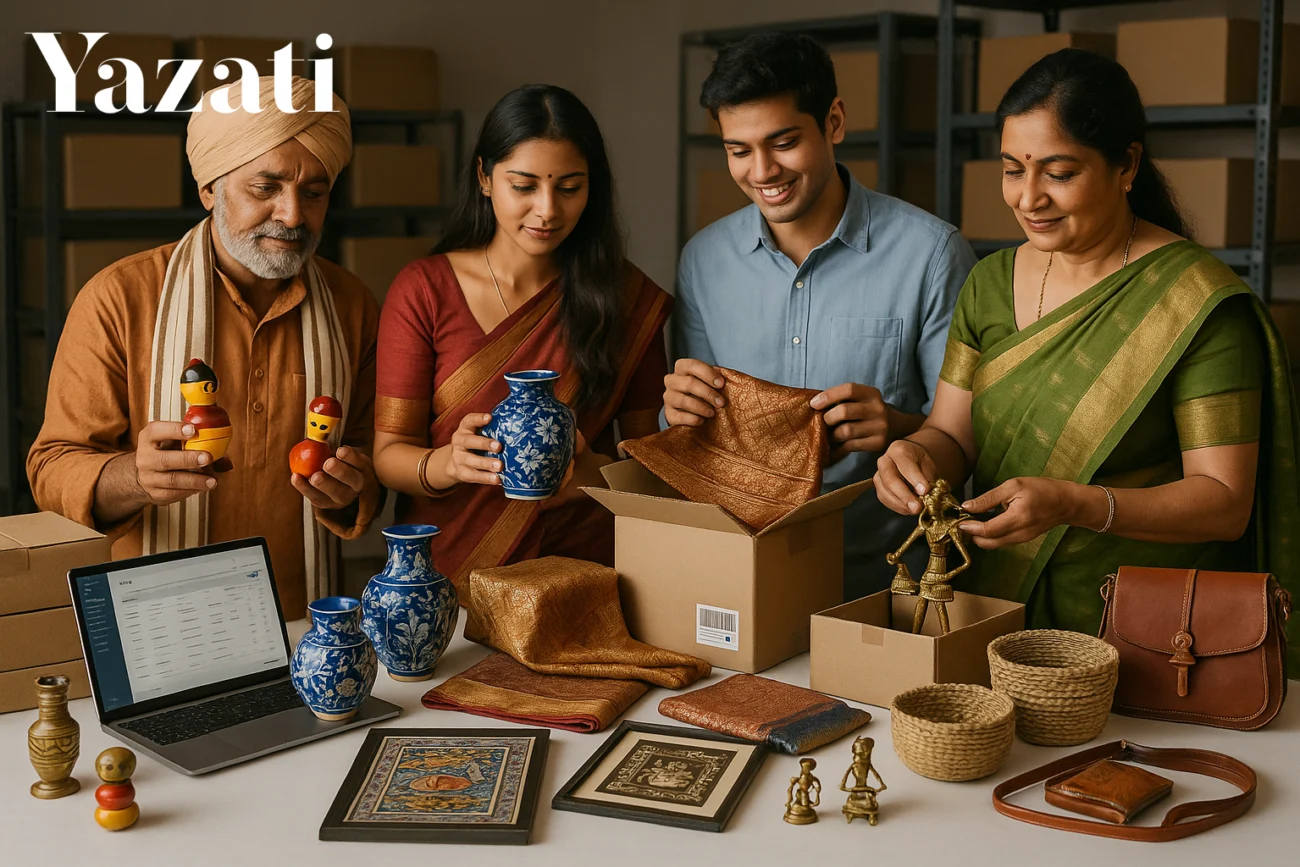
The Global Rise of Indian Handicrafts
Indian handicrafts are not just beautiful works of art—they’re timeless expressions of culture, creativity, and community. Over the past decade, these crafts have made a remarkable journey from rural workshops to global digital shelves. With platforms like Amazon, Etsy, and IndiaMART offering artisans global visibility, traditional Indian crafts are finding eager buyers across the U.S., U.K., Europe, and the Middle East.
This digital transformation has fueled India’s handicraft exports, which have surpassed USD 4 billion annually. From handwoven shawls to brassware and eco-friendly jute products, India’s crafts now symbolize sustainable luxury and cultural authenticity worldwide.
Historical Roots and Cultural Significance
Indian handicrafts trace back over 5,000 years, deeply intertwined with religion, tradition, and royal patronage. From the intricate Bidriware of the Deccan to the colorful Madhubani paintings of Mithila, each craft tells a story of its region’s ethos and heritage.
These crafts evolved as expressions of spirituality, artistry, and utility—passed down through generations as living traditions that continue to evolve while preserving their authenticity.
Role of E-Commerce in Promoting Handicrafts
E-commerce has revolutionized how artisans connect with global consumers. Traditional craftsmen, once dependent on middlemen, now market directly via Etsy, Amazon Handmade, Craftsvilla, and Flipkart Samarth.
Features like digital storefronts, secure payments, and global shipping have made it easier for small artisans to showcase their products to millions worldwide.
Furthermore, online marketplaces now emphasize “sustainable and handmade” tags—aligning perfectly with the rising eco-conscious and ethical consumer base. Digital storytelling through product videos, cultural branding, and artisan profiles also adds emotional value, helping buyers appreciate the heritage behind every craft.
Top 10 Indian Handicrafts Dominating the World Market
1. Pashmina Shawls (Kashmir)
Kashmir’s Pashmina shawls—crafted from the fine wool of Himalayan goats—are globally recognized for their softness and warmth. Traditionally hand-spun and hand-woven, each shawl takes weeks to complete. With growing luxury demand, Pashmina artisans are now selling directly on Etsy and Amazon Handmade, reaching elite customers across Europe and the U.S. The GI-tagged authenticity ensures trust and premium pricing online.
2. Madhubani Paintings (Bihar)
Originating in the Mithila region, Madhubani paintings feature vibrant depictions of Hindu deities, nature, and folklore. Once limited to local walls, these paintings now adorn canvases, home décor, and apparel worldwide. Their digital visibility has soared thanks to platforms like Etsy, where they rank among the most-searched Indian folk arts.
3. Blue Pottery (Jaipur)
Known for its unique cobalt blue dye, Jaipur’s Blue Pottery blends Persian and Indian artistry. Its eco-friendly process—free of clay—uses quartz and glass, making it both aesthetic and sustainable. Global customers love it for its modern utility in home décor, tableware, and souvenirs. Jaipur artisans now ship thousands of Blue Pottery items globally every month.
4. Brassware (Moradabad)
Moradabad, famously called “Pital Nagri,” produces brass décor that dominates Western homeware categories online. Artisans specialize in mirror work, lamp stands, and trays that combine traditional patterns with modern appeal. Through Amazon and Alibaba, brassware exports have expanded to more than 70 countries, with designs often customized for Western tastes.
5. Terracotta Art (West Bengal)
Terracotta, the ancient art of baked earth, remains one of India’s most sustainable crafts. From clay idols to wall décor, its rustic charm appeals to eco-conscious buyers worldwide. With e-commerce, Bengal’s terracotta villages—like Bishnupur—have turned into global suppliers of handmade decorative art.
6. Bidriware (Karnataka)
Bidriware, a metal inlay art from Bidar, Karnataka, uses blackened alloy with silver inlays, giving it a regal finish. Traditionally associated with royalty, Bidriware has found modern admirers online who seek unique luxury collectibles. Global platforms now feature Bidri jewelry, vases, and hookahs as premium décor pieces.
7. Wood Carvings (Saharanpur)
Saharanpur in Uttar Pradesh is renowned for its intricate wood carvings—ranging from furniture to wall panels. With rising demand for handcrafted home décor, Saharanpur’s artisans have successfully captured international markets. Many now collaborate with designers on Amazon Global Stores to create contemporary versions of traditional designs.
8. Phulkari Embroidery (Punjab)
Phulkari, meaning “flower work,” is a colorful embroidery art form from Punjab. Once worn at weddings, Phulkari designs now embellish scarves, stoles, and handbags for global buyers. The art’s vibrant patterns and bright threads have made it a fashion statement on platforms like Etsy and Ajio Luxe.
9. Coir and Jute Crafts (Kerala & Bengal)
As sustainability trends grow, coir and jute crafts from South and East India are thriving. From eco-friendly bags to mats and baskets, these products appeal to environmentally conscious consumers. The ‘Made in India, Made for the World’ initiative has further boosted exports through Amazon’s global program.
10. Dhokra Metal Art (Chhattisgarh & Odisha)
Dating back 4,000 years, Dhokra art uses the ancient “lost wax” casting method to create stunning brass figurines. These tribal designs, symbolizing freedom and life, are now cherished collectibles worldwide. Online buyers love their rustic finish and symbolic storytelling.
Government Support and Export Initiatives
The Indian Ministry of Textiles and Export Promotion Council for Handicrafts (EPCH) have launched several initiatives—like Ambedkar Hastshilp Vikas Yojana and Artisan Card Schemes—to empower craftsmen.
Additionally, the One District One Product (ODOP) and Vocal for Local programs help artisans reach e-commerce platforms directly, boosting visibility and exports.
Challenges Facing Indian Artisans in the Digital Age
Despite growth, artisans face hurdles like digital illiteracy, lack of logistics support, and product imitation. Many rural creators struggle to maintain consistent online supply chains or manage digital marketing.
However, organizations like Crafts Council of India and startups like Okhai are bridging this gap by training artisans in e-commerce and branding.
How E-Commerce Empowers Rural Artisans
E-commerce democratizes global trade. Rural artisans—especially women—can now earn independent incomes by selling their crafts online. For example, Phool.co, which upcycles temple flowers into incense and décor, has become a global success story. Similarly, Madhubani artists now showcase their works through virtual galleries on Etsy India.
The Future of Indian Handicrafts in the Global Market
With rising global demand for sustainable, handmade, and culturally rich products, the future looks bright. AI-driven marketplaces, virtual exhibitions, and blockchain-based authenticity tags will redefine transparency and trust.
By 2030, India aims to double its handicraft exports, with over 60% sales expected via digital platforms.
FAQs on Indian Handicrafts and E-Commerce
Q1. Which Indian handicraft has the highest global demand?
A: Pashmina shawls, brassware, and jute products consistently rank among the top-selling crafts worldwide.
Q2. How do artisans sell handicrafts online internationally?
A: Platforms like Etsy, Amazon Global, and IndiaMART allow artisans to create stores, upload products, and handle logistics seamlessly.
Q3. Are Indian handicrafts environmentally sustainable?
A: Yes. Most crafts—like jute, terracotta, and Dhokra—are made using eco-friendly materials and traditional, low-impact methods.
Q4. Which Indian state exports the most handicrafts?
A: Uttar Pradesh, Rajasthan, and Gujarat lead in export value, followed by Kashmir and West Bengal.
Q5. How does the government support handicraft exports?
A: Through training, subsidies, export fairs, and digital empowerment programs under EPCH and ODOP.
Q6. What’s the biggest trend in global handicraft demand?
A: Sustainability, customization, and cultural authenticity are the biggest trends shaping online handicraft purchases.
Conclusion: Preserving Heritage, Powering Prosperity
The Top 10 Indian Handicrafts Dominating Global E-Commerce Platforms reflect India’s timeless artistry meeting modern innovation.
Each handcrafted item tells a story of passion, patience, and pride. As artisans embrace e-commerce, India isn’t just exporting crafts—it’s exporting culture, creativity, and consciousness to the world.
🌏 By merging tradition with technology, Indian handicrafts are set to shine even brighter on the global stage.
✨ Discover Global Sourcing Excellence with Netyex ✨
Netyex is your trusted B2B sourcing partner, connecting international buyers with India’s finest manufacturers and curated product lines—from handicrafts and home décor to kitchenware, textiles, hospitality essentials, and more. With verified suppliers and end-to-end support, we make global procurement seamless, reliable, and efficient.
👉 Elevate your sourcing experience—explore Netyex today.
📦 Bulk orders & customisation | 🌍 Worldwide delivery | 🤝 Trusted by global buyers
Visit Netyex to source premium Indian products with confidence.