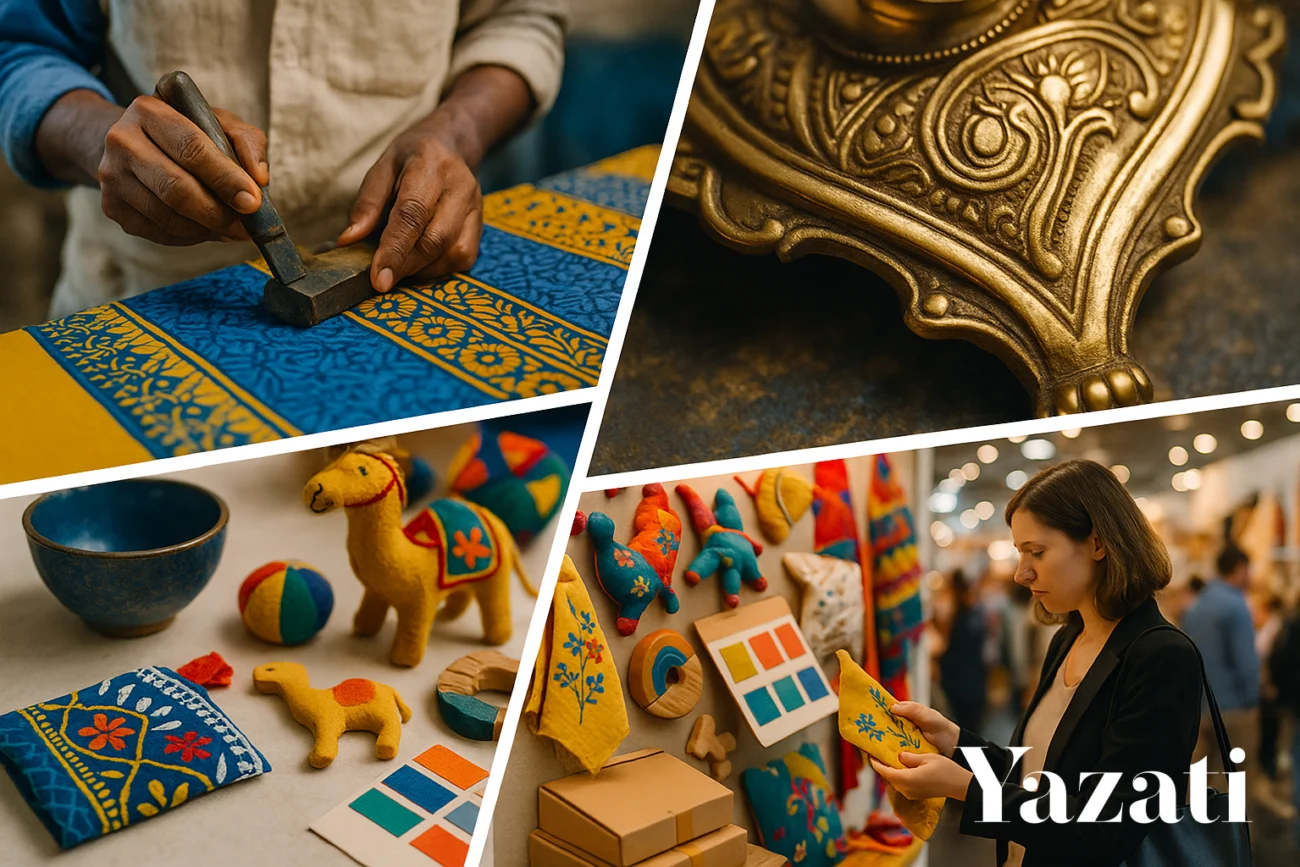
Introduction: The Global Revival of Indian Handicrafts
In 2025, Indian handicrafts are making a striking comeback on the world stage. International buyers are increasingly drawn to the authenticity, artistry, and sustainable appeal of handcrafted Indian products. From handwoven textiles to eco-friendly home décor, the demand for “made by hand” over “made by machine” has grown stronger than ever.
The global handicraft market, valued at over $1.2 trillion, is witnessing renewed attention toward products that tell a story. Indian artisans — backed by centuries of craftsmanship — are uniquely positioned to meet this shift. Whether it’s intricate metalwork from Rajasthan or bamboo artistry from the Northeast, each piece carries a legacy that appeals to buyers seeking depth, culture, and sustainability.
Understanding the Changing Preferences of International Buyers
Sustainability: The Core of Modern Handicraft Appeal
The sustainability movement has redefined global purchasing patterns. International consumers now prioritize ethically sourced, eco-friendly products with transparent origins. Handicrafts made from recycled materials, natural dyes, or biodegradable fibers are particularly popular among European and American buyers who want style without guilt.
Demand for Authentic, Culturally Rich Products
Buyers today value authenticity. They seek products that showcase India’s rich cultural diversity rather than mass-produced replicas. Handmade pottery from Khurja, brass idols from Moradabad, and Pashmina shawls from Kashmir are not just goods — they are embodiments of Indian tradition and identity.
Fusion of Tradition and Contemporary Design
The blend of modern aesthetics with traditional craftsmanship is a defining hallmark of 2025. Designers are collaborating directly with artisans to create functional, stylish pieces for urban homes — think minimalist lamps made from terracotta or jute-based furniture that merges rustic charm with modern design.
Top Indian Handicraft Trends to Watch in 2025
Eco-Friendly and Upcycled Handicrafts
Sustainability drives the 2025 trend list. Artisans are innovating with upcycled fabrics, reclaimed wood, and biodegradable materials to craft decor and fashion accessories that resonate with eco-conscious global buyers.
Minimalist Luxury and Handcrafted Home Décor
The concept of “less is more” is shaping global interiors. Handcrafted lamps, macramé wall hangings, and stone-carved tableware are in vogue — offering a sense of serene luxury rooted in tradition.
Revival of Regional Art Forms: Madhubani, Pattachitra, and Dhokra
India’s regional crafts are receiving global recognition. Buyers are captivated by Madhubani paintings, Dhokra metal sculptures, and Pattachitra art, which reflect India’s timeless storytelling through intricate design.
Textile Treasures: Handloom and Organic Fabrics Take Center Stage
Handloom textiles such as Khadi, Ikat, and Jamdani are experiencing a strong resurgence. Their organic origins and slow-production methods align perfectly with global sustainability goals.
Digital Craft Marketplaces: How Technology is Redefining Exports
Online platforms like Etsy, Amazon Handmade, and IndiaMart are bridging the gap between artisans and global consumers. In 2025, technology-driven storytelling — through videos and AR-based product previews — is a major selling point.
The Role of Sustainability in Global Handicraft Demand
Ethical Sourcing and Fair-Trade Certifications
Buyers increasingly expect transparency. Products bearing Fair Trade or Craftmark certifications gain credibility in international markets, ensuring artisans receive fair wages and ethical working conditions.
Use of Natural Dyes, Recycled Materials, and Organic Fibers
From vegetable-dyed fabrics to bamboo-based decor, the move toward natural materials is a significant global trend. These choices not only preserve traditional methods but also reduce environmental footprints.
How Indian Artisans are Adapting to Global Tastes
Training and Skill Development Through Government Initiatives
The Ministry of Textiles and EPCH (Export Promotion Council for Handicrafts) are offering training programs to modernize techniques while retaining traditional authenticity.
Designer-Artisan Collaborations for Modern Markets
Fashion designers and craft clusters are partnering to bring Indian craftsmanship into contemporary design spaces, especially in fashion weeks and interior design exhibitions.
Integration of AI and AR in Handicraft Promotion
Augmented Reality (AR) allows buyers to visualize handicrafts in their homes before purchase. Artificial Intelligence (AI) tools are helping artisans analyze market trends and customize designs accordingly.
Key Markets Driving Indian Handicraft Exports in 2025
The global demand for Indian handicrafts is surging across multiple regions, each with its own consumer behavior and product preferences. Let’s look at the top-performing markets where Indian artisans are making a strong mark.
United States and Europe: Growing Appetite for Handcrafted Luxury
The U.S. and European Union remain India’s biggest export destinations for handicrafts, contributing nearly 60% of total exports. Western buyers are increasingly drawn to India’s ability to merge sustainability with artistry. Items like handwoven textiles, eco-friendly home décor, and ethically sourced jewelry have become part of high-end retail stores such as Anthropologie, West Elm, and Crate & Barrel.
In Europe, Nordic-inspired minimalism is blending with Indian craftsmanship. Buyers prefer pastel tones, geometric patterns, and natural textures, leading to innovative designs from Indian artisans in Rajasthan, Gujarat, and Kerala.
Middle East and East Asia: Emerging Demand Hotspots
The Middle East and East Asia are rising as major buyers of Indian handicrafts. Countries like UAE, Japan, and South Korea show a strong appetite for handcrafted metal décor, carpets, and wooden furniture. The Indian export market in Dubai has particularly flourished due to the region’s luxury gifting culture and expat-driven demand for ethnic pieces.
Online Global Marketplaces and Direct-to-Consumer Export Models
In 2025, e-commerce is no longer a luxury — it’s a necessity. Platforms such as Etsy, eBay, Shopify, and Amazon Handmade allow Indian artisans to sell directly to international customers. This Direct-to-Consumer (D2C) model reduces dependency on middlemen and increases artisan earnings by up to 35%.
Challenges and Opportunities for Indian Handicraft Exporters
Overcoming Quality, Branding, and Logistics Barriers
While India’s craftsmanship is admired globally, exporters face challenges related to standardization, quality assurance, and timely delivery. To compete internationally, artisans are investing in product finishing, brand storytelling, and certified packaging standards.
Leveraging E-commerce and International Exhibitions
Participating in global trade fairs such as Ambiente (Germany) and Maison & Objet (Paris) helps Indian artisans showcase their collections to buyers, interior designers, and retailers worldwide. Moreover, digital exhibitions introduced after the pandemic continue to be a vital channel for B2B networking.
Government Policies Supporting Handicraft Growth in 2025
“Make in India” and Export Promotion Schemes
The Government of India’s “Make in India” initiative and export promotion programs like MEIS (Merchandise Exports from India Scheme) and RoDTEP (Remission of Duties and Taxes on Exported Products) have boosted handicraft exports significantly. These schemes help small-scale artisans gain global exposure and financial incentives.
Role of EPCH and Digital Platforms in Market Expansion
The Export Promotion Council for Handicrafts (EPCH) is spearheading India’s export growth through digital marketplaces and training programs. Initiatives such as India Handicraft Portal and Virtual Export Showrooms are helping artisans showcase their work globally, even from remote villages.
For more information on EPCH programs, visit the official EPCH website.
Case Studies: Success Stories from Indian Artisans
From Local Workshops to Global Brands
Take the example of Fabindia, which began as a small cooperative linking rural artisans to urban consumers. Today, it exports to over 30 countries, offering clothing, home décor, and handmade products. Similarly, Baaya Design in Mumbai collaborates with artisans across India to craft modern, art-driven interiors for global clients.
Empowering Women and Rural Communities Through Craft
Women-led initiatives such as SEWA (Self Employed Women’s Association) and Dastkar have empowered thousands of rural artisans. Their success in building sustainable livelihoods showcases how handicrafts are not just products — they are instruments of social transformation.
Future Outlook: The Road Ahead for Indian Handicrafts
Technological Integration and Sustainable Business Models
As the world moves toward automation, Indian artisans are embracing technology without losing their cultural essence. Tools like 3D design modeling, blockchain for supply-chain transparency, and AI-powered design forecasting are helping scale the handicraft ecosystem responsibly.
Anticipated Buyer Trends for 2026 and Beyond
By 2026, global buyers will increasingly value:
- Sustainable storytelling — transparency about the artisan and the process.
- Hybrid craft styles — merging modern design with traditional roots.
- Personalized handmade goods — bespoke gifting and décor with cultural flair.
- Virtual craft shopping — immersive experiences through AR/VR tech.
India’s unique advantage lies in its cultural diversity and deep craftsmanship base, which ensures its continued leadership in the global handmade revolution.
FAQs About Indian Handicraft Trends 2025
1. What are the top Indian handicraft trends in 2025?
The leading trends include eco-friendly crafts, fusion designs, handloom textiles, upcycled décor, and digital-first export models.
2. Why are international buyers focusing on sustainability?
Sustainability ensures ethical sourcing and environmental safety. Buyers prefer products that reflect responsibility, authenticity, and long-term value.
3. Which countries import the most Indian handicrafts?
The United States, United Kingdom, Germany, UAE, and Japan are the top importers of Indian handicrafts.
4. How is technology transforming the Indian handicraft sector?
AI and AR technologies are being used for design innovation, virtual showrooms, and predictive trend analysis, making handicrafts more accessible and appealing to global consumers.
5. What challenges do Indian artisans face in exporting?
Key challenges include inconsistent quality, limited branding, and logistical barriers, though e-commerce and government support are helping overcome these.
6. How can small artisans reach international buyers?
They can leverage online marketplaces like Etsy, register with EPCH, and participate in digital trade fairs to connect with buyers worldwide.
Conclusion: India’s Timeless Craftsmanship Meets Global Demand
The year 2025 marks a renaissance for Indian handicrafts — where heritage meets innovation and sustainability meets style. International buyers are no longer just purchasing products; they’re investing in stories, cultures, and ethical craftsmanship.
From intricate embroidery in Gujarat to bamboo artistry in Assam, India’s handmade treasures are shaping a global identity rooted in authenticity and creativity. With technology bridging the artisan-buyer gap and government initiatives fueling export growth, the future of Indian handicrafts is not just bright — it’s brilliant.
External Resource: Learn more about global handicraft export data at Trade Promotion Council of India (TPCI).
✨ Discover Timeless Elegance with Yazati ✨
At Yazati, we bring you a world of handcrafted luxury—from exquisite brass, copper, and wooden decor to artisanal kitchenware, elegant rugs, and premium hospitality essentials. Whether you’re an interior designer, wellness enthusiast, or retail buyer, our curated collections are crafted to inspire and impress.
👉 Elevate your space or gift with grace—explore Yazati today.
📦 Bulk customization available | 🌍 Worldwide shipping | 🛍️ B2B & B2C Friendly