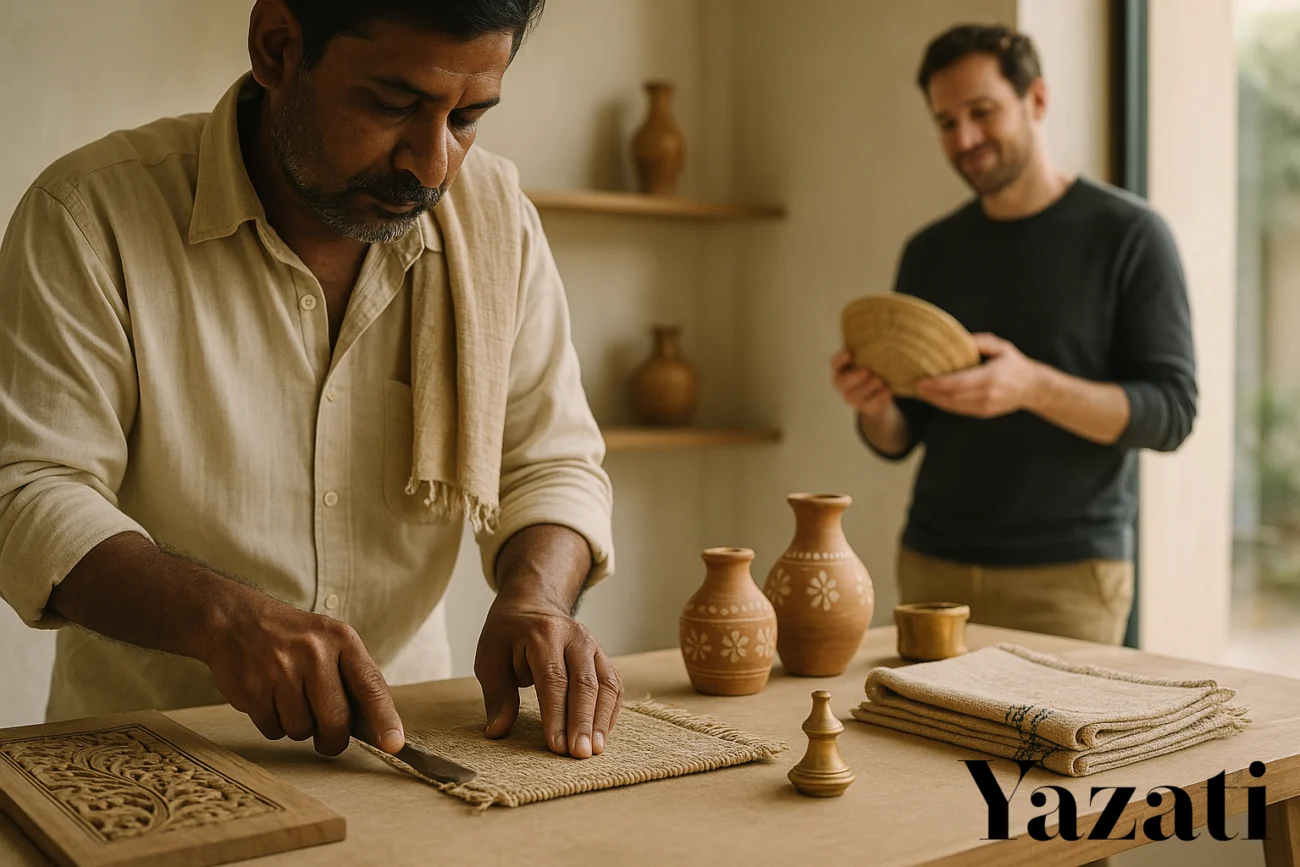
Introduction: The Timeless Appeal of Indian Handmade Products
There’s something profoundly human about owning something that was made by hand — not by machines, but by a person who poured their heart, creativity, and heritage into it. Indian handmade products carry this essence beautifully. From delicate handwoven sarees to intricately carved wooden artifacts, each creation tells a story of artistry passed down through generations.
In today’s fast-paced, digital world dominated by mass-produced goods, buyers are increasingly turning to authenticity — and that’s exactly what Indian handmade crafts offer. They reflect not just beauty, but meaning, history, and soul.
The Meaning of Authenticity in Indian Craftsmanship
The Soul of Indian Art: A Blend of Culture, Heritage, and Passion
Authenticity in Indian craftsmanship isn’t just about making things by hand — it’s about preserving a cultural legacy. Every artisan brings centuries of tradition to life, whether it’s through Madhubani paintings, Banarasi weaves, or Rajasthani blue pottery. These crafts embody stories, rituals, and skills passed from master to apprentice, often within families.
The Personal Connection Between Maker and Buyer
Unlike factory-made products, handmade crafts have an emotional signature. Buyers feel a personal connection, knowing that what they own is unique, imperfectly perfect, and created by a real human being. This sense of intimacy adds emotional depth to every purchase, turning an object into an heirloom.
Historical Roots of Indian Handicrafts
From Ancient Dynasties to Modern Craft Villages
India’s handmade legacy dates back thousands of years. Archaeological findings from the Indus Valley Civilization reveal pottery, beadwork, and textiles that mirror today’s craftsmanship. Throughout history — under Mughal, Rajput, and colonial influences — artisans evolved, blending styles while retaining their authenticity.
The Regional Diversity of Indian Handmade Traditions
Each region in India is a treasure trove of artistry:
- Kutch (Gujarat) – Mirror work embroidery and leather crafts.
- Kashmir – Pashmina shawls and papier-mâché art.
- Tamil Nadu – Tanjore paintings and bronze idols.
- Odisha – Pattachitra and stone carvings.
This diversity is the soul of Indian handmade heritage, representing a mosaic of cultures under one artistic umbrella.
Why Buyers Are Drawn to Authentic Handmade Creations
The Emotional Value of Handmade Art
When buyers invest in handmade Indian products, they aren’t just purchasing a physical object — they’re buying a story, a tradition, and a piece of India’s living history. Each product embodies emotion, dedication, and personality that mass production simply cannot replicate.
Sustainability and Ethical Production
Modern consumers value eco-conscious and ethical choices. Handmade products are often created using sustainable materials like organic cotton, natural dyes, or recycled metals. Supporting such craftsmanship contributes to a circular economy while helping artisans earn fair wages.
The Unique Imperfections That Define Authenticity
The slight irregularities in handwoven fabrics or hand-carved sculptures are not flaws — they’re marks of authenticity. These imperfections remind buyers that real hands crafted their product, making each item truly one-of-a-kind.
Exploring Popular Categories of Indian Handmade Products
Textiles and Embroidery: Weaving Stories with Threads
India’s textile tradition is world-renowned. From Kantha stitching in Bengal to Phulkari embroidery in Punjab, every pattern narrates a cultural story. The weaving of a saree can take weeks, often involving entire families — a beautiful blend of teamwork and devotion.
Pottery, Terracotta, and Earthenware
Pottery in India has both artistic and functional roots. Terracotta diyas, clay figurines, and hand-painted pots reflect the earthy connection between people and nature. Modern buyers love how these items bring a rustic charm to contemporary homes.
Jewelry, Accessories, and Traditional Ornamentation
Handmade Indian jewelry — especially from Rajasthan and Gujarat — carries exquisite detailing. From Meenakari to Kundan work, artisans blend precious stones and metals with time-honored methods, resulting in wearable art that celebrates India’s regal heritage.
Home Décor and Hand-Carved Furniture
Hand-carved furniture, brass lamps, and jute crafts are increasingly popular globally. These pieces merge functionality with artistic flair, making them staples for buyers who appreciate craftsmanship over convenience.
The Global Market for Indian Handmade Goods
Growing International Demand for Ethical Luxury
Buyers worldwide are embracing slow fashion and ethical luxury. Handmade Indian products, being unique and eco-friendly, align perfectly with these values. From New York to Tokyo, Indian handicrafts are seen as premium, sustainable, and culturally rich.
Online Platforms Promoting Indian Artisans
E-commerce has opened doors for artisans to reach international customers. Platforms like Etsy, Jaypore, and Okhai connect local craftspeople directly with buyers, removing middlemen and ensuring fair pay.
Challenges Faced by Indian Artisans Today
Mass Production and the Threat of Imitation
Machine-made replicas often imitate authentic designs, harming genuine artisans. These fakes dilute traditional art forms, making it harder for handmade products to stand out.
Lack of Fair Pricing and Recognition
Many artisans struggle with low wages and lack of recognition, even as their crafts sell for high prices abroad. Encouraging fair-trade policies and transparent pricing is crucial to sustaining the sector.
The Role of Technology in Reviving Traditional Crafts
E-commerce and Global Reach
With the rise of digital platforms, artisans can now sell globally without intermediaries. This shift not only increases visibility but also builds financial independence.
Digital Storytelling and Brand Building for Artisans
Social media and storytelling allow artisans to share their journeys, methods, and inspirations — creating emotional connections that resonate with modern buyers seeking authenticity.
How Consumers Can Support Authentic Handmade Products
Buying Directly from Local Artisans and Fair-Trade Platforms
Purchasing directly from artisans ensures fair wages and helps sustain ancient traditions. Consumers can also explore verified fair-trade organizations promoting ethical crafts.
Recognizing Genuine Handcrafted Quality
Authentic products often showcase uneven textures, natural dyes, and slight variations — hallmarks of real craftsmanship. Buyers can learn to identify these markers to avoid imitations.
Future of Indian Handmade Products in the Modern Market
Fusion of Tradition and Innovation
Modern artisans are blending traditional designs with contemporary aesthetics — a powerful evolution that keeps the craft relevant for younger audiences.
The Rise of Conscious Consumerism
As sustainability becomes mainstream, buyers are embracing handmade goods as symbols of mindful living and cultural appreciation.
Frequently Asked Questions (FAQs)
Q1: What makes Indian handmade products unique?
Each product carries centuries-old craftsmanship, regional identity, and cultural storytelling that mass production cannot replicate.
Q2: Are handmade products more sustainable than machine-made goods?
Yes. They use eco-friendly materials and produce minimal waste, making them more sustainable and ethical.
Q3: How can I verify if a product is genuinely handmade?
Look for slight imperfections, artisan certifications, or buy directly from verified platforms like Etsy or Craftsvilla.
Q4: Why are handmade Indian products priced higher?
The cost reflects the time, skill, and effort invested in each piece — not just the material value.
Q5: How does buying handmade support local communities?
It provides livelihood to rural artisans, empowers women, and preserves traditional crafts.
Q6: What are some popular Indian handmade crafts to explore?
Madhubani art, Banarasi weaves, Dhokra metalwork, and Blue Pottery are among the most cherished globally.
Conclusion: Embracing the Authentic Spirit of Indian Craftsmanship
Indian handmade products are not just commodities — they are living testaments of heritage, identity, and artistry. Buyers today cherish this authenticity because it connects them to something real, meaningful, and timeless.
By supporting handmade crafts, we don’t just purchase art — we preserve a culture and empower a creator.
✨ Discover Global Sourcing Excellence with Netyex ✨
Netyex is your trusted B2B sourcing partner, connecting international buyers with India’s finest manufacturers and curated product lines—from handicrafts and home décor to kitchenware, textiles, hospitality essentials, and more. With verified suppliers and end-to-end support, we make global procurement seamless, reliable, and efficient.
👉 Elevate your sourcing experience—explore Netyex today.
📦 Bulk orders & customisation | 🌍 Worldwide delivery | 🤝 Trusted by global buyers
Visit Netyex to source premium Indian products with confidence.