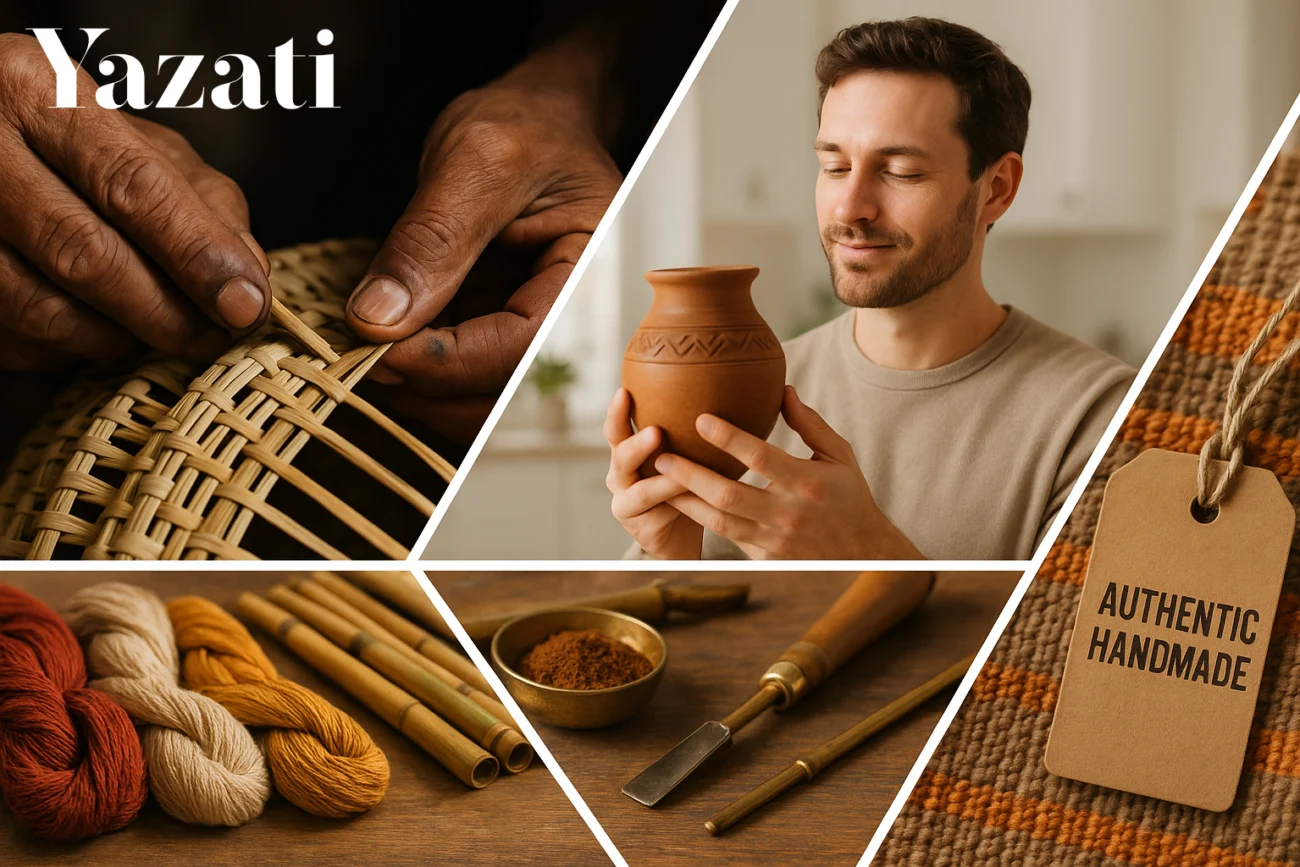
Introduction – The Timeless Appeal of Indian Craftsmanship
India is often described as the land of artisans, where every region tells a story through the textures of clay, silk, wood, or metal. From the intricate embroidery of Lucknow to the delicate pottery of Khurja, Indian handmade products symbolize more than just art—they embody authenticity, heritage, and soulful expression.
Buyers across the world are drawn to Indian handmade crafts not merely for their beauty but for the deep emotional connection and trust they inspire. Each handmade product represents the hard work, skill, and individuality of an artisan—qualities mass-produced goods can never replicate.
The Historical Roots of Indian Handmade Products
India’s craft history stretches back over 5,000 years, with evidence from the Indus Valley Civilization showcasing handwoven textiles, pottery, and jewelry. Over centuries, regional crafts flourished—each influenced by geography, local materials, and community traditions.
- Rajasthan’s block printing and Gujarat’s embroidery showcase color and cultural pride.
- Kashmiri carpets display Persian influence, blending luxury with heritage.
- South Indian bronze sculptures reflect devotion and precision in equal measure.
These crafts are passed down through generations, preserving an unbroken chain of creativity. This continuity of craftsmanship is a key reason buyers around the world trust Indian handmade goods—they are rooted in centuries of authenticity.
The Definition of Authentic Handmade Products
The term “handmade” has evolved with modern commerce, but at its core, it refers to items made by human hands, not machines. Authentic handmade products are:
- Crafted using traditional techniques rather than factory automation.
- Created with natural or locally sourced materials.
- Often unique, with small imperfections that add character and value.
In a world dominated by mass production, authentic handmade Indian products stand as a testament to the artist’s individual touch—a symbol of patience, creativity, and honesty.
Cultural Significance Behind Every Creation
Every handmade item in India is steeped in meaning. A Madhubani painting isn’t just decoration—it’s a visual narrative of mythology and daily life. A Banarasi saree represents centuries of devotion to weaving excellence.
For artisans, crafting is more than livelihood; it’s a spiritual expression. This sacred relationship between the creator and creation builds an aura of trust and respect—values global buyers deeply resonate with.
Why Global Buyers Seek Authentic Indian Handmade Products
Today’s consumers are more conscious than ever. They value authenticity, sustainability, and fair trade, seeking products that tell a story. Indian handmade crafts satisfy all three desires:
- Authenticity: No two items are identical. Each carries the fingerprint of its maker.
- Sustainability: Handmade production minimizes waste and supports eco-friendly practices.
- Ethical Value: Buyers know their money supports real artisans and communities.
In a marketplace filled with imitation goods, Indian handmade products stand out as honest, soulful, and transparent—key reasons behind their global trust.
Factors That Build Buyer Trust in Indian Handmade Products
- Proven Craftsmanship Traditions: Buyers trust Indian artisans because of their ancestral knowledge—skills refined over centuries.
- Certifications and Recognition: Indian government initiatives like the Handloom Mark and GI Tag certify authenticity.
- Natural Materials: Cotton, silk, bamboo, terracotta, and natural dyes assure quality and sustainability.
These elements reinforce a culture of transparency and reliability—qualities international buyers greatly value.
Role of Indian Artisans in Maintaining Authenticity
Indian artisans are not just creators—they’re custodians of culture. Families in Rajasthan, Odisha, and West Bengal pass down specialized techniques, ensuring the craft’s survival.
This generational craftsmanship nurtures consistency and authenticity. When buyers purchase Indian handmade goods, they’re not just acquiring a product—they’re investing in a living legacy.
The Rise of Eco-Friendly and Sustainable Practices
Modern buyers want their purchases to align with their environmental values. Fortunately, Indian artisans have always practiced eco-conscious craftsmanship—long before it became a global trend.
- Using organic dyes made from turmeric, indigo, and henna.
- Recycling fabric scraps for patchwork quilts or kantha embroidery.
- Employing zero-waste techniques like handloom weaving without electricity.
This eco-ethical foundation strengthens global trust in Indian handmade authenticity.
The Impact of E-Commerce on Indian Handmade Exports
Platforms like Etsy, Amazon Handmade, and IndiaMART have transformed the reach of Indian artisans. Today, a potter from Jaipur can directly sell to a buyer in London or New York.
E-commerce bridges the trust gap by providing transparency—customers can view artisan profiles, read reviews, and verify authenticity before purchasing. This digital shift has amplified global recognition of Indian craftsmanship.
How Buyers Verify Authenticity Before Purchase
Buyers today are proactive in ensuring they purchase genuine handmade goods. Some common verification methods include:
- Checking for artisan certifications (e.g., Craftmark, Handloom Mark).
- Reviewing artisan profiles and testimonials.
- Looking for Geographical Indication (GI) tags to confirm regional authenticity.
- Comparing design patterns and materials with traditional references.
By taking these steps, buyers feel confident that their chosen items are truly authentic Indian handmade products.
Government and NGO Support for Authentic Indian Handicrafts
The Indian government and NGOs play a crucial role in protecting artisanal authenticity. Notable initiatives include:
- Geographical Indication (GI) Tags: Protects crafts like Banarasi silk, Kanchipuram sarees, and Channapatna toys.
- Handicraft Export Promotion Council (EPCH): Supports artisans in reaching international markets.
- Dastkari Haat Samiti & Craft Council of India: Provide training and promote sustainable business practices.
These programs assure global buyers of quality, authenticity, and ethical trade.
Popular Indian Handmade Products Loved Worldwide
Indian handmade crafts enjoy global admiration across diverse categories:
| Category | Example | Specialty |
| Textiles & Handlooms | Pashmina shawls, Ikat sarees | Intricate weaving and natural fibers |
| Pottery & Ceramics | Khurja pottery, Blue Pottery | Vibrant colors and unique glazes |
| Jewelry | Meenakari, Kundan | Handcrafted detailing and cultural motifs |
| Wood & Metalwork | Sandalwood carvings, Dhokra art | Traditional designs and durability |
| Leather & Paper | Handmade journals, Jodhpur footwear | Eco-friendly and artisanal finishes |
These items are not only beautiful but carry the soul of India, enhancing their trust and appeal.
Emotional and Spiritual Value Attached to Indian Crafts
Owning an Indian handmade product is an emotional experience. It connects the buyer to a story, a community, and an artist’s soul.
Handmade art fosters a human-to-human connection in a mechanical world. Buyers trust these products because they represent truth, effort, and individuality—values that mass production simply cannot emulate.
The Economic and Social Impact of Buying Authentic Handmade Goods
When international buyers choose Indian handmade goods, they contribute to something far greater:
- Empowering rural artisans and women entrepreneurs.
- Preserving endangered crafts and cultural traditions.
- Encouraging fair wages and dignified employment.
Every purchase becomes a vote for sustainability and heritage preservation, reinforcing global confidence in Indian handmade authenticity.
Challenges Facing the Indian Handmade Industry
Despite growing appreciation, the sector faces issues like:
- Counterfeit goods labeled as handmade.
- Limited global marketing exposure for rural artisans.
- Inconsistent quality standards.
However, emerging technologies like blockchain verification and digital storytelling are helping overcome these challenges—further boosting buyer trust.
The Future of Indian Handmade Authenticity
The future of Indian handmade crafts lies in innovation without losing tradition. By integrating modern design with ancient techniques, artisans can appeal to global audiences while preserving their authenticity.
Digital authenticity tools, including QR-code verification and artisan blockchain IDs, are already revolutionizing transparency—ensuring that each handmade product carries a verifiable story of its origin.
Frequently Asked Questions (FAQs)
1. How can I ensure that an Indian handmade product is authentic?
Look for certifications like GI tags, Craftmark, or Handloom Mark, and buy from verified artisan stores or trusted e-commerce platforms.
2. Why are Indian handmade products more expensive than machine-made ones?
Because they’re crafted manually, using traditional methods and quality materials, ensuring durability and uniqueness.
3. Are Indian handmade crafts environmentally friendly?
Yes, most are made using eco-friendly, recycled, and natural materials.
4. What makes Indian handmade products unique compared to others?
Their cultural symbolism, intricate craftsmanship, and human touch make each product one-of-a-kind.
5. Do artisans benefit directly from global sales?
Yes—thanks to e-commerce and fair trade organizations, artisans now receive better recognition and income.
6. Which are the most trusted handmade products from India?
Pashmina shawls, brassware, handloom textiles, and blue pottery are globally renowned for authenticity.
Conclusion – The Enduring Trust in Indian Handcrafted Authenticity
Indian handmade products have transcended borders, becoming symbols of authenticity, heritage, and sustainability. Buyers trust them not just for their physical beauty but for the sincerity and human connection they represent.
In a digital age obsessed with speed and uniformity, Indian craftsmanship reminds the world of the beauty of imperfection and individuality—the true essence of authenticity.
✨ Discover Global Sourcing Excellence with Netyex ✨
Netyex is your trusted B2B sourcing partner, connecting international buyers with India’s finest manufacturers and curated product lines—from handicrafts and home décor to kitchenware, textiles, hospitality essentials, and more. With verified suppliers and end-to-end support, we make global procurement seamless, reliable, and efficient.
👉 Elevate your sourcing experience—explore Netyex today.
📦 Bulk orders & customisation | 🌍 Worldwide delivery | 🤝 Trusted by global buyers
Visit Netyex to source premium Indian products with confidence.