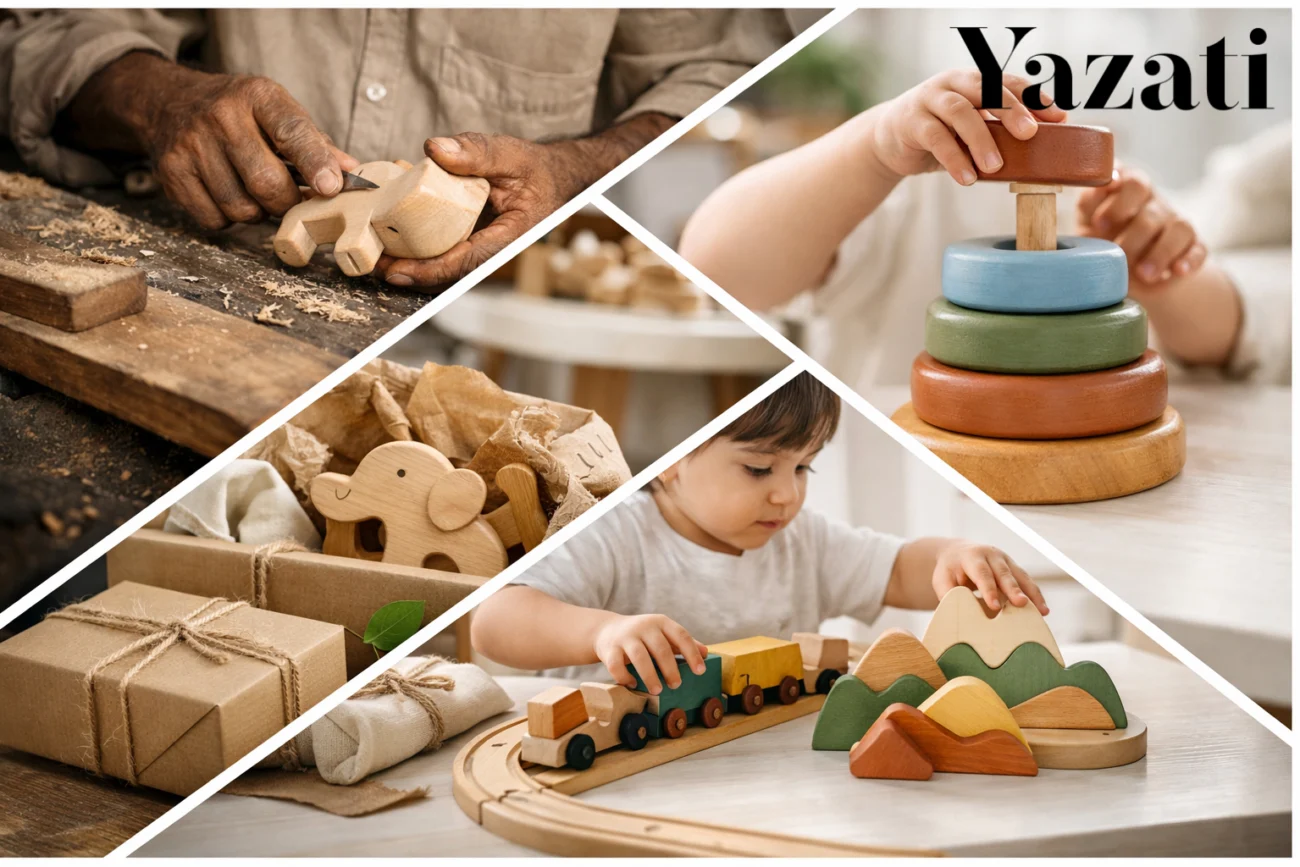
Why Eco-Friendly Wooden Toys from India Are Gaining Global Popularity
Across global markets, toy buying behavior is undergoing a fundamental shift. Parents, educators, and retailers are increasingly prioritizing safety, sustainability, and long-term value over novelty and disposability. In this changing landscape, eco-friendly wooden toys are experiencing a strong resurgence. Understanding Why Eco-Friendly Wooden Toys from India Are Gaining Global Popularity reveals how material integrity, ethical production, and thoughtful design are aligning perfectly with modern consumer values.
Manufactured in India, wooden toys combine natural materials, skilled craftsmanship, and export-ready compliance—making them especially attractive to global buyers seeking responsible alternatives to plastic toys.
Introduction: A Global Shift Toward Sustainable Play
Why Parents Are Rethinking Plastic Toys
Concerns about plastic waste, chemical exposure, and short product lifespans are pushing parents to reconsider conventional toy choices. Many plastic toys break easily, rely on synthetic materials, and contribute to long-term environmental pollution.
The Rise of Conscious Toy Buying
Today’s buyers want toys that are:
- Safe for children
- Environmentally responsible
- Durable and reusable
- Educational rather than purely entertaining
Wooden toys naturally meet these expectations.
Why India Is a Natural Leader in Wooden Toy Manufacturing
Cultural Heritage of Woodcraft
India has a centuries-old tradition of woodcraft, with skilled artisans experienced in shaping, carving, and finishing wooden products with precision and care. This heritage translates seamlessly into toy manufacturing.
Availability of Sustainable Raw Materials
India has access to responsibly managed wood sources and established practices for efficient material usage, reducing waste during production.
Why Eco-Friendly Wooden Toys from India Are Gaining Global Popularity
Sustainability Built Into the Product Lifecycle
From raw material selection to production and end use, Indian wooden toys are often designed with sustainability in mind—rather than adding it later as a marketing feature.
A Balance of Tradition and Modern Standards
Traditional craftsmanship is now supported by modern quality control, safety testing, and export systems—ensuring global compliance without losing authenticity.
Natural Materials and Non-Toxic Finishes
Responsibly Sourced Wood
Wood used in toy production is selected for strength, smooth grain, and safety—ensuring durability and reducing splinter risk.
Child-Safe Paints and Finishes
Eco-friendly wooden toys typically use:
- Water-based paints
- Natural dyes
- Non-toxic lacquers
These finishes minimize chemical exposure for young children.
Safety Advantages of Wooden Toys
Reduced Chemical Exposure
Unlike plastic toys that may contain synthetic additives, wooden toys rely on natural materials and simpler surface treatments.
Strength, Stability, and Low Breakage Risk
Wooden toys are structurally strong and less likely to shatter into sharp pieces, making them safer during active play.
Educational and Developmental Value
Open-Ended and Imaginative Play
Wooden toys encourage creativity by allowing children to imagine multiple uses rather than following fixed electronic functions.
Alignment with Montessori and Waldorf Principles
Many educational approaches favor wooden toys for their tactile quality, simplicity, and ability to support cognitive development.
Durability and Long Product Lifespan
Toys Designed to Last for Years
High-quality wooden toys withstand years of use without losing functionality or appeal.
Reusability and Multi-Child Use
Durable construction allows toys to be reused by siblings or passed on—reducing overall consumption.
Sustainability Beyond Materials
Low-Energy Production Methods
Wooden toy manufacturing often involves manual or semi-manual processes, consuming significantly less energy than plastic injection molding.
Reduced Plastic Waste Contribution
By choosing wooden toys, buyers help reduce dependence on plastics and lower landfill accumulation.
Ethical Production and Social Impact
Supporting Artisan Communities
Wooden toy production supports skilled workers and artisan communities, contributing to social sustainability.
Responsible Manufacturing Practices
Stable employment and ethical labor practices strengthen long-term supplier relationships and buyer confidence.
Export Readiness and Global Compliance
Meeting International Toy Safety Expectations
Indian wooden toy exporters increasingly design products to meet international safety requirements, including material safety and mechanical integrity.
Consistency for Global Retailers
Structured production systems ensure consistent quality across bulk orders—critical for retail and e-commerce buyers.
Commercial Advantages for Global Buyers
Strong Demand and Premium Positioning
Eco-friendly wooden toys often command premium pricing due to their perceived value, safety, and sustainability.
Storytelling and Brand Differentiation
Wooden toys offer compelling narratives around sustainability, education, and craftsmanship—valuable for marketing and brand building.
Common Misconceptions About Wooden Toys
“Wooden Toys Are Old-Fashioned”
Modern wooden toys feature contemporary design, vibrant colors, and innovative functionality.
“Eco-Friendly Means Fragile”
In reality, wooden toys are often more durable than plastic alternatives.
FAQs on Eco-Friendly Wooden Toys from India
1. Are wooden toys from India safe for young children?
Yes, when produced with child-safe materials and proper testing.
2. Do wooden toys meet international safety expectations?
Yes. Export-ready manufacturers design for global compliance.
3. Are eco-friendly toys more expensive?
They may cost more upfront but offer better long-term value.
4. Can wooden toys scale for large retail orders?
Yes. Structured production supports bulk supply.
5. Are wooden toys educational?
Yes. They support cognitive, sensory, and imaginative development.
6. Do global consumers prefer wooden toys?
Demand is growing rapidly across Europe, North America, and other markets.
Conclusion: A Sustainable Choice Shaping the Future of Play
Why Eco-Friendly Wooden Toys from India Are Gaining Global Popularity reflects a deeper change in how the world views childhood, consumption, and responsibility. Indian wooden toys combine natural materials, safety, durability, educational value, and ethical production into products that resonate with today’s conscious consumers.
For global buyers, these toys offer more than a trend—they represent a long-term category aligned with sustainability goals, regulatory expectations, and evolving parent preferences. As the global toy market moves toward safer and more responsible play, eco-friendly wooden toys from India are not just gaining popularity—they are helping define the future of the industry.
✨ Discover Global Sourcing Excellence with Netyex ✨
Netyex is your trusted B2B sourcing partner, connecting international buyers with India’s finest manufacturers and curated product lines—from handicrafts and home décor to kitchenware, textiles, hospitality essentials, and more. With verified suppliers and end-to-end support, we make global procurement seamless, reliable, and efficient.
👉 Elevate your sourcing experience—explore Netyex today.
📦 Bulk orders & customisation | 🌍 Worldwide delivery | 🤝 Trusted by global buyers
Visit Netyex to source premium Indian products with confidence.