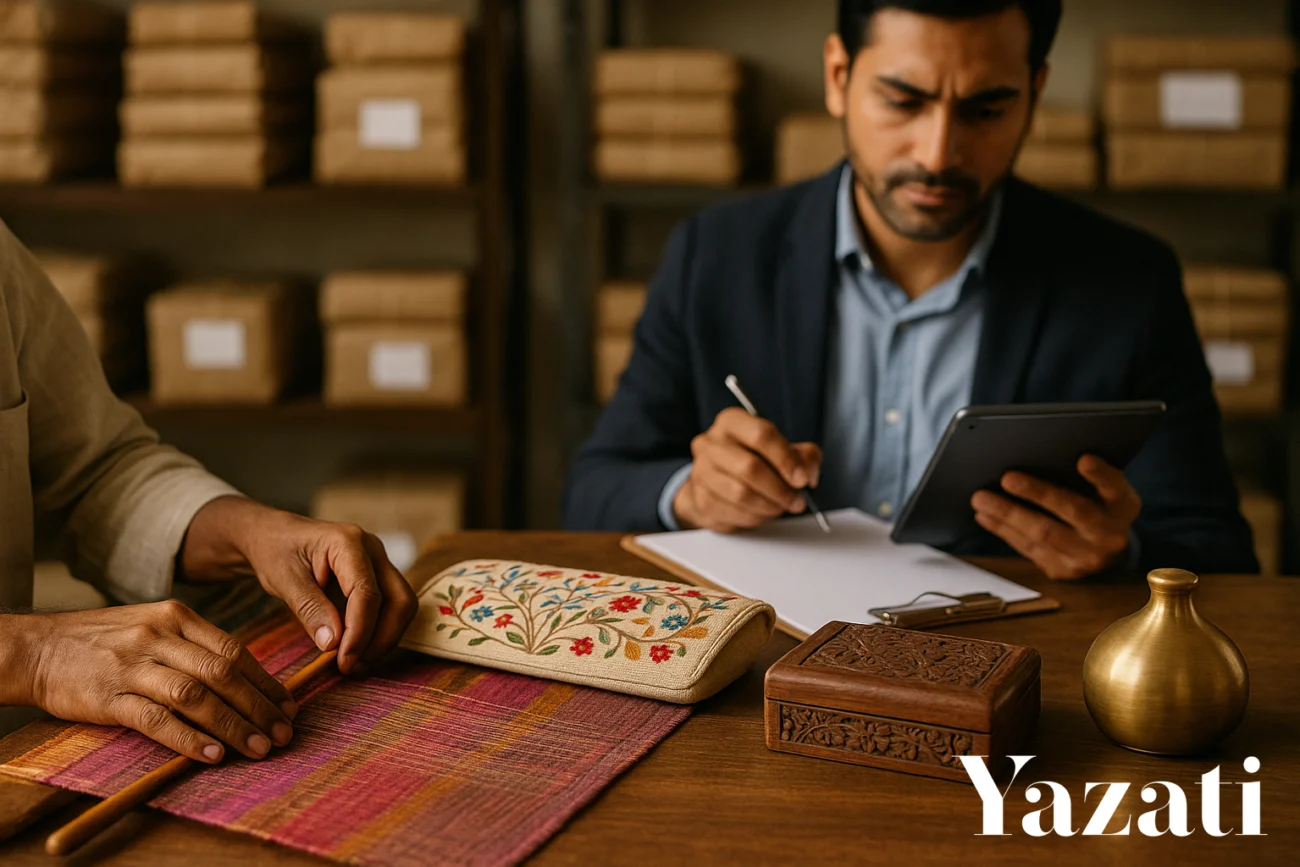
Introduction: The Rising Global Demand for Indian Handmade Products
The global market is witnessing a remarkable shift toward sustainability, authenticity, and craftsmanship. Consumers today are not just buying products—they’re buying stories, culture, and purpose. And nowhere is this truer than in the growing appreciation for handmade Indian products.
From intricately woven Banarasi silks to eco-friendly jute bags and handcrafted jewelry, India’s artisanal treasures have captivated global buyers. Yet, despite this immense potential, many exporters still overlook the “Handmade in India” movement.
Supporting this initiative is not just a patriotic choice—it’s a strategic business move that aligns with evolving global trends in fair trade, sustainability, and ethical production.
Understanding the ‘Handmade in India’ Movement
Origins and Vision of the Movement
The ‘Handmade in India’ movement began as an extension of the government’s Make in India campaign, emphasizing the importance of preserving India’s traditional crafts while integrating them into the global marketplace. It aims to celebrate and empower the millions of artisans whose skills have been passed down through generations.
Role of Indian Artisans in the Global Supply Chain
India has over 7 million artisans, contributing significantly to rural employment. These artisans produce unique, high-value goods that often require months of intricate work—products impossible to replicate by machines. Their contribution positions India as a key player in the global handmade market, valued at over $1 trillion by 2030.
Economic Significance of Supporting Handmade in India
Boosting Local Economies and Employment
Each time an exporter chooses to support handmade products, they directly fuel rural economic growth. Handicraft production provides livelihoods to marginalized communities, especially women and rural youth, ensuring inclusive development.
Increasing India’s Share in Global Exports
India’s handmade goods already command a strong international presence, particularly in the US, UK, and Europe. Supporting this movement could help India capture a larger slice of the expanding ethical and sustainable product market, which is expected to grow 15% annually over the next decade.
Why Exporters Should Embrace the Movement
Growing Global Appreciation for Ethical and Sustainable Products
Modern consumers are drawn to products with an ethical backbone. The “Handmade in India” label stands for eco-conscious production, fair wages, and cultural authenticity—values that resonate deeply with global buyers.
How Handmade Products Enhance Brand Value for Exporters
For exporters, offering handmade collections enhances brand reputation. It signals authenticity and aligns with global sustainability trends, allowing businesses to command premium pricing and build customer loyalty.
Exporters as Cultural Ambassadors of India
Every handmade product carries a story—of heritage, artistry, and resilience. Exporters who promote these goods act as cultural ambassadors, bridging the gap between Indian traditions and global audiences.
Key Sectors Driving the Handmade Export Industry
Handloom and Textiles
India’s handloom industry is world-famous, producing timeless fabrics like khadi, ikat, and chanderi. These textiles are prized for their quality and sustainability, offering immense export potential.
Handicrafts and Home Décor
From wooden toys of Channapatna to brassware from Moradabad, India’s handicraft exports reflect regional diversity. They remain popular in Western markets due to their uniqueness and handmade charm.
Jewelry and Accessories
Ethnic jewelry—crafted from silver, brass, or semi-precious stones—has found loyal buyers worldwide. Exporters focusing on handmade jewelry enjoy the advantage of exclusivity and design innovation.
Sustainable and Eco-friendly Products
The global demand for eco-friendly goods is surging. Handmade Indian exports like bamboo utensils, organic cotton textiles, and recycled paper crafts are leading examples of sustainable artistry.
Challenges Facing the Handmade Sector
Limited Access to Global Markets
Many artisans lack digital literacy or export knowledge, making it hard to connect with international buyers. Exporters can play a key role in bridging this gap.
Lack of Standardization and Certification
Without proper certification (like fair trade or organic labels), handmade goods often struggle to compete internationally. Exporters can help artisans achieve recognized standards.
Competition from Machine-made Goods
Mass-produced goods often dominate due to lower prices. However, exporters must focus on differentiation through storytelling, quality, and exclusivity to stand out.
How Exporters Can Strengthen the Handmade Ecosystem
Building Direct Partnerships with Artisans
Creating direct trade relationships eliminates middlemen, ensuring fair compensation for artisans and transparency for buyers.
Adopting Fair Trade Practices
Exporters who commit to fair trade principles can access niche global markets that prioritize ethical sourcing.
Leveraging E-commerce and Digital Platforms
Platforms like Etsy, Amazon Handmade, and IndiaMART enable exporters to showcase handmade products to global audiences instantly.
Investing in Skill Development and Quality Control
By investing in artisan training, exporters can maintain consistent quality, meet global standards, and build long-term partnerships.
Government Initiatives Promoting Handmade in India
Export Promotion Councils and Schemes
The Export Promotion Council for Handicrafts (EPCH) and Development Commissioner (Handicrafts) offer financial aid, marketing support, and participation in global trade fairs.
The Role of Geographical Indications (GI Tags)
GI tags protect regional products like Pashmina shawls or Kutch embroidery, enhancing their global appeal and authenticity.
Incentives for Exporters Supporting Handcrafted Goods
The government offers tax benefits, subsidies, and duty exemptions for exporters engaged in the handmade sector—making it both ethical and profitable.
Case Studies: Successful Exporters of Handmade Indian Products
Fabindia – Bringing Indian Craftsmanship to the World
Founded in 1960, Fabindia is a pioneer in connecting rural artisans to international markets. It represents how sustainable business models can thrive while preserving heritage.
Jaipur Rugs – Empowering Rural Artisans Globally
Jaipur Rugs employs over 40,000 artisans across India, exporting to more than 60 countries. Their model of direct engagement and ethical production sets a benchmark for exporters worldwide.
The Future of Handmade Exports: Trends and Opportunities
Rising Consumer Awareness About Sustainability
Consumers are consciously choosing sustainable products. Exporters who align with the “Handmade in India” ethos can tap into this high-value market segment.
Integration of Technology in Handmade Exports
Emerging technologies—like blockchain for product traceability and AR/VR for virtual showrooms—are revolutionizing how handmade goods are showcased and sold internationally.
FAQs About the Handmade in India Movement
1. What is the ‘Handmade in India’ movement?
It’s a national initiative promoting traditional Indian crafts and artisans, encouraging both local and international support for handmade products.
2. How can exporters benefit from supporting it?
Exporters gain access to ethical markets, premium pricing, and government incentives while enhancing brand reputation.
3. Are handmade products in demand internationally?
Yes. Global consumers increasingly prefer handmade, sustainable, and ethically produced goods.
4. What government schemes support handmade exporters?
Schemes by EPCH, DC(Handicrafts), and MSME provide marketing, training, and financial support to artisans and exporters.
5. What challenges do artisans face today?
They face issues like limited market access, lack of branding, and competition from machine-made goods.
6. How can technology help promote handmade exports?
E-commerce, digital marketing, and blockchain traceability can help artisans and exporters reach global audiences efficiently.
Conclusion: Empowering India’s Artisans, Empowering the Nation
Supporting the ‘Handmade in India’ movement is not just a social responsibility—it’s an opportunity for exporters to align profit with purpose. By uplifting artisans, exporters help sustain India’s rich cultural heritage while catering to a global audience that values sustainability and authenticity.
In essence, every handmade export tells a story of India’s heart and soul. When exporters champion this movement, they aren’t just building businesses—they’re weaving a legacy of empowerment, pride, and progress.
✨ Discover Global Sourcing Excellence with Netyex ✨
Netyex is your trusted B2B sourcing partner, connecting international buyers with India’s finest manufacturers and curated product lines—from handicrafts and home décor to kitchenware, textiles, hospitality essentials, and more. With verified suppliers and end-to-end support, we make global procurement seamless, reliable, and efficient.
👉 Elevate your sourcing experience—explore Netyex today.
📦 Bulk orders & customisation | 🌍 Worldwide delivery | 🤝 Trusted by global buyers
Visit Netyex to source premium Indian products with confidence.