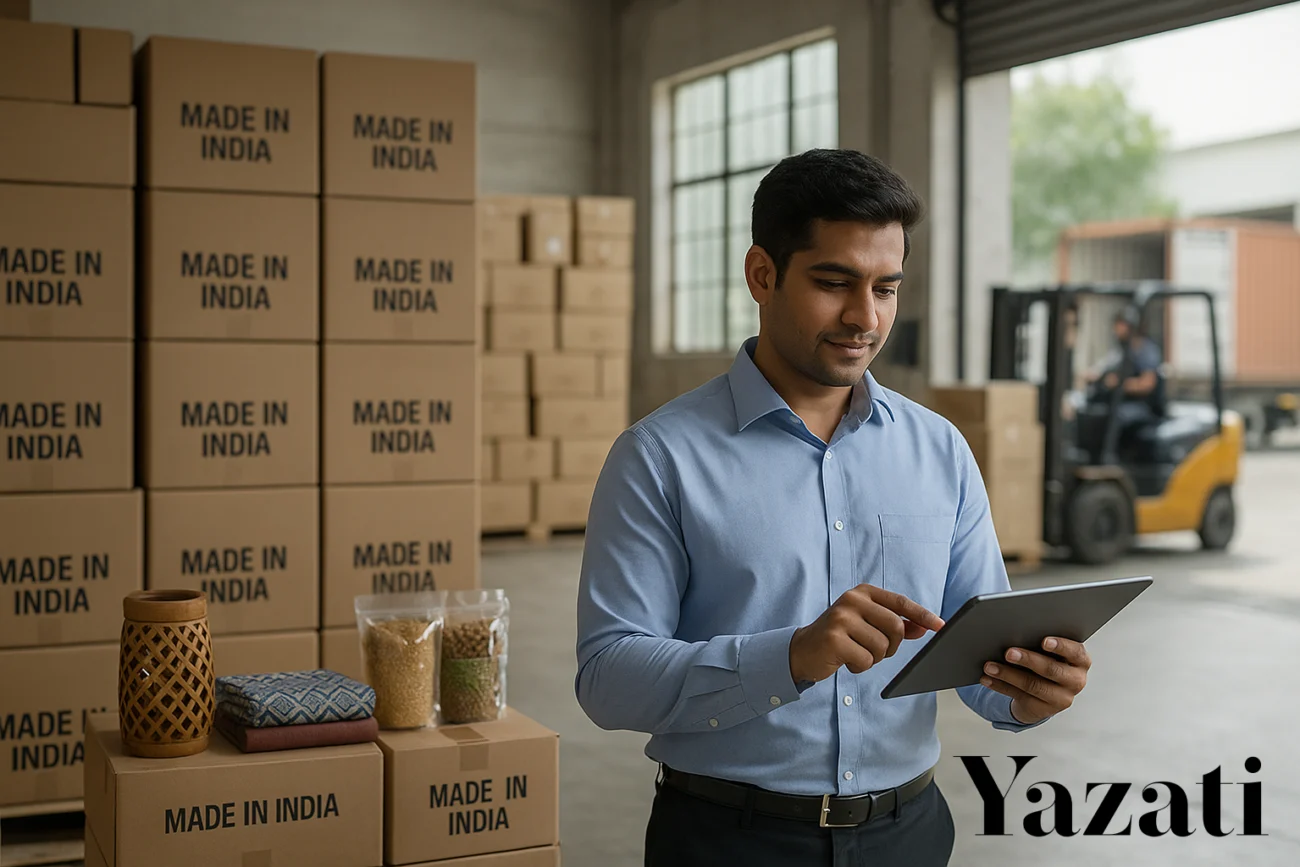
Introduction – The Rise of India’s Export Potential
India has rapidly evolved into one of the world’s most promising export destinations. In the past decade, the country’s exports have surged, spanning everything from pharmaceuticals and textiles to information technology and green energy. With new-age policies, digital infrastructure, and simplified trade processes, exporting from India is now easier than ever.
What once required months of paperwork and bureaucratic hurdles can now be done in a few clicks. From applying for an Import Export Code (IEC) to obtaining shipping documentation, digitalization has made the process seamless. But this transformation didn’t happen overnight — it’s the result of years of strategic planning, policy reforms, and technological innovation.
The Transformation of India’s Export Ecosystem
Over the past few years, India’s export ecosystem has undergone a major transformation. Today, exporting goods or services no longer demands complex red tape or multiple physical visits to government offices.
The “Ease of Doing Business” initiatives, combined with online platforms such as the DGFT portal, have empowered businesses of all sizes — including small and medium enterprises (SMEs) — to explore international markets effortlessly.
Government Policies Fueling Export Growth
The government has implemented several forward-thinking policies aimed at promoting exports, such as:
- Make in India: Encourages manufacturing for global markets.
- National Logistics Policy (NLP): Reduces logistics costs and boosts supply chain efficiency.
- Foreign Trade Policy (FTP) 2023: Simplifies procedures and promotes sustainability in trade.
These frameworks have redefined India’s trade landscape, making it easier for exporters to start, sustain, and scale operations.
Simplified Licensing and Documentation Procedures
The Directorate General of Foreign Trade (DGFT) has digitized the entire export licensing system. Businesses can now:
- Apply online for an IEC (Import Export Code).
- Generate electronic Bank Realization Certificates (eBRCs).
- File applications for export incentives and monitor them in real-time.
This streamlined, paperless process not only saves time but also ensures transparency and accountability.
Digital India and Technological Advancements
Digitalization is one of the most transformative factors in making exporting from India simpler and more efficient.
The Role of DGFT Online Platforms and Paperless Trade
The new DGFT platform has revolutionized how exporters manage compliance. With its single-window interface, exporters can:
- File documents electronically.
- Track shipments.
- Connect directly with customs and port authorities.
This integration ensures faster clearances, reduced manual errors, and lower transaction costs.
AI, Blockchain, and Automation in Export Management
Cutting-edge technologies are helping Indian exporters in unprecedented ways.
- Artificial Intelligence (AI) predicts global demand and helps in inventory planning.
- Blockchain enhances transparency in international payments and contracts.
- Automation tools simplify customs declarations and invoice processing.
These tools together make Indian exports more competitive, reliable, and future-ready.
Infrastructure Development and Logistics Support
An efficient logistics system is the backbone of successful exports. The Indian government has heavily invested in improving the country’s logistics and transportation networks.
Bharatmala, Sagarmala, and Dedicated Freight Corridors
- Bharatmala Project: Expands road connectivity, ensuring faster inland transport to ports.
- Sagarmala Initiative: Modernizes ports and reduces shipping turnaround times.
- Dedicated Freight Corridors (DFC): Allow faster, more cost-effective freight movement across industrial hubs.
These initiatives have drastically reduced the time and cost of exporting, making Indian goods more competitive globally.
Financial Support and Export Incentives
Exporters now enjoy easier access to credit, lower interest rates, and several incentive schemes.
Export Credit and Risk Mitigation Programs
Institutions such as the Export Credit Guarantee Corporation (ECGC) and the EXIM Bank provide exporters with insurance and funding support. This ensures protection against payment defaults and global market risks.
Duty Drawback and Remission Schemes
Exporters can benefit from government schemes like:
- RoDTEP (Remission of Duties and Taxes on Exported Products)
- MEIS (Merchandise Exports from India Scheme)
- RoSCTL (Rebate of State & Central Taxes and Levies)
These programs enhance exporters’ profitability and encourage greater participation in global trade.
MSMEs and Startups: The New Export Powerhouses
Micro, Small, and Medium Enterprises (MSMEs) have emerged as the backbone of India’s export growth. With the rise of global e-commerce and simplified online trade regulations, even small-scale manufacturers can now sell internationally.
Global Market Access through E-commerce Platforms
Platforms such as Amazon Global Selling, Flipkart Export Hub, and Shopify have made cross-border trade accessible to Indian entrepreneurs.
Startups can:
- List products globally.
- Receive international payments directly to Indian bank accounts.
- Leverage logistic partners for end-to-end delivery.
This democratization of exports has opened new frontiers for thousands of Indian sellers.
Trade Agreements and Global Integration
India has actively pursued trade agreements that create easier access to international markets.
Regional Comprehensive Economic Partnerships (RCEP) and Beyond
Although India opted out of RCEP, it has focused on bilateral Free Trade Agreements (FTAs) with countries like the UAE, Australia, and the UK. These agreements simplify tariff structures, making it cheaper and easier for Indian exporters to do business abroad.
Sustainability and Green Exports
Sustainability is now a driving force behind India’s export strategy. Many Indian companies are shifting toward eco-friendly manufacturing, renewable energy exports, and sustainable textiles.
This aligns with global demand for green products, positioning India as a key player in the circular economy.
Challenges That Remain – And How They’re Being Solved
While exporting from India has become easier, some challenges persist, such as:
- Complex global compliance requirements.
- High logistics costs in remote areas.
- Limited awareness among small exporters.
However, continuous policy reforms, better trade infrastructure, and increased digital literacy are addressing these issues rapidly.
Future Outlook: The Road Ahead for Indian Exports
India’s exports are poised for exponential growth in the coming decade.
With initiatives like the National Export Insurance Account (NEIA) and PLI (Production-Linked Incentive) schemes, India is targeting an export value of $2 trillion by 2030.
Emerging sectors like renewable energy, defense manufacturing, and electronics are expected to drive this next wave.
FAQs About Exporting from India
Q1. How do I start exporting from India?
Apply for an IEC (Import Export Code) through the DGFT portal, identify export markets, and connect with buyers through trade portals or e-commerce platforms.
Q2. What documents are required for export?
Essential documents include commercial invoices, packing lists, shipping bills, and eBRCs.
Q3. How can MSMEs benefit from exports?
MSMEs can access schemes like RoDTEP, credit insurance, and e-commerce platforms for global visibility.
Q4. Is it expensive to start exporting from India?
No. With digital tools and platforms, setup costs are now significantly lower.
Q5. Which are the top export products from India?
Pharmaceuticals, textiles, IT services, gems and jewelry, and agricultural goods.
Q6. What role does technology play in exports today?
Technology enables paperless trade, AI-driven logistics, and blockchain-secured transactions for exporters.
Conclusion – A New Era for Indian Exporters
India’s export ecosystem has entered a golden phase. With digital transformation, progressive policies, and global market access, exporting from India is now easier than ever. Entrepreneurs, startups, and established enterprises alike can harness this momentum to expand their reach and build a sustainable, global business.
The future is bright — and India is ready to lead the next export revolution.
✨ Discover Global Sourcing Excellence with Netyex ✨
Netyex is your trusted B2B sourcing partner, connecting international buyers with India’s finest manufacturers and curated product lines—from handicrafts and home décor to kitchenware, textiles, hospitality essentials, and more. With verified suppliers and end-to-end support, we make global procurement seamless, reliable, and efficient.
👉 Elevate your sourcing experience—explore Netyex today.
📦 Bulk orders & customisation | 🌍 Worldwide delivery | 🤝 Trusted by global buyers
Visit Netyex to source premium Indian products with confidence.