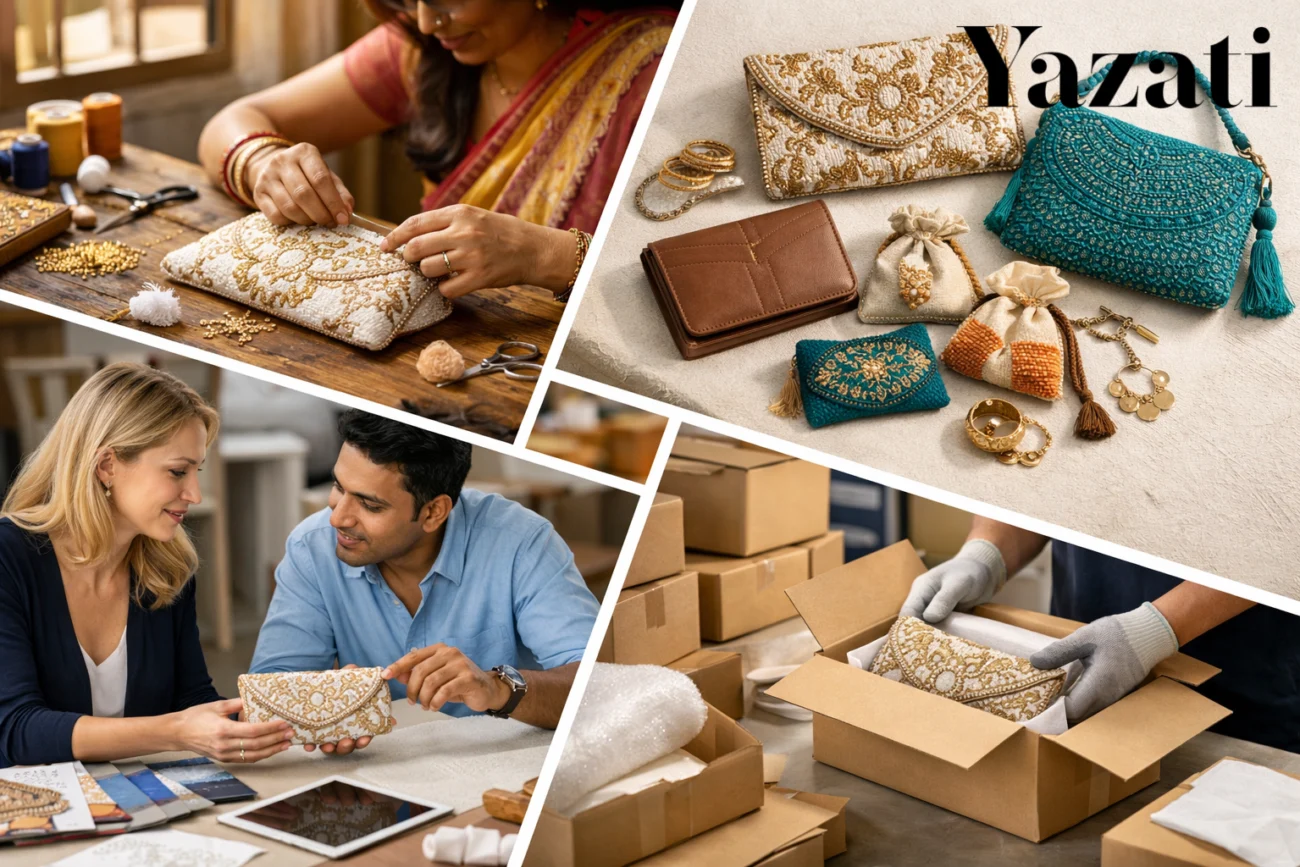
Introduction: Why Importers Choose India for Handcrafted Fashion Accessories
The global fashion industry is constantly evolving, with consumers seeking products that are unique, sustainable, and culturally rich. In this changing landscape, handcrafted fashion accessories have gained immense popularity. From embroidered bags and beaded jewelry to handwoven scarves and leather goods, handcrafted accessories offer a blend of artistry and authenticity that mass-produced products often lack.
This growing demand has led many international buyers to explore sourcing destinations that can deliver both quality and creativity. Among these destinations, India has emerged as one of the most trusted and preferred sourcing hubs. The country’s rich cultural heritage, skilled artisans, and diverse craftsmanship make it an ideal place for producing handcrafted fashion accessories.
Importers around the world choose India not only for its beautiful designs but also for its competitive pricing, reliable manufacturing ecosystem, and ability to produce both small boutique orders and large wholesale volumes. Additionally, India’s strong tradition of handmade artistry ensures that every product carries a unique story and character.
In this article, we will explore the key reasons why importers choose India for handcrafted fashion accessories, examining the factors that make the country a leading global supplier in the handcrafted fashion industry.
Rich Heritage of Handcrafted Artistry
India’s craftsmanship tradition spans thousands of years, making it one of the most culturally rich countries in the world when it comes to handmade products.
Generations of artisans have passed down traditional techniques through families and communities. These skills have evolved over centuries but still retain their authenticity and cultural roots. This heritage gives Indian handcrafted fashion accessories a unique identity that is difficult to replicate elsewhere.
Traditional Craft Techniques
Many handcrafted fashion accessories in India are created using techniques that have existed for centuries. Some examples include:
- Hand embroidery
- Beadwork and mirror work
- Hand weaving
- Block printing
- Leather crafting
- Metal embellishments
These techniques add intricate detailing and uniqueness to each product.
Regional Craft Diversity
Different regions of India specialize in different forms of craftsmanship. This regional diversity allows importers to source a wide variety of handcrafted fashion accessories from a single country.
For example:
| Region | Specialty |
|---|---|
| Rajasthan | Mirror work, embroidery |
| Gujarat | Beaded accessories |
| Uttar Pradesh | Zari embroidery |
| West Bengal | Handwoven textiles |
| Karnataka | Traditional silk crafts |
This diversity allows buyers to create varied product lines with distinct cultural aesthetics.
Highly Skilled Artisan Workforce
Another major reason importers prefer India is the presence of a vast and highly skilled artisan workforce.
Millions of artisans across the country specialize in different forms of handicrafts. Many of them have learned their skills from previous generations and possess exceptional attention to detail.
Experience and Expertise
Indian artisans often spend years mastering their craft. Their expertise allows them to create highly detailed and intricate accessories such as:
- Embroidered handbags
- Handcrafted jewelry
- Decorative belts
- Textile-based accessories
This level of craftsmanship ensures superior product quality.
Customization Capabilities
Importers often require customized designs tailored to specific markets. Indian manufacturers are highly flexible and can adapt designs, materials, and colors according to buyer requirements.
Customization options often include:
- Private labeling
- Custom embroidery patterns
- Specific color palettes
- Unique packaging solutions
This flexibility makes India an attractive sourcing destination.
Competitive Pricing Without Compromising Quality
Cost efficiency plays a significant role in global sourcing decisions. One of the main reasons why importers choose India for handcrafted fashion accessories is the balance between affordability and quality.
India offers competitive manufacturing costs while maintaining high craftsmanship standards.
Lower Production Costs
Several factors contribute to India’s cost advantage:
- Abundant skilled labor
- Strong local supply chains
- Availability of raw materials
- Efficient small-scale production units
These factors allow manufacturers to offer competitive prices compared to many other countries.
High Value for Money
Despite affordable pricing, Indian handcrafted accessories maintain excellent quality standards. Buyers often receive premium-looking products at prices that allow for strong retail margins.
This value proposition is highly appealing for wholesalers, retailers, and boutique brands.
Wide Variety of Fashion Accessories
India offers an incredibly diverse range of handcrafted fashion accessories. This wide product selection allows importers to source multiple product categories from a single country.
Popular Product Categories
Some of the most commonly exported handcrafted fashion accessories include:
- Handmade handbags
- Beaded jewelry
- Embroidered clutches
- Leather belts
- Scarves and shawls
- Hair accessories
- Decorative brooches
This diversity enables brands to create cohesive collections with complementary items.
Fusion of Traditional and Modern Designs
Indian manufacturers have successfully blended traditional craftsmanship with modern fashion trends.
This fusion results in accessories that appeal to global consumers while maintaining a cultural identity.
Strong Export Infrastructure
India has developed a well-established export ecosystem that supports international trade.
This infrastructure makes it easier for importers to source products efficiently and reliably.
Export-Oriented Manufacturing Clusters
Several cities and regions specialize in handicraft exports. These clusters bring together artisans, manufacturers, suppliers, and exporters in one location.
Benefits include:
- Faster production timelines
- Easier sourcing coordination
- Better quality control
Efficient Logistics and Shipping
India has multiple international ports and cargo hubs that facilitate global shipping. This ensures that orders can be delivered to buyers around the world without major logistical challenges.
Sustainable and Ethical Production
Consumers today are more conscious about sustainability and ethical production. Handmade products naturally align with these values.
India’s handcrafted fashion industry offers several sustainability advantages.
Eco-Friendly Materials
Many handcrafted accessories use natural and sustainable materials such as:
- Cotton
- Jute
- Leather
- Silk
- Recycled textiles
These materials reduce environmental impact compared to synthetic alternatives.
Support for Artisan Communities
By sourcing from India, importers often support rural artisans and traditional craft communities.
This contributes to:
- Job creation
- Preservation of cultural heritage
- Economic development in rural areas
For brands that promote ethical fashion, this is a major advantage.
Flexibility for Small and Large Orders
One of the unique strengths of Indian manufacturers is their flexibility when it comes to order sizes.
Small Batch Production
Boutique brands and emerging designers often prefer small production runs. Indian manufacturers frequently accommodate smaller minimum order quantities.
This allows brands to:
- Test new product lines
- Launch limited collections
- Reduce inventory risks
Large Wholesale Capacity
At the same time, larger manufacturers in India are capable of handling high-volume orders for major retailers and global brands.
This scalability makes India suitable for businesses of all sizes.
Innovation and Design Adaptability
Indian handicraft manufacturers are constantly evolving to meet global market trends.
Trend Awareness
Manufacturers actively study international fashion trends and adapt their designs accordingly. This ensures that handcrafted accessories remain relevant to modern consumers.
Collaboration with Designers
Many exporters collaborate with international designers to create unique collections tailored to specific markets.
This collaborative approach leads to innovative and fashionable products.
Government Support for Handicraft Exports
The Indian government actively promotes handicraft exports through various initiatives.
Training and Development Programs
These programs help artisans improve their skills and learn modern production techniques.
Export Promotion Policies
Export-focused policies support handicraft businesses by providing resources, trade opportunities, and international exposure.
This support strengthens the entire handicraft export industry.
Global Reputation for Handcrafted Excellence
Over the years, India has built a strong reputation as a reliable source for handcrafted products.
Buyers trust Indian suppliers for their:
- Authentic craftsmanship
- High-quality finishing
- Cultural richness
- Creative designs
This reputation has helped India maintain a strong position in the global handcrafted fashion accessories market.
FAQs About Why Importers Choose India for Handcrafted Fashion Accessories
1. Why is India famous for handcrafted fashion accessories?
India has centuries-old craft traditions, skilled artisans, and diverse regional craftsmanship, making it a global leader in handmade fashion products.
2. Are handcrafted accessories from India affordable for importers?
Yes. India offers competitive production costs while maintaining high quality, allowing importers to achieve good profit margins.
3. What types of handcrafted fashion accessories are exported from India?
Common exports include embroidered bags, beaded jewelry, scarves, belts, clutches, and decorative fashion accessories.
4. Can Indian manufacturers handle custom designs?
Yes. Many manufacturers offer customization options such as private labeling, custom colors, unique patterns, and personalized packaging.
5. Is sourcing handcrafted accessories from India sustainable?
Yes. Many products are made using natural materials and traditional techniques that support eco-friendly and ethical production.
6. Do Indian suppliers accept small order quantities?
Many suppliers accommodate both small boutique orders and large wholesale orders, making India suitable for businesses of all sizes.
Conclusion
The global demand for authentic and handcrafted products continues to rise, and India remains at the forefront of this movement. With its deep-rooted craft heritage, skilled artisans, competitive pricing, and diverse product offerings, the country provides a unique combination of creativity and reliability.
Importers who source from India benefit from not only high-quality handcrafted fashion accessories but also flexible manufacturing, sustainable production methods, and strong export infrastructure.
These factors clearly explain why importers choose India for handcrafted fashion accessories. As the global fashion industry increasingly values authenticity and craftsmanship, India’s role as a leading supplier of handcrafted fashion accessories is likely to grow even stronger in the years to come.
✨ Discover Global Sourcing Excellence with Netyex ✨
Netyex is your trusted B2B sourcing partner, connecting international buyers with India’s finest manufacturers and curated product lines—from handicrafts and home décor to kitchenware, textiles, hospitality essentials, and more. With verified suppliers and end-to-end support, we make global procurement seamless, reliable, and efficient.
👉 Elevate your sourcing experience—explore Netyex today.
📦 Bulk orders & customisation | 🌍 Worldwide delivery | 🤝 Trusted by global buyers
Visit Netyex to source premium Indian products with confidence.