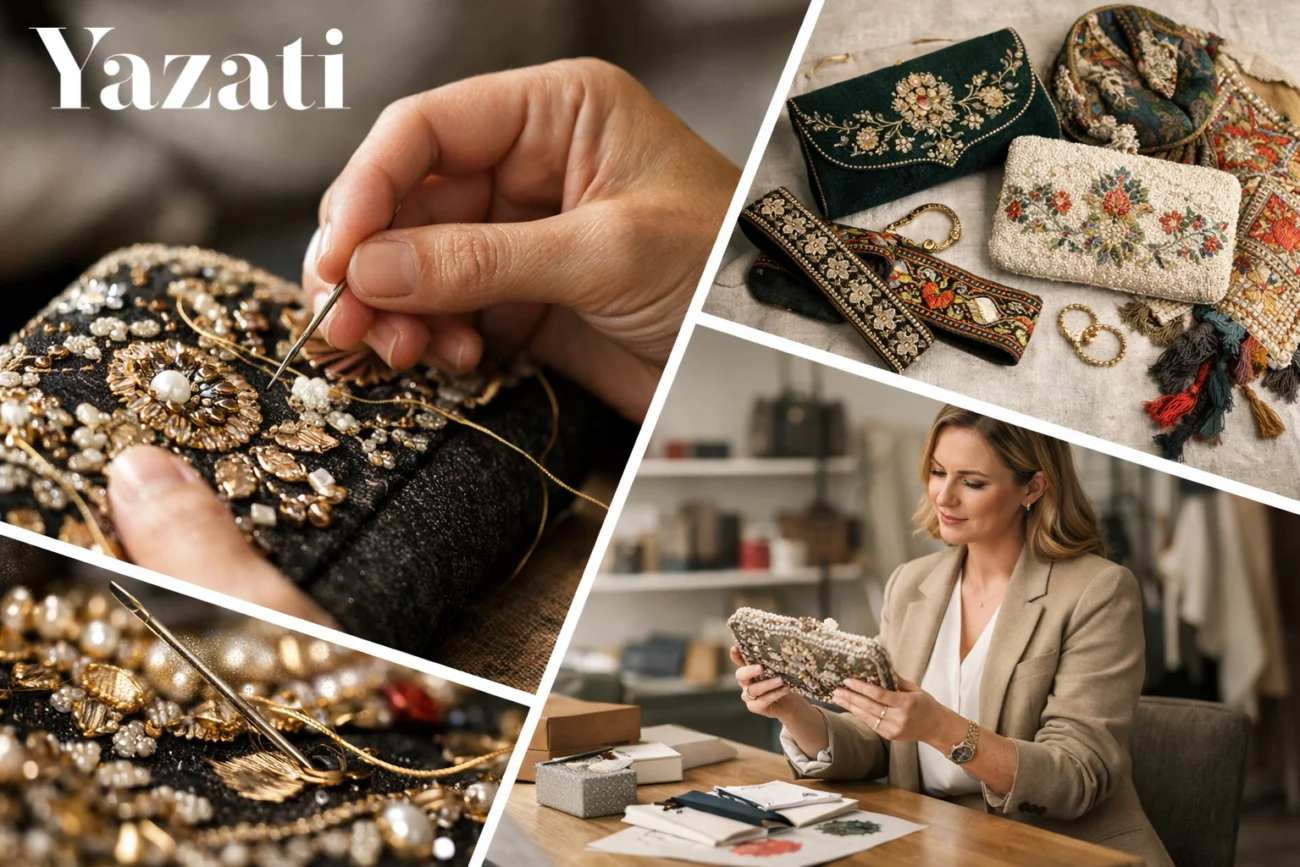
Introduction to Hand-Embroidered Accessories Market
The global fashion industry is changing fast, and one trend that’s catching serious attention is hand-embroidered accessories. If you’re wondering why importers should focus on hand-embroidered accessories, the answer lies in rising consumer demand, uniqueness, and profitability.
Hand-embroidered products are no longer just traditional crafts—they’re now seen as premium, artistic, and sustainable fashion items. From bags and scarves to belts and jewelry, these accessories are gaining popularity across global markets.
Definition and Scope of Hand-Embroidered Products
Hand-embroidered accessories are items decorated using needle and thread by skilled artisans. Unlike machine-made products, each piece is unique. These products include:
- Handbags and clutches
- Shawls and scarves
- Footwear and belts
- Jewelry and decorative items
The scope is vast, and importers can tap into multiple product categories depending on their target market.
Growing Global Demand for Artisan Goods
Consumers today are moving away from mass-produced goods. Instead, they prefer products that tell a story. Artisan goods, especially hand-embroidered ones, offer authenticity and cultural richness.
This growing demand is one of the strongest reasons why importers should focus on hand-embroidered accessories.
The Rising Popularity of Sustainable Fashion
Sustainability is no longer optional—it’s essential. Buyers are becoming more aware of environmental and ethical issues.
Consumer Shift Toward Ethical Products
Modern consumers prefer brands that care about:
- Fair wages
- Ethical sourcing
- Low environmental impact
Hand-embroidered accessories often meet all these criteria, making them highly desirable.
Eco-Friendly Production Benefits
These products typically use:
- Natural fibers
- Minimal machinery
- Low energy consumption
This makes them environmentally friendly, giving importers a strong selling point.
Unique Selling Proposition of Hand-Embroidered Accessories
One major advantage is uniqueness. No two pieces are exactly the same.
Craftsmanship and Cultural Value
Each item reflects the culture and tradition of its origin. This adds emotional and artistic value, which customers appreciate.
Limited Edition Appeal
Because these products are handmade, they are naturally limited in quantity. This scarcity increases their desirability and allows importers to position them as exclusive items.
High Profit Margins for Importers
If you’re thinking about profitability, this is where things get exciting.
Cost vs Retail Value
Hand-embroidered accessories are often produced in regions with lower labor costs. However, they are sold in international markets at premium prices.
This creates a significant profit margin for importers.
Premium Pricing Strategies
Importers can use strategies like:
- Branding as luxury or artisan goods
- Highlighting handmade craftsmanship
- Emphasizing sustainability
These approaches justify higher pricing and increase revenue.
Expanding Market Opportunities
The market for handmade products is growing rapidly.
E-commerce Growth and Global Reach
Online platforms allow importers to:
- Reach international customers
- Showcase product stories
- Sell directly to consumers
This reduces dependency on traditional retail channels.
Niche and Luxury Market Segments
Hand-embroidered accessories fit perfectly into:
- Luxury fashion markets
- Bohemian and ethnic fashion niches
- Gift and souvenir segments
These niches are often less competitive but highly profitable.
Supporting Local Artisans and Communities
Importing these products isn’t just about business—it’s also about impact.
Economic Empowerment
By sourcing from artisan communities, importers help:
- Create jobs
- Preserve traditional skills
- Improve living standards
Social Impact Branding
Consumers love brands with a purpose. Importers can build strong brand identities by showcasing their contribution to artisan communities.
Customization and Personalization Trends
Customization is a huge trend in today’s market.
Demand for Unique Designs
Customers want products that reflect their personality. Hand-embroidered accessories can be customized easily, making them highly attractive.
Opportunities for Private Labeling
Importers can:
- Create exclusive designs
- Add brand-specific elements
- Offer limited collections
This helps in building a strong brand presence.
Durability and Product Longevity
Quality is another major advantage.
Quality Materials and Techniques
These products are often made using high-quality materials and traditional techniques, ensuring durability.
Customer Satisfaction and Retention
Durable products lead to:
- Higher customer satisfaction
- Repeat purchases
- Positive word-of-mouth
Challenges and How to Overcome Them
Like any business, there are challenges.
Supply Chain Issues
Handmade products take time to produce. Delays can occur due to:
- Limited production capacity
- Seasonal availability
Solution: Build strong relationships with suppliers and plan inventory in advance.
Quality Control Measures
Since products are handmade, consistency can vary.
Solution:
- Set clear quality standards
- Conduct regular inspections
- Work with experienced artisans
Marketing Strategies for Importers
To succeed, importers need effective marketing.
Storytelling and Branding
Highlight:
- The artisan’s story
- Cultural significance
- Handmade process
This creates emotional connections with customers.
Leveraging Social Media
Platforms like Instagram and Pinterest are perfect for showcasing:
- Visual appeal
- Behind-the-scenes processes
- Customer testimonials
Future Trends in Hand-Embroidered Accessories
The future looks bright.
Integration with Modern Fashion
Designers are blending traditional embroidery with modern styles, making these products more appealing to younger audiences.
Technology and Artisan Collaboration
Digital tools are helping artisans:
- Create new designs
- Connect with global buyers
- Improve efficiency
FAQs
1. Why importers should focus on hand-embroidered accessories?
Because they offer high profit margins, growing demand, and unique products that stand out in the market.
2. Are hand-embroidered accessories profitable?
Yes, they can be sold at premium prices while being sourced at relatively low costs.
3. What types of products are included?
Bags, scarves, belts, footwear, and jewelry are common examples.
4. Is there a strong global demand for these products?
Yes, especially in markets that value sustainability and uniqueness.
5. What are the main challenges for importers?
Supply chain delays and quality consistency, which can be managed with proper planning.
6. How can importers market these products effectively?
By using storytelling, social media, and emphasizing craftsmanship and sustainability.
Conclusion
Understanding why importers should focus on hand-embroidered accessories can open doors to a highly profitable and meaningful business opportunity. These products combine tradition, sustainability, and uniqueness—qualities that modern consumers truly value.
From high profit margins to strong market demand, the benefits are clear. While challenges exist, they can be managed with the right strategies. Importers who act now can position themselves ahead of the curve and build a brand that is not only profitable but also impactful.
✨ Discover Global Sourcing Excellence with Netyex ✨
Netyex is your trusted B2B sourcing partner, connecting international buyers with India’s finest manufacturers and curated product lines—from handicrafts and home décor to kitchenware, textiles, hospitality essentials, and more. With verified suppliers and end-to-end support, we make global procurement seamless, reliable, and efficient.
👉 Elevate your sourcing experience—explore Netyex today.
📦 Bulk orders & customisation | 🌍 Worldwide delivery | 🤝 Trusted by global buyers
Visit Netyex to source premium Indian products with confidence.