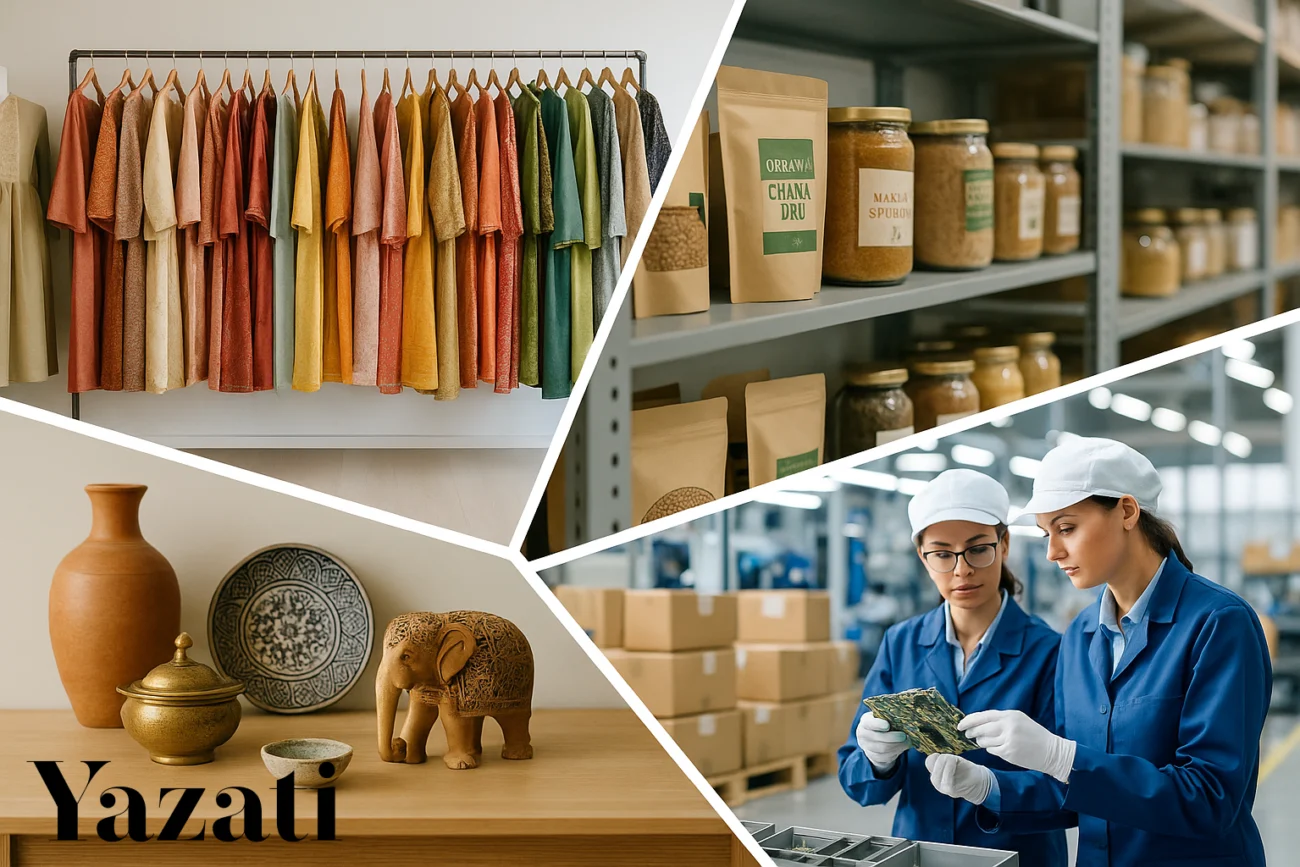
Introduction: India’s Rising Role in Global Sourcing
Over the past decade, India has steadily transformed from a regional manufacturing hub into a global sourcing powerhouse. With a unique combination of skilled labor, cost-effective production, and government-backed initiatives such as Make in India, the country is becoming a preferred choice for importers worldwide.
In today’s dynamic global trade landscape, businesses are no longer relying on a single product category or supplier. Instead, many importers are embracing multi-category sourcing from India—a strategy that not only diversifies their supply chain but also enhances efficiency, resilience, and profitability.
This approach allows importers to tap into India’s wide range of industries—from textiles and handicrafts to engineering goods and organic produce—while benefiting from competitive prices and consistent quality.
Understanding Multi-Category Sourcing
What Is Multi-Category Sourcing?
Multi-category sourcing refers to the practice of procuring products from multiple industries or categories within a single country or region. For instance, an importer may source home décor, fashion accessories, and organic foods—all from India—rather than dealing with different suppliers across various countries.
This holistic approach streamlines logistics, fosters supplier relationships, and minimizes risks related to geopolitical or regional disruptions.
How It Differs from Traditional Single-Category Sourcing
Unlike single-category sourcing, which limits importers to one product range or industry, multi-category sourcing encourages diversification. It allows businesses to create broader product portfolios and cater to evolving consumer demands without over-dependence on one market segment.
By adopting this model in India, importers can enjoy cross-category synergies, shared logistics, and the flexibility to experiment with different product lines—all under one sourcing umbrella.
Key Advantages of Multi-Category Sourcing from India
1. Diversification of Supply Chain
In a post-pandemic world, diversification has become a business necessity. Importers who rely on a single country or product line face higher risks from supply chain disruptions. India offers unparalleled diversity—whether it’s handcrafted goods from Rajasthan, textiles from Tamil Nadu, or engineering components from Pune.
By sourcing across categories, importers can spread risks and ensure consistent supply flow, even during global uncertainties.
2. Cost Efficiency and Competitive Pricing
India’s labor costs and raw material availability offer substantial savings compared to Western markets and even other Asian competitors. Multi-category sourcing amplifies these savings by consolidating shipments and reducing per-unit logistics costs.
Moreover, India’s currency stability and supportive export policies make pricing predictable—an essential factor for long-term sourcing partnerships.
3. High-Quality Production Across Industries
Indian manufacturers have made significant strides in technology, quality assurance, and certification compliance. From ISO-certified factories to eco-friendly production units, quality standards have risen dramatically.
For example, the Indian textile industry now produces world-class fabrics and garments meeting international sustainability standards like OEKO-TEX and GOTS.
4. Reduced Dependency on a Single Market
Diversifying sourcing across multiple Indian categories allows importers to move away from overreliance on Chinese suppliers—a strategy many global companies are now pursuing. This not only reduces exposure to trade tensions but also improves brand reputation by showcasing ethically sourced, handcrafted, or sustainable products.
5. Access to India’s Specialized Clusters
India’s regional industrial clusters are a unique advantage. Each state or city specializes in specific product categories:
- Moradabad (U.P.) – Metal handicrafts and home décor
- Jaipur (Rajasthan) – Textiles and gemstone jewelry
- Tirupur (Tamil Nadu) – Knitwear and apparel
- Kutch (Gujarat) – Embroidered textiles and artisanal crafts
These clusters ensure efficiency, innovation, and cultural authenticity in every product.
Leading Product Categories to Source from India
Textiles and Apparel
India is the world’s second-largest textile exporter, known for its cotton, silk, and synthetic fabrics. Importers can source everything from eco-friendly fabrics to designer apparel, ensuring variety and quality under one roof.
Handicrafts and Home Décor
With over 7 million artisans, India’s handicraft sector produces exquisite items made of wood, metal, glass, and ceramics. This sector is ideal for lifestyle brands looking for authentic, handcrafted, and sustainable products.
Leather Goods and Accessories
Indian leather exporters supply premium bags, belts, and footwear to brands in Europe and the US. Many manufacturers now use vegetable-tanned leather, appealing to eco-conscious consumers.
Engineering Goods and Automotive Components
India’s engineering sector is one of its fastest-growing export segments. From precision tools to automotive parts, Indian manufacturers offer technologically advanced and competitively priced solutions.
Organic Food, Spices, and Agro Products
India leads the world in the production of organic spices, tea, and pulses. Importers can benefit from its traceable and certified organic supply chains, catering to the rising demand for clean-label foods.
Comparing India with Other Global Sourcing Hubs
India vs. China
While China remains dominant in mass manufacturing, India’s strength lies in diversity, customization, and ethical production. Indian suppliers are more flexible with smaller batch orders and custom designs.
India vs. Vietnam and Bangladesh
Vietnam and Bangladesh excel in apparel manufacturing, but India offers multi-industry depth, from engineering to handicrafts—making it a one-stop sourcing destination.
India vs. Latin American Markets
Latin America offers proximity to North American markets, but India wins on cost competitiveness, skilled manpower, and raw material access.
The Role of Government Policies and Trade Agreements
Make in India and Production-Linked Incentives (PLI)
India’s Make in India and PLI schemes encourage global investment and manufacturing expansion, creating favorable conditions for importers.
Export Promotion Councils and Trade Fairs
The Export Promotion Councils (EPCs) and events like the India International Trade Fair (IITF) help connect global buyers with verified Indian exporters.
Bilateral and Regional Trade Agreements
India’s trade pacts with the EU, UAE, and ASEAN nations further streamline export documentation and tariff benefits.
Challenges in Multi-Category Sourcing from India
Quality Control and Standardization
While most Indian suppliers meet international standards, importers must implement robust quality checks and certifications to ensure consistency.
Logistics and Infrastructure Bottlenecks
Despite improvements in ports and highways, logistics can still be a challenge in remote areas. Partnering with local freight experts can mitigate delays.
Communication and Cultural Gaps
Differences in communication styles and timelines can lead to misunderstandings. Regular virtual meetings and clear documentation help maintain alignment.
Strategies to Succeed in Multi-Category Sourcing
Partnering with Local Sourcing Agents
Experienced Indian sourcing agents can manage supplier vetting, price negotiation, and logistics coordination across product categories.
Leveraging Technology and B2B Marketplaces
Platforms like IndiaMART, TradeIndia, and Alibaba India help importers connect with verified suppliers and monitor production digitally.
Conducting Supplier Audits and Certifications
Investing in third-party audits (like SGS or TÜV) ensures compliance and builds long-term supplier trust.
Case Studies: Global Importers Benefiting from Indian Multi-Category Sourcing
Example 1: European Home Goods Retailer
A UK-based retailer diversified its portfolio by sourcing textiles, candles, and kitchenware from India, cutting logistics costs by 18% and boosting profit margins.
Example 2: US-Based Lifestyle Brand
An American brand partnered with Indian artisans to produce sustainable home décor and fashion accessories—enhancing its brand image and sales growth.
Future Outlook: India’s Evolving Manufacturing Ecosystem
Adoption of Sustainable and Ethical Production
India is investing heavily in green manufacturing, renewable energy, and waste management to meet global sustainability expectations.
Growth of MSMEs and Startups in Exports
Small and medium enterprises (MSMEs) are driving innovation and customization in exports, offering unique, niche, and scalable products across industries.
FAQs about Multi-Category Sourcing from India
1. What makes India ideal for multi-category sourcing?
India offers unmatched diversity, cost-efficiency, and skilled manufacturing across multiple sectors, making it ideal for importers seeking product variety.
2. Is it safe to source multiple product types from one country?
Yes. Multi-category sourcing in India diversifies your risk while simplifying logistics and supplier management.
3. How can importers verify Indian suppliers?
Use government-verified portals like DGFT, FIEO, or hire sourcing agents to conduct audits and background checks.
4. Are Indian products compliant with international standards?
Most exporters comply with ISO, CE, and other global standards. Always verify certifications before placing bulk orders.
5. How long does it take to establish supplier relationships?
Typically 2–3 months, depending on product complexity and negotiation processes.
6. What are the best cities for sourcing in India?
Delhi, Mumbai, Jaipur, Moradabad, and Coimbatore are top sourcing hubs with diverse industries.
Conclusion: Why Now Is the Time to Source from India
In a rapidly evolving global market, multi-category sourcing from India offers importers an edge in flexibility, sustainability, and profitability. With diverse manufacturing capabilities, government support, and improving infrastructure, India stands ready to become the next global sourcing epicenter.
By diversifying across product categories—from apparel to engineering goods—importers can build resilient supply chains that not only survive but thrive in the modern trade ecosystem.
✨ Discover Global Sourcing Excellence with Netyex ✨
Netyex is your trusted B2B sourcing partner, connecting international buyers with India’s finest manufacturers and curated product lines—from handicrafts and home décor to kitchenware, textiles, hospitality essentials, and more. With verified suppliers and end-to-end support, we make global procurement seamless, reliable, and efficient.
👉 Elevate your sourcing experience—explore Netyex today.
📦 Bulk orders & customisation | 🌍 Worldwide delivery | 🤝 Trusted by global buyers
Visit Netyex to source premium Indian products with confidence.