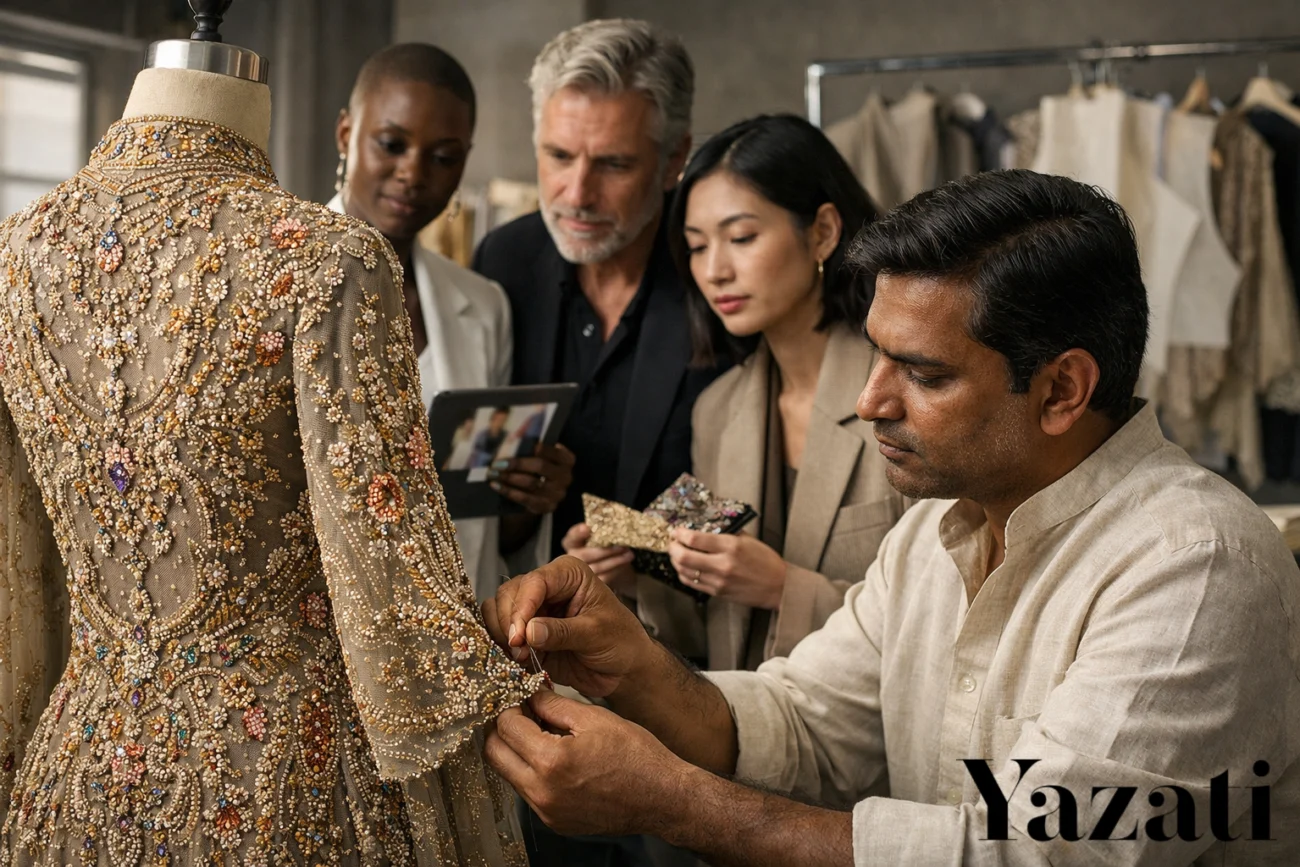
9 Powerful Reasons Behind the Global Fashion Takeover
Fashion is constantly evolving. Trends rise, fade, and return in new forms. Yet one artistic tradition has not just survived—it has conquered the global stage. Why Indian Beadwork and Embroidery Dominate Global Runways is a question rooted in centuries of craftsmanship, culture, and creativity.
From Paris couture shows to New York Fashion Week, intricate hand-beading and embroidery inspired by Indian artisans appear again and again. Designers across the world draw from these techniques to create garments that shimmer, tell stories, and celebrate heritage. But what makes Indian beadwork and embroidery so powerful?
Let’s explore the nine compelling reasons behind this remarkable global dominance.
The Rich History of Indian Textile Arts
India’s embroidery traditions date back thousands of years. Ancient trade routes carried Indian textiles to Rome, Persia, and Southeast Asia. Even then, the world admired the precision and beauty of Indian craftsmanship.
During the Mughal era, embroidery reached royal heights. Elaborate garments decorated with gold threads and gemstones became symbols of luxury and power. Over time, regional techniques developed across India, each with unique identity and style.
Zardozi Embroidery
Zardozi originated in royal courts. It uses metallic threads—often gold or silver—to create raised, textured designs. The process is slow and detailed, but the result? Pure opulence. Today, high-fashion designers reinterpret Zardozi in evening gowns and couture jackets.
Aari and Resham Work
Aari embroidery uses a hooked needle to create fine chain stitches. Resham work uses silk threads for delicate detailing. Both techniques are light yet intricate, making them perfect for modern silhouettes.
Mirror Work and Bead Embellishments
From Gujarat and Rajasthan comes mirror work, also called shisha embroidery. Tiny mirrors and colorful beads reflect light beautifully, making garments sparkle under runway lights.
This rich heritage explains why Indian embroidery continues to inspire global fashion houses.
Craftsmanship That Takes Months to Perfect
Unlike mass-produced fashion, Indian beadwork is intensely handmade. Each bead is stitched individually. Patterns are drawn by hand. Layers are built stitch by stitch.
Some couture pieces require weeks—or even months—of continuous labor.
The Role of Skilled Artisans
Artisans learn these techniques from their parents and grandparents. Skills pass down through generations. This knowledge cannot be rushed or automated.
Their expertise ensures flawless execution, even on complex designs.
Time-Intensive Techniques
Hand-beading involves precision placement to create depth and dimension. Embroidery often includes layering metallic threads, sequins, silk, and beads in a single design.
The result is clothing that feels alive—textured, dimensional, and luxurious.
Luxury Fashion Houses Embrace Indian Techniques
Global luxury brands regularly collaborate with Indian artisans. Many couture collections incorporate traditional embroidery styles adapted to modern aesthetics.
From Paris to Milan, designers recognize the unmatched beauty of Indian craftsmanship. These details elevate garments from stylish to spectacular.
Couture and High Fashion Shows
On international runways, hand-embroidered capes, gowns, and jackets steal the spotlight. The shimmer of beadwork catches camera flashes. Audiences gasp at the complexity.
Why Indian Beadwork and Embroidery Dominate Global Runways becomes obvious when such pieces command global attention season after season.
Sustainability and Slow Fashion Movement
In a world overwhelmed by fast fashion, handmade embroidery represents something rare: time, care, and intention.
Consumers today value sustainability. Handcrafted garments last longer and carry emotional meaning.
Handcrafted vs Machine-Made
Machine embroidery may be fast, but it lacks soul. Hand embroidery, on the other hand, has subtle irregularities that make each piece unique.
This individuality aligns perfectly with the growing slow fashion movement.
Cultural Storytelling Through Thread and Beads
Every motif tells a story. Flowers may symbolize growth. Peacocks represent beauty and pride. Paisley patterns symbolize fertility and life.
Embroidery becomes a language—one spoken without words.
Regional Identity in Fashion
Each Indian state has distinct techniques. For example:
- Punjab: Phulkari floral patterns
- Gujarat: Mirror and bead embellishments
- Kashmir: Kashida embroidery
- Rajasthan: Gota patti detailing
When designers incorporate these techniques, they celebrate not just fashion—but culture.
Bollywood and Celebrity Influence
Global exposure increased dramatically through film and celebrity fashion.
Bollywood actresses regularly wear heavily embroidered couture at international events. As global media shares these images, designers worldwide take note.
Soon, the influence spreads into Western fashion markets.
Modern Innovation Meets Tradition
Indian embroidery has adapted to modern design. Today’s garments feature traditional techniques on contemporary silhouettes.
Think embroidered bomber jackets, embellished evening blazers, and bead-encrusted gowns with minimalist cuts.
Fusion Fashion Trends
East meets West in breathtaking ways. Traditional beadwork enhances modern tailoring. Silk threads decorate power suits. Cultural boundaries dissolve.
This fusion keeps embroidery relevant and exciting.
Economic Impact on India’s Fashion Industry
India’s embroidery sector supports millions of artisans. Export markets value handcrafted textiles highly.
Global demand boosts local economies and sustains traditional skills.
As fashion houses increasingly invest in ethical production, artisan communities benefit.
Social Media and Digital Globalization
Instagram and fashion influencers amplify visual appeal. Intricate beadwork photographs beautifully.
Close-up images reveal texture and shine. Viral posts drive global interest.
Digital platforms allow small artisan workshops to reach international buyers directly.
The Emotional Value of Handmade Fashion
Handmade garments carry emotional weight. When someone wears a hand-embroidered piece, they wear hours of dedication.
This emotional connection resonates deeply in luxury markets.
Why Indian Beadwork and Embroidery Dominate Global Runways in the 21st Century
The dominance is not accidental. It is built on:
- Centuries of heritage
- Unmatched craftsmanship
- Cultural storytelling
- Sustainability appeal
- Global designer collaborations
- Celebrity endorsement
- Visual impact on digital platforms
- Economic strength
- Adaptability to modern trends
These factors combine to create unstoppable global influence.
Frequently Asked Questions (FAQs)
1. What makes Indian beadwork different from other embroidery styles?
Indian beadwork emphasizes handcrafting, layering, and detailed storytelling through symbolic motifs.
2. Is Indian embroidery sustainable?
Yes. It supports artisan communities and promotes slow fashion practices.
3. Why do luxury designers use Indian embroidery?
Because it offers unmatched intricacy, texture, and cultural depth that machine techniques cannot replicate.
4. How long does it take to create a heavily embroidered garment?
It can take several weeks to months, depending on complexity.
5. Which Indian embroidery style is most popular globally?
Zardozi and Aari embroidery are especially popular in couture fashion.
6. Can Indian beadwork be adapted to modern fashion?
Absolutely. Designers frequently combine traditional techniques with modern silhouettes.
7. Is Indian embroidery expensive?
High-quality hand embroidery can be costly due to labor intensity, but it offers exceptional durability and artistry.
Conclusion
The global fashion world thrives on innovation—but it also reveres heritage. Why Indian Beadwork and Embroidery Dominate Global Runways is ultimately about excellence rooted in tradition.
These techniques offer what modern fashion often lacks: authenticity, craftsmanship, and cultural depth. Designers across continents recognize this value. Consumers feel it. Artisans embody it.
From royal courts centuries ago to today’s glittering fashion weeks, Indian beadwork continues to shine—brighter than ever.
And honestly? It’s not just a trend.
It’s timeless.
✨ Discover Global Sourcing Excellence with Netyex ✨
Netyex is your trusted B2B sourcing partner, connecting international buyers with India’s finest manufacturers and curated product lines—from handicrafts and home décor to kitchenware, textiles, hospitality essentials, and more. With verified suppliers and end-to-end support, we make global procurement seamless, reliable, and efficient.
👉 Elevate your sourcing experience—explore Netyex today.
📦 Bulk orders & customisation | 🌍 Worldwide delivery | 🤝 Trusted by global buyers
Visit Netyex to source premium Indian products with confidence.