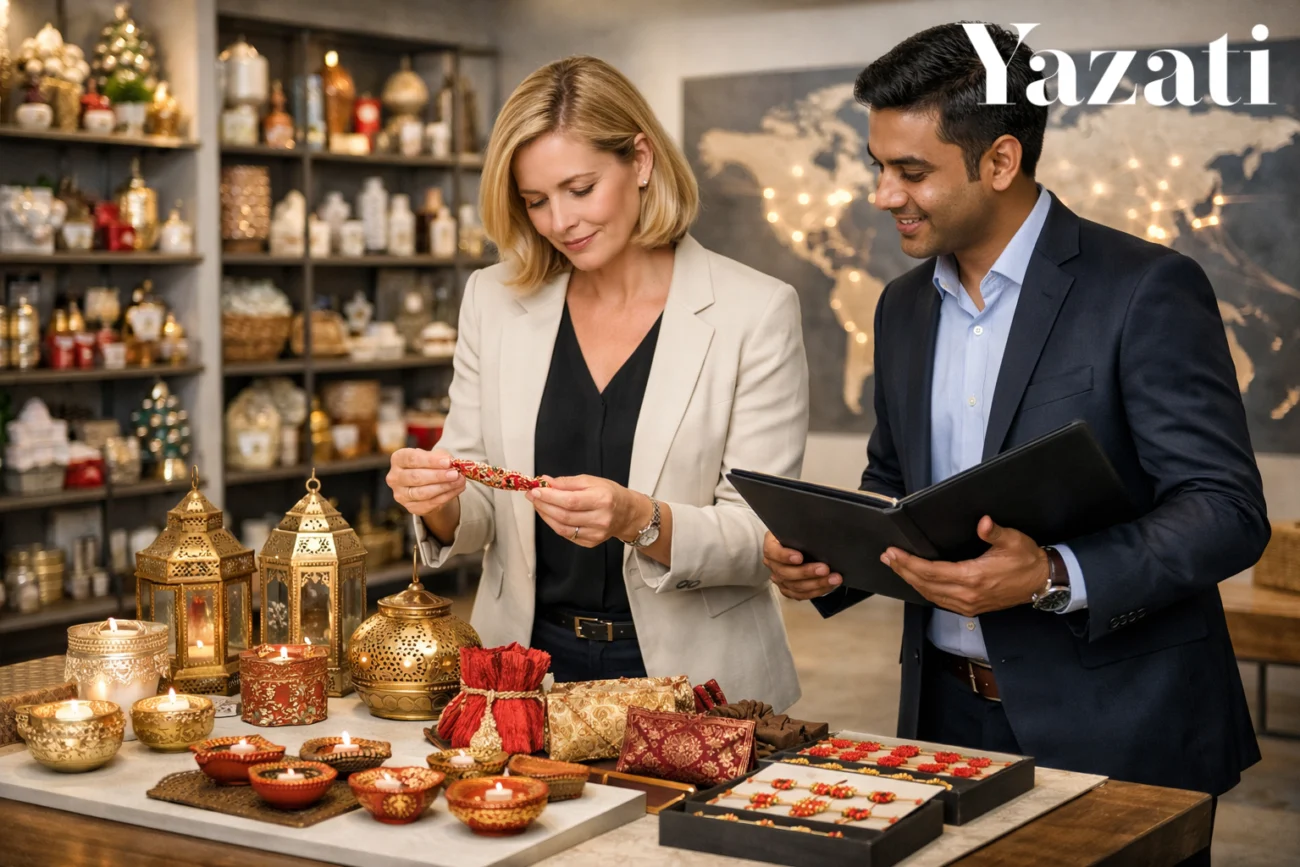
Understanding the Cultural Foundation of Indian Festive Crafts
Indian festive crafts are rooted in centuries of tradition. Each craft tells a story—of faith, celebration, craftsmanship, and community.
The Cultural Diversity That Fuels Creativity
India celebrates dozens of festivals across religions and regions:
- Diwali (Festival of Lights)
- Eid
- Christmas
- Navratri
- Pongal
- Onam
- Raksha Bandhan
- Durga Puja
Each celebration requires decorations, garments, gift items, and ritual materials. As a result, artisans produce a wide variety of crafts year-round.
Handmade Heritage and Artisanal Skills
Indian craftsmen often inherit their skills across generations. Whether it’s:
- Madhubani painting
- Blue pottery
- Brass lamps
- Handwoven silk textiles
- Terracotta idols
These crafts are handmade, sustainable, and culturally authentic—qualities global buyers deeply value today.
Why Indian Festive Crafts Have Year-Round Export Potential in Global Markets
Now let’s directly address the key question: Why Indian Festive Crafts Have Year-Round Export Potential beyond India’s festive calendar.
1. Global Diaspora Creates Continuous Demand
India has one of the largest diasporas in the world. Millions of Indians living in:
- USA
- UK
- Canada
- Australia
- Middle East
celebrate Indian festivals abroad. They actively seek authentic festive décor and puja items from India.
Because these communities celebrate different festivals at different times, demand remains steady throughout the year.
2. Cross-Cultural Appeal of Indian Aesthetics
Indian festive crafts are not purchased only for religious purposes anymore. Their:
- Bright colors
- Intricate patterns
- Eco-friendly materials
- Handmade charm
make them popular in:
- Bohemian interior décor
- Wedding decorations
- Boutique hotels
- Cultural events
- Fusion fashion markets
A brass diya can be sold as a spiritual item—or as a luxury candle holder in Europe. That flexibility fuels year-round exports.
3. Western Holiday Integration
Many Indian crafts align perfectly with global celebrations:
| Indian Craft | Used For Globally |
|---|---|
| Diyas | Christmas & fall décor |
| Handcrafted lanterns | Halloween & Ramadan |
| Embroidered textiles | Thanksgiving table settings |
| Decorative idols | Spiritual gift items |
Exporters smartly rebrand products according to international festive calendars.
Product Categories That Drive Continuous Export Demand
Let’s explore the major craft categories that ensure consistent export performance.
Handcrafted Home Décor
- Wall hangings
- Lanterns
- Candle holders
- Brass artifacts
- Wooden carvings
Home décor trends change often, but handcrafted ethnic products remain timeless.
Textiles and Apparel
Indian festive textiles like:
- Banarasi silk
- Phulkari embroidery
- Kalamkari prints
- Block-printed cotton
are exported as scarves, table runners, cushion covers, and fashion garments.
Eco-Friendly Decorative Items
Sustainability is now a global priority. Indian festive crafts often use:
- Clay
- Bamboo
- Jute
- Natural dyes
This makes them attractive in eco-conscious markets like Germany and Scandinavia.
Seasonal Rotation Creates Continuous Sales Cycles
One reason why Indian festive crafts maintain export momentum is seasonal diversification.
Indian Festivals Spread Across the Calendar
- January: Pongal, Makar Sankranti
- March: Holi
- April–May: Eid
- August: Rakhi
- October–November: Diwali
- December: Christmas
When exports target both Indian and international buyers, production never stops.
Global Retail Buying Cycles
International retailers typically plan inventory 6–9 months in advance. This means Indian exporters receive orders continuously throughout the year—even for a single festival.
E-Commerce Has Expanded Market Reach
Digital platforms have changed the game entirely.
Online Marketplaces Drive Small-Batch Exports
Platforms like:
- Etsy
- Amazon Handmade
- Shopify stores
allow artisans and exporters to sell directly to global consumers.
This removes the dependency on large seasonal wholesale orders.
Social Media Marketing Boosts Festive Sales
Instagram, Pinterest, and TikTok have made Indian festive aesthetics trendy worldwide. Influencers showcase:
- Diwali home styling
- Indian wedding décor
- Ethnic-themed parties
This drives impulse buying even outside traditional festival seasons.
Rising Demand for Authentic and Handmade Products
Today’s global consumer wants:
- Storytelling
- Ethical sourcing
- Handmade authenticity
- Cultural depth
Indian festive crafts tick all these boxes.
Mass-produced décor lacks emotional connection. But handcrafted Indian items offer uniqueness and human touch—qualities buyers are willing to pay premium prices for.
Government Support and Export Promotion
The Indian government has implemented multiple initiatives to support handicraft exports:
- Export Promotion Councils
- GI (Geographical Indication) tagging
- MSME schemes
- Financial assistance for artisans
- Trade fairs and international exhibitions
Such policies make exporting easier and more profitable.
Customization Increases Global Appeal
Modern exporters now adapt traditional designs for international markets.
Examples:
- Neutral-colored diyas for Scandinavian interiors
- Minimalist brass décor for modern homes
- Customized gift hampers for corporate clients
- Personalized festive kits for weddings
This blend of tradition and innovation keeps products relevant year-round.
High Profit Margins Due to Handcrafted Value
Indian festive crafts offer:
- Low production costs
- High perceived luxury value
- Premium pricing in Western markets
For example:
A handcrafted brass diya costing $3–5 in India can retail for $25–40 internationally.
That margin encourages continuous export activity.
Growing Popularity of Spiritual and Wellness Markets
Yoga, meditation, and holistic living have grown globally. Indian festive crafts such as:
- Incense holders
- Brass lamps
- Prayer beads
- Decorative idols
fit perfectly into the spiritual lifestyle market.
This market operates year-round, not just during festivals.
Corporate Gifting and Event Industry Boost Sales
Indian festive crafts are widely used for:
- Corporate gifting
- Wedding favors
- Cultural conferences
- Destination weddings
Many companies now prefer eco-friendly handmade gifts over plastic promotional items.
This steady B2B demand adds another layer of export potential.
Challenges Exporters Should Consider
While the opportunity is strong, exporters must manage:
- Quality consistency
- Packaging standards
- International shipping costs
- Customs regulations
- Cultural sensitivity in design
Professional branding and certification can overcome these challenges.
Future Trends Supporting Year-Round Export Growth
The future looks promising due to:
- Increased global interest in ethnic décor
- Expansion of cross-border e-commerce
- Sustainable product demand
- Rising disposable income in emerging markets
- Luxury handcrafted home styling trends
Indian festive crafts are positioned perfectly to ride these waves.
Frequently Asked Questions (FAQs)
1. Why Indian Festive Crafts Have Year-Round Export Potential in Western markets?
Because they are versatile décor items, not limited to religious use. Many products can be rebranded for multiple global festivals and lifestyle categories.
2. Which countries import the most Indian festive crafts?
USA, UK, UAE, Canada, Australia, and Germany are major importers.
3. Are Indian festive crafts profitable for small exporters?
Yes. Low production costs and high retail value create strong profit margins.
4. What are the best-selling Indian festive craft items globally?
Diyas, brass décor, embroidered textiles, lanterns, incense holders, and handcrafted wall art.
5. How does e-commerce support year-round exports?
Online marketplaces allow continuous direct-to-consumer sales without seasonal wholesale dependency.
6. Are Indian festive crafts considered sustainable products?
Many are made using natural materials like clay, bamboo, jute, and organic dyes, making them eco-friendly.
Conclusion
So, why Indian festive crafts have year-round export potential is no longer a mystery. It’s a combination of cultural richness, global diaspora demand, design adaptability, sustainability, e-commerce growth, and rising appreciation for handmade artistry.
These crafts are more than decorative objects—they represent heritage, craftsmanship, and emotional storytelling. And in today’s global marketplace, authenticity sells.
For exporters willing to innovate while preserving tradition, Indian festive crafts offer not just seasonal success—but continuous global opportunity.
✨ Discover Global Sourcing Excellence with Netyex ✨
Netyex is your trusted B2B sourcing partner, connecting international buyers with India’s finest manufacturers and curated product lines—from handicrafts and home décor to kitchenware, textiles, hospitality essentials, and more. With verified suppliers and end-to-end support, we make global procurement seamless, reliable, and efficient.
👉 Elevate your sourcing experience—explore Netyex today.
📦 Bulk orders & customisation | 🌍 Worldwide delivery | 🤝 Trusted by global buyers
Visit Netyex to source premium Indian products with confidence.