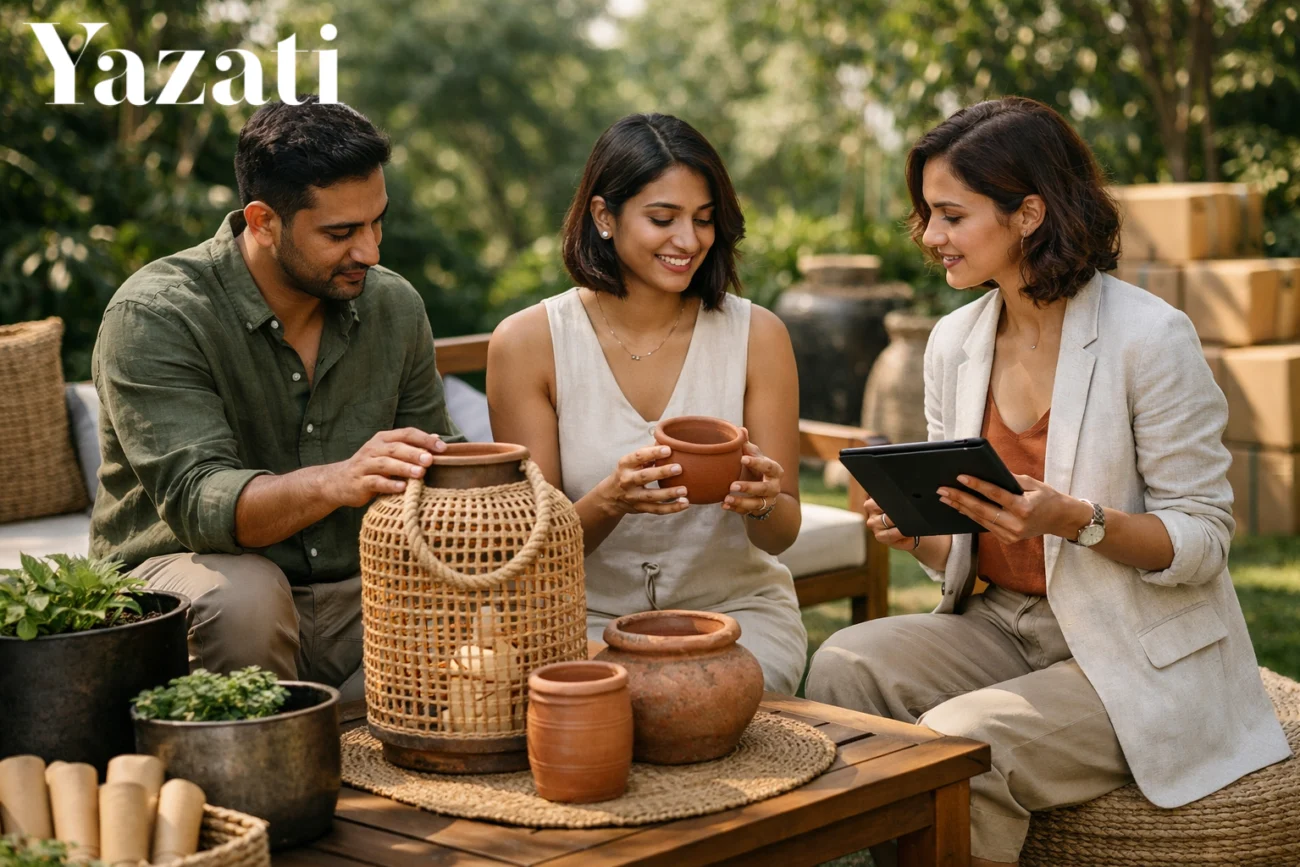
Introduction: Why Indian Garden Décor Appeals to Sustainability-Focused Brands
Why Indian Garden Décor Appeals to Sustainability-Focused Brands is more than just a trend-based discussion—it reflects a global shift toward ethical production, conscious consumption, and environmentally responsible business practices. Across industries, brands are moving away from mass-produced, carbon-heavy décor and embracing sustainable alternatives that align with their values.
Indian garden décor stands out because it blends traditional craftsmanship, natural materials, low-impact production methods, and cultural authenticity. Sustainability-focused brands are drawn to its handcrafted appeal, renewable resources, and community-centered production systems.
Today’s customers expect more than beautiful products. They want transparency, ethical sourcing, and environmental accountability. Indian garden décor checks all these boxes—offering aesthetic charm while supporting sustainable development.
Let’s explore why Indian Garden Décor Appeals to Sustainability-Focused Brands and how it supports long-term ecological and ethical goals.
1. Handcrafted Production Reduces Carbon Footprint
One of the strongest reasons why Indian Garden Décor Appeals to Sustainability-Focused Brands is its handcrafted nature.
Unlike factory-made products that rely heavily on machinery, fuel, and large-scale logistics, Indian garden décor is often handmade by skilled artisans using minimal energy. Hand tools, traditional techniques, and local workshops dramatically reduce emissions.
Low-Energy Craftsmanship
Many rural craft clusters use:
- Manual carving techniques
- Sun-drying methods
- Hand-polishing processes
- Traditional kiln firing with controlled fuel use
Because production is not heavily industrialized, the overall environmental impact remains significantly lower.
Localized Production Ecosystems
Most décor items are created within artisan communities, meaning:
- Fewer transportation layers
- Reduced industrial waste
- Smaller production batches
- Lower resource consumption
Sustainability-focused brands value this decentralized model because it aligns with slow production and conscious consumption principles.
2. Natural and Renewable Materials
Another major reason why Indian Garden Décor Appeals to Sustainability-Focused Brands is the use of natural, eco-friendly materials.
Indian garden décor commonly features:
- Terracotta
- Reclaimed wood
- Bamboo
- Stone
- Wrought iron
- Jute and natural fibers
Terracotta: Earth-Friendly and Biodegradable
Terracotta is made from natural clay, which is abundant and biodegradable. It does not release harmful chemicals and naturally decomposes over time.
Reclaimed Wood and Bamboo
Reclaimed wood prevents deforestation by reusing existing timber. Bamboo grows quickly and regenerates without the need for replanting, making it one of the most sustainable materials globally.
Brands focused on reducing environmental impact see these materials as powerful assets in their sustainability narrative.
3. Strong Alignment with Ethical Sourcing Standards
Modern sustainability-focused brands operate under strict sourcing guidelines. They must ensure:
- Fair wages
- Safe working conditions
- Transparent supply chains
- No exploitative labor
Indian garden décor production often takes place in artisan cooperatives and small family-run workshops. Many of these clusters follow fair-trade principles.
Empowering Rural Artisans
By sourcing Indian garden décor, brands contribute to:
- Employment stability
- Skill preservation
- Economic empowerment
- Gender inclusion (many craft sectors involve women artisans)
This human-centered production model directly aligns with corporate social responsibility goals.
4. Cultural Sustainability and Heritage Preservation
Sustainability is not just environmental—it is cultural too.
Indian garden décor often reflects centuries-old artistic traditions such as:
- Hand-carved stone sculptures
- Brass casting
- Blue pottery
- Wood lattice craftsmanship
- Traditional clay idol making
When brands choose these products, they help preserve intangible cultural heritage.
Preserving Traditional Skills
Mass production threatens many artisan communities. By integrating Indian garden décor into product lines, brands help ensure:
- Traditional skills are passed to future generations
- Craft villages remain economically viable
- Cultural identity is protected
For sustainability-focused brands, this cultural dimension adds authenticity and deeper impact.
5. Durability and Long Product Lifespan
Fast décor trends encourage disposable buying habits. Sustainability-focused brands aim to break this cycle.
Indian garden décor is often:
- Weather-resistant
- Structurally durable
- Designed for outdoor longevity
- Repairable rather than disposable
Stone and Metal Longevity
Stone statues and wrought iron pieces can last decades. Even terracotta, when properly sealed, performs well outdoors.
Long-lasting products reduce waste generation and replacement frequency—key sustainability metrics.
6. Minimal Packaging and Plastic Reduction
Indian artisan clusters frequently use simple packaging methods:
- Recycled paper
- Cardboard
- Natural fibers
- Straw padding
Unlike mass-produced décor that relies on plastic-heavy packaging, Indian garden décor often arrives with minimal synthetic materials.
Brands striving to reduce plastic waste see this as a significant advantage.
7. Support for Circular Economy Models
Why Indian Garden Décor Appeals to Sustainability-Focused Brands also ties into circular economy principles.
Repair, Reuse, Repurpose
Many décor pieces can be:
- Repainted
- Refinished
- Repurposed
- Recycled
For example:
- Broken terracotta can be crushed and reused in landscaping.
- Wooden décor can be refinished instead of discarded.
Circular design extends product life cycles and reduces landfill waste.
8. Strong Consumer Demand for Ethical Home Décor
Market research consistently shows rising demand for:
- Ethical sourcing
- Sustainable home design
- Artisan-crafted décor
- Eco-friendly outdoor living
Sustainability-focused brands respond to consumer values. Indian garden décor naturally supports:
- Story-driven marketing
- Transparency
- Authentic craftsmanship
Customers are more likely to trust brands that prioritize ethical sourcing and environmental responsibility.
9. Lower Industrial Waste Compared to Mass Manufacturing
Industrial décor manufacturing often generates:
- Chemical runoff
- High emissions
- Plastic waste
- Overproduction surplus
Indian garden décor production is typically small-scale and demand-driven. This reduces:
- Overstock
- Dead inventory
- Large-scale environmental damage
Sustainability-focused brands benefit from sourcing products that align with low-waste production models.
10. Adaptability to Modern Sustainable Design Trends
Indian garden décor is versatile and integrates well with modern sustainability trends such as:
- Biophilic design
- Minimalist landscaping
- Eco-resorts
- Sustainable hospitality spaces
Brands in hospitality, landscaping, eco-retail, and green architecture find Indian garden décor easy to incorporate into eco-conscious environments.
11. Transparent Craft Narratives Strengthen Brand Identity
Consumers want stories behind products.
Indian garden décor allows brands to highlight:
- Artisan backgrounds
- Craft traditions
- Regional heritage
- Ethical production methods
This storytelling builds emotional connections and strengthens brand loyalty.
12. Reduced Energy Dependency in Production
Traditional crafting processes depend more on human skill than electricity-intensive machinery.
This means:
- Lower carbon emissions
- Fewer fossil fuel dependencies
- Reduced industrial pollution
For brands measuring carbon footprints, this makes sourcing more sustainable.
Frequently Asked Questions (FAQs)
1. Why Indian Garden Décor Appeals to Sustainability-Focused Brands more than factory-made décor?
Because it uses natural materials, handcrafted production methods, ethical labor practices, and low-energy processes—aligning closely with sustainability values.
2. Is Indian garden décor environmentally friendly?
Yes. Many products are made from renewable or biodegradable materials such as terracotta, bamboo, reclaimed wood, and natural fibers.
3. Does sourcing Indian garden décor support local communities?
Absolutely. It supports rural artisans, preserves traditional skills, and promotes economic empowerment.
4. Is Indian garden décor durable for outdoor use?
Yes. Stone, metal, and treated terracotta pieces are highly durable and weather-resistant.
5. How does Indian garden décor reduce waste?
Its small-batch production reduces overproduction, and many items are repairable or recyclable.
6. Can sustainability-focused brands build marketing stories around Indian garden décor?
Yes. The cultural heritage and artisan craftsmanship provide strong storytelling opportunities.
Conclusion: A Natural Fit for Ethical and Eco-Conscious Brands
Why Indian Garden Décor Appeals to Sustainability-Focused Brands becomes clear when we look at the bigger picture. It combines environmental responsibility, ethical sourcing, cultural preservation, durability, and consumer appeal.
In a world where sustainability is no longer optional, brands must make thoughtful sourcing decisions. Indian garden décor offers a rare combination of beauty and responsibility. It reduces carbon footprints, supports communities, preserves heritage, and aligns perfectly with conscious consumer expectations.
For sustainability-focused brands seeking authentic, eco-friendly décor solutions, Indian garden décor isn’t just an option—it’s a strategic advantage.
✨ Discover Global Sourcing Excellence with Netyex ✨
Netyex is your trusted B2B sourcing partner, connecting international buyers with India’s finest manufacturers and curated product lines—from handicrafts and home décor to kitchenware, textiles, hospitality essentials, and more. With verified suppliers and end-to-end support, we make global procurement seamless, reliable, and efficient.
👉 Elevate your sourcing experience—explore Netyex today.
📦 Bulk orders & customisation | 🌍 Worldwide delivery | 🤝 Trusted by global buyers
Visit Netyex to source premium Indian products with confidence.