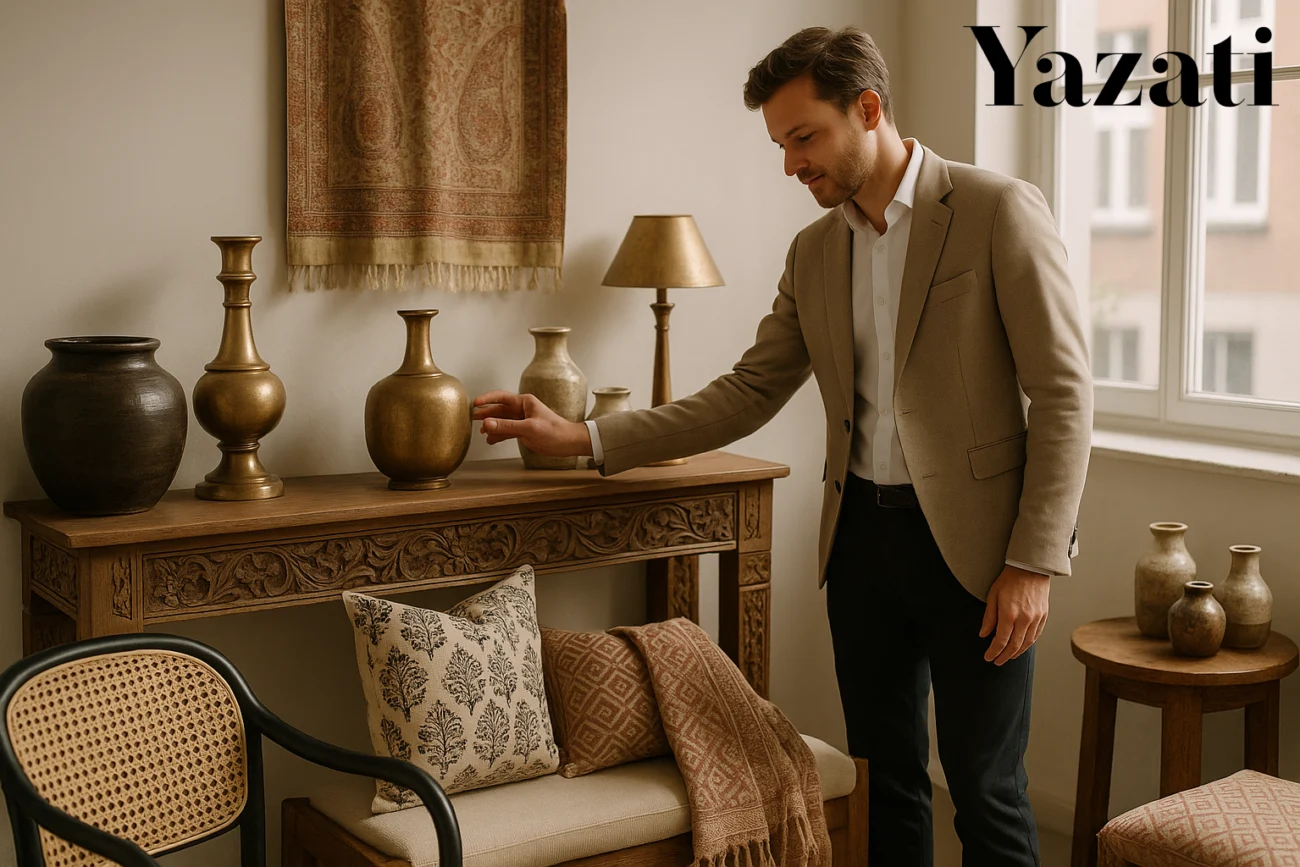
Introduction: The Global Rise of Indian Home Décor
Indian home décor has transcended geographical and cultural boundaries, capturing the attention of designers, architects, and homeowners worldwide. In recent years, European retailers have shown a growing fascination with Indian aesthetics — an art form that harmoniously blends heritage craftsmanship with modern sensibilities.
This rising trend isn’t merely about exotic appeal. It reflects a deeper shift toward sustainability, authenticity, and cultural storytelling. From handcrafted wooden furniture to intricately embroidered textiles, Indian home décor represents more than decoration — it’s an expression of soulful living and mindful consumption.
The Essence of Indian Home Décor: Tradition Meets Modernity
A Blend of Artistry, Spirituality, and Functionality
Indian home décor is rooted in a philosophy that views art as a reflection of life and spirituality. Every motif, color, and texture tells a story — whether it’s a hand-painted Rajasthani mirror or a Madhubani wall hanging inspired by mythology.
Unlike industrial décor, Indian craftsmanship thrives on imperfection, where each handmade item carries a distinct human touch. European buyers admire this authenticity, finding it a refreshing contrast to mass-produced home goods.
The Influence of Regional Craftsmanship Across India
India’s diverse geography contributes to an array of regional art forms — Kashmiri papier-mâché, Rajasthani block printing, Kerala brassware, and Tamil Nadu’s stone sculptures. European retailers are particularly drawn to this diversity, which allows them to curate collections that appeal to varied customer segments — from bohemian and rustic to luxury and contemporary.
Historical Connection Between India and Europe in Design
Colonial Trade and the Exchange of Aesthetic Ideals
The relationship between Indian and European design is centuries old. During the colonial era, Indian textiles, furniture, and decorative arts became highly sought after in Europe. Chintz fabrics, for instance, revolutionized European fashion and interior design in the 17th century.
This cultural exchange set the stage for the ongoing admiration of Indian craftsmanship — a legacy that continues in today’s global décor market.
Revival of Oriental and Ethnic Designs in Modern Europe
In the 21st century, Europe has seen a resurgence of interest in ethnic and artisanal aesthetics. This revival aligns perfectly with India’s design ethos — vibrant, symbolic, and steeped in tradition. As minimalist Scandinavian interiors dominate, European homeowners increasingly look to Indian accents for warmth, texture, and color contrast.
Key Elements That Define Indian Home Décor
Rich Textiles and Handcrafted Fabrics
India’s textile industry, one of the oldest in the world, is synonymous with handwoven fabrics, natural dyes, and embroidery techniques like Kantha, Zardozi, and Phulkari. European retailers favor these for their tactile appeal and sustainability, often incorporating them into premium cushion covers, drapes, and upholstery.
Vibrant Colors and Symbolic Patterns
Indian décor celebrates color psychology. Shades of saffron, turquoise, and maroon symbolize energy, prosperity, and protection. These bold palettes are gaining traction in European homes, especially when blended with muted Scandinavian or Mediterranean tones.
Sustainable and Natural Materials
European consumers are becoming increasingly eco-conscious. Indian artisans naturally work with bamboo, jute, clay, cotton, and reclaimed wood — materials that resonate with the sustainability values of the European market.
Why European Retailers Are Embracing Indian Designs
Growing Consumer Demand for Authentic, Handcrafted Goods
European shoppers are shifting toward products with authentic stories and cultural depth. Indian home décor fits perfectly into this movement, offering handcrafted pieces that reflect both artistic value and ethical production.
The Popularity of Ethical and Sustainable Sourcing
India’s traditional craft ecosystem supports rural employment, women artisans, and sustainable livelihoods. European retailers view these social impact narratives as powerful marketing tools that align with their CSR and ESG commitments.
Unique Selling Proposition (USP) of Indian Artisans
Indian décor’s uniqueness lies in its fusion of art and purpose. No two handcrafted pieces are identical — an exclusivity that appeals strongly to European luxury consumers seeking individuality and character in their spaces.
The Role of E-commerce and Global Supply Chains
Online Marketplaces and Direct-to-Consumer Models
E-commerce platforms like Etsy, Amazon Handmade, and Pepperfry have bridged the gap between Indian artisans and global buyers. European retailers increasingly source through digital channels, minimizing intermediaries and increasing profit margins.
Efficient Shipping and Cross-Border Logistics
Advancements in logistics and packaging have made delicate Indian items — such as terracotta lamps and glass mosaics — easier to ship internationally without damage. This reliability has strengthened European confidence in Indian exports.
Case Studies: Indian Brands Thriving in European Markets
Fabindia: Craftsmanship Meets Conscious Living
Fabindia has successfully penetrated European markets by positioning itself as a sustainable lifestyle brand. Its collection of handcrafted furniture, textiles, and accessories resonates with eco-aware European consumers.
Good Earth and the Rise of Luxury Indian Aesthetics
Good Earth redefines Indian décor with a luxury twist, merging traditional motifs with contemporary design. Its collaborations with European retailers and interior designers have made it a symbol of India’s evolving design language.
IKEA Collaborations and Indian Design Inspirations
IKEA’s “INDIA COLLECTION” pays tribute to Indian artisanship, showcasing woven rugs, hand-painted ceramics, and bamboo lamps. These collaborations highlight the global recognition of India’s creative potential.
Challenges in Exporting Indian Home Décor to Europe
Standardization, Quality Control, and Market Adaptation
While demand is high, exporters often face challenges in maintaining consistent quality and adapting to European design preferences and safety standards. However, training programs and craft clusters are helping artisans modernize their processes.
Navigating Tariffs, Certifications, and Sustainability Rules
European markets impose strict regulations around materials, dyes, and certifications. Indian exporters are increasingly adopting Fair Trade and ISO standards to stay competitive and compliant.
Future Trends: The Next Wave of Indian Design Influence
Fusion Décor and Minimalist-Indian Blends
Future Indian décor exports will likely merge ethnic craftsmanship with modern minimalism — think carved wooden tables with sleek finishes or indigo cushions with geometric patterns.
Technology and the Globalization of Craft
AI-driven design tools and blockchain-based transparency systems are transforming how Indian artisans connect with European buyers, ensuring traceability and trust in the global supply chain.
Expert Insights: What European Buyers Look For
Demand for Storytelling and Authentic Provenance
Retailers emphasize storytelling — the who, where, and how behind each product. Provenance boosts perceived value and builds emotional connections with consumers.
Preference for Eco-Friendly and Handcrafted Products
From recycled metal lanterns to natural-dye curtains, eco-friendly production remains a key factor in purchasing decisions for European home décor chains.
Conclusion: India’s Timeless Appeal in Global Home Décor
The love affair between European retailers and Indian home décor is far more than a design trend — it’s a celebration of culture, sustainability, and creativity. Indian artisans, with their centuries-old wisdom and evolving innovation, continue to redefine global interior aesthetics.
As European markets shift toward mindful living and sustainable luxury, Indian décor stands as a beacon of authenticity and artistry — a bridge between heritage and modern design.
FAQs About Indian Home Décor in European Retail Markets
1. Why is Indian home décor so popular in Europe?
Because it combines authenticity, artistry, and sustainability — elements highly valued by European consumers seeking handcrafted, eco-friendly products.
2. Which Indian décor products sell best in Europe?
Handwoven rugs, brass lamps, embroidered textiles, wooden furniture, and ceramic tableware are among the top-selling items.
3. Are Indian décor products sustainable?
Yes. Most are made from renewable, biodegradable materials like jute, cotton, bamboo, and clay, supporting India’s green craftsmanship.
4. How do Indian exporters reach European buyers?
Through trade fairs, e-commerce platforms like Etsy and Amazon, and partnerships with major European retailers.
5. What challenges do Indian artisans face in exporting?
Maintaining quality standards, meeting EU regulations, and competing with machine-made alternatives.
6. What’s the future of Indian décor in Europe?
The future looks bright — expect greater collaborations, fusion designs, and digital platforms connecting artisans to global audiences.
✨ Discover Global Sourcing Excellence with Netyex ✨
Netyex is your trusted B2B sourcing partner, connecting international buyers with India’s finest manufacturers and curated product lines—from handicrafts and home décor to kitchenware, textiles, hospitality essentials, and more. With verified suppliers and end-to-end support, we make global procurement seamless, reliable, and efficient.
👉 Elevate your sourcing experience—explore Netyex today.
📦 Bulk orders & customisation | 🌍 Worldwide delivery | 🤝 Trusted by global buyers
Visit Netyex to source premium Indian products with confidence.